Unique Kitchen Gadgets: 2026 Blenders & Choppers Guide
Discover unique kitchen gadgets for 2026. Our buyer's guide compares high-torque blenders, precision food processors, and manual choppers for every workflow.
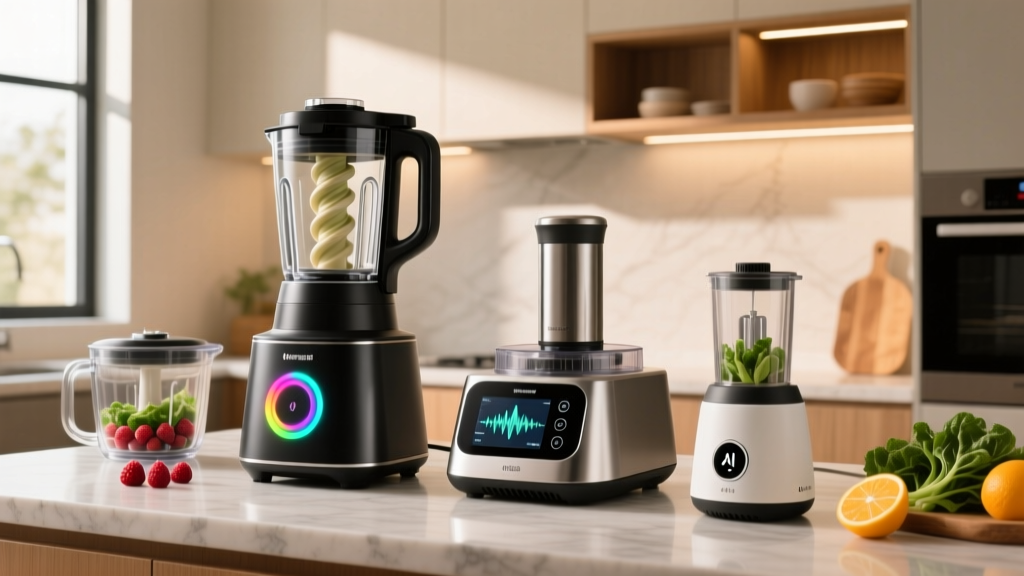
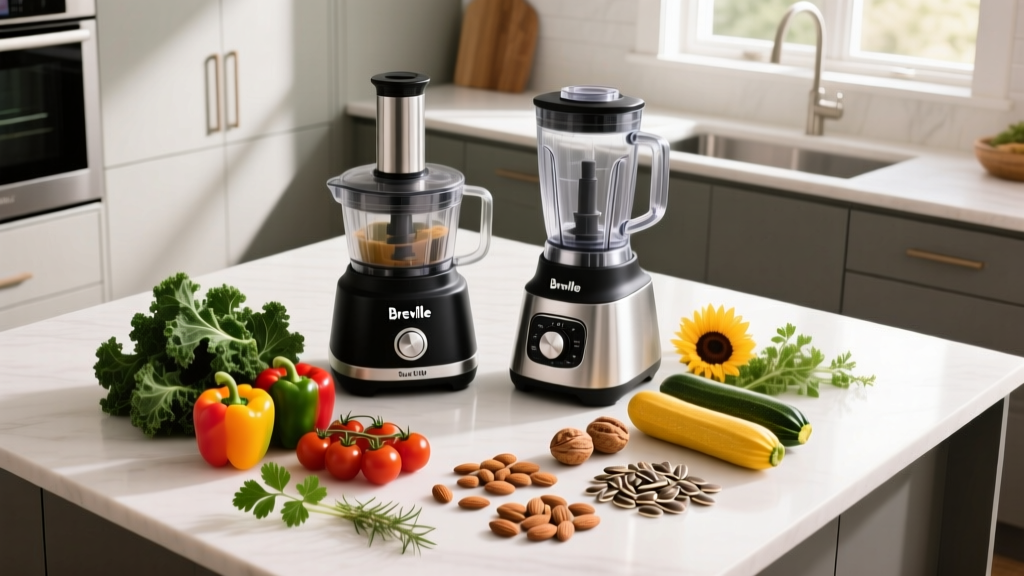
Most home cooks default to the same three motorized prep tools, unaware that the landscape of food processors, blenders, and choppers has fractured into highly specialized sub-categories. When evaluating unique kitchen gadgets for modern prep work, wattage and capacity are no longer the primary differentiators. In 2026, the defining metrics are continuous torque delivery, blade metallurgy, and vessel hydrodynamics. This comprehensive buyer's guide dissects the engineering behind today's most innovative prep gadgets, moving beyond generic marketing claims to expose the mechanical realities of high-performance kitchen equipment.
The Motor Matrix: Peak Horsepower vs. Continuous Torque
A common failure point in mid-tier blenders and food processors is the confusion between peak horsepower and continuous torque. A blender advertised with a '2.0 Peak HP' motor might only deliver 800 watts of continuous power once the blades encounter the viscous resistance of nut butter or frozen acai.
- Universal AC Motors: Found in heavy-duty food processors like the Breville Sous Chef. They are heavy, generate significant heat, but deliver massive, unwavering torque at low RPMs, making them ideal for kneading dough or shredding hard root vegetables without stalling.
- Brushless DC Motors: Increasingly common in premium 2026 blenders. They offer precise variable speed control, run 30% cooler, and are significantly quieter, though they rely heavily on advanced blade geometry to compensate for lower raw torque.
2026 Comparison Matrix: Unique Kitchen Gadgets for Precision Prep
| Gadget Model | Motor / Mechanism | RPM / Torque Profile | Optimal Use Case | 2026 Street Price |
|---|---|---|---|---|
| Breville Sous Chef 16 Pro (BFP800XL) | 2000W Direct-Drive AC | Low RPM, High Torque | Emulsions, doughs, precision slicing | $399 |
| Beast Blender B100 | 1000W Brushless DC | 29,000 RPM Peak | Viscous smoothies, micro-purees | $155 |
| Zyliss Quick Pull (E910001U) | Manual Gear-Ratio Pull | Variable (User-Dependent) | Alliums, herbs, salsa, pesto | $25 |
Deep Dive: Specialized Food Processors & Blenders
The Heavy-Duty Contender: Breville Sous Chef 16 Pro (BFP800XL)
The BFP800XL remains the benchmark for high-end food processing. Its standout feature is the micro-adjustable slicing disc, which offers 24 exact thickness settings ranging from 0.3mm (ideal for carpaccio and translucent radish ribbons) to 8.0mm (perfect for thick stew cuts). The die-cast metal base weighs over 18 pounds, which is not a design flaw but a necessity; it absorbs the kinetic vibration generated when processing dense ingredients like hard parmesan or frozen butter. The primary failure mode for this unit is user error: failing to engage all five safety interlock pins will prevent the 2000W motor from firing, a frustration that leads to unwarranted warranty claims.
The Personal Powerhouse: Beast Blender B100
While legacy brands rely on sheer wattage to force ingredients through a vortex, the Beast B100 utilizes a uniquely ribbed, 32-ounce Tritan vessel. These internal vertical ribs disrupt the laminar flow of the liquid, preventing 'cavitation'—the phenomenon where high-speed blades create an air pocket, leaving ingredients stuck to the sides of the jar while the blades spin freely. Paired with a 1000W motor hitting 29,000 RPM, the B100 achieves a completely homogenous micro-puree without the manual tamping required by competitors. It is specifically engineered for high-viscosity personal smoothies and hot soups, though its small footprint makes it unsuitable for batch-prepping large family meals.
The Manual Micro-Chopper: Zyliss Quick Pull
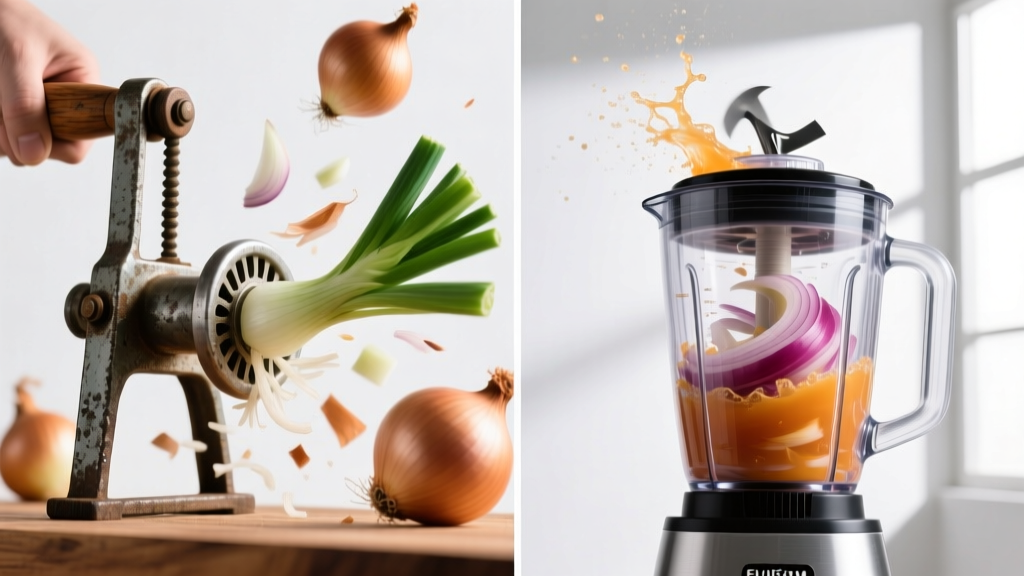
Why include a $25 manual pull-chopper in a guide about high-tech gadgets? Because of the biochemistry of alliums. When you blitz an onion in a 1500W electric blender, the high-speed friction generates heat and massive cellular destruction. This accelerates the enzymatic reaction that converts amino acid sulfoxides into syn-propanethial-S-oxide—the volatile gas that causes eye irritation and alters the onion's flavor profile to taste slightly 'cooked' or bitter. The Zyliss Quick Pull uses a sharp, multi-directional stainless steel blade and a mechanical gear ratio that cleanly slices onions, garlic, and herbs with minimal cell-wall crushing and zero thermal transfer. For salsas, pestos, and mirepoix, manual pulling yields a vastly superior flavor profile compared to electric pulsing.
Blade Metallurgy: 420J2 vs. 440C Stainless Steel
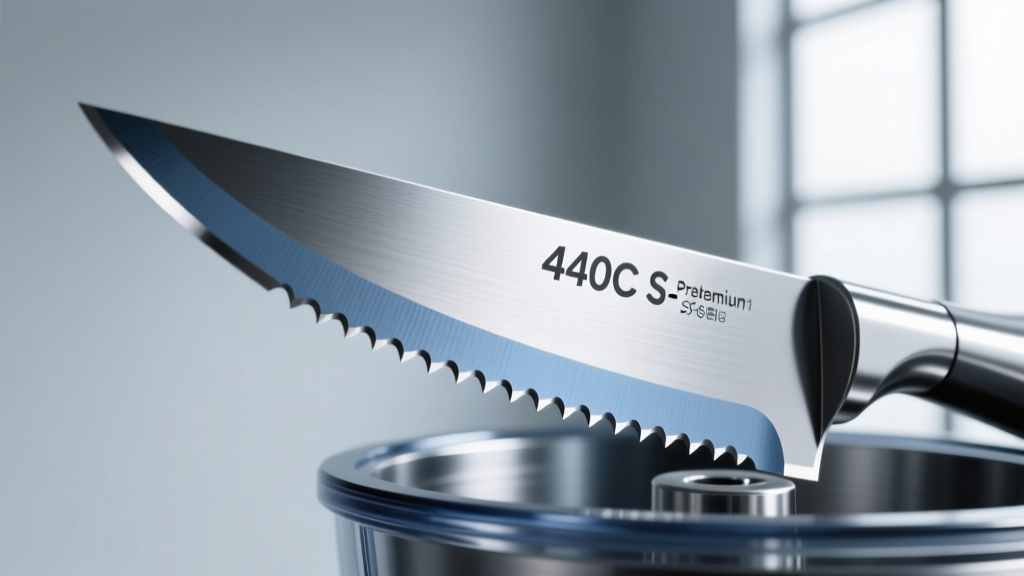
The longevity of your prep gadget is dictated by its blade steel. Most entry-level blenders and choppers use 420J2 martensitic stainless steel. It is highly rust-resistant and cheap to stamp, but its low carbon content means it loses its cutting edge within 6 to 12 months of regular use, transitioning from 'slicing' to 'bruising' your produce.
Expert Insight: Premium gadgets are increasingly adopting 440C or Japanese VG-10 stainless steel for their primary blades. These high-carbon alloys maintain a razor edge for years but require immediate hand-drying after washing to prevent micro-corrosion. If your blender blades are tearing leafy greens instead of pulverizing them, the steel has dulled, and the motor is working 40% harder to achieve the same result.
⚠️ Cross-Contamination Warning: The Gasket Crevices
According to FDA guidelines on raw meat handling, kitchen equipment must be thoroughly sanitized after contact with raw proteins. The most dangerous part of a blender or mini-chopper is not the blade—it is the rubber O-ring gasket at the base of the blade assembly. If your gadget's blade does not unscrew completely from the jar, microscopic meat fibers and Salmonella bacteria will lodge in the gasket crevices. Rule of thumb: Never buy a blender or chopper for savory prep unless the blade assembly completely disassembles for flat cleaning.
Decision Framework: Matching Gadget to Technique
Stop buying tools based on capacity; buy them based on your dominant culinary techniques. Use this diagnostic tree to finalize your purchase:
- Do you make nut butters, thick acai bowls, or hot soups from scratch?
Action: Invest in a high-torque blender with a ribbed vessel (e.g., Beast B100 or Vitamix Ascent). You need continuous torque and cavitation-prevention. - Do you batch-prep meals, shred cabbage for slaw, or make pie crusts?
Action: You need a wide-bowl food processor with a heavy AC motor (e.g., Breville Sous Chef). The wide surface area prevents ingredients from stacking uncut on top of each other. - Do you primarily prep aromatics (garlic, onions, chilies) for fresh salsas and stir-fries?
Action: Buy a manual pull-chopper (e.g., Zyliss Quick Pull). You will preserve the volatile flavor compounds and avoid the bitter oxidation caused by electric motors.
Frequently Asked Questions
Are immersion blenders a viable replacement for countertop models?
Only for specific tasks. Immersion blenders (stick blenders) excel at emulsifying mayonnaise directly in a beaker or pureeing soups directly in the stockpot, saving you from transferring hot liquids. However, as noted in Serious Eats blender testing methodology, immersion blenders lack the vessel geometry required to create a true vortex, making them entirely useless for crushing ice, grinding dry spices, or making smooth nut butters.
How often should food processor blades be replaced?
If you are using a standard 420J2 steel blade and processing hard ingredients (frozen fruit, ice, hard cheese) weekly, expect the edge to degrade noticeably within 18 to 24 months. You will know it is time for a replacement when the motor runs longer, the pitch of the motor whine increases, and ingredients are left in uneven chunks rather than a uniform mince.
Does the wattage of a mini-chopper matter?
For electric mini-choppers (1-cup to 3-cup capacity), wattage is largely irrelevant past 200W. Because the bowl diameter is so small, the blade tip speed is already exceptionally high. The limiting factor in mini-choppers is almost always the lid seal integrity and the durability of the plastic drive shaft, not the motor power.
Written by
Ryan TanakaRyan Tanaka holds a B.S. in Mechanical Engineering from Oregon State University and is a certified AWS Solutions Architect. He has built over 80 custom electronics projects ranging from CNC machines to IoT sensor networks, and has reviewed development boards, 3D printers, soldering equipment, and maker tools for the past 6 years. Ryan is an active contributor to 12 open-source hardware projects on GitHub and teaches monthly workshops at three hackerspaces across the Pacific Northwest. His reviews combine engineering rigor with accessibility — he evaluates products not just on specs but on documentation quality, community support, and learning curve for beginners. He has presented at Maker Faire Bay Area, Open Hardware Summit, and the Adafruit community showcase, and maintains a popular blog documenting his build processes.