Latest Kitchen Gadgets: Eco-Friendly Knife Sets & Sharpeners
Discover the latest kitchen gadgets for sustainable prep. We review eco-friendly knife sets, recycled steel sharpeners, and biodegradable cutting boards.
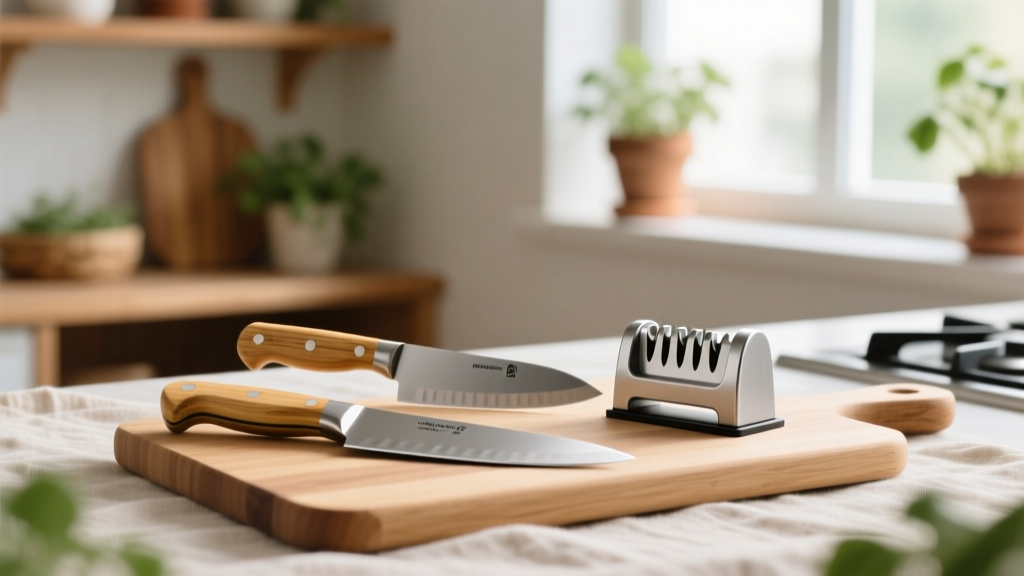
The culinary industry generates massive amounts of waste, from single-use plastics to prematurely discarded metal tools. When evaluating the latest kitchen gadgets for eco-friendly prep, the focus must shift from fleeting trends to metallurgical longevity, sustainable sourcing, and zero-waste maintenance. A truly sustainable kitchen relies on cutting tools that minimize carbon footprints during manufacturing and eliminate landfill contributions at the end of their lifecycle.
The Carbon Footprint of Culinary Steel
Traditional knife manufacturing relies heavily on virgin steel produced via Basic Oxygen Furnaces (BOF), which emit approximately 1.85 tons of CO2 per ton of steel. In contrast, the latest sustainable manufacturing processes utilize Electric Arc Furnaces (EAF) powered by renewable energy grids to melt recycled scrap metal. According to the World Steel Association, steel is the most recycled material on the planet, and utilizing EAF recycled steel reduces carbon emissions by up to 70% compared to virgin ore extraction.
When selecting an eco-friendly knife set, look for brands that explicitly state their use of post-consumer recycled stainless steel or high-carbon alloys forged in EAF facilities. The environmental impact of a $150 chef's knife is negligible if it lasts three generations, but catastrophic if the steel degrades and the handle cracks within five years.
Top Sustainable Knife Sets and Prep Tools
The market is saturated with the latest kitchen gadgets promising one-touch sharpening and self-healing boards, but true sustainability requires a return to durable, repairable materials. Here are the top-performing eco-conscious cutting tools available today.
1. Tojiro Eco-Series (F-737) Chef's Knife
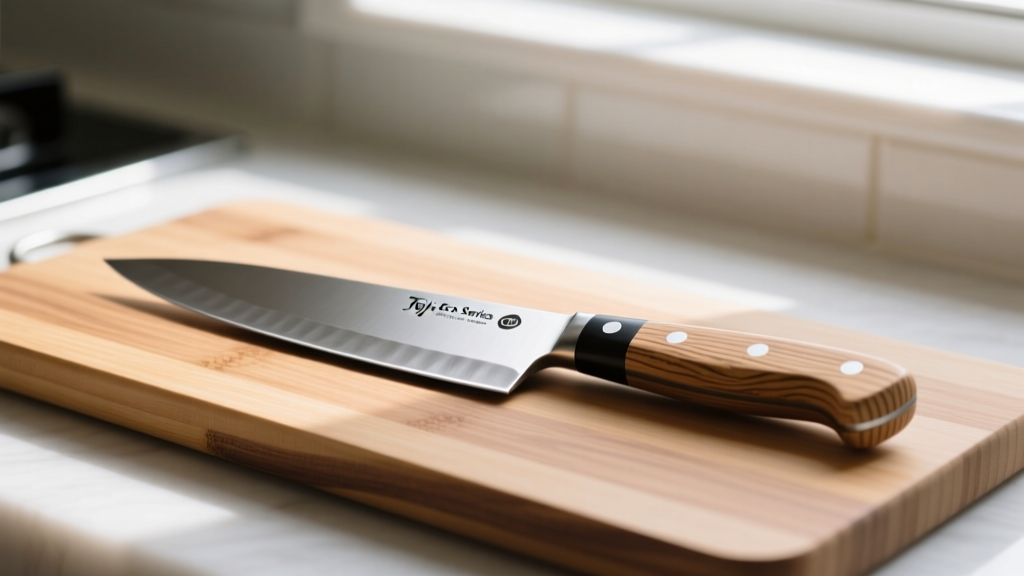
Japanese manufacturer Tojiro addressed the environmental impact of traditional hardwood and plastic handles by developing the Eco-Series. The handle is constructed from Paper Micarta—a composite of recycled paper layers compressed with an eco-friendly resin. This material is entirely waterproof, highly resistant to kitchen acids, and eliminates the need for harvesting endangered tropical hardwoods. The blade features a VG-10 stainless steel core clad in softer recycled stainless steel, providing exceptional edge retention without the ecological toll of virgin mining.
2. Victorinox Fibrox Pro Line
While often recognized as a commercial kitchen staple, the Victorinox Fibrox handle is a triumph of sustainable polymer engineering. The handles are molded from recycled Thermoplastic Elastomers (TPE) and post-industrial plastic waste. Unlike cheap ABS plastic handles that become brittle and crack in the dishwasher, TPE remains stable across extreme temperature fluctuations. By utilizing diverted landfill plastics, Victorinox significantly lowers the embodied energy of their mass-market knife lines.
3. Global NI Series with Upcycled Packaging
Global's monolithic stainless steel construction inherently reduces waste by eliminating the need for handle adhesives, rivets, and secondary materials that complicate end-of-life recycling. A single piece of CROMOVA 18 stainless steel can be melted down and reformed with zero material loss, making it a perfect candidate for a closed-loop circular economy.
The Zero-Waste Sharpening Matrix
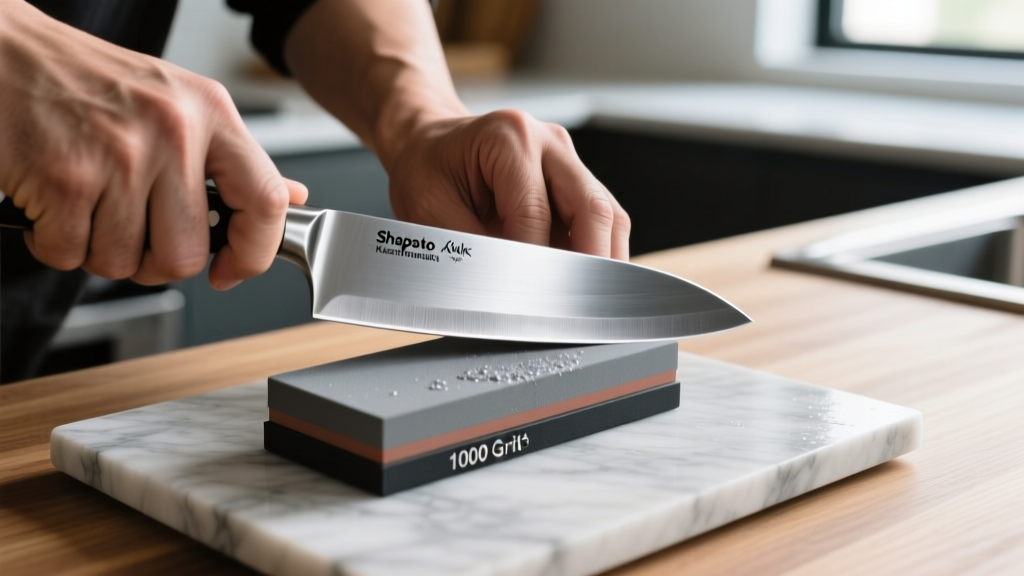
The most ecologically damaging kitchen gadgets are carbide pull-through sharpeners and cheap electric grinders. These devices aggressively strip 1 to 2 millimeters of steel per use to create a cheap, jagged edge. Over three years, a pull-through sharpener will grind away enough steel to completely destroy the profile of a premium chef's knife, forcing premature replacement. Whetstones, conversely, remove steel on a microscopic level, measured in microns rather than millimeters.
| Sharpening Method | Steel Removed Per Session | Tool Lifespan | Landfill Waste Generated | Edge Quality |
|---|---|---|---|---|
| Carbide Pull-Through | 1.0 - 2.0 mm | 1-2 Years | High (Plastic housing + metal blades) | Poor (Jagged, tears food fibers) |
| Electric Grinder | 0.5 - 1.0 mm | 3-5 Years | Very High (E-waste, motors, plastics) | Fair (Overheats and ruins temper) |
| Ceramic Whetstone (e.g., Shapton Kuromaku) | 5 - 15 microns | 15-30 Years | Near Zero (Natural/Ceramic dust) | Exceptional (Polished, clean slices) |
| Leather Strop with Diamond Emulsion | < 1 micron | 10+ Years | Minimal (Biodegradable leather) | Mirror Polish (Razor sharp) |
Investing in a high-density ceramic whetstone, such as the Shapton Kuromaku 1000-grit and 5000-grit combination, is the ultimate zero-waste sharpening strategy. These stones are made from naturally occurring minerals and ceramic binders, requiring only water for lubrication. They eliminate the need for petroleum-based honing oils and electric motors.
Cutting Boards: Beyond Plastic and Endangered Woods
Cutting surfaces dictate the lifespan of your knife edge and the ecological footprint of your prep station. Traditional plastic polyethylene boards shed microplastics into your food and eventually degrade into unusable, deeply grooved slabs that harbor bacteria. Conversely, harvesting slow-growing hardwoods like walnut or maple for end-grain boards contributes to deforestation if not strictly managed.
Engineered Recycled Composites
The latest sustainable cutting boards utilize advanced composite materials. Epicurean Cutting Boards are manufactured from Richlite, a paper-based composite made from recycled wood fibers and post-consumer paper. Certified by the NSF for food safety, Richlite is non-porous, dishwasher safe, and remarkably gentle on knife edges. Because it is engineered from recycled cellulose, it completely bypasses the need for timber harvesting.
Upcycled Urban Bamboo
Bamboo is a rapidly renewable grass that matures in 3-5 years, making it a superior alternative to hardwood. However, the eco-credentials of bamboo depend heavily on the adhesives used in lamination. Brands like ChopValue have revolutionized this space by upcycling urban bamboo and reclaimed materials into high-density, end-grain style cutting boards. By utilizing water-based, formaldehyde-free adhesives and sourcing bamboo from Forest Stewardship Council (FSC) certified plantations, these boards offer a carbon-negative footprint from harvest to kitchen counter.
Sustainable Storage and Organization
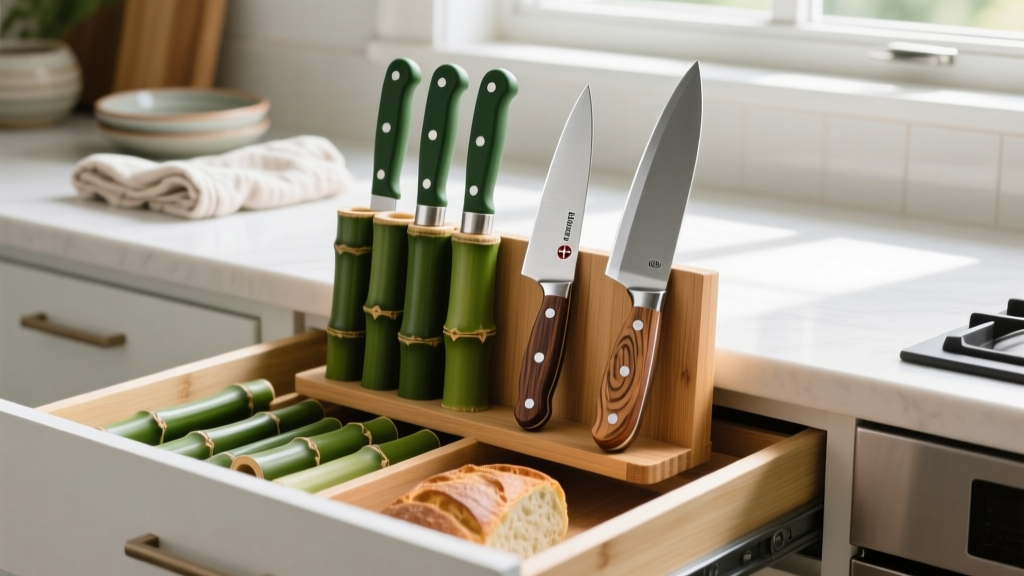
Knife blocks are notoriously difficult to clean and often harbor mold in their deep, unventilated slots. The sustainable alternative is modular, upcycled storage. Magnetic knife strips made from reclaimed scaffolding wood or recycled stainless steel keep blades exposed to air, preventing moisture buildup and bacterial growth. For drawer storage, adjustable dividers crafted from reclaimed cork or FSC-certified acacia wood protect delicate blade edges from chipping against other metal utensils without relying on petroleum-based plastic trays.
The Verdict on Sustainable Prep
Transitioning to an eco-friendly kitchen does not require sacrificing culinary precision. By prioritizing EAF-recycled steel, composite handles like Paper Micarta, and zero-waste ceramic whetstones, home cooks can drastically reduce their environmental impact. The initial investment in high-quality, sustainable cutting tools pays dividends in both edge performance and ecological preservation, proving that the most effective kitchen gadgets are those designed to last a lifetime.
Written by
Ryan TanakaRyan Tanaka holds a B.S. in Mechanical Engineering from Oregon State University and is a certified AWS Solutions Architect. He has built over 80 custom electronics projects ranging from CNC machines to IoT sensor networks, and has reviewed development boards, 3D printers, soldering equipment, and maker tools for the past 6 years. Ryan is an active contributor to 12 open-source hardware projects on GitHub and teaches monthly workshops at three hackerspaces across the Pacific Northwest. His reviews combine engineering rigor with accessibility — he evaluates products not just on specs but on documentation quality, community support, and learning curve for beginners. He has presented at Maker Faire Bay Area, Open Hardware Summit, and the Adafruit community showcase, and maintains a popular blog documenting his build processes.