Top Kitchen Gadgets 2025: Silicone Bakeware & Non-Stick Fixes
Discover the best problem-solving silicone bakeware and non-stick kitchen gadgets 2025 introduced. Learn how to prevent sticking, warping, and coating wear.
The Evolution of Non-Stick and Silicone: Moving Past the Gimmicks
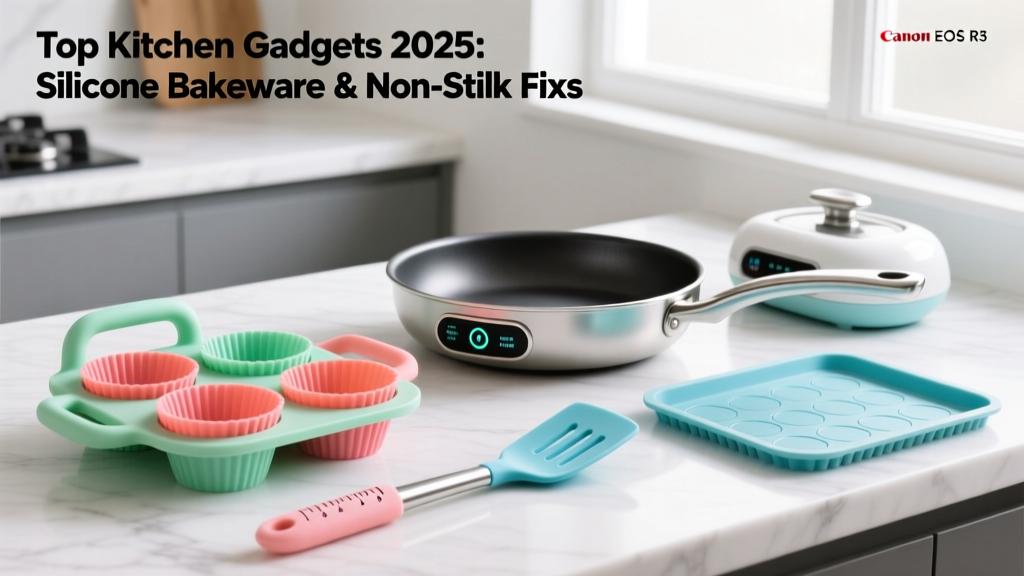
When evaluating the most impactful kitchen gadgets 2025 brought to market, the clearest trend was a shift away from single-use novelties toward high-performance material upgrades. Home cooks demanded solutions to the three most persistent kitchen frustrations: baked goods that tear, non-stick coatings that degrade in months, and silicone tools that melt or warp. As we navigate 2026, the market has finally stabilized around platinum-cured silicones and advanced ceramic-hard-anodized hybrids. This guide breaks down the exact material science, failure modes, and specific product picks you need to upgrade your prep and baking stations.
The Silicone Flop Factor: Solving the Flexibility Problem
The primary complaint with cheap silicone bakeware is structural failure under load. A standard silicone cake pan filled with two pounds of batter will buckle when lifted, spilling contents and creating a burn hazard. The engineering solution is a fiberglass mesh core encapsulated within 100% platinum-cured silicone.
Practical Pick: Silpat Premium Non-Stick Baking Mat
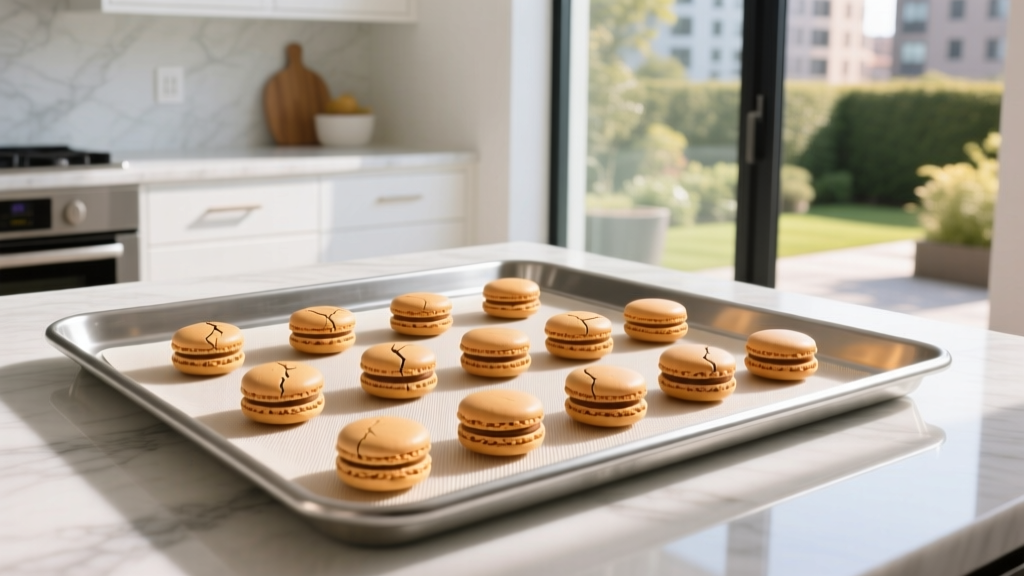
While generic silicone mats cost around $8, the Silpat Premium ($22 - $25) remains the benchmark. Its proprietary fiberglass mesh allows it to withstand temperatures up to 480°F without warping. More importantly, the micro-texture of the silicone surface promotes optimal air circulation, preventing the soggy bottoms common in solid silicone pans. For high-moisture batters like financiers or macarons, this airflow is non-negotiable.
Non-Stick Safety and Longevity: Beyond the Coating Panic
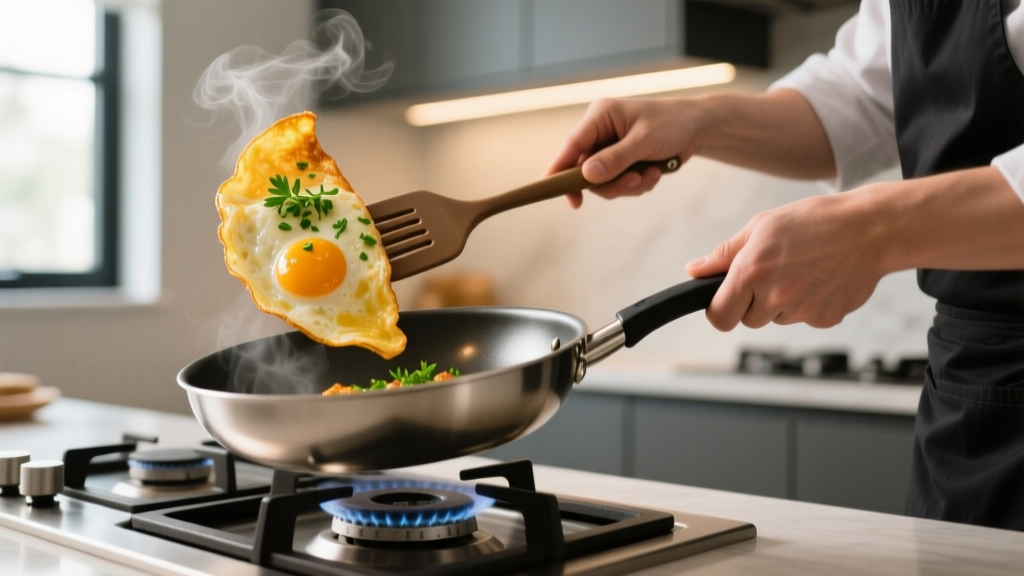
The non-stick category has fractured into three distinct material camps: traditional PTFE (polytetrafluoroethylene), Sol-Gel Ceramic, and Carbon Steel. Understanding the thermal limits of each is critical for preventing premature failure and addressing health concerns. According to the EPA's ongoing assessments of PFAS, modern PTFE cookware manufactured after 2013 is PFOA-free, but thermal degradation remains a physical reality if overheated.
Comparative Matrix: Non-Stick Materials
| Material | Max Safe Temp | Average Lifespan | Primary Failure Mode |
|---|---|---|---|
| PTFE (Traditional) | 500°F (260°C) | 3 - 5 Years | Micro-scratching, coating flaking |
| Sol-Gel Ceramic | 400°F (204°C) | 6 - 18 Months | Thermal shock, silica network breakdown |
| Carbon Steel | 600°F+ (315°C+) | Lifetime | Rust, stripping of polymerized oil layer |
As noted in extensive durability testing by Serious Eats culinary equipment analysts, ceramic non-stick pans fail not because the coating scratches, but because the microscopic silica network fractures under repeated thermal shock (e.g., moving a hot pan directly to a cold sink). Once this network fractures, the hydrophobic properties vanish, and food sticks aggressively.
Practical Picks: The Ultimate Problem-Solver Toolkit
To build a functional, non-stick ecosystem, you need tools that respect the physical limits of your cookware. Here are the specific models that solve real-world friction points.
1. GIR (Got It Right) Ultimate 11-Inch Spatula ($15)
- The Problem: Traditional two-piece silicone spatulas trap food and bacteria in the seam where the handle meets the head.
- The Fix: GIR's spatula is molded from a single piece of platinum silicone with a fiberglass core. It has no seams, is dishwasher safe, and the tapered edge is thin enough to slide under delicate fish fillets without breaking them.
- Edge Case: The 11-inch version is required for deep Dutch ovens; the standard 9.5-inch version will leave your knuckles dangerously close to simmering liquids.
2. GreenPan Valencia Pro 10-Inch Hard-Anodized ($69)
- The Problem: Ceramic pans are notoriously fragile and warp on induction or high-BTU gas burners.
- The Fix: GreenPan pairs their Thermolon Infinity ceramic coating with a hard-anodized aluminum exterior. The anodization process hardens the exterior aluminum, making it warp-resistant and induction-compatible, while the interior remains PTFE-free.
- Maintenance Rule: Never use aerosol cooking sprays (like PAM) on this pan. The lecithin in aerosol sprays polymerizes at low temperatures, creating a permanent, gummy buildup that destroys ceramic non-stick properties.
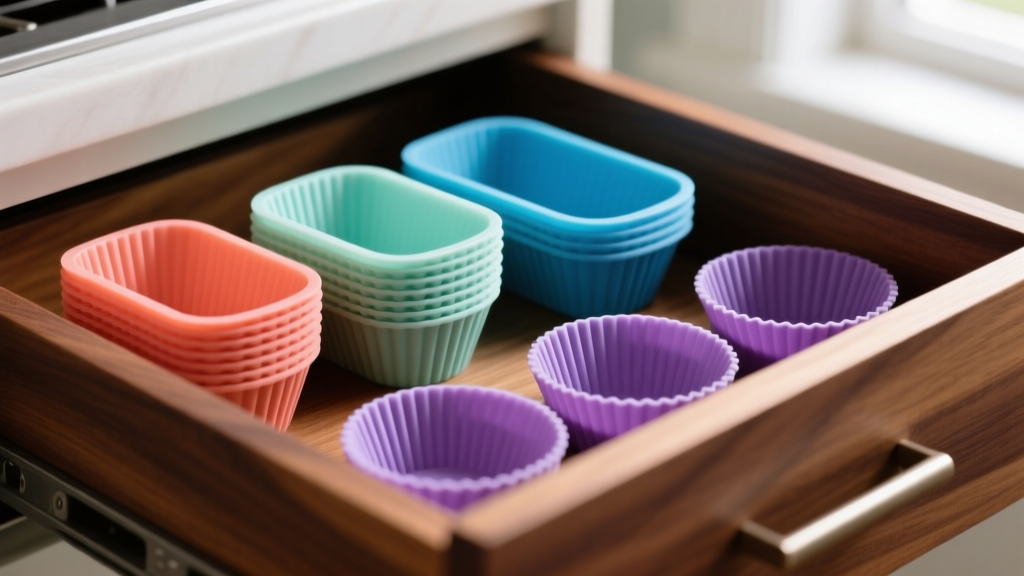
3. OXO Good Grips Silicone Baking Cups ($10 for 12)
- The Problem: Paper liners peel away from muffins, and cheap silicone cups are too flimsy to stand upright on a flat sheet pan.
- The Fix: OXO engineered these with a thicker, dual-texture wall. The ridged exterior provides structural rigidity, allowing them to sit perfectly flat on a baking sheet without a muffin tin, while the smooth interior ensures instant release.
Maintenance Matrix: Keeping Non-Stick and Silicone Alive
The number one reason users discard non-stick and silicone tools is improper maintenance, not manufacturing defects. Follow this decision tree to extend the life of your gear by up to 300%.
The Cleaning & Storage Protocol
- Thermal Shock Prevention: Never place a hot non-stick pan under cold water. Wait until the pan is cool enough to touch comfortably (below 120°F). Rapid contraction warps the aluminum base, creating an uneven cooking surface that pools oil.
- Polymerization Removal: If your silicone mats or non-stick pans develop a sticky, brownish film, this is polymerized oil. Do not scrub with steel wool. Create a paste of baking soda and warm water, apply it to the sticky areas, and let it sit for 15 minutes before wiping away with a microfiber cloth.
- Silicone Staining: Tomato sauces and turmeric will stain porous silicone. To reverse this, bake the stained silicone item in the oven at 350°F for 20 minutes. The heat opens the silicone pores and releases the trapped pigment molecules.
- Utensil Pairing: Never use metal whisks or tongs in ceramic or PTFE pans. Even 'rounded' metal tongs will create micro-fissures in ceramic coatings over time. Stick exclusively to seamless silicone or high-heat nylon (up to 400°F).
Real-World Edge Cases & FAQ
Can I put my silicone baking mats in the dishwasher?
While technically dishwasher safe, the high-alkaline detergents used in modern dishwashers will degrade the non-stick surface of silicone mats over time, leaving them feeling chalky. Hand washing with a mild, pH-neutral dish soap and a soft sponge is the only way to preserve the micro-texture of premium mats like the Silpat.
Is it safe to sear meat at high heat in modern PTFE pans?
No. A proper steak sear requires surface temperatures exceeding 550°F. PTFE begins to degrade and release invisible, odorless fluorocarbon gases at 500°F, which can cause polymer fume fever in humans and is highly lethal to pet birds. For high-heat searing, abandon non-stick entirely and use a pre-heated cast iron or carbon steel skillet.
Why do my silicone ice cube trays make ice that tastes like plastic?
Silicone is highly permeable to odors. If you store your ice cube trays in a freezer alongside strong-smelling foods (like onions, garlic, or frozen fish), the silicone will absorb those volatile compounds. Store silicone trays in a sealed zip-top bag or an airtight container inside the freezer to prevent flavor transfer.
Written by
Ryan TanakaRyan Tanaka holds a B.S. in Mechanical Engineering from Oregon State University and is a certified AWS Solutions Architect. He has built over 80 custom electronics projects ranging from CNC machines to IoT sensor networks, and has reviewed development boards, 3D printers, soldering equipment, and maker tools for the past 6 years. Ryan is an active contributor to 12 open-source hardware projects on GitHub and teaches monthly workshops at three hackerspaces across the Pacific Northwest. His reviews combine engineering rigor with accessibility — he evaluates products not just on specs but on documentation quality, community support, and learning curve for beginners. He has presented at Maker Faire Bay Area, Open Hardware Summit, and the Adafruit community showcase, and maintains a popular blog documenting his build processes.