Outdoor Precision: Knife Sharpeners & Barista Gadgets PID Setups
Master the seasonal outdoor kitchen with our guide to premium knife sets, field sharpeners, and integrating barista gadgets PID controllers.
The Rise of the Precision Outdoor Kitchen
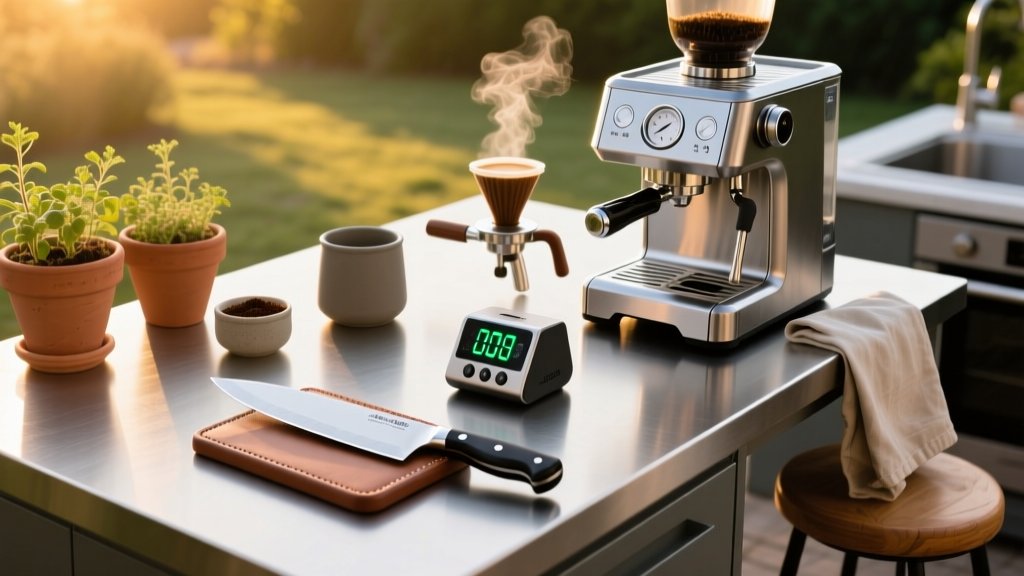
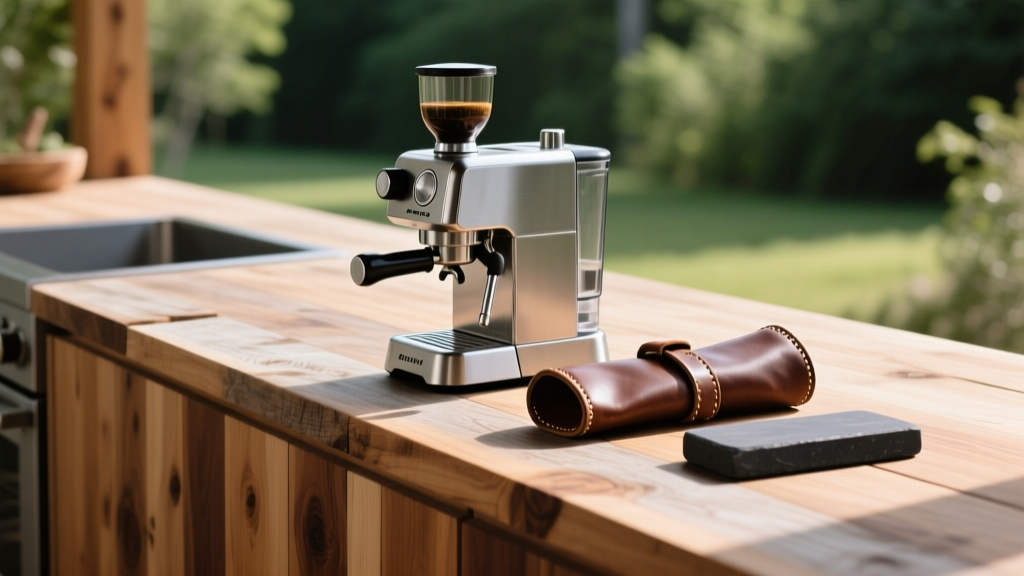
As of 2026, the seasonal outdoor kitchen has evolved far beyond basic grill grates and cast-iron skillets. Whether you are outfitting a remote off-grid cabin, a high-end RV, or an overlanding rig, modern outdoor culinary enthusiasts demand the same precision in the wild as they do in their home kitchens. This pursuit of excellence requires a meticulous approach to two critical pillars of food and beverage preparation: the metallurgical edge of your cutlery and the thermal stability of your brewing equipment.
Building a truly elite seasonal kitchen means investing in tools that can withstand environmental fluctuations while delivering micrometer-level accuracy. From selecting the right stainless alloys for high-humidity environments to dialing in espresso extraction temperatures using advanced thermal controllers, this guide covers the essential intersection of heavy-duty prep tools and precision beverage tech.
Selecting Cutlery for Seasonal & Off-Grid Environments
When choosing a knife set for an outdoor or seasonal kitchen, the primary enemy is ambient moisture. High-carbon steels offer incredible edge retention but require rigorous maintenance to prevent rust in humid or coastal environments. For most seasonal setups, high-quality stainless or semi-stainless steels are the superior choice.
The Stainless Steel Standard
For a fixed seasonal cabin kitchen, the Wüsthof Classic Ikon 3-Piece Set ($299) remains a benchmark. Forged from X50CrMoV15 stainless steel and hardened to 58 HRC (Rockwell Hardness Scale), it offers exceptional stain resistance and an edge that is easy to maintain. If you are looking for a more budget-friendly but highly capable option, the Misen 3-Piece Essential Set ($165) utilizes Japanese AUS-8 steel, offering a slightly harder edge (59-60 HRC) that excels at precise vegetable brunoise and delicate fish filleting.
Backcountry and Overlanding Kits
For mobile setups, traditional wooden blocks are impractical. Opt for roll-up kits like the Barebones Enamel Camp Knife Set ($85) or build a custom kit using the Zwilling Pro 3.5-inch Paring Knife and a 6-inch Utility Knife housed in a waxed-canvas or leather magnetic roll. These compact tools provide the agility needed for prep work on folding teak tables or tailgate stations.
Field Sharpening: Maintaining the Micro-Bevel Off-Grid
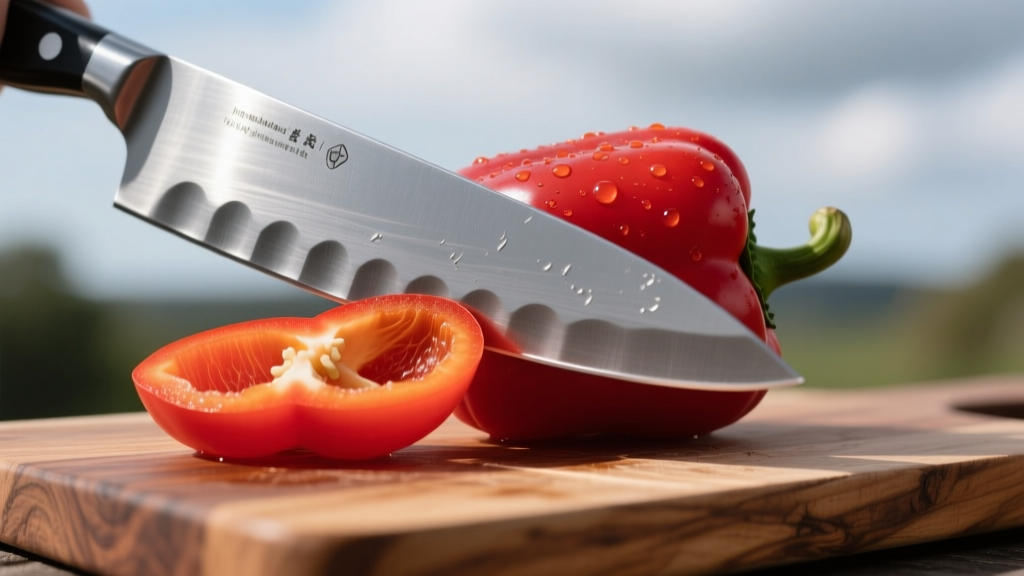
A premium knife is only as good as its last sharpening session. In an outdoor environment, cutting boards are often harder (like dense teak or acacia), and accidental contact with bone or frozen foods can micro-chip the edge. Relying on a pull-through carbide sharpener will destroy your blade's geometry over time. Instead, you need controlled abrasion.
The Guided Rod System: Work Sharp Precision Adjust Elite
For the cabin or RV kitchen, the Work Sharp Precision Adjust Elite ($129.95) is the undisputed champion of field maintenance. Unlike freehand whetstones, which require a stable, wet surface and years of muscle memory, this guided rod system clamps directly to your counter. It features an adjustable angle arm (from 15° to 20° per side) and includes a comprehensive abrasive progression: 220, 320, 400, 600, and 800 grit diamond plates, finishing with a ceramic stropping rod.
- 15° Angle: Ideal for Japanese-style knives and precise slicing tasks (e.g., sashimi, soft tomatoes).
- 20° Angle: Best for Western-style chef knives and heavy-duty outdoor prep (e.g., breaking down poultry, cutting through winter squash).
True Backcountry Maintenance: Fallkniven DC4
If you are miles away from the cabin and need to touch up an edge, the Fallkniven DC4 ($38) is a pocket-sized necessity. It features a diamond-coated side for aggressive material removal and a fine ceramic side for polishing the micro-bevel. According to Work Sharp's metallurgy guidelines, maintaining a consistent angle is far more critical than the grit level itself; even a 400-grit edge will outperform a poorly angled 1000-grit edge in field conditions.
Thermal Stability: Where Cutlery Meets Coffee Calibration
When outfitting a high-end seasonal kitchen, enthusiasts obsess over two distinct metrics: the edge angle of their cutlery and the thermal stability of their espresso. This pursuit of perfection is where premium cutlery intersects with advanced barista gadgets PID controllers. In off-grid environments, ambient temperature swings—especially during crisp autumn mornings or high-altitude summers—can wreak havoc on espresso extraction and pour-over bloom phases.
Portable espresso makers like the Flair 58 or customized Cafelat Robot setups are phenomenal, but they rely on pre-heated water. If you are using a custom seasonal boiler or an electric urn to heat your brew water, standard thermostats will swing wildly by 5°C to 10°C, leading to sour or astringent extractions. By integrating a standalone PID (Proportional-Integral-Derivative) controller—such as the Auber Instruments SYL-1515A ($145)—into your water heating setup, you achieve laboratory-grade thermal stability.
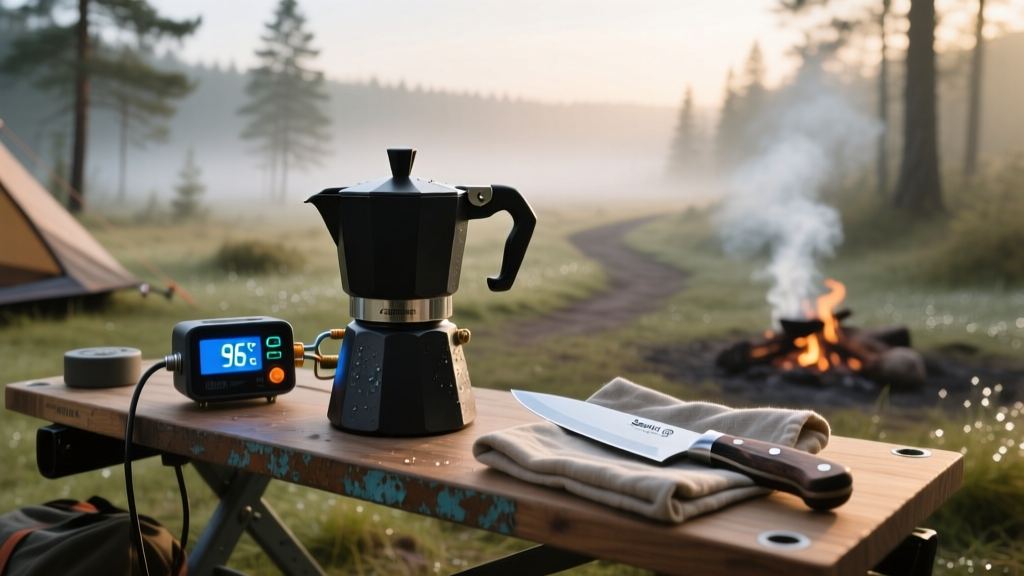
A properly tuned PID controller monitors the water temperature via a PT100 sensor and pulses the heating element in micro-bursts, maintaining your brew water at exactly 93°C ± 0.5°C. This mirrors the exactitude of your 15-degree knife bevel, ensuring every variable in your morning ritual is controlled.
For those interested in the deep thermodynamics of extraction, Barista Hustle's research on espresso temperature highlights how even a 2°C drop in water temperature drastically reduces the extraction yield of complex organic acids. When you combine a perfectly sharpened Misen utility knife with a PID-stabilized 93°C pour-over, your outdoor kitchen transcends camping and becomes a true culinary sanctuary.
Comparison Matrix: Cabin vs. Backcountry Prep & Brew
| Feature | Seasonal Cabin Setup | Backcountry Overland Setup |
|---|---|---|
| Primary Knife Steel | X50CrMoV15 (German Stainless) | VG-10 (Japanese High-Carbon Stainless) |
| Sharpener Type | Guided Rod System (Diamond/Ceramic) | Pocket Whetstone (Diamond/Ceramic) |
| Edge Angle Target | 20° (Durability for heavy prep) | 15° (Agility for precise camp cooking) |
| Espresso Gear | Flair 58 + Custom PID Boiler | Outin Nano / Wacaco Picopresso |
| Temp Control | Auber SYL-1515A PID (± 0.5°C) | Built-in battery heating (± 2.0°C) |
Seasonal Maintenance Protocols
Preparing your gear for winter storage or the transition between seasons requires specific protocols to prevent degradation.
Blade Care and Patina Management
If you do opt for high-carbon steel knives (like the Bob Kramer European Stainless or traditional Japanese carbon blades), you must force a patina before the humid summer months. Submerge the blade in warm vinegar for 10 minutes, then boil it in black tea for 20 minutes. This creates a stable oxidation layer that prevents red rust. Before closing up the cabin for winter, coat all blades in Camellia oil and store them in a breathable canvas roll, never in a sealed plastic sheath which traps moisture.
PID and Boiler Descaling
Outdoor water sources, particularly well water or hard mountain spring water, will rapidly scale your heating elements, blinding the PID's thermal transfer efficiency. At the end of the season, flush your boiler with a solution of 5g/L food-grade citric acid. Heat the solution to 60°C using your PID controller, let it sit for 45 minutes, and flush with distilled water. This ensures your thermistor remains perfectly responsive for the next year's first extraction.
Frequently Asked Questions
Can I use a standard kitchen knife block outdoors?
Wooden blocks trap moisture and harbor mold in humid, unclimate-controlled environments like cabins or RVs. Always use magnetic wall strips made of stainless steel or sealed, waxed-canvas knife rolls for seasonal kitchens.
Is a PID controller necessary for outdoor pour-over coffee?
While not strictly necessary, it elevates the brew. As noted by Serious Eats' culinary testing team, precision tools define the modern outdoor kitchen. A PID ensures your water is exactly at the optimal 92°C-96°C range, preventing the scalding of delicate light-roast beans often ruined by guessing temperatures over a camp stove.
How do I calibrate my guided sharpener for a micro-bevel?
Sharpen the primary edge at 15° using your 600-grit diamond plate. Then, adjust the guided arm to 18° and use only the ceramic stropping rod for 10 passes per side. This creates a durable micro-bevel that resists chipping when cutting on dense outdoor teak boards.
Written by
Ryan TanakaRyan Tanaka holds a B.S. in Mechanical Engineering from Oregon State University and is a certified AWS Solutions Architect. He has built over 80 custom electronics projects ranging from CNC machines to IoT sensor networks, and has reviewed development boards, 3D printers, soldering equipment, and maker tools for the past 6 years. Ryan is an active contributor to 12 open-source hardware projects on GitHub and teaches monthly workshops at three hackerspaces across the Pacific Northwest. His reviews combine engineering rigor with accessibility — he evaluates products not just on specs but on documentation quality, community support, and learning curve for beginners. He has presented at Maker Faire Bay Area, Open Hardware Summit, and the Adafruit community showcase, and maintains a popular blog documenting his build processes.