Beginner vs Expert Face Beauty Gadgets: Which Tier Fits You?
Compare beginner and expert face beauty gadgets. Discover pricing, clinical results, and hidden costs to find the right skincare tech tier for you.
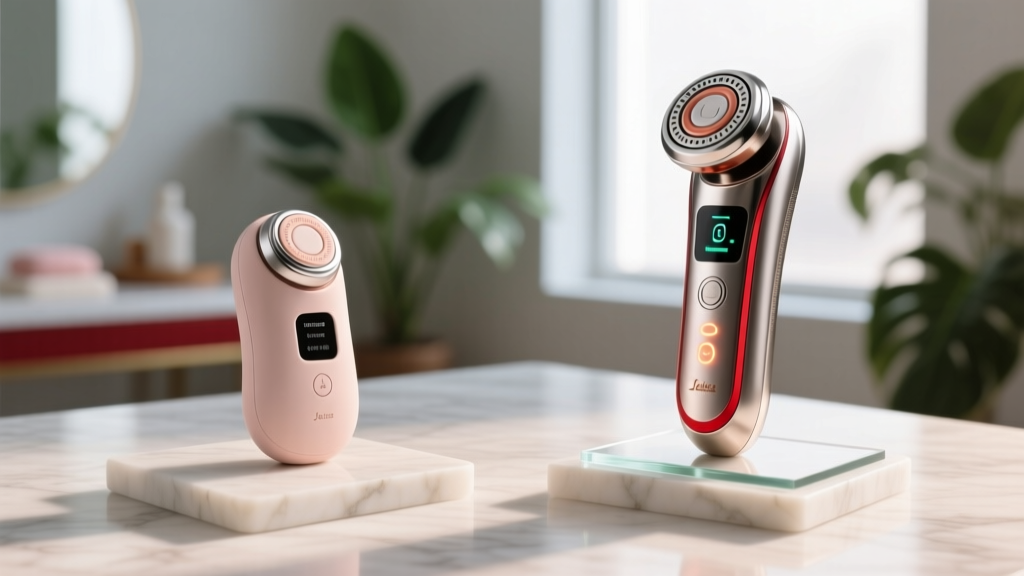
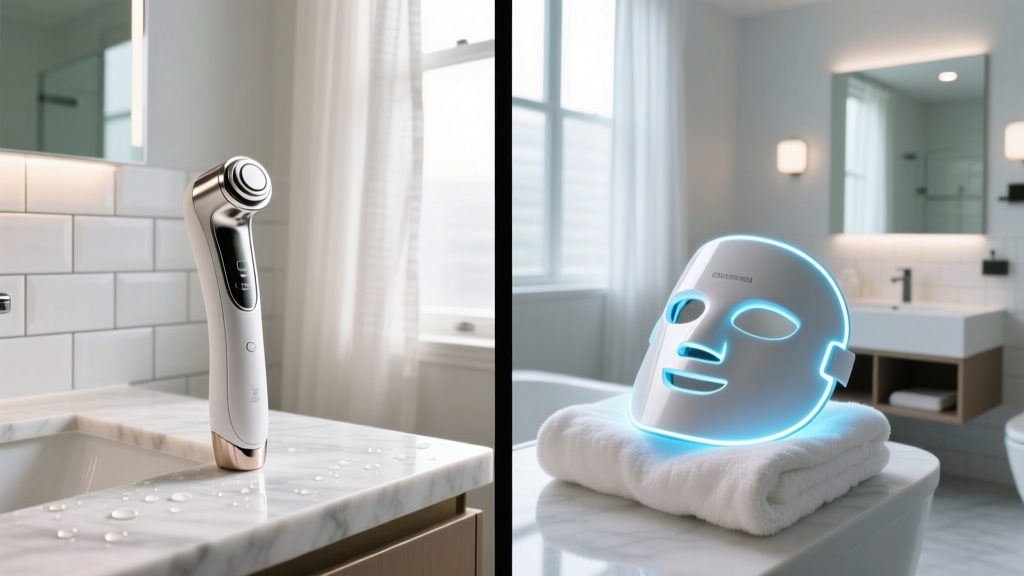
The Great Divide: Entry-Level vs. Clinical-Grade Skincare Tech
The market for face beauty gadgets has evolved from simple vibrating rollers to sophisticated, FDA-cleared biostimulation devices. However, the sheer volume of options creates a paradox of choice. Are you better off investing $150 in a beginner-friendly wand, or dropping $500 on a prosumer-grade, multi-modal mask? The answer depends entirely on your biological goals, time commitment, and tolerance for recurring maintenance costs.
In this comprehensive guide, we dissect the beginner and expert tiers of facial technology. We will examine exact power outputs, wavelength specifications, and the hidden economics of conductive gels to help you build a data-driven skincare arsenal.
Tier 1: The Gateway Tools (Beginner Face Beauty Gadgets)
Beginner devices are characterized by their low barrier to entry, single-function focus, and compact form factors. They are designed for spot treatments and users who are just introducing bio-hacking into their routines.
The Solawave Advanced Skincare Wand ($169)
This 4-in-1 wand combines microcurrent, red light therapy, facial massage, and therapeutic warmth. While it is a phenomenal travel companion, its LED output is broad-spectrum and lacks the targeted irradiance of clinical panels. The microcurrent is localized to the small metal prongs, making it ideal for targeting under-eye puffiness or lifting a specific brow arch, but inefficient for full-face muscle toning.
NuFACE Mini+ ($149)
The Mini+ delivers up to 335 microamps of current. It is an excellent entry point for understanding how your facial muscles respond to electrical stimulation. However, because it requires manual gliding across the face in 5-minute increments, user fatigue often leads to inconsistent routines—the primary reason at-home microcurrent fails to deliver long-term results.
Expert Insight: Beginner gadgets are fantastic for 'maintenance' and 'spot correction.' If your primary concern is occasional morning puffiness or localized dullness, entry-level wands provide an excellent ROI without the learning curve of clinical interfaces.
Tier 2: The Heavy Hitters (Expert & Prosumer Devices)
Expert-tier gadgets bridge the gap between the dermatologist's office and your bathroom vanity. They utilize multi-depth penetration, precise wavelength targeting, and automated protocols to remove human error from the equation.
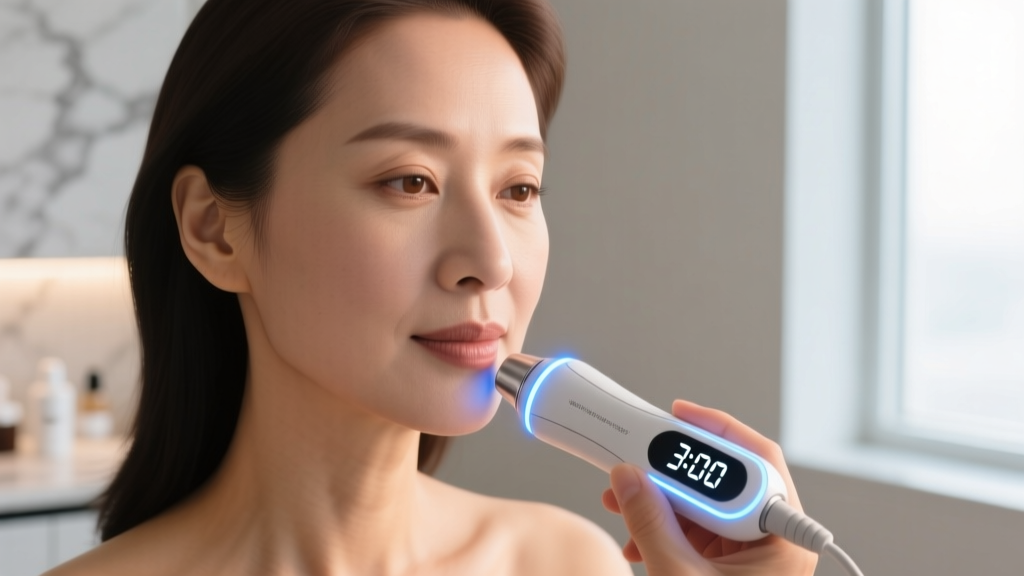
CurrentBody Skin 4-in-1 LED Face Mask ($415)
Unlike beginner wands, this flexible silicone mask delivers clinical-grade irradiance across the entire face simultaneously. It utilizes precise wavelengths: 633nm (Red) for superficial collagen synthesis and 830nm (Near-Infrared) for deep-tissue inflammation reduction. According to photobiomodulation research published in the NCBI, these specific wavelengths optimize cytochrome c oxidase absorption, boosting ATP (cellular energy) production. The 4-in-1 zone targeting allows you to focus on the jawline, cheeks, or forehead with customized power doses, a feature entirely absent in beginner models.
ZIIP HALO ($495)
The ZIIP HALO represents the pinnacle of at-home electrical stimulation. It uniquely combines traditional microcurrent (for immediate muscle lifting) with nanocurrent (sub-sensory waves that stimulate cellular repair and elastin production). The expert advantage here is the app-driven waveform technology; you can download specific 'cocktails' of current designed for lymphatic drainage, acne eradication, or deep tissue lifting, adjusting the hertz and microamp output dynamically.
Head-to-Head Matrix: Where the Money Goes
To understand the price gap between beginner and expert face beauty gadgets, we must look at the engineering and coverage metrics.
| Feature | Beginner Tier (e.g., Wands/Mini Devices) | Expert Tier (e.g., Full Masks/Halo) |
|---|---|---|
| LED Wavelengths | Broad spectrum, single bulb (Red only) | Dual/Tri-wave (633nm Red, 830nm NIR, Deep Red) |
| Coverage Area | Spot treatment (1-2 square inches) | Full-face and neck mapping |
| Current Type | Microcurrent only (up to 335µA) | Micro + Nano, Multi-RF, or EMS |
| Treatment Time | 5-10 mins (requires manual movement) | 3-10 mins (hands-free, automated) |
| Price Range | $120 - $180 | $350 - $600+ |
The Expert-Only Frontier: Radiofrequency (RF)
While LED and microcurrent have accessible beginner versions, Radiofrequency (RF) remains strictly in the expert domain due to safety protocols and hardware costs. Devices like the Tripollar STOP Vx ($499) use multi-RF technology (1MHz to 1.15MHz) to heat the dermis to exactly 40-42°C. This controlled thermal injury triggers fibroblasts to denature old collagen and synthesize new, tight collagen fibers.
Clinical studies on fractional RF confirm its efficacy in skin laxity reduction, but it requires strict adherence to grid-mapping and temperature monitoring. Beginners are advised to avoid RF until they have mastered basic LED and microcurrent routines, as improper use can lead to localized fat loss or thermal burns.
The Hidden Economics: Gels, Serums, and Upkeep
When budgeting for expert-tier face beauty gadgets, the initial hardware cost is only half the equation. Microcurrent and RF devices require conductive mediums to bridge the gap between the metal prongs and your stratum corneum.
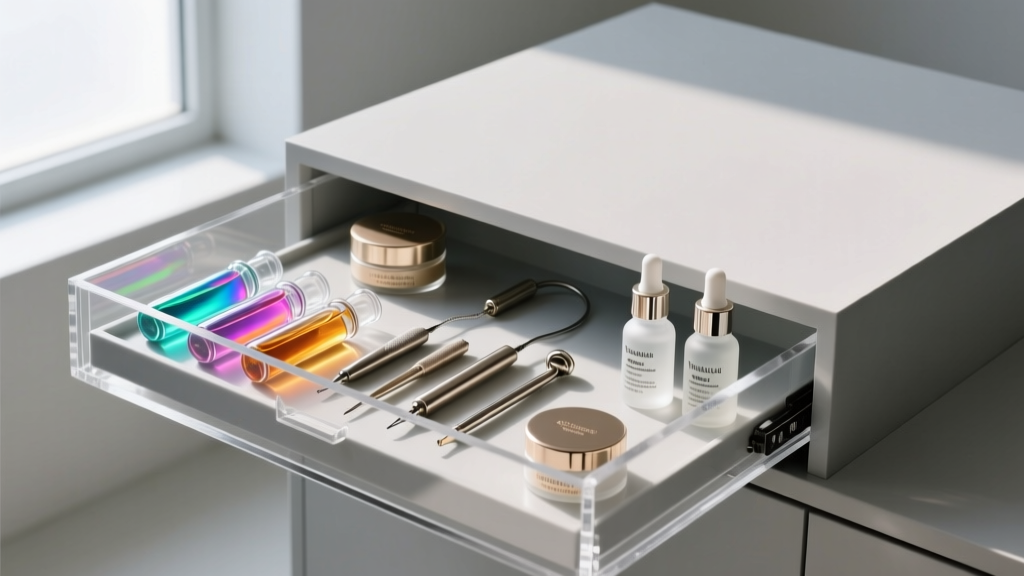
- Conductive Gels: Brand-specific gels (like NuFACE's Hydrating Leave-On Gel) cost around $39 for 2oz. With daily 5-minute use, a tube lasts roughly 4 weeks, equating to an annual 'tax' of $468 just to keep the device functional.
- Hack the System: Expert users often bypass proprietary gels by using high-molecular-weight Hyaluronic Acid serums or pure Aloe Vera gels, provided they contain no oils or active exfoliants (AHAs/BHAs), which can block conductivity and cause stinging.
- Replacement Parts: Advanced RF devices often require replacement heads every 6-12 months to maintain optimal thermal sensors, adding $50-$100 to your yearly overhead.
Decision Framework: Which Tier Should You Invest In?
Use this actionable checklist to determine your ideal entry point into skincare technology:
Choose the Beginner Tier If:
- You travel frequently and need TSA-friendly, compact tools.
- Your primary concerns are localized (e.g., under-eye bags, single brow lift).
- You have less than 10 minutes a day to dedicate to your routine.
- You are under 30 and focusing on preventative 'pre-juvenation' rather than structural correction.
Choose the Expert Tier If:
- You want hands-free treatments (allowing you to answer emails or watch TV while wearing an LED mask).
- You are targeting full-face erythema (redness), deep tissue inflammation, or systemic collagen loss.
- You are willing to track treatment cycles (e.g., 5 days a week for 60 days, followed by a maintenance protocol).
- You are over 35 and seeking non-invasive alternatives to clinical microneedling or Botox.
FAQ: Upgrading Your Skincare Tech
Can I use a beginner microcurrent wand and an expert LED mask together?
Absolutely. In fact, this is the optimal hybrid routine. Use a full-face LED mask like the CurrentBody for 10 minutes to boost cellular ATP, followed by a localized microcurrent wand to physically tone the zygomaticus muscles. The LED preps the tissue, making the muscle response to the current more efficient.
Do expert devices really last longer than beginner ones?
Yes, primarily due to battery architecture and build quality. Expert devices utilize high-capacity lithium-ion batteries designed to sustain high-output RF or multi-wave LED draws without degrading quickly. Beginner wands often suffer from battery swelling or motor fatigue after 18-24 months of daily use.
Are at-home RF devices safe for all skin tones?
Unlike certain laser therapies that target melanin, Radiofrequency targets water and tissue resistance, making it generally color-blind and safe for all Fitzpatrick skin types. However, users with metal implants, pacemakers, or active rosacea should consult a dermatologist before using thermal devices.
Written by
Nina PetrovaNina Petrova holds a Master's degree in Child Development from the Erikson Institute and a B.S. in Nursing from the University of Illinois at Chicago. She worked as a pediatric nurse for 6 years before transitioning to family technology consulting, bringing clinical rigor to her evaluations of kid-friendly gadgets, educational toys, and parental control software. Nina has reviewed over 400 children's tech products, testing each for safety compliance (CPSC and ASTM standards), developmental appropriateness across age groups, screen-time impact, and data privacy practices. She serves on the Children's Technology Review advisory board and has testified before the FTC on children's data protection in connected toys. Her reviews are trusted by parents and educators alike for their evidence-based approach to balancing technology benefits with child safety.