Beginner vs Expert: Choosing New Camping Gadgets in 2026
Discover how beginners and experts choose new camping gadgets. We compare power, lighting, and safety gear to help you build a smarter 2026 kit.
The Gadget Gap: How Experience Changes Your Gear Bag
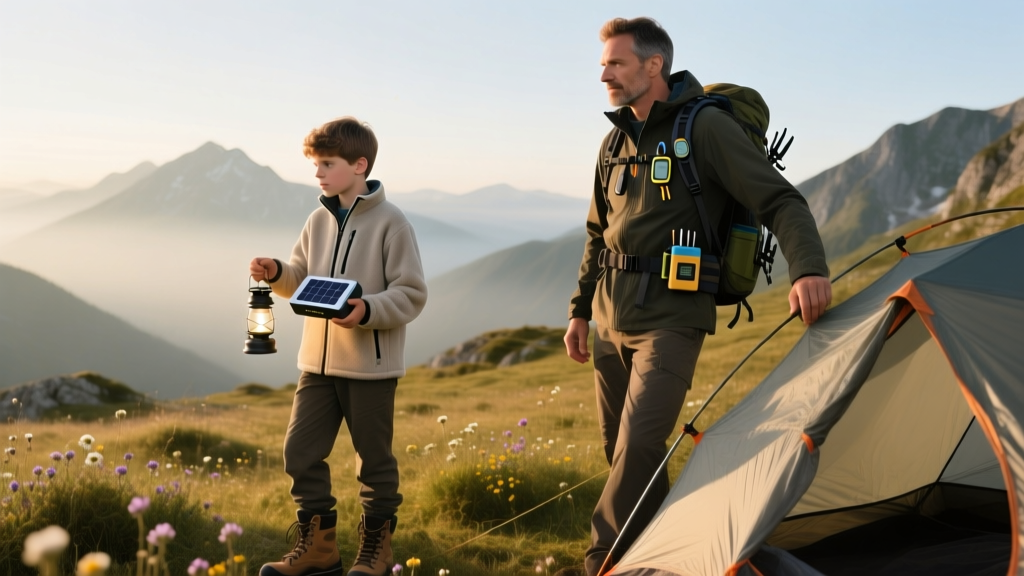
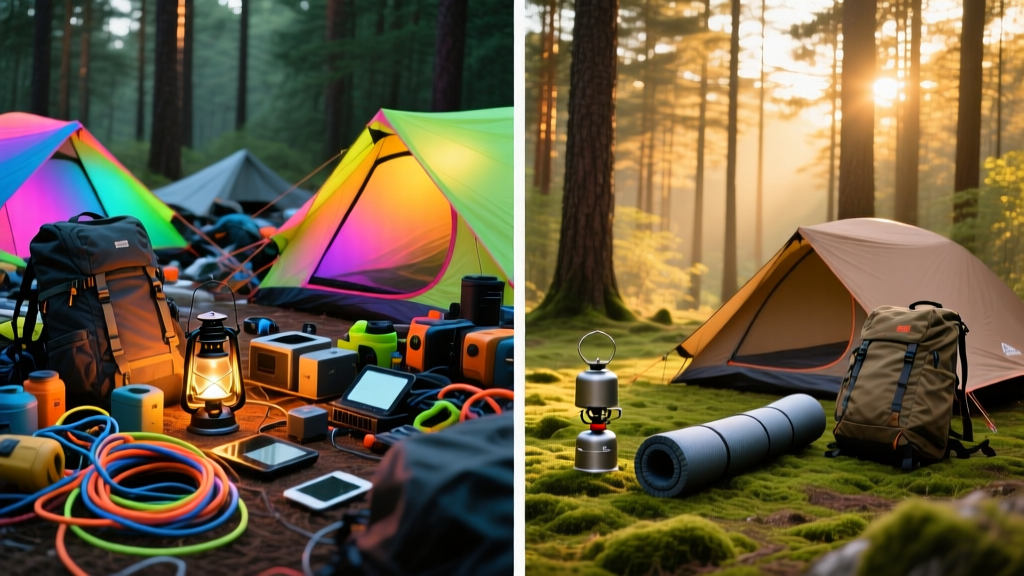
Every year, the outdoor market floods with new camping gadgets promising to revolutionize your time in the woods. For beginners, these gadgets represent comfort, convenience, and a digital tether to the modern world. For seasoned outdoorsmen and expedition experts, however, most of these novelties are dead weight, prone to failure, and fundamentally misunderstood. As we navigate the 2026 camping season, the divide between beginner and expert gear philosophies has never been more pronounced. Beginners buy for features; experts buy for reliability, efficiency, and repairability.
In this comprehensive comparison, we break down four critical gear categories—power, illumination, cooking, and communication—to contrast the gimmicky gadgets that clutter beginner campsites with the high-performance tools trusted by backcountry experts. Whether you are upgrading your car-camping rig or shaving ounces for a thru-hike, understanding this paradigm shift is the first step toward building a smarter, more resilient kit.
Power Solutions: The Solar Myth vs. High-Density Cells
The most common mistake novices make when evaluating portable power is falling for the "high-capacity solar power bank" trap. You have likely seen them: bulky, $35 bricks claiming 50,000mAh capacities with tiny, fold-out solar panels. Experts know this is a mathematical impossibility for primary charging.
The Math Behind the Myth
A standard 5cm x 10cm solar panel operating at 20% efficiency generates roughly 1 Watt of power under perfect, direct, equatorial sunlight. To fully charge a 50,000mAh (185Wh) battery at 1 Watt, it would take over 185 hours of uninterrupted, perfect sunlight. In real-world forest canopy conditions, that number stretches into the thousands. As noted in OutdoorGearLab's extensive solar charger testing, integrated solar panels on power banks are strictly for emergency trickle-charging, not primary generation.
Beginner Pick vs. Expert Pick
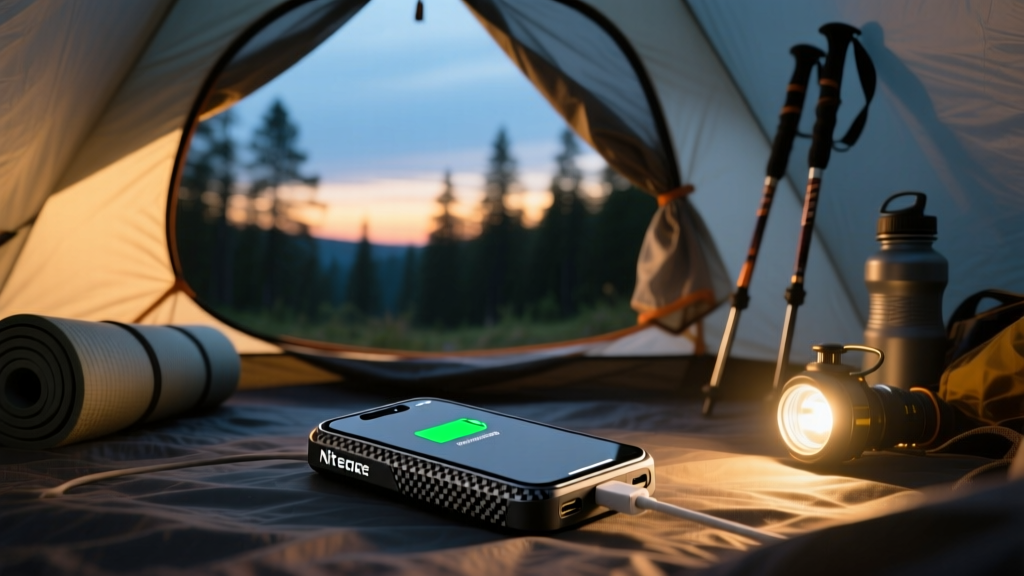
- Beginner Pick: Generic 50,000mAh Solar Bank ($35). Weighs 2.5 lbs, takes 4 days to charge via wall outlet, solar panel is virtually useless, and the cheap lithium-ion cells degrade rapidly in cold weather.
- Expert Pick: Nitecore NB10000 Gen 3 Carbon Fiber ($65). Weighs just 5.3 oz, offers 10,000mAh (enough for 2-3 smartphone charges), supports USB-C PD 20W fast charging, and utilizes high-density cells that perform better in sub-zero temperatures.
Expert Insight: "If you need massive capacity for basecamp, experts don't buy plastic solar bricks; they invest in LiFePO4 portable power stations like the Anker SOLIX C1000 ($799) or EcoFlow RIVER 2 Pro, which offer thousands of charge cycles and true solar input capabilities via dedicated, foldable 100W+ arrays."
Illumination: Bluetooth Novelties vs. Precision Optics
Walk into any big-box sporting goods store, and the most prominent new camping gadgets on display are RGB Bluetooth speaker lanterns. They boast 1,000-lumen outputs, app-controlled color palettes, and built-in audio. But when you are three days into a backcountry trip and the temperature drops, these gadgets become a liability.
The Lumens vs. Runtime Trade-off
Beginners assume more lumens equal a better lantern. Experts understand that beam profile and runtime dictate usability. A 1,000-lumen lantern will drain a standard 18650 battery in under 90 minutes. Furthermore, keeping a Bluetooth radio active to maintain an app connection drains the battery even when the light is off.
| Feature | Beginner RGB Speaker Lantern ($45) | Expert UCO Gravitor+ ($50) |
|---|---|---|
| Max Output | 1,000 Lumens (Unfocused) | 110 Lumens (Precision Diffuser) |
| Runtime (High) | 2.5 Hours | 10.5 Hours |
| Weight | 14.2 oz | 3.5 oz |
| Failure Points | Bluetooth module, speaker cone, app bugs | Single physical switch, USB-C port |
The UCO Gravitor+ utilizes a micro-prismatic diffuser to eliminate harsh shadows, providing enough ambient light to cook and read without blinding your campmates or destroying your natural night vision.
Camp Kitchen: Electric Gimmicks vs. Thermal Efficiency
The rise of overlanding and car camping has spawned a wave of 12V electric camping gadgets, from heated mugs to portable electric skillets that plug directly into your vehicle's cigarette lighter. While they seem like a convenient way to avoid carrying fuel canisters, they fundamentally ignore the laws of thermodynamics and automotive electrical limits.
The 12V Amperage Bottleneck
Most vehicle 12V accessory outlets are fused at 10A to 15A, capping your maximum power draw at 120W to 180W. To boil one liter of water starting at 50°F (10°C) using a 120W electric heating element takes approximately 45 to 60 minutes. In contrast, a dedicated canister stove outputs roughly 10,000 BTUs (approx. 2,900W of thermal energy).
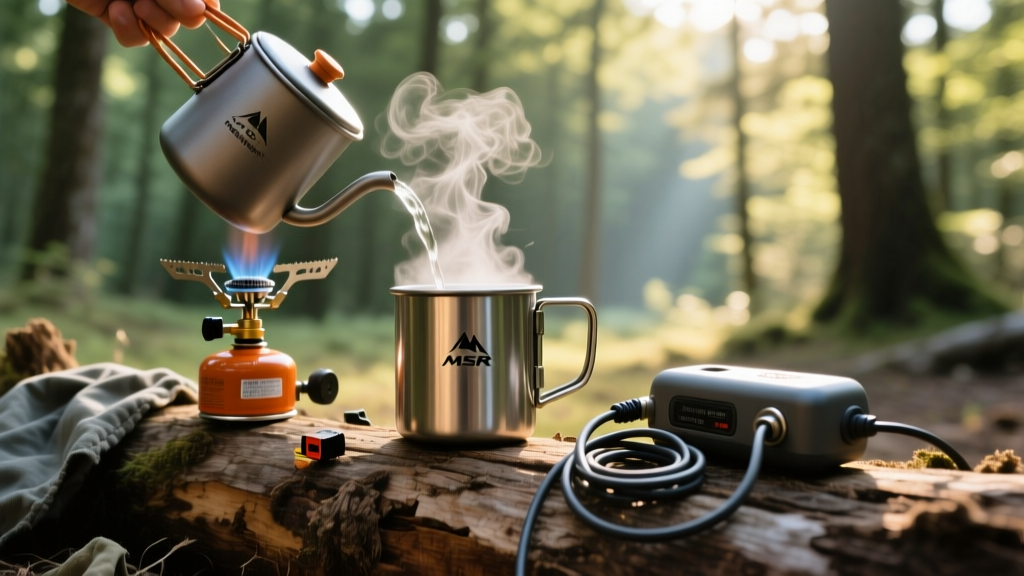
According to REI's comprehensive camp stove guide, thermal efficiency and wind resistance are the true metrics of a quality cooking system. The MSR PocketRocket Deluxe ($75) features a push-button piezo igniter, a built-in wind clip, and a pressure regulator that maintains a rolling boil in just 3.5 minutes, even in cold, high-altitude environments. It weighs a mere 2.9 oz and requires no heavy wiring or vehicle idling.
Safety and Navigation: Smartwatches vs. Dedicated Satcom
In 2026, wearable tech is more advanced than ever. Many beginners rely on premium smartwatches, like the Apple Watch Ultra 2 or Garmin Fenix 8, assuming that built-in offline maps and SOS features are sufficient for deep wilderness travel. This is a potentially fatal miscalculation.
The Cellular Dead Zone Reality
Smartwatch SOS features rely on cellular networks. Once you step outside a cell tower's range—which happens within minutes of entering most national park backcountry zones—your $800 smartwatch becomes nothing more than a heavy, offline step-counter. Experts never rely on cellular-dependent gear for life-saving communications.
The Expert Standard: Iridium Satellite Networks
Experts carry dedicated satellite communicators like the Garmin inReach Mini 2 ($400) or the Zoleo Satellite Communicator ($250). As highlighted in Backpacker Magazine's satcom reviews, these devices connect directly to the Iridium satellite network, offering true global coverage, including the poles and deep canyons. They offer two-way text messaging, breadcrumb trail tracking, and a dedicated, hardware-based SOS button that triggers a coordinated search-and-rescue response, regardless of cell service.
The 2026 Decision Framework: Upgrading Your Kit
Transitioning from a beginner to an expert mindset requires applying a strict decision framework before purchasing any new camping gadgets. Run every potential purchase through the Rule of Three:
- Single-Purpose Reliability: Does this gadget do one thing exceptionally well, or is it a "Swiss Army Knife" that does five things poorly? Experts favor modular, single-purpose tools.
- Redundancy vs. Dependency: If this gadget's battery dies or its circuit board shorts, do I have a manual backup? (e.g., carrying a ferrocerium rod alongside your piezo igniter).
- The Repairability Index: Can this be fixed in the field with duct tape, a multi-tool, or basic soldering? Sealed, glued-together RGB gadgets fail this test; mechanical stoves and simple LED circuits pass.
Frequently Asked Questions
Q: Are solar panels completely useless for camping?
A: No, but they must be sized correctly. Experts use dedicated, foldable 60W to 120W monocrystalline panels (like those from Jackery or Bluetti) paired with a separate charge controller and power station, rather than relying on the tiny panels glued to the back of cheap power banks.
Q: What is the best new camping gadget for beginners to buy first?
A: A high-quality, rechargeable headlamp with a red-light mode (like the BioLite HeadLamp 425). It frees up your hands, preserves night vision, and prevents you from blinding your campmates, solving multiple campsite issues simultaneously.
Q: Do I need a satellite messenger if I only camp in state parks?
A: If your state park has reliable cell service and well-marked trails, a basic GPS watch or phone app may suffice. However, if you venture into slot canyons, dense forests, or winter environments where weather can shift rapidly, a dedicated Satcom device is a non-negotiable safety net.
Written by
Priya SharmaPriya Sharma holds a Ph.D. in Acoustical Engineering from the University of Southampton and a B.Tech in Electronics from IIT Delhi. She has spent 9 years as a consumer electronics journalist, with deep specialization in audio equipment, camera systems, and assistive technology. Priya is an active member of the Audio Engineering Society (AES) and has co-authored papers on spatial audio perception published in the Journal of the Acoustical Society of America. Her reviews of headphones, portable DACs, and studio monitors include objective measurements using Audio Precision analyzers alongside subjective listening tests. She also serves on the advisory board of the Global Accessibility Reporting Initiative (GARI), evaluating mobile devices for users with visual and hearing impairments.