Top Gadgets for Dad 2026: Beginner vs Expert Power Tools
Compare top gadgets for dad in 2026 with our beginner vs expert power tool guide. Discover exact models, pricing, and upgrade paths for DIY fathers.
The DIY Divide: Why Skill Level Dictates Gadget Needs
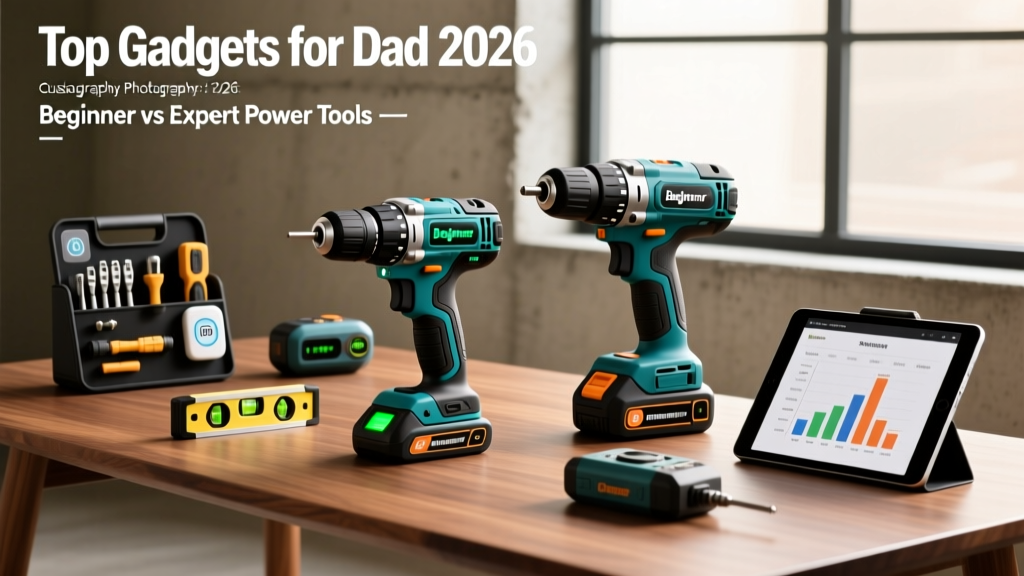
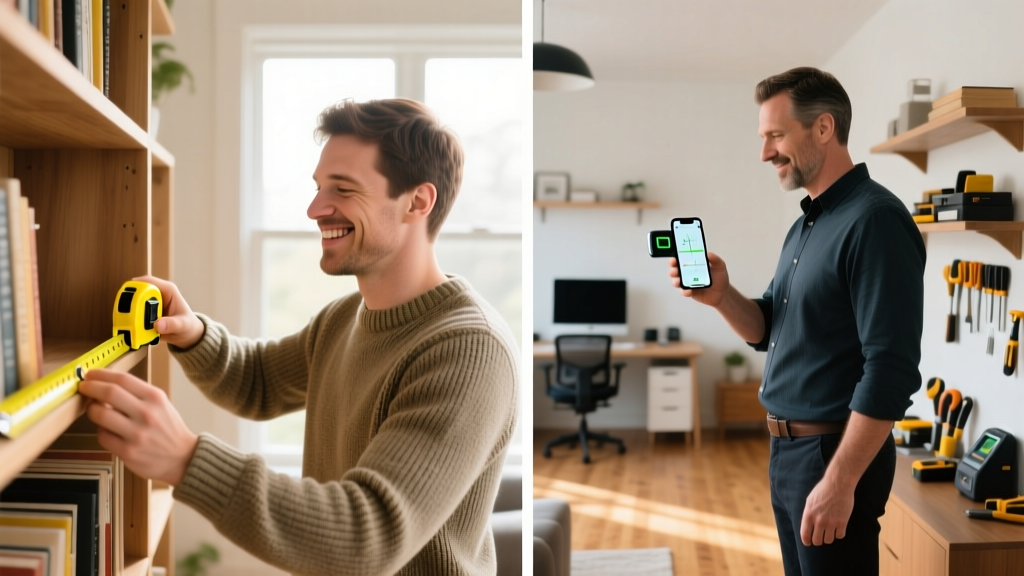
Shopping for fathers who enjoy home improvement requires navigating a massive gap between weekend hobbyists and master craftsmen. A beginner needs forgiveness, safety features, and low barrier-to-entry pricing. An expert demands telemetry, ruggedized tolerances, and ecosystem integration. Buying the wrong tier leads to frustration: beginners are overwhelmed by complex digital interfaces, while experts are bottlenecked by the thermal throttling and mechanical slop of entry-level gear. This guide dissects the top gadgets for dad across three critical DIY categories, contrasting entry-level picks with professional-grade upgrades to help you match the tool to the craftsman.
Category 1: Precision Measurement (Laser Distance Meters)
The days of dragging a 25-foot Stanley tape measure across a muddy job site are ending. Digital laser measures calculate area, volume, and Pythagorean indirect heights in seconds. However, the difference in sensor quality between a $40 gadget and a $180 professional instrument is stark, particularly regarding the ISO 16331-1 standard for laser accuracy in varying light conditions.
Beginner Pick: Bosch GLM 20 ($45)
The Bosch GLM 20 is the quintessential entry-level gadget. It measures up to 65 feet with an accuracy of +/- 1/8 inch. It features a simple one-button operation and a backlit display. Failure Mode: The GLM 20 lacks a target camera and relies on a basic Class II laser. In direct outdoor sunlight, the red dot becomes entirely invisible past 15 feet, rendering it useless for exterior siding or deck layout. It is strictly an indoor, single-room gadget.
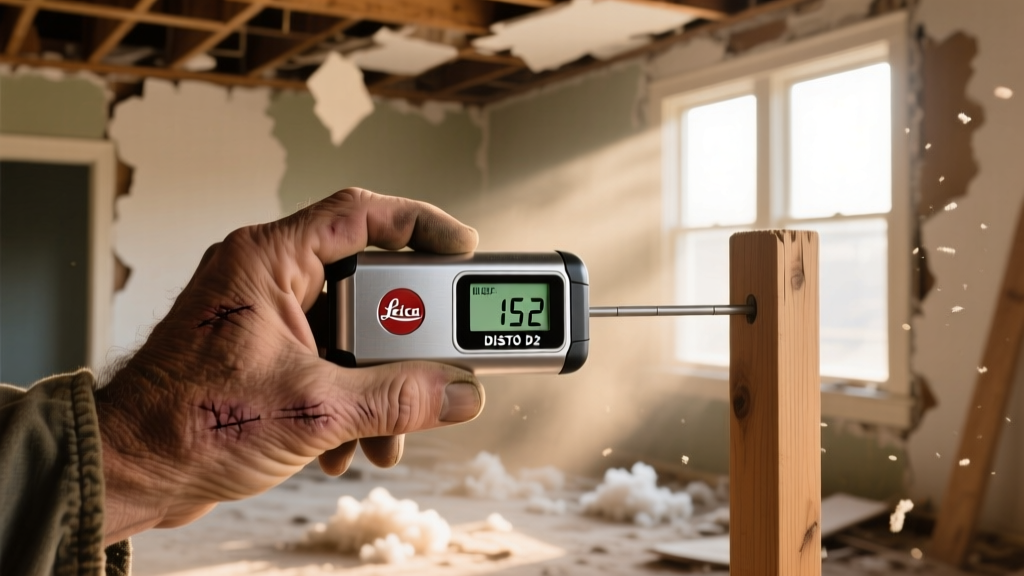
Expert Pick: Leica DISTO D2 ($179)
For the dad framing additions or building custom cabinetry, the Leica DISTO D2 is the benchmark. It offers a 330-foot range with 1/16-inch accuracy and is ISO 16331-1 certified. The integrated digital point finder (a 4x zoom camera on the screen) allows for precise outdoor targeting in full sun. Furthermore, Bluetooth 4.0 integration pushes measurements directly into the Leica DISTO Plan app, generating scaled floor plans in real-time.
Measurement Gadget Comparison Matrix
| Feature | Bosch GLM 20 (Beginner) | Leica DISTO D2 (Expert) |
|---|---|---|
| Max Range | 65 ft | 330 ft |
| Accuracy | +/- 1/8 in | +/- 1/16 in |
| Outdoor Viability | Poor (No camera) | Excellent (Digital point finder) |
| Durability Rating | Unrated | IP54 (Dust/Splash proof) |
| Data Export | None | Bluetooth to CAD/App |
Category 2: Oscillating Multi-Tools (The Ultimate Problem Solver)
Oscillating multi-tools vibrate a blade at up to 20,000 oscillations per minute (OPM) to plunge-cut drywall, undercut door jambs, and scrape grout. According to safety guidelines outlined by OSHA for hand and power tools, high-vibration tools require strict ergonomic management to prevent hand-arm vibration syndrome (HAVS). This is where the beginner vs. expert divide becomes a matter of physical health.
Beginner Pick: Ryobi 18V ONE+ HP ($119 bare tool)
Ryobi offers exceptional value for the casual user. The 18V ONE+ HP brushless model delivers up to 20,000 OPM and features a tool-free blade change lever. The Trade-off: It uses a standard OIS (Oscillating Interface System) flange. Under heavy lateral load—such as cutting through dense oak or hardened grout—the flat blade connection can slip, stripping the blade mounting holes and ruining the accessory. Additionally, the un-damped motor housing transfers high-frequency vibration directly into the user's palms after 10 minutes of continuous use.
Expert Pick: Fein MultiMaster 500 ($399 kit)
Fein invented the oscillating tool category, and the MM 500 remains the undisputed king for professionals. It utilizes the Starlock Plus 3D mounting system, which physically locks the blade into a cupped interface, guaranteeing zero slip and 100% torque transfer. More importantly, it features Fein's Anti-Vibration System (AVS), which decouples the motor housing from the grip, reducing felt vibration by up to 70%. For a dad spending weekends restoring historic homes, this tool prevents fatigue and ensures surgical precision.
Category 3: Smart Fastening (Digital Torque Wrenches)
For the automotive enthusiast dad, proper torque specification is non-negotiable. Over-torquing stretches bolts and warps brake rotors; under-torquing leads to catastrophic wheel detachment. Digital torque wrenches have largely replaced mechanical click-types in high-end garages due to their ability to log data and alert the user via LED and haptic feedback.
Beginner Pick: GearWrench 1/2" Electronic Torque Wrench ($140)
The GearWrench 85076 provides a digital readout and a buzzer/vibration alert when you reach 90% of your target torque, allowing you to finish the final degrees slowly. It operates on standard AAA batteries and offers +/- 2% accuracy in the clockwise direction. Edge Case: The strain gauge sensor in this tier is highly susceptible to temperature drift. If left in a freezing garage overnight, the digital readout will require a 15-minute acclimation period and a zero-reset before use, otherwise, readings can skew by up to 5%.
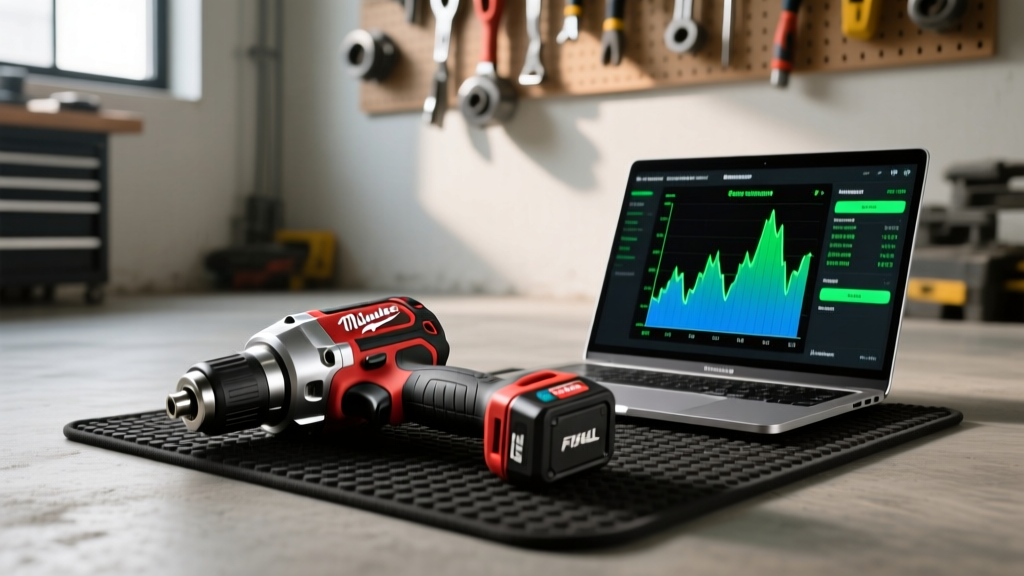
Expert Pick: Milwaukee M18 FUEL 1/2" Digital Torque Wrench ($549)
The Milwaukee 2862-20 is a paradigm shift. It combines a brushless motor (for fast run-down of long studs) with an electronic torque limiting clutch. It measures from 10 to 250 ft-lbs with +/- 2% accuracy across the entire range. Through the ONE-KEY app, dads can upload specific vehicle torque sequences (e.g., a 5-star pattern for a specific BMW lug nut sequence) and the tool will track and log every single fastener to the cloud, generating a PDF compliance report. It is the ultimate gadget for the dad who tracks his builds like an aerospace engineer.
The Battery Ecosystem Trap: A Warning for Upgrading Dads
When selecting top gadgets for dad, the tool itself is only half the equation; the battery ecosystem is the long-term financial commitment. Expert resources like This Old House frequently emphasize that locking into a specific voltage platform dictates future purchasing behavior.
- The 12V vs. 18V/20V Dilemma: Beginners often buy 12V tools for their lightweight ergonomics. However, as projects scale from assembling IKEA furniture to building a 10x12 shed, 12V motors will thermally throttle and shut down. Always default to the 18V/20V Max platforms for long-term viability.
- Amp-Hour (Ah) Misconceptions: A 5.0Ah battery doesn't just run longer than a 2.0Ah battery; it delivers higher peak current due to having more parallel cells. Expert cordless tools (like the Milwaukee M18 FUEL) will actively limit power output if they detect a slim 2.0Ah pack to prevent battery damage.
- The Bare Tool Strategy: Never buy a kit for an expert dad who already owns the brand. Buy the 'bare tool' and invest the saved $100 into high-capacity 8.0Ah or 12.0Ah batteries, which drastically reduce the voltage sag that causes brushless motors to stall under heavy loads.
Final Verdict: When to Cross the Chasm
Upgrading a dad from beginner to expert gadgets shouldn't be done arbitrarily. If his projects are strictly cosmetic or seasonal, the Bosch GLM 20 and Ryobi multi-tool provide excellent ROI without cluttering the workbench with unnecessary telemetry. However, if he is pulling permits, restoring vehicles, or building structural additions, the Leica DISTO, Fein MultiMaster, and Milwaukee ONE-KEY torque wrenches transition from 'luxury gadgets' to mandatory instruments of precision and safety. Match the tool's tolerance to the project's stakes.
Written by
Sarah KimSarah Kim holds certifications from both NASM (National Academy of Sports Medicine) and ACE (American Council on Exercise), along with a B.S. in Kinesiology from UCLA. She has spent 7 years bridging the gap between exercise science and consumer technology, evaluating fitness trackers, smart scales, sleep monitors, and recovery devices with clinical precision. Sarah has tested over 200 health-focused wearables in controlled lab settings and real-world training environments, comparing device data against gold-standard medical equipment like ECG monitors and DEXA scans. She consults for three fitness app companies on data accuracy standards and has presented research on wearable reliability at the American College of Sports Medicine (ACSM) annual conference. Her reviews emphasize clinical validity over marketing claims.