Best Camera Gadgets for iPhone Under $50: 2026 Guide
Discover the best camera gadgets for iPhone under $50 in 2026. We test budget lighting, macro lenses, ND filters, and audio gear for mobile creators.
The $50 Threshold: What to Expect in 2026
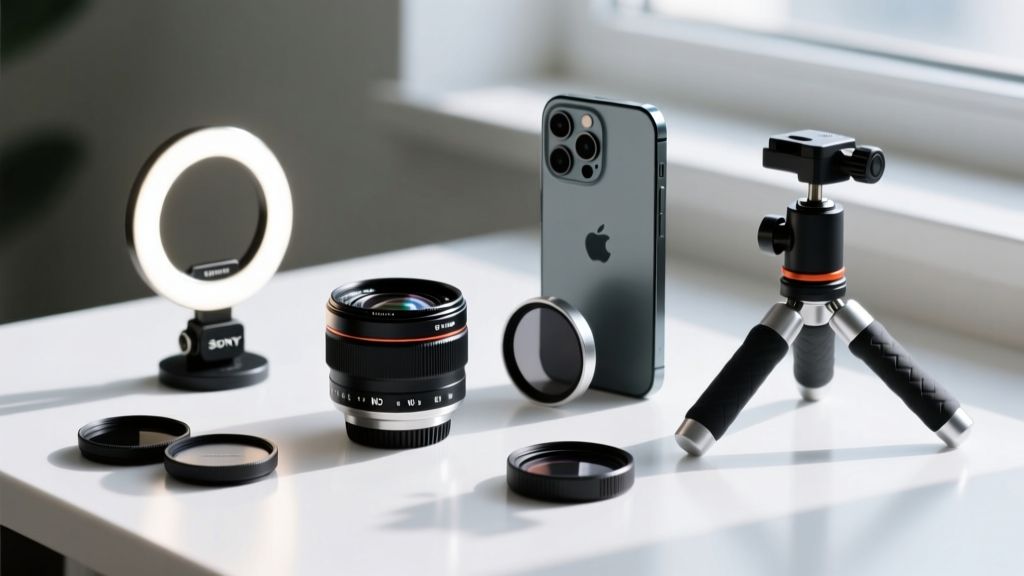
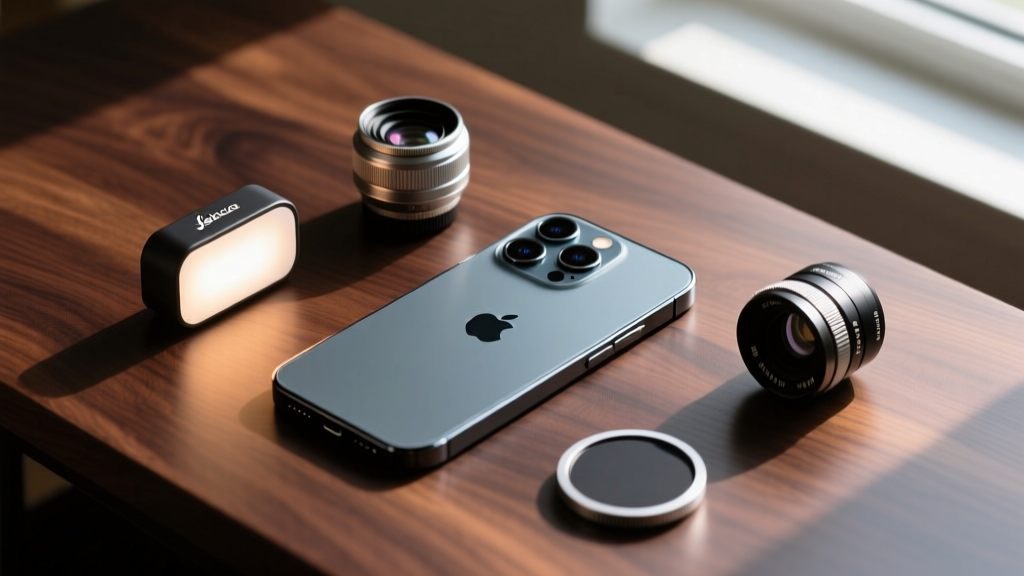
Upgrading your mobile photography kit does not require dropping hundreds of dollars on motorized gimbals or cinema-grade anamorphic lenses. The best camera gadgets for iPhone on a strict budget focus on solving specific optical and acoustic bottlenecks that even the iPhone 16 Pro Max and iPhone 17 series cannot fix with computational photography alone. Specifically, we are targeting hard lighting, macro focal lengths, motion blur in video, and wireless audio latency.
According to DXOMARK's smartphone testing protocols, mobile sensors still struggle with high-contrast edge retention and low-light noise when digital zooming or relying on small on-sensor pixels. Physical glass and external photon collection remain the only reliable fixes. Below, we break down five pieces of gear under $50 that yield measurable improvements in your raw files and 4K Dolby Vision footage.
Budget iPhone Gear Matrix
| Gadget | Price (2026) | Weight | Primary Use Case | Key Specification |
|---|---|---|---|---|
| Ulanzi VL49 RGB | $25.99 | 68g | Fill light / Macro | 2500K-9000K, CRI 95+ |
| Apexel 100mm Macro | $35.99 | 112g | Macro / Product | 2x Optical, 100mm focal |
| Freewell Snap-On ND | $39.99 | 14g | Video / 24fps Cinematic | ND2 to ND400 (Magnetic) |
| Ulanzi MT-16 Tripod | $24.90 | 175g | Vlogging / Timelapse | Extends to 250mm, 1.5kg load |
| Boya BY-V2 Mic | $34.99 | 8g (TX) | Run-and-gun Audio | 2.4GHz, 48kHz/16-bit |
Deep Dive: The 5 Best Camera Gadgets for iPhone on a Budget
1. Ulanzi VL49 RGB Pocket Light
The built-in iPhone flash is a harsh, cool-toned point light source that destroys skin tones and causes red-eye. The Ulanzi VL49 provides a broad, diffused 600-lux output at 0.5 meters. It features a stepless color temperature dial ranging from 2500K (tungsten) to 9000K (daylight).
- The Edge Case: Battery life drops to roughly 40 minutes if you run it at 100% brightness. For sustained interview setups, dial it back to 50% brightness, which pushes the 2000mAh battery to nearly 2.5 hours.
- Mounting: Includes a standard 1/4-inch thread and a cold shoe adapter, allowing you to stack it directly on top of a tripod or cage.
2. Apexel 100mm 2-in-1 Macro Lens
While the iPhone's native macro mode relies on the 13mm ultrawide lens (which introduces edge distortion and requires you to block your own light by getting 2cm from the subject), the Apexel 100mm allows you to shoot macro from 15cm away. This physical distance lets natural light hit the subject and prevents casting shadows.
3. Freewell Snap-On Variable ND Filter (Magnetic)
When shooting 4K video at 24fps or utilizing the iPhone's 120fps Dolby Vision capabilities, you must adhere to the 180-degree shutter rule (shutter speed = 1 / double the frame rate) to achieve natural motion blur. In bright daylight, your iPhone will automatically bump the shutter speed to 1/2000s, resulting in jittery, hyper-sharp video. Apple's advanced camera hardware demands physical light reduction to maintain cinematic motion.
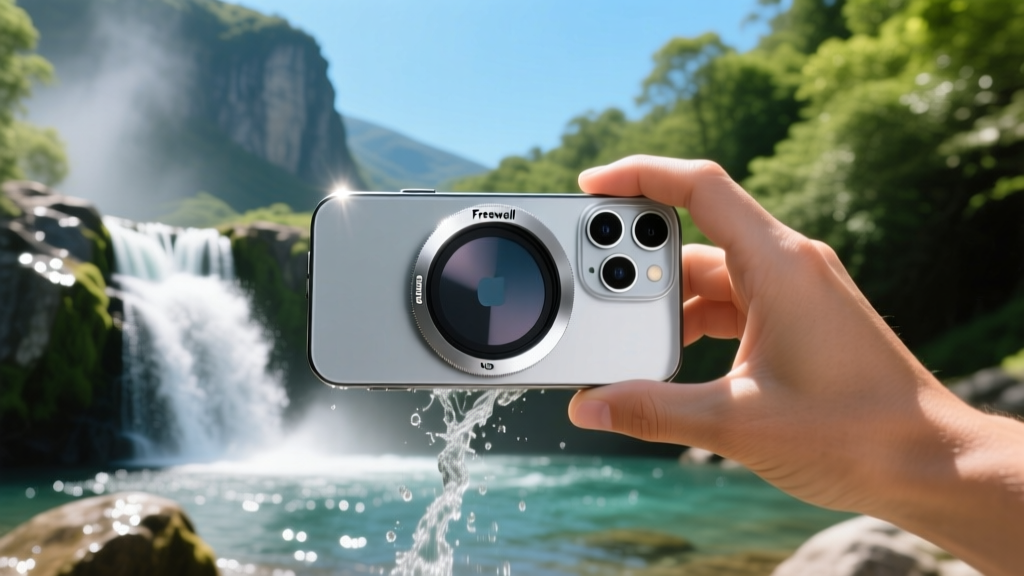
The Freewell magnetic variable ND (ND2-ND400) snaps directly over the main 24mm lens. It allows you to lock your exposure and physically cut up to 8.6 stops of light without degrading the image quality or introducing the color shifts common in cheap resin filters.
4. Ulanzi MT-16 Extension Tripod
Most budget tripods suffer from weak ball-head friction, causing heavy phones like the 227g iPhone 16 Pro Max to droop mid-shoot. The MT-16 features a high-friction ball head rated for a 1.5kg payload. It collapses to 140mm for pocket storage and extends to 250mm via a 5-section aluminum center column.
- Pro Tip: The included cold-shoe mount adapter allows you to attach the Ulanzi VL49 or Boya mic directly to the tripod, creating a complete one-handed vlogging rig for under $75 total.
5. Boya BY-V2 Ultra-Compact Wireless Mic
Onboard iPhone microphones capture excessive wind noise and room reverb. The Boya BY-V2 plugs directly into the USB-C port (or Lightning, depending on your model) and utilizes a 2.4GHz frequency to transmit 48kHz/16-bit audio with a 50-meter line-of-sight range.
- Failure Mode: In highly congested RF environments (like trade show floors or busy city centers), 2.4GHz can experience dropouts. Keep the transmitter within 3 meters of the receiver in these specific scenarios.
⚠️ MagSafe Alignment Warning
When using magnetic accessories like the Freewell ND filter or magnetic phone clamps, bare-metal alignment is critical. Apple's MagSafe guidelines note that third-party cases without built-in magnetic rings will reduce the holding force by up to 80%. If your accessory relies on magnets, use a certified MagSafe case or mount directly to the titanium/glass chassis of the phone to prevent catastrophic drops.
Field-Tested Pairings for Specific Scenarios
Scenario A: The Golden Hour Macro
Kit: Apexel 100mm Macro + Ulanzi VL49 RGB.
Execution: Attach the Apexel clip over the main 24mm lens. Set the iPhone to ProRAW. Position the subject (e.g., a watch dial or insect) and place the VL49 at a 45-degree angle, dialed to 3500K to simulate warm sunset light. The physical distance provided by the 100mm focal length ensures the phone does not block the ambient light.
Scenario B: The Run-and-Gun Travel Vlog
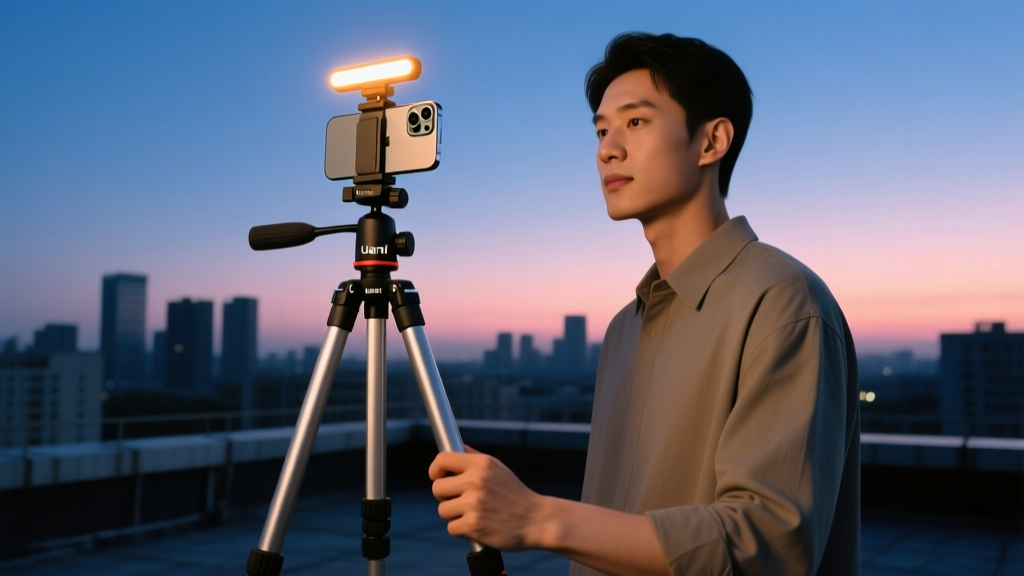
Kit: Ulanzi MT-16 + Boya BY-V2 + Freewell ND Filter.
Execution: Snap the ND filter over the main lens to lock the shutter speed at 1/50s for 24fps video. Clip the Boya transmitter to your collar. Extend the MT-16 to its maximum 250mm height to act as a makeshift monopod, keeping the camera at eye level while walking. This combination eliminates wind noise, ensures cinematic motion blur, and stabilizes the footage via the iPhone's Action Mode.
Maximizing Your Budget
The pursuit of the best camera gadgets for iPhone is not about replacing the device's internal computational engine; it is about feeding it better raw data. By controlling the photons hitting the sensor with physical ND filters, expanding the optical reach with dedicated macro glass, and isolating audio frequencies with wireless lavaliers, a sub-$150 total investment will yield production value that rivals dedicated mirrorless setups in mobile-first environments.
Written by
Ryan TanakaRyan Tanaka holds a B.S. in Mechanical Engineering from Oregon State University and is a certified AWS Solutions Architect. He has built over 80 custom electronics projects ranging from CNC machines to IoT sensor networks, and has reviewed development boards, 3D printers, soldering equipment, and maker tools for the past 6 years. Ryan is an active contributor to 12 open-source hardware projects on GitHub and teaches monthly workshops at three hackerspaces across the Pacific Northwest. His reviews combine engineering rigor with accessibility — he evaluates products not just on specs but on documentation quality, community support, and learning curve for beginners. He has presented at Maker Faire Bay Area, Open Hardware Summit, and the Adafruit community showcase, and maintains a popular blog documenting his build processes.