Essential Gadgets for Dementia Patients: 2026 Safety & Care Guide
Solve wandering, medication, and sundowning challenges with our practical 2026 guide to the best gadgets for dementia patients and caregivers.
The Reality of Dementia Caregiving in 2026
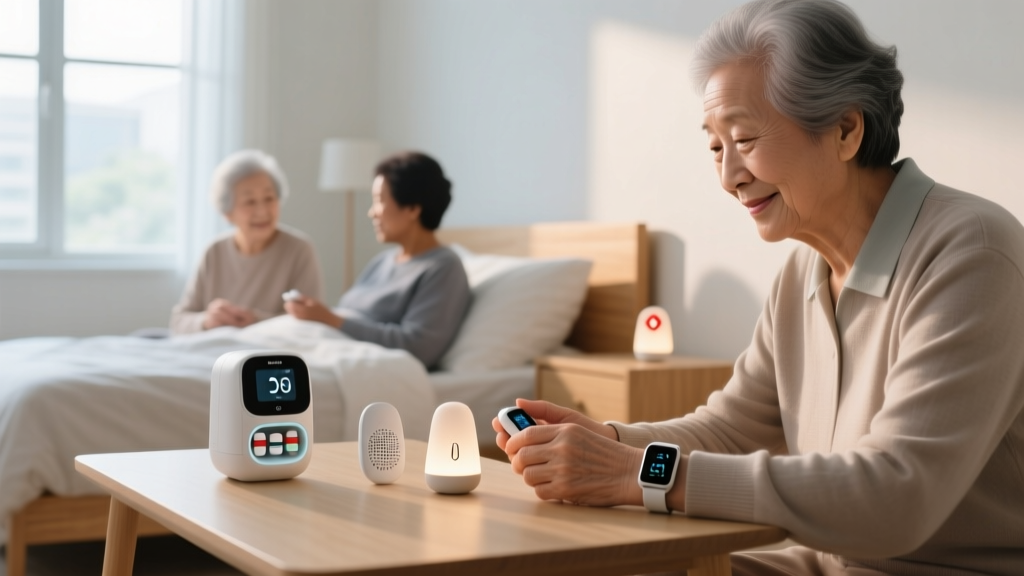
Caring for a loved one with cognitive decline requires more than patience; it requires a proactive, technology-assisted strategy. According to the Alzheimer's Association, six in ten people with dementia will wander, and polypharmacy (managing multiple daily medications) introduces severe risks of missed doses or accidental double-dosing. The market for gadgets for dementia patients has evolved past simple panic buttons. Today's adaptive devices leverage LTE geofencing, automated dispensing, and circadian lighting to solve specific behavioral and safety challenges. This guide bypasses generic smart home lists to focus on practical, problem-solving hardware with real-world failure modes and exact costs.
Problem 1: Wandering and Elopement
Wandering is often triggered by unmet needs or spatial disorientation. The primary goal is immediate location tracking without relying on the patient to operate a device.
Practical Pick: AngelSense GPS Tracker vs. Apple Watch SE (LTE)
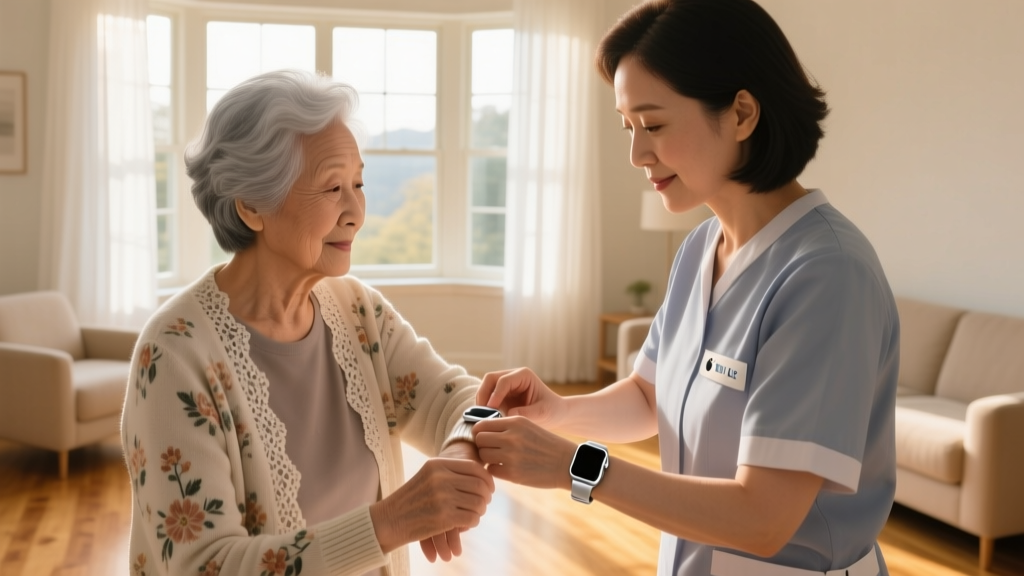
The Apple Watch SE (3rd Gen, LTE) ($249 + $15/month cellular plan) offers excellent fall detection and two-way audio. However, its fatal flaw for dementia care is the 18-hour battery life and the ease with which a confused patient can unclasp it. If the watch dies or is removed, the caregiver loses all visibility.
Conversely, the AngelSense GPS Tracker ($119 upfront + $45/month) is designed specifically for elopement. It features a 100-hour battery life and utilizes a specialized locking pin or harness that prevents the patient from removing the device. Furthermore, AngelSense offers indoor location tracking via Wi-Fi triangulation, which is critical when a patient wanders inside a large assisted living facility where GPS signals fail.
When setting up geofences (virtual boundaries) on either device, expect a 10-to-15-second GPS polling delay. If a patient exits a front door and immediately enters a vehicle moving at 30 mph, they may be a quarter-mile away before the alert triggers. Always pair GPS trackers with physical door alarms (like the $25 GE Personal Security Window/Door Alarm) for zero-latency exit detection.
Problem 2: Medication Adherence and Polypharmacy
As cognitive function declines, patients lose the executive function required to sort weekly pill organizers. The National Institute on Aging emphasizes that automated dispensers reduce hospital readmissions related to adverse drug events.
Practical Pick: Hero Health Smart Dispenser
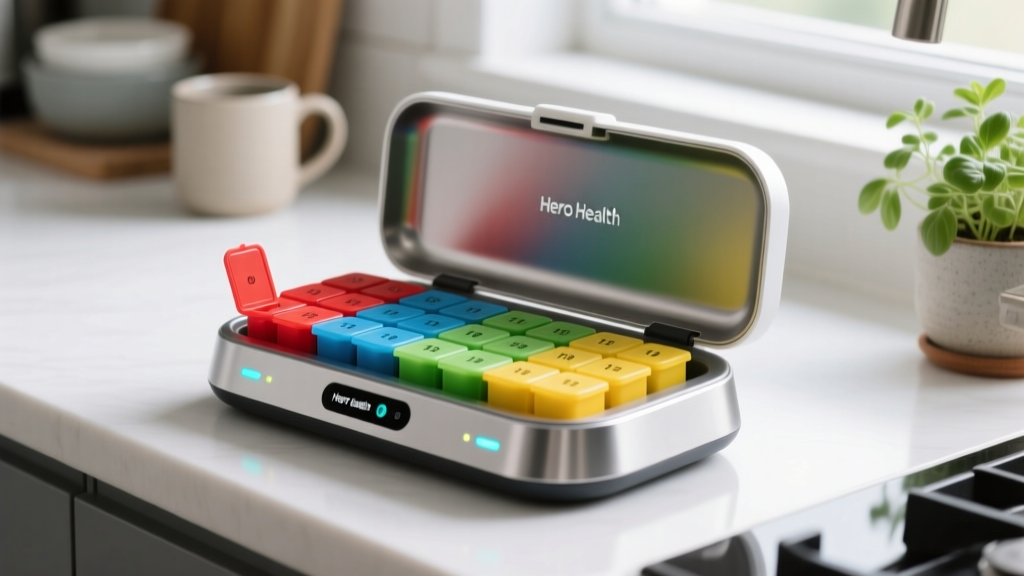
The Hero Health Smart Medication Dispenser ($299 upfront + $40/month subscription) stores up to 90 days of medication across 10 canisters. At the scheduled time, it chimes, dispenses the exact pills into a cup, and sends a push notification to the caregiver's smartphone. If the patient does not take the medication within a set window, the machine locks the pills away to prevent accidental double-dosing and alerts the caregiver.
Real-World Failure Modes to Anticipate
- Gel-Cap Jamming: The Hero dispenser relies on gravity and mechanical agitation. Softgels, liquid-filled capsules, or oddly shaped gummies frequently jam the dispensing chute. Stick to standard hard tablets and caplets.
- Wi-Fi Dependency: The device requires a stable 2.4GHz Wi-Fi connection to sync with the cloud and trigger caregiver alerts. If your router reboots or the ISP drops the connection, the machine will still dispense locally, but you will not receive the 'missed dose' alert.
Problem 3: Sundowning and Circadian Disruption
Sundowning—increased confusion, agitation, and anxiety in the late afternoon and evening—affects up to 20% of Alzheimer's patients. This is heavily linked to the degradation of the suprachiasmatic nucleus, the brain's internal clock, which becomes less responsive to ambient light cues.
Practical Pick: Hatch Restore 2 & Smart Bulb Integration
To combat sundowning, caregivers must artificially manipulate the patient's circadian rhythm using specific light temperatures (measured in Kelvin).
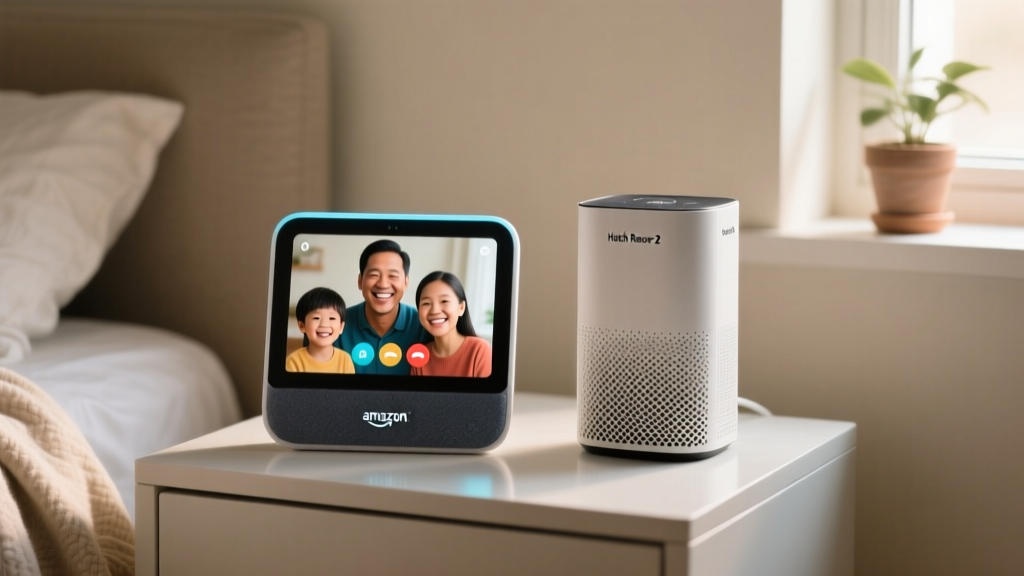
During the day, use smart bulbs (like the Philips Hue White Ambiance, $25 per bulb) set to 5000K (cool daylight) to promote alertness. At 5:00 PM, transition the lighting to 2700K (warm amber) to stimulate melatonin production. The Hatch Restore 2 ($129) serves as an excellent bedside companion. Its dedicated 'Sleep' routines use low-level, red-spectrum light (which does not inhibit melatonin) combined with non-looping pink noise, which is proven to be more effective than white noise for masking disruptive household sounds that trigger nighttime waking.
Problem 4: Emergency Communication and Aphasia
In the middle to late stages of dementia, patients often develop aphasia (difficulty producing or comprehending speech) or dysarthria (slurred speech). Standard voice-activated assistants frequently fail to understand these speech patterns, leading to frustrating loops and abandoned use.
Practical Pick: Amazon Echo Show 8 (3rd Gen) with Alexa Care Hub
The Echo Show 8 ($149) combined with the free Alexa Care Hub feature transforms the device into a passive monitoring and communication node. Care Hub allows designated family members to receive automated alerts if the patient's activity patterns change (e.g., no motion detected in the kitchen by 9:00 AM).
More importantly, the 'Drop In' feature allows a caregiver to initiate a two-way video call instantly, without requiring the patient to press 'accept.' This bypasses the need for complex touchscreen navigation or clear verbal commands during an emergency.
'When configuring Alexa for a patient with dysarthria, disable the 'Hey Alexa' wake word and rely solely on the Care Hub Drop-In feature. False wake-word activations caused by slurred speech or television background noise will rapidly degrade the device's local processing cache and cause system lag.'
Decision Matrix: Matching the Gadget to the Patient's Stage
Selecting the right gadgets for dementia patients requires matching the technology to their current cognitive and physical capabilities. Use this framework to prioritize your purchases.
| Primary Challenge | Patient Capability | Recommended Hardware | Estimated Monthly Cost |
|---|---|---|---|
| Active Wandering | Can remove wristwear; high mobility | AngelSense GPS (Harness mount) | $45/month |
| Medication Forgetting | Can swallow pills; cannot sort them | Hero Health Smart Dispenser | $40/month |
| Sundowning / Insomnia | Easily agitated by loud noises | Hatch Restore 2 + Philips Hue | $0 (One-time $179) |
| Isolation / Aphasia | Cannot use smartphones or touchscreens | Echo Show 8 (Care Hub Drop-In) | $0 (One-time $149) |
Final Implementation Advice
Do not introduce all gadgets simultaneously. Patients with dementia experience high cognitive load when their environment changes. Introduce one device per week, starting with passive monitors (like lighting and Care Hub) before moving to active wearables or dispensers. Maintain physical routines alongside the technology; gadgets are force multipliers for caregivers, not replacements for human oversight.
Written by
Ryan TanakaRyan Tanaka holds a B.S. in Mechanical Engineering from Oregon State University and is a certified AWS Solutions Architect. He has built over 80 custom electronics projects ranging from CNC machines to IoT sensor networks, and has reviewed development boards, 3D printers, soldering equipment, and maker tools for the past 6 years. Ryan is an active contributor to 12 open-source hardware projects on GitHub and teaches monthly workshops at three hackerspaces across the Pacific Northwest. His reviews combine engineering rigor with accessibility — he evaluates products not just on specs but on documentation quality, community support, and learning curve for beginners. He has presented at Maker Faire Bay Area, Open Hardware Summit, and the Adafruit community showcase, and maintains a popular blog documenting his build processes.