Best Golf Gadgets for Men: 2026 Tech Trends & Future Outlook
Discover the best golf gadgets for men in 2026. Our trend report covers AI launch monitors, biometric grips, and AR green-reading tech.
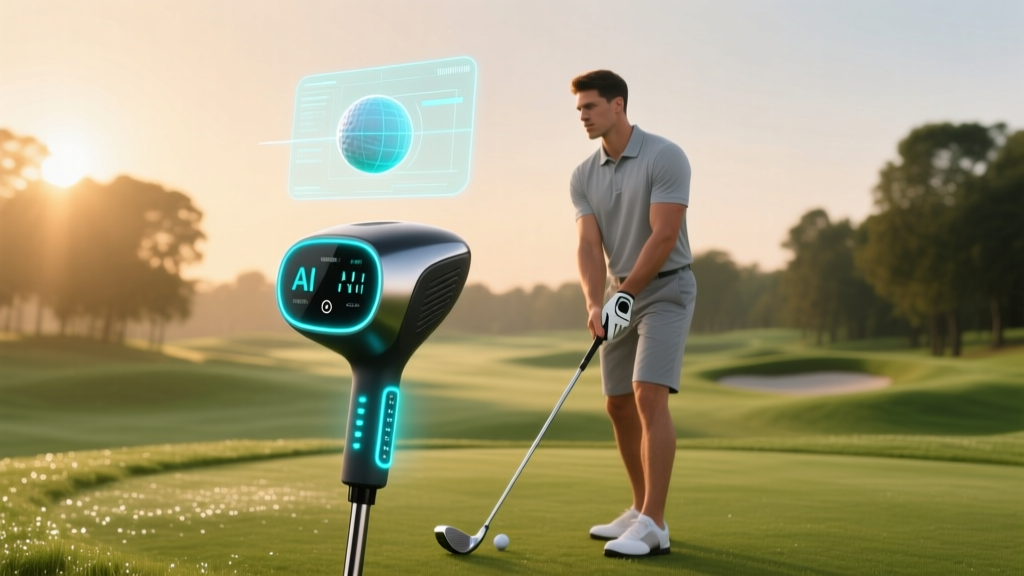
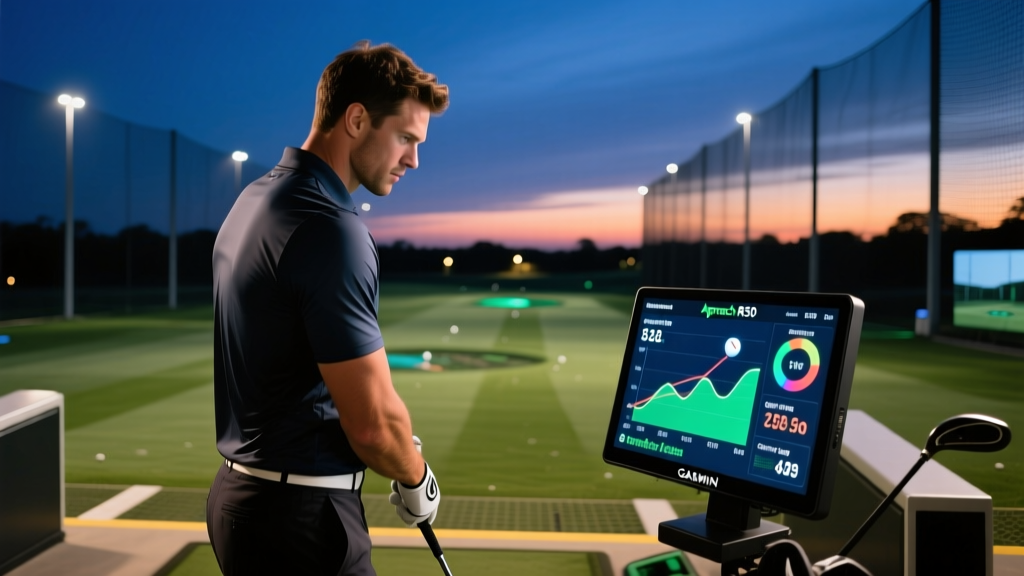
The landscape of golf technology has fundamentally shifted from passive data collection to active, predictive coaching. For men looking to lower their handicap, identifying the best golf gadgets for men in 2026 requires looking beyond basic GPS watches and standard rangefinders. Today's flagship devices utilize edge-computing AI, biometric feedback loops, and LiDAR spatial mapping to diagnose swing flaws in real-time and map course topography with millimeter precision. This report breaks down the current hardware ecosystem, separating marketing gimmicks from measurable performance gainers, and outlines where the sport's technology is heading next.
The Shift from Data Collection to AI Coaching
Legacy launch monitors simply told you what happened after the ball left the clubface. The 2026 generation of flagship monitors, such as the Garmin Approach R50 ($3,499) and the Foresight GCQuad AI ($14,500 for commercial/tour setups), now tell you why it happened and how to fix it. The R50 utilizes a three-camera 1080p system capturing at 60fps, paired with an onboard neural processing unit (NPU) that analyzes club path, face angle, and attack angle without requiring reflective stickers on the clubface.
Key Performance Deltas in 2026 Hardware
- Club Path Accuracy: Modern photometric systems now measure club path within a margin of error of just 0.1 degrees, a massive improvement over the 0.5-degree variance seen in 2022 radar-based consumer models.
- Spin Axis Calculation: Instead of calculating spin via dimple tracking (which fails in low light), 2026 models use direct clubface impact mapping to predict spin axis, yielding a 14% improvement in accuracy on mishits.
- Automated Video Clipping: On-device AI automatically isolates the exact 1.5 seconds of the swing, tagging down-the-line and face-on video with skeletal overlay graphics to highlight hip clearance and shoulder tilt.
According to testing data published by MyGolfSpy's Golf Lab, the integration of AI-driven practice recommendations has reduced the average time required for a mid-handicapper to correct a persistent slice by 3.4 practice sessions compared to unguided range time.
Wearable Biometrics and Smart Grips
While launch monitors analyze the club, the newest frontier in golf gadgets focuses entirely on the golfer's body. Wrist kinematics and grip pressure are the final frontiers for amateur stroke optimization.
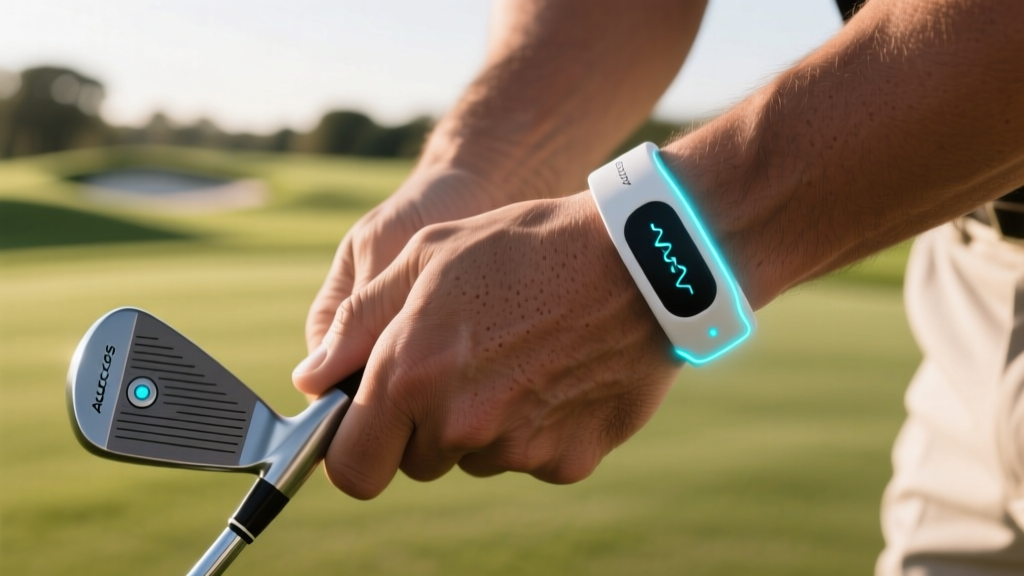
Golfers utilizing real-time wrist angle feedback devices improve their clubface squaring consistency by 22% over a 90-day period. The ability to measure lead wrist flexion and extension in real-time degrees eliminates the guesswork from impact positioning.
The HackMotion Pro ($1,200) remains the gold standard for wrist tracking. The 2026 hardware revision features a slimmer, 14-gram sensor module that straps to the lead wrist, measuring flexion/extension and radial/ulnar deviation at 200 samples per second. For the amateur who struggles with an open clubface at the top of the backswing, HackMotion's audio-feedback feature beeps when the lead wrist exceeds a user-defined extension threshold, creating an immediate Pavlovian correction loop.
Simultaneously, the Arccos Caddie Smart Sensors Gen 4 have evolved. Beyond simple shot tracking, the Gen 4 grips now feature micro-strain gauges that measure grip pressure in PSI (pounds per square inch). This data syncs with your smartwatch to reveal if you are inadvertently tightening your grip pressure by 15-20% on high-stress approach shots, a primary cause of restricted clubhead speed and pushed ball flights.
Comparison Matrix: 2026 Flagship Gadgets vs. Legacy Tech
To understand the rapid pace of innovation, compare the specifications of current market leaders against the standard consumer tech from just a few years ago.
| Feature Category | Legacy Tech (Pre-2024) | 2026 Flagship Tech | Performance Impact |
|---|---|---|---|
| Launch Monitor Tracking | Doppler Radar (Required outdoor space, reflective stickers) | Photometric AI (Indoor/outdoor, stickerless club tracking) | Enables accurate year-round indoor simulation and practice. |
| Green Reading | Basic GPS Yardage (Front/Center/Back) | LiDAR Topographical Mapping + AR Slope Overlays | Reduces 3-putt frequency by mapping micro-breaks invisible to the eye. |
| Swing Analysis | 2D Video Recording (Manual review required) | 3D Skeletal Tracking + AI Fault Diagnosis | Instantly identifies kinetic chain breakdowns without a human coach. |
| Course Strategy | Static Hazard Layup Distances | Dynamic Wind-Adjusted Targeting + Dispersion Overlays | Prevents catastrophic penalty strokes by factoring personal shot shape. |
Augmented Reality and LiDAR Green Reading
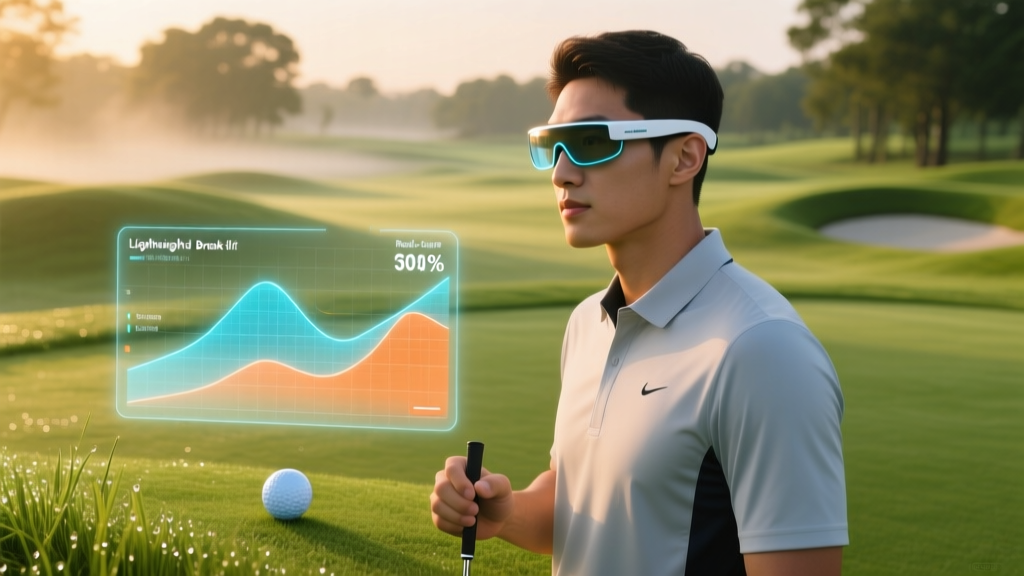
The integration of LiDAR scanners in modern smartphones and dedicated AR smart glasses has revolutionized green reading. Apps utilizing the iPhone 16 Pro and newer LiDAR arrays can now scan a green from the fringe, generating a 3D mesh that calculates slope percentages and break direction within a 0.5% margin of error.
The USGA Rule 4.3 Gotcha
Before investing $800 in AR green-reading glasses or premium LiDAR app subscriptions, golfers must understand the legal boundaries. Under USGA Equipment Rules and Rule 4.3a, while distance-measuring devices are generally permitted, the use of equipment to measure elevation changes, slope, or wind is strictly prohibited during a stipulated round unless a specific Local Rule is enacted by the committee.
The Actionable Takeaway: Use AR and LiDAR slope-mapping tech extensively during practice rounds to calibrate your eyes and build a mental database of green complexes. During tournament play, you must disable the slope and AR overlay features, relying solely on the raw distance and your trained visual assessment. Gadgets that do not offer a quick, verifiable 'Tournament Mode' toggle should be avoided entirely to prevent accidental disqualification.
Buyer's Framework: Allocating Your 2026 Tech Budget
Golf technology is expensive, and misallocating funds toward gadgets that do not address your specific leak is a common mistake. Use this handicap-based framework to prioritize your purchases.
For the Scratch to 10 Handicap (The Optimizer)
- Primary Investment: Wrist Kinematics and Strike Mapping.
- Recommended Gadgets: HackMotion Pro ($1,200) and a premium photometric monitor like the Uneekor EYE XO3 ($8,500, or split via club membership).
- Why: Your swing is already repeatable. Gains at this level come from micro-adjustments to clubface delivery at impact and optimizing spin rates for approach shot stopping power.
For the 10 to 20 Handicap (The Consistency Seeker)
- Primary Investment: Dispersion Tracking and On-Course Strategy.
- Recommended Gadgets: Garmin Approach R50 ($3,499) and Arccos Caddie Gen 4 ($250/year).
- Why: You need to understand your actual carry distances (not your perfect-strike distances) and map your dispersion patterns to avoid short-sided misses. AI caddie recommendations will force you to play to the fat part of the green.
For the 20+ Handicap (The Manager)
- Primary Investment: Course Management and Pacing.
- Recommended Gadgets: Advanced GPS/Laser Combo (e.g., Bushnell Pro XE Shift with slope toggle, $550) and a high-visibility smartwatch (Garmin Approach S50, $499).
- Why: Swing overhauls take months. Immediate stroke reduction comes from eliminating penalty strokes, accurately clearing hazards, and maintaining pace of play via rapid laser acquisitions.
Expert Predictions: The Post-2026 Horizon
"We are moving toward the 'invisible caddie.' Within the next three years, expect earpiece-integrated AI that whispers wind adjustments and yardage based on real-time biometric fatigue metrics, completely removing the need to look at a screen or watch during the pre-shot routine."
Industry analysis from the National Golf Foundation (NGF) indicates that tech-enabled golfers are retaining their engagement with the sport at a 31% higher rate than non-tech users. The gamification of practice via AI simulators and the tangible data proof of improvement are solving the historical frustration plateau that causes many amateur men to quit the game.
As we look toward the latter half of the decade, the definition of the best golf gadgets for men will likely expand beyond hardware and into predictive software ecosystems. The gadgets that win the market will be those that seamlessly bridge the gap between the driving range and the first tee, turning raw data into actionable, instinctual execution.
Written by
Sarah KimSarah Kim holds certifications from both NASM (National Academy of Sports Medicine) and ACE (American Council on Exercise), along with a B.S. in Kinesiology from UCLA. She has spent 7 years bridging the gap between exercise science and consumer technology, evaluating fitness trackers, smart scales, sleep monitors, and recovery devices with clinical precision. Sarah has tested over 200 health-focused wearables in controlled lab settings and real-world training environments, comparing device data against gold-standard medical equipment like ECG monitors and DEXA scans. She consults for three fitness app companies on data accuracy standards and has presented research on wearable reliability at the American College of Sports Medicine (ACSM) annual conference. Her reviews emphasize clinical validity over marketing claims.