Essential Golf Gadgets Buyer's Guide: Top Tech for 2026
Discover the best golf gadgets for 2026. Our buyer's guide covers top GPS watches, laser rangefinders, and swing analyzers to lower your handicap.
Why Upgrade Your Golf Tech Arsenal in 2026?
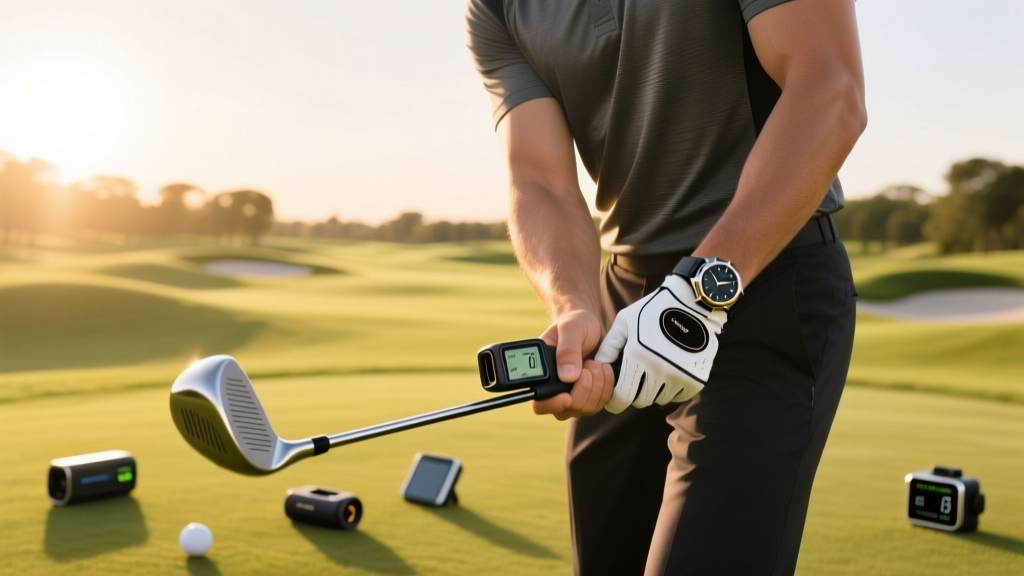
The landscape of golf gadgets has evolved dramatically over the last few years, shifting from simple distance-measuring tools to comprehensive, AI-driven caddie systems. In 2026, the integration of multi-band satellite tracking, biomechanical wrist sensors, and machine-learning course management means that playing without tech is no longer just a handicap disadvantage—it is a strategic error. Whether you are a weekend warrior trying to break 90 or a scratch golfer fine-tuning your wedge dispersion, the right equipment provides actionable data that shaves strokes off your card.
This comprehensive buyer's guide cuts through the marketing noise. We evaluate the exact specifications, real-world battery performance, and pricing of the most critical golf gadgets on the market today, helping you build a loadout that aligns with your skill level and budget.
Laser Rangefinders vs. GPS Watches: The Core Dilemma
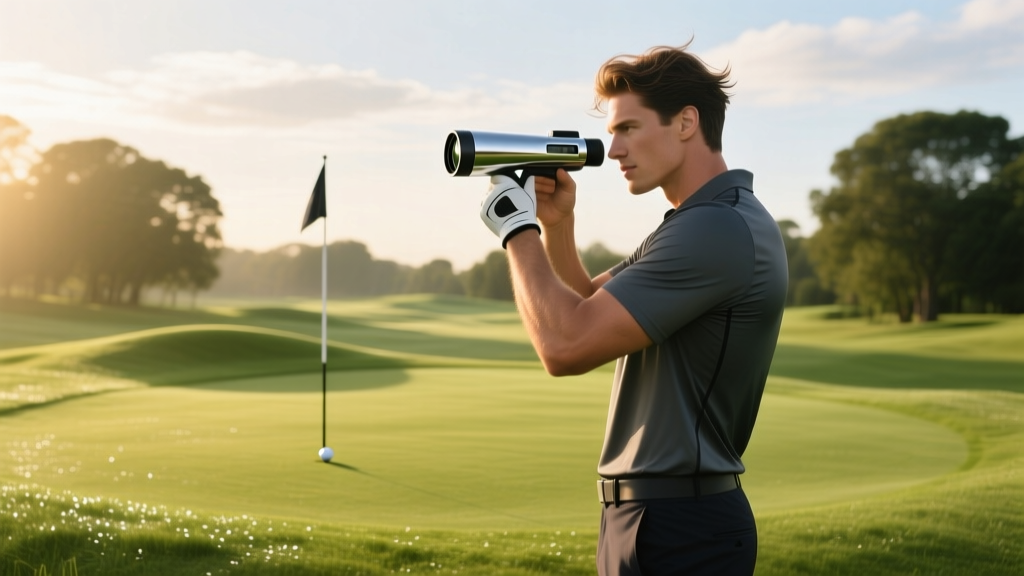
The most common question among golfers upgrading their gear is whether to invest in a laser rangefinder, a GPS watch, or both. The short answer? They serve fundamentally different purposes, and serious players eventually adopt both. Lasers provide line-of-sight precision to specific targets (pins, bunker lips), while GPS watches offer spatial awareness for blind layups, hazard carry distances, and green contour mapping.
| Feature | Premium Laser Rangefinder | High-End GPS Smartwatch |
|---|---|---|
| Primary Use | Exact pin distance, slope calculation | Hazard carries, blind shots, green mapping |
| Accuracy | Within 1 yard (line-of-sight required) | Within 3-5 yards (multi-band GPS) |
| Tournament Legal? | Yes (if slope feature is disabled) | Yes (if distance-lock mode is active) |
| Battery Life | 6+ months (CR2 battery) | 15-20 hours (rechargeable lithium) |
| Average Price | $400 - $600 | $350 - $500 |
Top Laser Rangefinder Pick: Bushnell Pro XE2
At $549, the Bushnell Pro XE2 remains the gold standard for laser precision. Its standout feature is Slope with Elements, which factors in not just elevation changes, but also real-time temperature and altitude adjustments to calculate true playing distance. The 7x magnification optics and JOLT technology (a physical vibration when the laser locks onto the flag) eliminate the guesswork of hitting trees in the background. For tournament play, the magnetic slope-switch mount makes it easy to snap onto a golf cart and instantly disable the slope function to comply with USGA equipment rules.
Top GPS Watch Pick: Garmin Approach S76
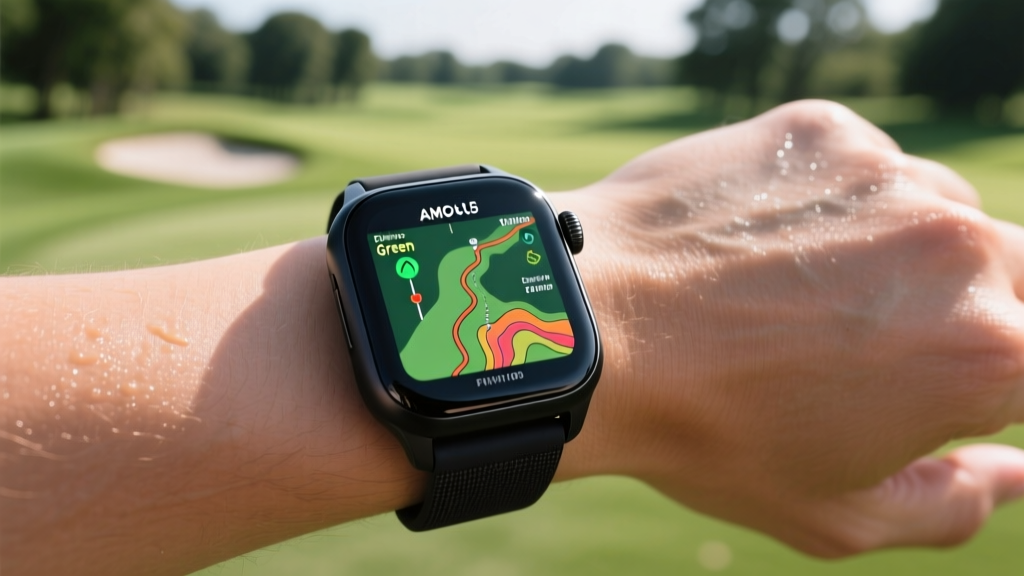
Retailing at $399, the Garmin Approach S76 represents a massive leap in wearable golf tech. The introduction of multi-band GPS (satIQ technology) means the watch dynamically switches between satellite frequencies based on tree cover and atmospheric conditions, reducing the infamous 'GPS drift' that plagued older models. The 1.2-inch AMOLED display is brilliantly visible in direct sunlight, and the PlaysLike distance feature mirrors the slope adjustments found in premium rangefinders. According to Garmin's official specs, it delivers up to 18 hours of battery life in full GPS mode, easily covering a 36-hole weekend marathon.
Swing Analyzers: Data-Driven Game Improvement
Knowing your distances is only half the battle; understanding why you hit it that distance is where modern swing analyzers shine. In 2026, the market is dominated by two distinct approaches to data collection: club-tracking ecosystems and biomechanical wearables.
Arccos Caddie Smart Sensors (Gen 4)
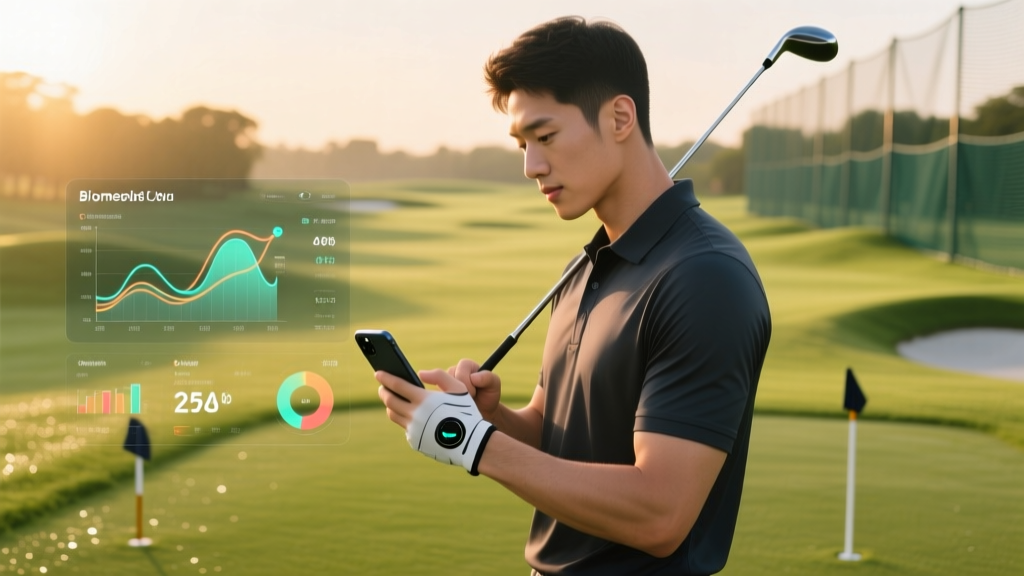
The Arccos Caddie system ($249 for the hardware) utilizes 14 ultralight sensors that screw into the grips of your clubs. By pairing with your smartphone, it automatically tracks every shot, calculating your Strokes Gained across driving, approach, chipping, sand, and putting. The real magic, however, is the AI Caddie subscription ($99/year after the first free year). It analyzes your historical dispersion patterns and wind conditions to suggest exact club selections and target lines. Warning: The subscription model can lead to fatigue for casual players, but for data-obsessed competitors, the insights into proximity to the hole from 150-175 yards are invaluable.
HackMotion Wrist Sensor
While Arccos tracks the club's journey, HackMotion ($300 for the Core tier) tracks the engine: your wrists. Worn like a watch, it measures flexion/extension and radial/ulnar deviation at the address, top of the backswing, and impact. This is the exact data used by tour pros to shallow the club and square the face. If you struggle with a slice caused by a cupped lead wrist at the top, HackMotion provides real-time audio feedback to train a flatter wrist angle. It is an incredibly powerful training aid, though it requires a willingness to digest complex biomechanical charts.
On-Course Accessories & Practice Gadgets
Beyond the big-ticket items, several niche golf gadgets offer immense value for specific practice routines and on-course convenience.
- Garmin Approach CT10 ($79): If you already own a compatible Garmin watch but don't want to pay for Arccos, these automatic club trackers log your shot distances and club averages directly to your watch without requiring a smartphone on the course.
- PRGR HS-130 Pocket Launch Monitor ($199): A radical departure from $2,000 radar units, this pocket-sized device uses Doppler radar to accurately measure club speed, ball speed, smash factor, and carry distance. It is the ultimate gadget for winter indoor net sessions or quick driving range diagnostics.
- PuttOUT Pressure Putt Trainer ($59): A low-tech but highly effective gadget. The parabolic ramp returns good putts and rejects bad ones, providing immediate visual feedback on your start line and pace control from 6 to 10 feet.
Decision Framework: Building Your Gadget Loadout
With hundreds of golf gadgets on the market, budget allocation is critical. Use this framework to build your tech bag based on your current handicap and financial comfort.
The 'Break 90' Starter Loadout (Budget: $450)
- Garmin Approach S12 GPS Watch ($149): Provides reliable yardages to the front, middle, and back of the green.
- TecTecTec VPRO500 Rangefinder ($149): Basic 6x magnification laser for pin-seeking.
- PuttOUT Pressure Putt Trainer ($59): Fixes the 6-footers that ruin your card.
- Remaining Budget: Spend on a dozen premium golf balls and a greens reading book.
The 'Scratch Seeker' Elite Loadout (Budget: $1,500+)
- Garmin Approach S76 ($399): Multi-band GPS and AMOLED mapping.
- Bushnell Pro XE2 ($549): Slope with elements for exact number crunching.
- Arccos Gen 4 + 2-Year Subscription ($447): Total strokes gained analytics.
- PRGR HS-130 ($199): For off-course speed training and smash factor optimization.
'Data overload is a real trap in modern golf. The best players use gadgets to build a pre-shot routine and confirm their instincts, not to paralyze themselves with 40 different metrics over the ball.' — PGA Teaching Professional
Frequently Asked Questions (FAQ)
Are slope rangefinders legal in official tournaments?
No. According to USGA Rule 4.3a, devices that measure elevation changes (slope) or gauge wind speed are strictly prohibited during handicap or tournament rounds. However, most premium rangefinders feature a physical switch or magnetic faceplate that disables the slope calculation, making the device legal when the feature is turned off.
Do I really need both a GPS watch and a laser rangefinder?
For optimal course management, yes. A laser cannot shoot a blind target over a hill or tell you the exact carry distance over a water hazard. Conversely, a GPS watch struggles to give you the exact distance to a tucked pin placement on a massive green. Using both covers all strategic blind spots.
How accurate are pocket launch monitors compared to TrackMan?
Devices like the PRGR HS-130 are remarkably accurate for club speed and ball speed (within 1-2 mph of a TrackMan). However, because they lack the dual-radar multi-camera setup of enterprise units, their spin rate and spin axis calculations are estimated via algorithms rather than measured directly. They are perfect for speed training, but not for precise club fitting.
What is the battery life like on modern golf GPS watches?
In 2026, premium models like the Garmin S76 offer 15 to 20 hours in continuous GPS mode. This translates to roughly four to five full 18-hole rounds before needing a charge. Entry-level models typically last 12 to 15 hours, which is still sufficient for a standard weekend of golf.
Written by
Lena ChenLena Chen earned her M.S. in Human-Computer Interaction from Carnegie Mellon University and a B.S. in Electrical Engineering from the University of Washington. She has spent the past decade specializing in smart home architecture and IoT ecosystems, helping over 200 homeowners design fully connected living spaces. Lena is a certified Matter protocol consultant and has published peer-reviewed research on voice-first interface design in the ACM Digital Library. Her reviews of smart home products combine deep technical analysis with real-world usability testing, evaluating everything from Zigbee mesh stability to Alexa skill responsiveness. She regularly speaks at CEDIA Expo and CES smart home panels.