Best Kitchen Gadget Caddy Picks for Countertop Organization 2026
Discover the best kitchen gadget caddy options for 2026. Compare materials, rotating vs. slanted designs, and expert tips for countertop organization.
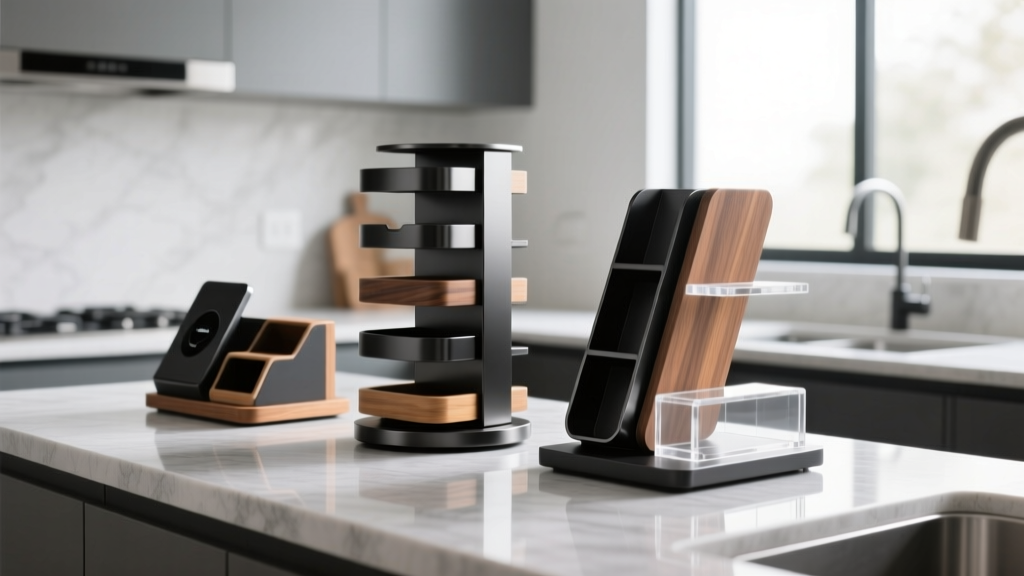
The traditional ceramic utensil crock is a relic of outdated kitchen design. While it looks charming in catalog photos, the reality of daily cooking reveals a frustrating 'black hole' effect: you reach for a vegetable peeler and pull out a tangled nest of whisks, tongs, and splattered wooden spoons. In 2026, the kitchen gadget caddy has emerged as the definitive solution for countertop organization, prioritizing ergonomic retrieval, material hygiene, and spatial efficiency over mere aesthetics.
This comprehensive buyer's guide cuts through the marketing fluff. We will dissect material grades, analyze center-of-gravity failure modes, and provide a concrete decision framework to help you select the exact caddy that matches your cooking workflow.
The Ergonomics of Countertop Retrieval
According to Good Housekeeping's Home & Organizing Experts, the most efficient kitchens minimize the physical steps and visual friction required to access daily tools. A standard deep crock forces you to dig, often contaminating the handles of other tools with wet or greasy fingers. A properly engineered kitchen gadget caddy solves this through staggered heights, angled tiers, or 360-degree rotation, ensuring every handle is visible and accessible within a one-second reach.
Material Matrix: What Should Your Caddy Be Made Of?
Not all countertop organizers are created equal. The environment around your stove and prep zone is hostile: high humidity, aerosolized grease, and frequent water splashes. Here is how the top three materials perform in real-world conditions.
| Material | Best For | Price Range | Maintenance & Failure Points |
|---|---|---|---|
| 304 Stainless Steel (18/8) | Heavy daily use, modern kitchens | $45 - $85 | Dishwasher safe. Zero rot risk. Ensure base has a silicone ring to prevent scratching quartz or granite. |
| FSC Acacia Bamboo | Warm aesthetics, farmhouse/boho styles | $25 - $45 | Hand-wash only. High mildew risk if bottom lacks drainage. Requires monthly mineral oil conditioning. |
| ABS Plastic / Silicone | Renters, budget-conscious, outdoor kitchens | $18 - $30 | Flexible and lightweight. Prone to UV yellowing and permanent staining from tomato-based sauces. |
2026 Top-Tier Kitchen Gadget Caddy Profiles
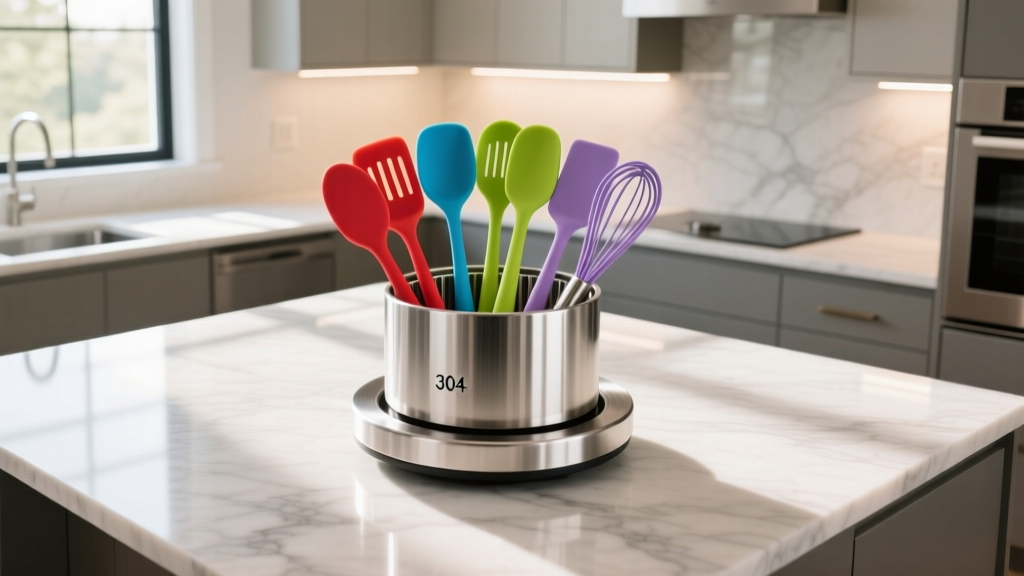
1. The 360° Rotating Steel Caddy (The Power User's Choice)
Designed for cooks who use 10+ tools per meal prep session. The defining feature of a premium rotating caddy is the sealed ball-bearing swivel mechanism. Cheap models use plastic friction rings that grind and snap within six months. Look for a weighted stainless steel base weighing at least 1.5 lbs empty; this prevents the 'top-heavy tip' when you load it with heavy metal potato mashers and thick silicone spatulas. Opt for models with removable, dishwasher-safe ABS dividers so you can customize compartments for microplanes versus bulky tongs.
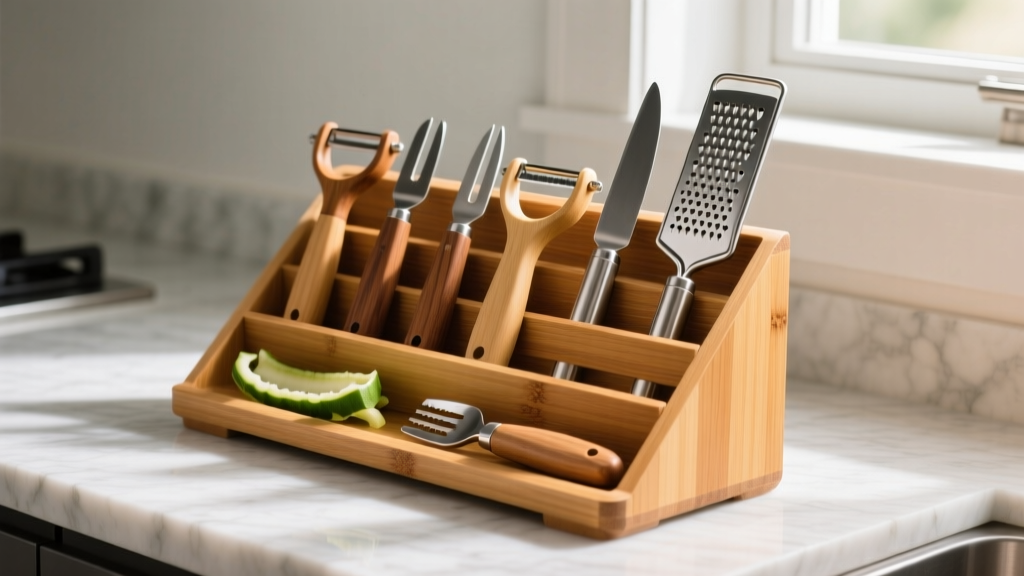
2. The 15-Degree Slanted Bamboo Tier (The Visual Organizer)
Instead of a vertical cylinder, this caddy uses a staggered, slanted design (typically rising from 4 inches in the front to 6.5 inches in the back). The 15-degree forward tilt is crucial: it angles the handles toward you, eliminating the need to crane your neck to see what is in the back row. Warning: Only purchase bamboo caddies that feature an elevated slatted bottom or a removable silicone drip tray. Solid-bottom wooden caddies will trap moisture and breed bacteria, a serious cross-contamination risk highlighted in the FDA Safe Food Handling Guidelines.
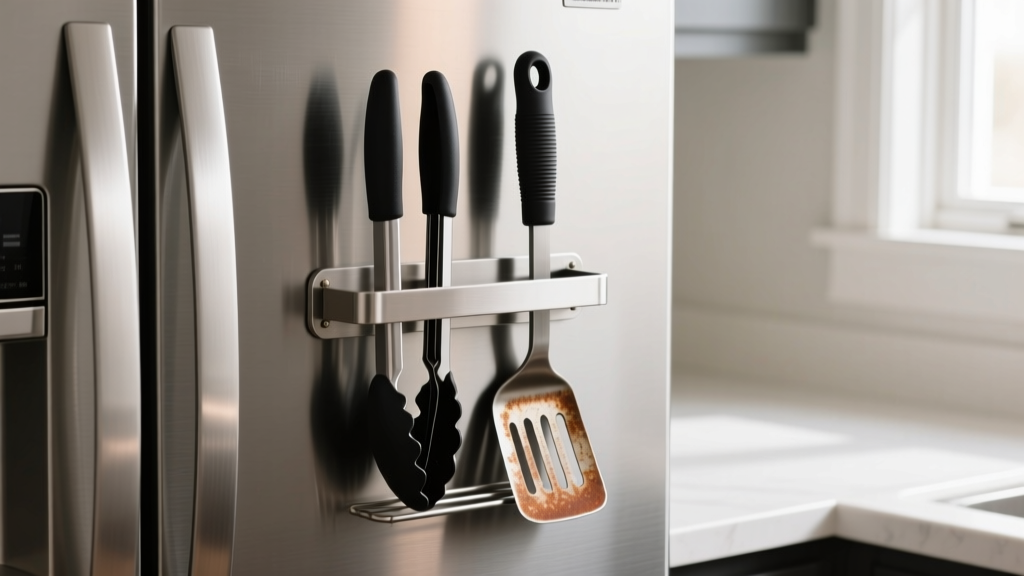
3. The Magnetic Fridge-Mount Caddy (The Space Saver)
For galley kitchens where countertop real estate is mathematically restricted, magnetic caddies are a revelation. However, do not rely on standard ferrite magnets. You must look for caddy models utilizing N52-grade Neodymium magnets backed by a thick, non-slip silicone pad. The N52 grade provides the sheer vertical shear strength required to hold heavy-duty locking tongs and a cast-iron skillet scraper without sliding down the refrigerator door when you pull a tool out.
Spatial Planning: The Golden Ratio of Countertop Real Estate
Before adding any organizer to your cart, measure your landing zones. Standard base cabinets are 24 inches deep, with countertops extending to 25 inches. The 'prime prep zone' (the 18 inches immediately adjacent to your sink and stove) must remain clear for cutting boards and hot pans.
- Maximum Footprint: Your kitchen gadget caddy should never exceed a 7x7 inch base footprint.
- Clearance Check: Ensure the tallest point of the caddy (often 8 to 9 inches) does not interfere with the swing radius of your faucet or the opening of low-hanging microwave doors.
- The Splash Zone: Keep the caddy at least 12 inches away from the primary burner grates to prevent aerosolized grease from coating your tool handles.
Many modular caddies use tight-fitting plastic dividers. Over time, flour dust, spice particles, and dried oils accumulate in these friction seams, creating a sticky residue that is nearly impossible to clean. The Fix: Always choose a caddy where the internal dividers lift out completely, leaving a smooth, single-piece interior basin for easy wiping.
Final Verdict: Which Caddy Fits Your Workflow?
Use this decision matrix to finalize your purchase based on your specific kitchen environment:
- If you cook high-volume, multi-course meals daily: Buy the 360° Rotating 304 Stainless Steel Caddy. The durability and rapid tool retrieval will save you cumulative hours of frustration.
- If you have a small apartment kitchen or galley layout: Buy the N52 Magnetic Fridge-Mount Caddy. Reclaiming 49 square inches of counter space is worth the investment.
- If you prioritize warm aesthetics and are diligent about hand-washing: Buy the 15-Degree Slanted Acacia Bamboo Tier. Just commit to wiping it dry and oiling it quarterly.
Frequently Asked Questions
Can I put my bamboo kitchen gadget caddy in the dishwasher?
No. The high heat and prolonged moisture of a dishwasher cycle will cause the bamboo fibers to swell, split, and eventually harbor mold. Always hand-wash bamboo with mild soap, dry it immediately with a microfiber cloth, and let it air-dry upside down once a week.
How do I stop my stainless steel caddy from scratching my quartz countertop?
Look for models that include a pre-attached, high-durometer silicone base ring. If your current caddy lacks this, purchase a self-adhesive EVA foam pad or a silicone coaster (at least 8mm thick) to place underneath it. Never drag the caddy across the stone; always lift it to move it.
Are utensil crocks with built-in UV sterilizers worth the premium?
Generally, no. While UV-C light is effective at killing surface bacteria, the tools inside a crowded caddy cast shadows, rendering the UV light useless on the shaded sides of your spatulas. Proper washing and complete air-drying remain the most effective sanitation methods.
Written by
Sarah KimSarah Kim holds certifications from both NASM (National Academy of Sports Medicine) and ACE (American Council on Exercise), along with a B.S. in Kinesiology from UCLA. She has spent 7 years bridging the gap between exercise science and consumer technology, evaluating fitness trackers, smart scales, sleep monitors, and recovery devices with clinical precision. Sarah has tested over 200 health-focused wearables in controlled lab settings and real-world training environments, comparing device data against gold-standard medical equipment like ECG monitors and DEXA scans. She consults for three fitness app companies on data accuracy standards and has presented research on wearable reliability at the American College of Sports Medicine (ACSM) annual conference. Her reviews emphasize clinical validity over marketing claims.