Best Music Gadgets 2026: The Ultimate Studio Buyer's Guide
Discover the best music gadgets for 2026. Our comprehensive buyer's guide covers audio interfaces, MIDI controllers, and portable synths for every budget.
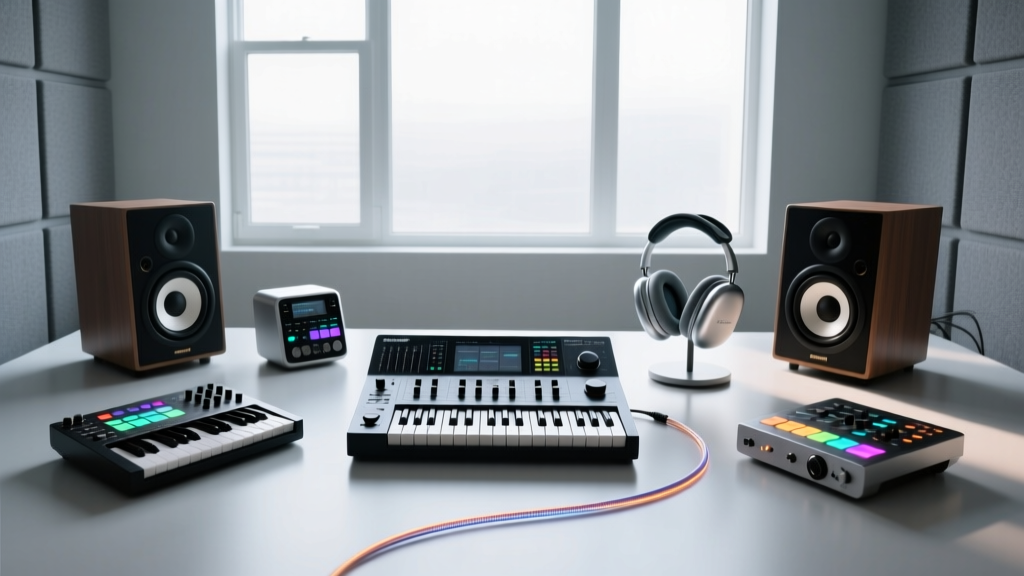
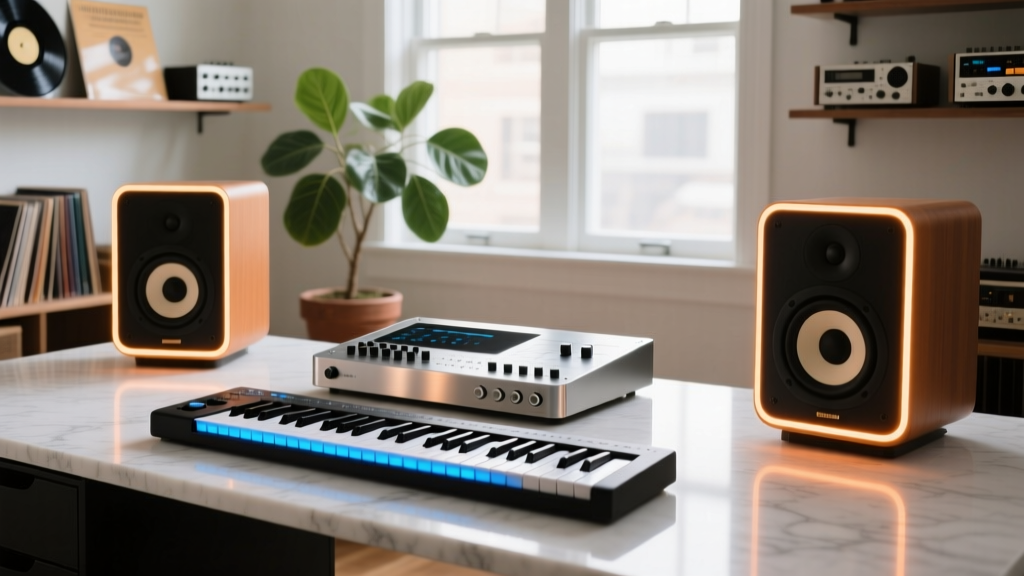
Building a modern music production setup is no longer about dropping $10,000 on a commercial studio lease. In 2026, the market is flooded with incredibly powerful, compact, and affordable hardware. But with hundreds of new releases each quarter, separating the essential tools from the gimmicky toys is harder than ever. Whether you are a bedroom producer, a touring electronic artist, or a podcasting musician, choosing the right music gadgets can drastically accelerate your workflow.
This comprehensive buyer's guide breaks down the most critical hardware categories for modern audio creators. We will look at exact specifications, real-world pricing, and the non-obvious edge cases that spec sheets often hide.
The Hub of Your Setup: Audio Interfaces
Your audio interface is the literal bridge between the analog and digital worlds. In 2026, the standard for entry-level converters has jumped from 24-bit/96kHz to 32-bit float recording, effectively eliminating digital clipping during unpredictable live recordings.
Top Pick for Solo Producers: MOTU M2 (2026 Refresh)
The MOTU M2 remains a staple, but the latest refresh includes native DSP for zero-latency reverb monitoring. Priced around $199, it offers an industry-leading 120dB dynamic range on its main outputs, rivaling units that cost three times as much.
- Pros: Full-color LCD metering, 32-bit float recording option, loopback routing for streamers.
- Cons: Plastic chassis feels less premium than the metal Focusrite Clarett series.
Top Pick for Synth Heavy Rigs: RME Babyface Pro FS
If your definition of essential music gadgets includes a massive collection of hardware synthesizers and drum machines, you need rock-solid clocking and abundant I/O. The RME Babyface Pro FS ($899) uses SteadyClock FS technology to guarantee zero jitter, ensuring your analog sequencers stay perfectly locked to your DAW.

Tactile Control: MIDI Controllers and Keyboards
Clicking a mouse to draw in automation curves is a workflow killer. The best music production gadgets prioritize tactile feedback, allowing you to play your software instruments with physical expression.
The Deep Integration King: Novation Launchkey 61 MK4
Novation's MK4 series ($279) introduced polyphonic aftertouch to the sub-$300 market. This means you can press down on a single key within a held chord to open a filter on just that one note. The integration with Ableton Live is seamless, mapping the 8 continuous rotary knobs and 16 RGB pads the moment you plug it in via USB-C.
The Desktop Grid: Ableton Push 3 Standalone
At $1,999, the Push 3 Standalone is a luxury gadget, but it completely removes the need for a laptop during the sketching phase. Its MPE-capable touchstrip and polyphonic aftertouch keybed make it the ultimate expressive instrument for sound design.
Sound Design on the Go: Portable Synthesizers and Samplers
Hardware synths have seen a massive renaissance. The following units offer immediate, hands-on sound design that software plugins simply cannot replicate in terms of workflow speed.
| Gadget Model | Category | Price Range | Best Use Case | Battery Life |
|---|---|---|---|---|
| Teenage Engineering OP-XY | Groovebox / Brain | $1,999 | Live performance, complex sequencing | ~2 Hours |
| Korg MicroKORG 2 | Virtual Analog Synth | $449 | Classic leads, stage backup | ~4 Hours (6x AA) |
| Elektron Digitakt II | Sampling Drum Computer | $999 | Beat making, sample manipulation | N/A (DC In) |
| Arturia MicroFreak V5 | Experimental Hybrid | $349 | Weird textures, FM synthesis | N/A (USB-C / DC) |
Monitoring: Headphones and Room Correction
You cannot mix what you cannot hear. While acoustic treatment is vital, modern DSP gadgets allow you to bypass imperfect room acoustics.
Slate Digital VSX vs. Sonarworks SoundID Reference
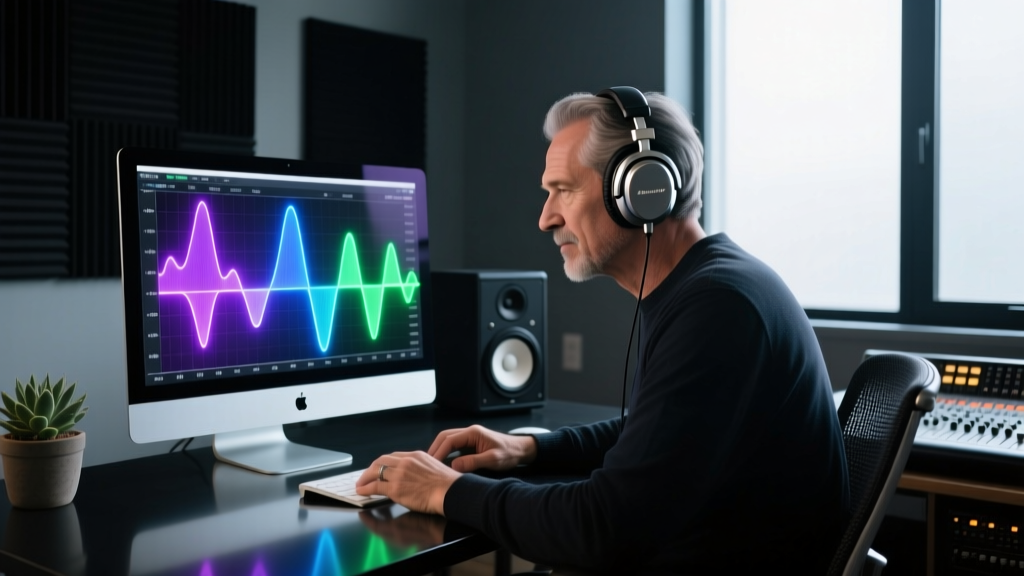
Instead of relying solely on a $3,000 pair of Focal studio monitors in an untreated bedroom, many producers in 2026 are turning to modeling headphones. The Slate Digital VSX system ($299) pairs specialized modeling headphones with software that accurately emulates the acoustic response of world-class studios like NRG and Archon. According to Sound on Sound, this technology has matured to the point where translation to car systems and club PAs is highly reliable.
The Hidden Costs: Cables, Power, and Adapters
When budgeting for music gadgets, amateurs forget the infrastructure. A $2,000 synthesizer will sound terrible and introduce ground hum if powered by cheap, unshielded adapters.
- USB Isolators ($45 - $70): Essential if you are connecting USB synths to an audio interface to prevent ground loop hum.
- Mogami or Cordial Cables ($25+ per 10ft): Do not use $5 Amazon basics cables for your main monitor outputs. The capacitance in cheap cables rolls off high frequencies over long runs.
- Furman P-1800 PF Power Conditioner ($119): Protects your delicate digital gear from voltage spikes and filters out EMI/RFI interference from nearby routers.
Decision Framework: How to Allocate Your Budget
If you have exactly $1,500 to spend on upgrading your studio, do not blow it all on a single flagship synthesizer. Follow the 50/30/20 Audio Rule for balanced growth:
- 50% on Monitoring & Acoustics: Good headphones (e.g., Sennheiser HD600) and basic broadband absorption panels. You need a reliable reference.
- 30% on Tactile Input: A quality MIDI controller or hardware drum pad. Get your hands off the mouse.
- 20% on 'Inspiration' Gadgets: A quirky synth pedal, a lo-fi cassette emulator, or a unique MIDI effects generator like the Meris Ottobit Jr.
Frequently Asked Questions
Do I need an external DAC if I use studio headphones?
For most modern production, no. High-end audio interfaces from Universal Audio, RME, and MOTU already feature pristine headphone amplifiers and DACs capable of driving 250-ohm headphones. Standalone DACs are generally reserved for dedicated audiophile listening rooms rather than active studio tracking.
Are hardware synthesizers obsolete in the age of AI and advanced plugins?
Not at all. As noted by Attack Magazine, the resurgence of hardware is driven by workflow limitations. Hardware synths force you to commit to audio and make rapid decisions without getting lost in infinite plugin menus. They are workflow accelerators, not just sound generators.
What is the most important gadget for a beginner producer?
A reliable audio interface with low-latency drivers and a comfortable pair of open-back reference headphones. Before you buy synths or drum machines, ensure you can accurately record a vocal or guitar and hear your playback without frequency masking.
Investing in the right music gadgets is about buying tools that remove friction from your creative process. Focus on gear that offers tactile control, pristine conversion, and reliable monitoring, and your music will translate beautifully to any sound system in the world.
Written by
Marcus WebbMarcus Webb served as a U.S. Army logistics officer for 8 years, where he managed field equipment procurement and tactical gear evaluation across three combat deployments. After honorable discharge, he earned a certification from the Professional Knife Makers Association and became a certified Wilderness First Responder (WFR). Marcus has tested over 500 EDC products in extreme environments — from -40°F in Alaska to 120°F in the Mojave Desert — using military-spec testing protocols. His reviews of multi-tools, tactical flashlights, and survival gear are known for their rigorous methodology: controlled drop tests from 6 feet, 120-minute water submersion at 2 meters, and lateral torque testing at 45 Nm. He is a member of the Blade Show judging panel and contributes to OutdoorGearLab.