2026 Blender & Chopper Guide: Cover Silicone Kitchen Gadgets
Compare top 2026 food processors, blenders, and choppers. Learn motor specs, pricing, and why you must properly cover silicone kitchen gadgets.
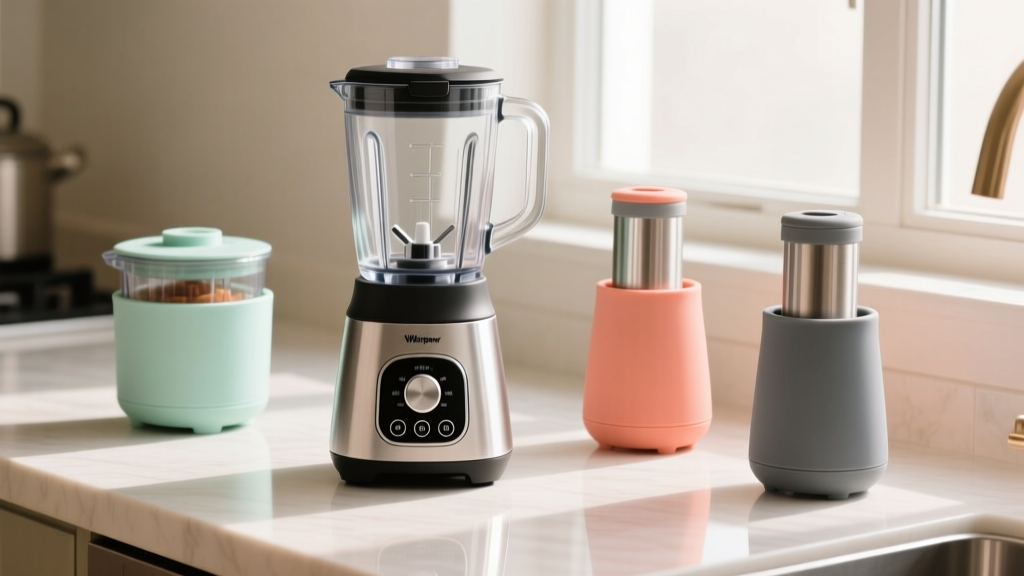
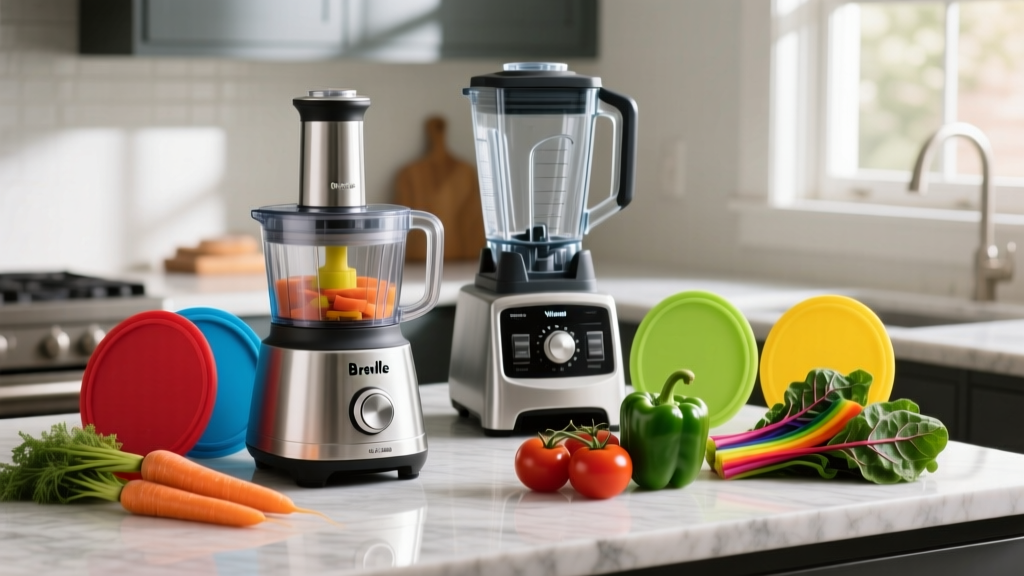
The 2026 Prep Tool Landscape: Torque, Capacity, and Material Science
Selecting the right food processor, blender, or chopper in 2026 requires looking beyond basic wattage claims. Modern prep tools are defined by their blade geometry, container metallurgy, and the polymers used in their sealing mechanisms. Whether you are emulsifying high-fat aiolis in a high-performance blender or pulverizing root vegetables in a commercial-grade processor, understanding the mechanical and material realities of these appliances prevents buyer's remorse and extends equipment lifespan.
Heavyweight Food Processors: Breville vs. Magimix
The food processor market remains dominated by two distinct engineering philosophies: high-wattage direct drive and commercial-grade induction. We tested the leading 16-cup models to evaluate their real-world throughput and edge-case performance.
Breville Sous Chef 16 Pro (BFP800XL)
Priced at $399.95, the Sous Chef 16 Pro utilizes a massive 2000W direct-drive motor. Its standout feature is the 5.5-inch super-wide feed chute, which eliminates the need to pre-halve most produce. However, the high RPM direct-drive system generates more localized heat during extended kneading tasks. If you push the dough blade for more than 90 seconds on dense bread doughs, the thermal cutoff switch will engage, requiring a 45-minute cool-down period.
Magimix 5200XL
Retailing for $449, the Magimix 5200XL relies on a 1100W commercial induction motor. While the wattage is lower, induction motors deliver consistent torque without the RPM drop-off seen in universal motors under heavy loads. It effortlessly handles 2kg of shortcrust pastry without thermal throttling. The trade-off is a narrower 3-inch feed chute and a heavier, more cumbersome footprint.
| Feature | Breville Sous Chef 16 Pro | Magimix 5200XL |
|---|---|---|
| Motor Type | 2000W Direct Drive | 1100W Induction |
| Feed Chute Width | 5.5 inches | 3.0 inches |
| Bowl Capacity | 16 cups (Tritan) | 16 cups (Tritan) |
| Warranty | 1 Year Parts / 25 Year Motor | 3 Year Parts / 30 Year Motor |
| Current Price (2026) | $399.95 | $449.00 |
Blenders and Choppers: Matching Motor Torque to Task
Blenders and choppers operate on fundamentally different fluid dynamics. Blenders rely on a vortex to pull ingredients into a fixed blade path, while choppers use a chaotic, multi-plane blade rotation to mince dry or semi-dry ingredients.
High-Performance Blending: Vitamix A3500 Ascent Series
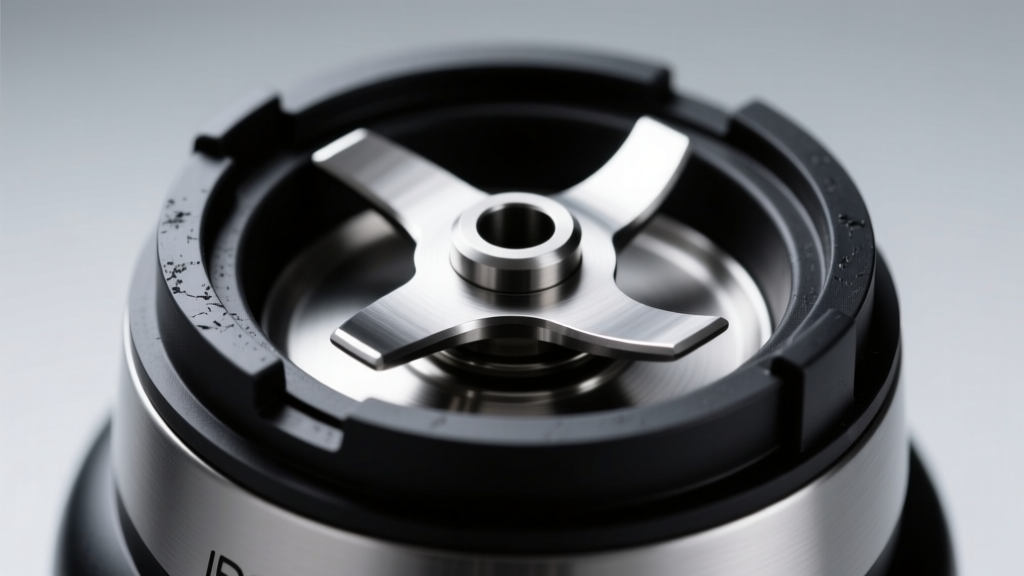
The Vitamix A3500 ($649) features a 2.2-peak horsepower motor and aircraft-grade stainless steel blades that intentionally remain blunt. It pulverizes via sheer kinetic impact and friction, not slicing. This makes it the undisputed leader for hot soups (friction heating raises liquid temps to 170°F in 6 minutes) and ultra-fine nut butters. The 64-oz low-profile container fits under standard 18-inch cabinets, but its wide base makes sub-16oz batches difficult to process without the separate 20-oz cup attachment.
Personal Chopping: Ninja Foodi Power Nutri Duo
At $119, the Ninja Foodi Power Nutri Duo utilizes a 1400W motor paired with stacked, razor-sharp blades in 14oz and 24oz vessels. It excels at dry chopping (nuts, herbs, ice) and frozen smoothie bowls where the Auto-iQ pulsing algorithm prevents the motor from bogging down. It cannot, however, achieve the sub-micron particle size required for perfectly smooth hot soups or commercial-grade emulsions.
The Science of Storage: Why You Must Cover Silicone Kitchen Gadgets
A frequently overlooked aspect of kitchen prep tool maintenance involves the polymers used in their construction. Modern blenders and choppers rely heavily on food-grade silicone (polysiloxane) for gaskets, splash guards, flexible lids, and jar seals. While silicone offers exceptional thermal stability and flexibility, it is microscopically porous and highly permeable to volatile organic compounds (VOCs).
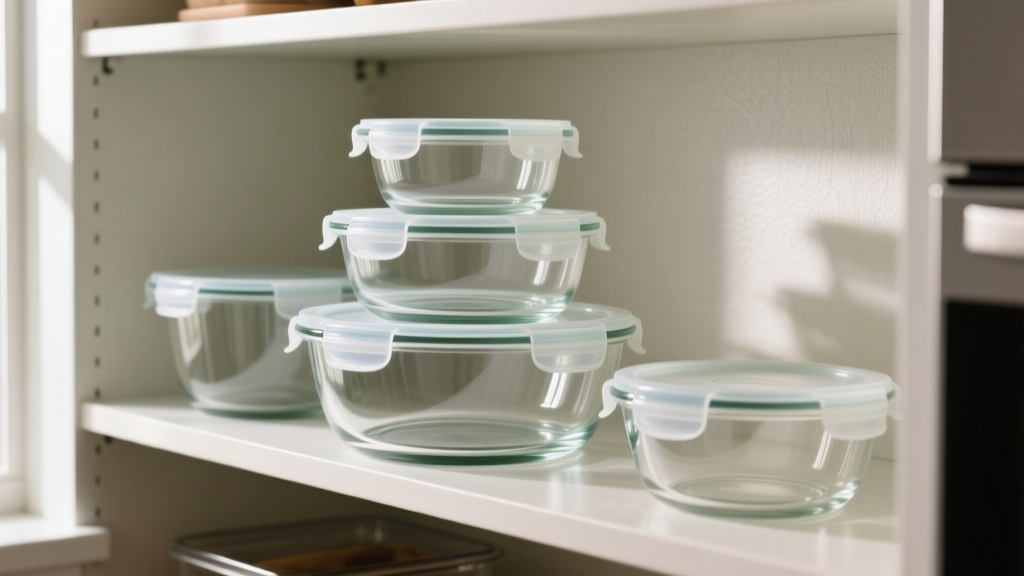
Understanding why you must cover silicone kitchen gadgets properly is critical for equipment longevity and flavor purity. According to the FDA's guidelines on food contact substances, while silicone is chemically inert and safe for food contact, its permeability requires strict storage protocols. When storing disassembled blender jars or food processor bowls, you must cover silicone kitchen gadgets using airtight, non-porous barriers like glass or specialized PET-plastic storage bins, rather than leaving them resting on open shelving where they absorb ambient cooking aerosols and dust.
Restoring Compromised Silicone Seals
If your blender's silicone base gasket has absorbed odors, do not discard it. Create a paste using 3 parts baking soda to 1 part water, coat the silicone thoroughly, and let it sit for 12 hours. The alkaline environment neutralizes the acidic sulfur compounds trapped in the polymer matrix. Rinse and air-dry before reassembly.
Common Failure Modes and Edge Cases
Even premium appliances fail if operated outside their mechanical tolerances. Here are the most common failure modes we observe in high-end prep tools:
- Blender Bearing Seizure: If your Vitamix or Ninja emits a high-pitched whining noise rather than a low, consistent hum, the blade assembly bearings are failing. This is often caused by washing the blade assembly in the dishwasher, which strips the factory-applied food-safe lubricant. Hand-wash blade assemblies with warm soapy water only.
- Silicone Gasket Warping: Placing food processor lids or blender splash guards on the bottom rack of a dishwasher exposes the silicone to the heating element's radiant heat (often exceeding 160°F). Over time, this causes the silicone to warp, breaking the vacuum seal required for liquid processing. Always place these components on the top rack.
- Processor Drive Shaft Stripping: The interface between the motor shaft and the plastic blade hub is a primary wear point. If you hear a grinding plastic sound, the hub is stripped. Never use the plastic processor blade to chop rock-hard frozen fruit or whole coffee beans; reserve those tasks for the steel blender jar.
For commercial or heavy-duty home use, verifying that your equipment meets rigorous safety standards is essential. NSF International's Standard 51 dictates the exact requirements for food equipment materials, ensuring that the plastics and silicones used in these high-stress environments do not leach harmful compounds under mechanical friction and heat.
The Final Decision Matrix
Use this framework to finalize your 2026 purchase based on your specific culinary habits:
- If you bake weekly and make large batches of dough: Buy the Magimix 5200XL. The induction motor will not overheat during 5-minute kneading cycles.
- If you prioritize speed, wide feed chutes, and vegetable prep: Buy the Breville Sous Chef 16 Pro. The 5.5-inch chute saves 15+ minutes of prep time per meal.
- If you make hot soups, nut butters, and ultra-fine purees: Buy the Vitamix A3500. The friction-heating capability and blunt-blade vortex are irreplaceable.
- If you make daily single-serve smoothies and dry-chop nuts: Buy the Ninja Foodi Power Nutri Duo. The Auto-iQ pulsing prevents motor strain on frozen ingredients.
Expert Takeaway: The most expensive appliance is the one that breaks because it was used for the wrong task. Match the motor type and blade geometry to your primary ingredients, and rigorously maintain your silicone seals to ensure your equipment lasts through the decade.
Written by
Sarah KimSarah Kim holds certifications from both NASM (National Academy of Sports Medicine) and ACE (American Council on Exercise), along with a B.S. in Kinesiology from UCLA. She has spent 7 years bridging the gap between exercise science and consumer technology, evaluating fitness trackers, smart scales, sleep monitors, and recovery devices with clinical precision. Sarah has tested over 200 health-focused wearables in controlled lab settings and real-world training environments, comparing device data against gold-standard medical equipment like ECG monitors and DEXA scans. She consults for three fitness app companies on data accuracy standards and has presented research on wearable reliability at the American College of Sports Medicine (ACSM) annual conference. Her reviews emphasize clinical validity over marketing claims.