Best Budget Kitchen Tool Gadget Fruit Prep Picks for 2026
Discover the best budget kitchen tool gadget fruit prep essentials for 2026. Expert reviews on affordable slicers, corers, and peelers under $25.

The True Cost of Cheap Fruit Prep Gear
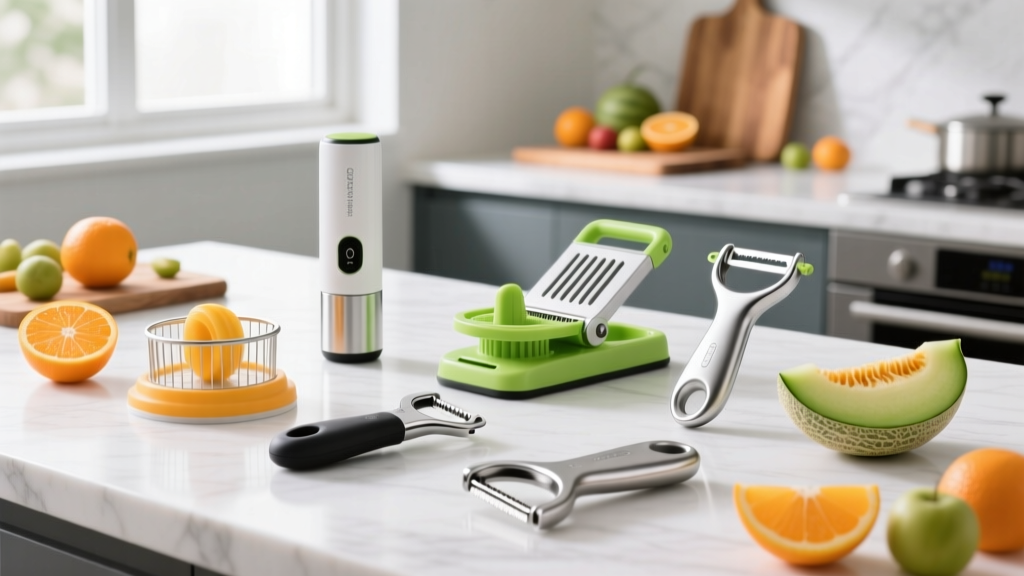
Walk into any big-box store and you will find a $4 plastic apple corer and a $3 swivel peeler. By week three, the peeler's blade is dulling, the plastic handle is cracking, and you are wasting 15% of your fruit flesh to inefficient cuts. When building a functional kitchen arsenal, the goal is not to buy the most expensive gear, but to identify the exact price threshold where metallurgical quality and ergonomic design intersect. For fruit prep in 2026, that threshold sits firmly between $8 and $25.
According to extensive equipment testing by Serious Eats, a high-quality Y-peeler outlasts five to six cheap swivel models over a two-year period. This guide breaks down the five best budget-friendly kitchen tools and gadgets for fruit preparation, focusing on blade steel grades, mechanical leverage, and long-term durability.
Core Criteria: What Makes a Budget Fruit Gadget Worth Buying?
Before spending money, evaluate these three non-negotiable specifications:
- Blade Steel Composition: Avoid unmarked 'stainless steel'. Look for 420J2 or 304-grade stainless steel. High-carbon blades hold an edge longer but will rust if left wet on a countertop.
- Mechanical Advantage: For juicers and corers, the tool must multiply your grip strength. A standard glass reamer requires 40+ lbs of downward pressure; a dual-gear lever juicer cuts that requirement by more than half.
- Sanitation and Crevice-Free Design: The FDA emphasizes that cross-contamination often occurs in the microscopic grooves of poorly designed kitchen tools. Gadgets with seamless construction or dishwasher-safe modular parts prevent bacterial buildup from fruit sugars.
Top 5 Budget Fruit Prep Gadgets Under $25
1. OXO Good Grips Smooth Edge Y-Peeler ($11.99)
The Y-peeler is the undisputed king of fruit skin removal. OXO's updated Smooth Edge model features a 420 stainless steel blade that sits at an optimal 15-degree angle, allowing it to glide under the skin of delicate peaches and tough butternut squashes alike. The Santoprene handle provides a non-slip grip even when your hands are wet from citrus juice.
- Pros: Ergonomic grip, replaceable blade, ambidextrous design.
- Cons: The thick handle takes up slightly more drawer space than traditional metal peelers.
2. Kuhn Rikon SwissPeel ($14.95)
If you prefer a traditional swivel design, the SwissPeel uses a high-carbon steel blade. It is exceptionally sharp out of the box and excels at creating paper-thin ribbons of citrus zest or apple skin. The built-in potato-eye remover on the side is a practical bonus for prepping stone fruits with blemishes.
- Pros: Razor-sharp carbon steel, lightweight, built-in blemish remover.
- Cons: Carbon steel requires immediate hand-drying to prevent oxidation and rust.
3. Chef'n FreshForce Citrus Juicer ($22.00)
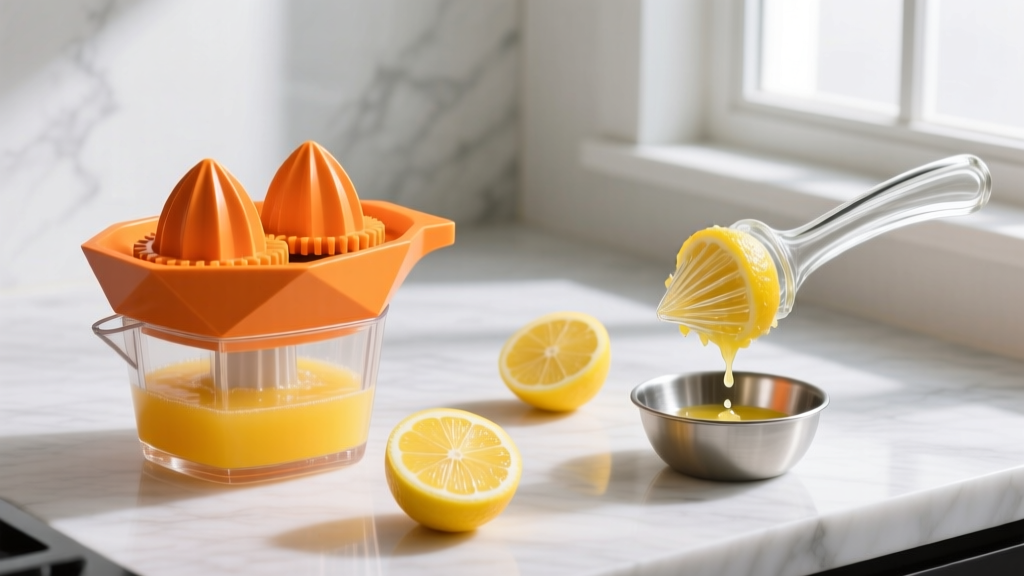
Handheld reamers are inefficient and messy. The Chef'n FreshForce utilizes a patented dual-gear mechanism that increases pressing power by 20% compared to standard lever juicers. Tested extensively by America's Test Kitchen, this model consistently extracts maximum yield from lemons and limes without crushing the bitter pith. The BPA-free plastic and zinc-cast gears ensure it survives daily meal-prep routines.
- Pros: Maximum juice extraction, keeps seeds and pulp out of the glass, gear-assisted leverage.
- Cons: Not suitable for large grapefruits or oranges; strictly for lemons, limes, and small tangerines.
4. Norpro Apple Corer/Divider ($8.50)
At under ten dollars, the Norpro 18/8 stainless steel corer is a masterclass in single-purpose utility. The 3.5-inch serrated edge grips the waxy skin of apples and pears, while the heavy-gauge steel shaft prevents the bending that plagues cheaper aluminum alternatives. It cores and slices into eight uniform wedges in one downward thrust.
- Pros: Incredibly cheap, highly durable 18/8 steel, uniform slicing.
- Cons: Requires significant downward force; not ideal for users with limited grip strength.
5. Mueller Austria Pro-Series V-Blade Mandoline ($24.99)
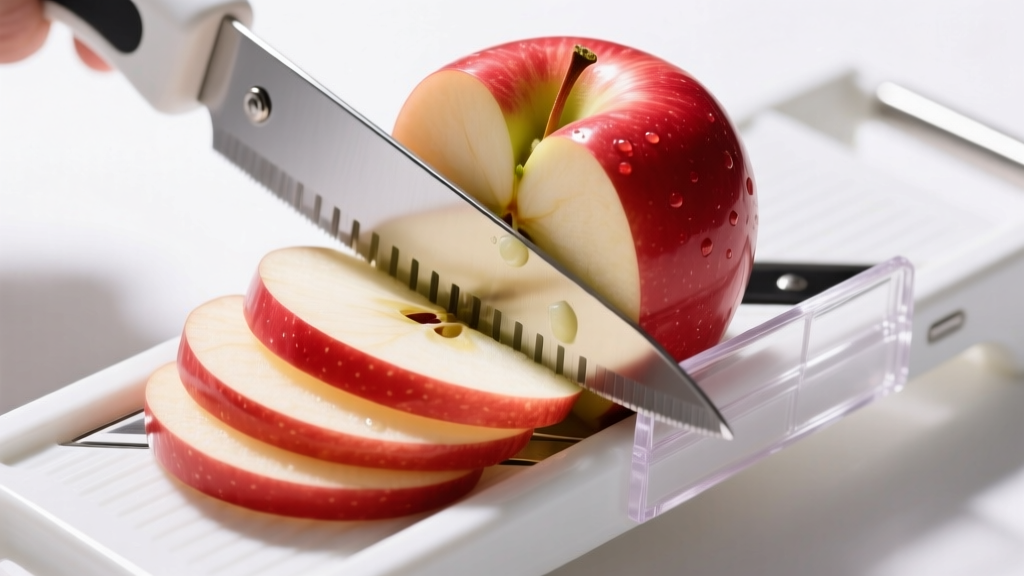
Slicing apples, pears, and citrus for dehydrating or garnishing requires uniform thickness. The Mueller V-Blade mandoline solves the issue of straight-blade models that push fruit rather than cut it. The V-shape creates two cutting angles that grab slippery fruit skins instantly. It includes four interchangeable thickness settings (1mm to 9mm) and a crucial hand-guard to protect your fingers.
- Pros: V-blade grips fruit skins, multiple thickness dials, suction-cup base for stability.
- Cons: The hand-guard can struggle to hold very small fruit pieces near the end of the slice.
Comparison Matrix: Budget Fruit Tools
| Tool | Primary Use | Material | Price | Dishwasher Safe? |
|---|---|---|---|---|
| OXO Y-Peeler | Peeling | 420 Stainless / Santoprene | $11.99 | Yes (Top Rack) |
| Kuhn Rikon SwissPeel | Peeling / Zesting | Carbon Steel / ABS | $14.95 | No (Hand Wash) |
| Chef'n FreshForce | Citrus Juicing | Zinc / BPA-Free Plastic | $22.00 | Yes (Top Rack) |
| Norpro Corer | Coring / Wedging | 18/8 Stainless Steel | $8.50 | Yes |
| Mueller V-Blade | Uniform Slicing | 420 Stainless / ABS | $24.99 | No (Hand Wash Blades) |
Maintenance: Extending the Life of Budget Blades
Budget tools require slightly more maintenance than premium $80 equivalents, but the payoff is a decade of use. Follow these specific care protocols:
- Never Use the Dishwasher for Carbon Steel: The 140°F water and highly alkaline detergents in dishwashers will strip the protective oils off carbon steel blades (like the Kuhn Rikon), leading to surface pitting and rust within 48 hours.
- Honing vs. Sharpening: Y-peelers and mandolines do not need whetstones. Use a ceramic honing rod once a month to realign the microscopic edge of the blade. When the blade eventually chips or dulls beyond honing, simply buy a replacement blade cartridge for $4 rather than replacing the entire tool.
- Sugar Acid Removal: Fruit acids (citric and malic) can degrade plastic components and rubberized grips over time. Rinse your gadgets immediately after use with warm water and a pH-neutral dish soap to prevent the Santoprene grips from turning sticky or degrading.
Common Fruit Prep Mistakes to Avoid
Even with the right tools, poor technique ruins yields. Avoid pressing citrus halves too deeply into a lever juicer; stopping just before the rind inverts prevents bitter oils from the zest from spraying into your juice. When using a mandoline for dehydrating apple chips, toss the slices immediately in a light ascorbic acid (vitamin C) solution to prevent enzymatic browning before they hit the dehydrator trays. Investing $80 in these five targeted tools will outperform a $200 generic knife block when it comes to daily fruit preparation efficiency.
Written by
Ryan TanakaRyan Tanaka holds a B.S. in Mechanical Engineering from Oregon State University and is a certified AWS Solutions Architect. He has built over 80 custom electronics projects ranging from CNC machines to IoT sensor networks, and has reviewed development boards, 3D printers, soldering equipment, and maker tools for the past 6 years. Ryan is an active contributor to 12 open-source hardware projects on GitHub and teaches monthly workshops at three hackerspaces across the Pacific Northwest. His reviews combine engineering rigor with accessibility — he evaluates products not just on specs but on documentation quality, community support, and learning curve for beginners. He has presented at Maker Faire Bay Area, Open Hardware Summit, and the Adafruit community showcase, and maintains a popular blog documenting his build processes.