Best Budget Music Gadget Upgrades for Home Studios in 2026
Discover the best budget music gadget upgrades for 2026. Compare affordable audio interfaces, MIDI controllers, and mics for home studios.
The Democratization of Home Audio in 2026
Building a professional-grade home studio no longer requires taking out a second mortgage. As we navigate through 2026, the proliferation of USB-C standards, 32-bit float recording, and AI-assisted gain staging has completely transformed the entry-level market. Whether you are a bedroom producer, a podcaster, or a touring musician needing portable rigs, finding a high-quality music gadget that respects your wallet is easier than ever. However, the market is flooded with cheap imitations. The key to building a reliable setup is knowing exactly where to invest your limited funds and where to save.
In this comprehensive roundup, we are bypassing the gimmicks and focusing strictly on workhorse gear. These are the budget-friendly studio essentials that deliver professional results without the professional price tag.
Why Budget Gear in 2026 is Better Than Ever
A decade ago, 'budget' meant compromising on preamp noise floors, dealing with flimsy plastic chassis, and suffering from high-latency drivers. Today, the trickle-down effect of flagship technology has revolutionized the sub-$150 category. For instance, dynamic ranges that once required $1,000+ rack units are now standard on desktop interfaces. Furthermore, the integration of 32-bit float technology into portable recorders has virtually eliminated digital clipping, a massive leap forward for field recording and unsupervised tracking sessions.
The 2026 Budget Music Gadget Comparison Matrix
Before diving into the deep-dive reviews, here is a quick-reference matrix comparing our top budget picks based on current street prices and primary specifications.
| Product Model | Category | Approx. Price | Standout Spec | Best Use Case |
|---|---|---|---|---|
| Zoom H1essential | Portable Recorder | $129 | 32-bit Float / 120dB SPL | Field recording, acoustic demos |
| Focusrite Scarlett Solo (4th Gen) | Audio Interface | $119 | 115dB Dynamic Range / Auto Gain | Studio vocal tracking, guitar DI |
| Arturia MiniLab 3 | MIDI Controller | $99 | 5-Pin MIDI Out / Analog Lab | Beatmaking, synth programming |
| Sony MDR-7506 | Studio Headphones | $99 | 63 Ohms / 10Hz-20kHz | Critical tracking, mix referencing |
The Core Four: Top Budget-Friendly Studio Essentials
1. Zoom H1essential: The 32-Bit Float Revolution
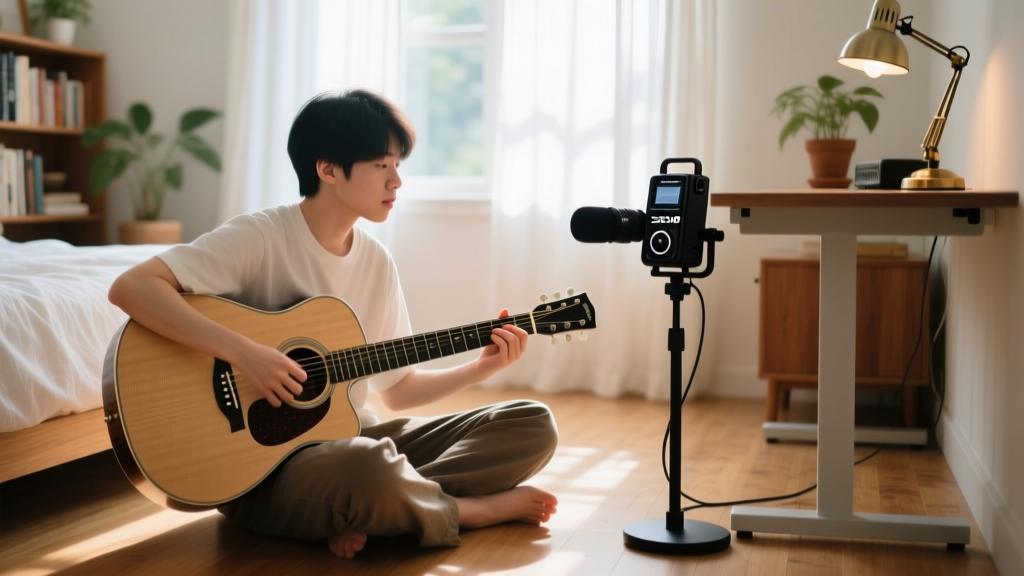
The Zoom H1essential is arguably the most important budget music gadget released in recent years. Priced at just $129, it brings 32-bit float recording to the masses. What does this mean for you? You no longer need to set your gain levels before hitting record. The dual A/D converter circuit captures everything from a whispering vocal to a 120dB SPL guitar amp without clipping or introducing excessive noise floor. According to Sound on Sound, the H1essential's ability to act as a USB-C audio interface while simultaneously recording to a microSD card makes it an indispensable backup tool for live gigs and remote podcasting.
- Pros: No gain staging required, USB-C bus power, built-in tone generator for slating.
- Cons: X/Y mic configuration is fixed (no mid-side decoding out of the box), plastic build feels slightly lightweight.
2. Focusrite Scarlett Solo (4th Gen): The Interface Standard
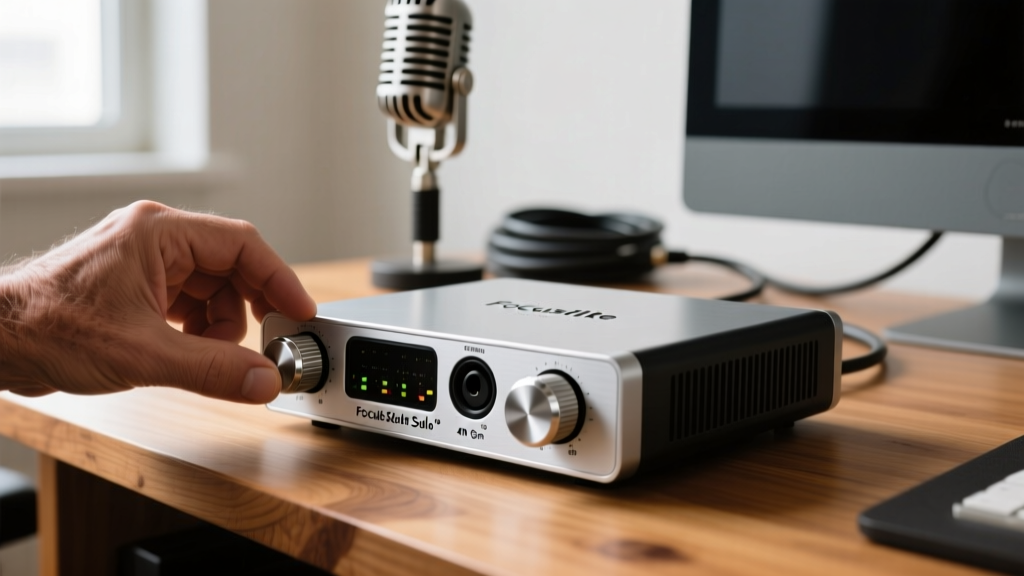
When discussing affordable audio interfaces, the Focusrite Scarlett series remains the undisputed heavyweight champion. The 4th Generation Scarlett Solo ($119) pushes the envelope with a massive 115dB dynamic range on its inputs, rivaling converters that cost three times as much. The standout feature for beginners and pros alike is the 'Auto Gain' and 'Clip Safe' technology. By pressing a single button, the interface automatically sets the perfect gain level based on your playing dynamics and prevents clipping in real-time. Focusrite's official specs confirm that the 4th Gen preamps offer a staggering 69dB of gain, meaning you can easily drive gain-hungry dynamic microphones like the Shure SM7B without needing an inline activator.
- Pros: Class-leading preamp gain, Air mode adds high-frequency presence, loopback functionality for streaming.
- Cons: Only one microphone input, no dedicated MIDI I/O ports.
3. Arturia MiniLab 3: The Producer's Sketchpad
At $99, the Arturia MiniLab 3 is a masterclass in tactile control. Unlike many budget MIDI keyboards that feel like toys, the MiniLab 3 features 25 slim but highly responsive keys, 8 RGB backlit pads, and 8 assignable rotary encoders. The true value, however, lies in its connectivity and software bundle. It includes a full-sized 5-pin MIDI output (a rarity in this price bracket), allowing you to control vintage hardware synths directly. Furthermore, it ships with Analog Lab Intro, granting you access to hundreds of meticulously modeled vintage synth presets right out of the box.
- Pros: Exceptional build quality, 5-pin MIDI out, deep DAW integration via MIDI Control Center.
- Cons: Slim keys might not suit classically trained pianists, pitch/mod strips take time to build muscle memory.
4. Sony MDR-7506: The Timeless Tracking Workhorse
You cannot mix or track what you cannot hear. While the audiophile market chases $500 open-back headphones, the closed-back Sony MDR-7506 ($99) remains the undisputed king of studio tracking. With an impedance of 63 ohms and a frequency response of 10Hz to 20kHz, they are easily driven by any budget interface. Their slightly forward upper-midrange (around 4kHz to 8kHz) makes them exceptional for identifying vocal sibilance, fret noise, and harsh EQ resonances. The closed-back design provides excellent isolation, ensuring that the click track or backing track does not bleed into your condenser microphone during recording.
- Pros: Industry-standard isolation, highly durable coiled cable, easily replaceable earpads.
- Cons: Unforgiving high-end can cause ear fatigue during long mix sessions, pleather earpads flake over time.
The $500 Studio Allocation Framework
If you are starting from scratch or upgrading a bedroom setup with a strict $500 budget, how should you allocate your funds? Here is a proven decision framework for 2026:
- The Audio Hub ($120): Prioritize your audio interface. The Focusrite Scarlett Solo ensures pristine A/D conversion and enough gain for most microphones.
- The Capture Tool ($100-$150): Depending on your instrument, allocate this to a microphone (like the Audio-Technica AT2020) or a portable recorder like the Zoom H1essential for acoustic instruments and sampling.
- The Monitoring ($100): Do not mix on Bluetooth speakers. Invest in the Sony MDR-7506 headphones to ensure accurate translation.
- The Controller & Cables ($80-$130): Use the remaining funds for the Arturia MiniLab 3 and high-quality, shielded TRS and XLR cables. Never skimp on cables; a $100 interface is useless if a $5 cable introduces radio interference.
Frequently Asked Questions (FAQ)
Do I need a 32-bit float recorder if I already have an audio interface?
Yes, if you record outside of your treated studio. Interfaces require manual gain staging. A 32-bit float music gadget like the Zoom H1essential guarantees you will never ruin a once-in-a-lifetime live performance or field recording due to digital clipping.
Can the Focusrite Scarlett Solo power an SM7B microphone?
The 4th Gen Scarlett Solo provides 69dB of gain. While an SM7B typically requires around 60-65dB for a clean signal, the Scarlett can drive it natively. However, for highly dynamic vocalists or quiet podcasters, an inline preamp like a Cloudlifter may still provide a cleaner noise floor.
Are budget MIDI controllers compatible with all DAWs in 2026?
Yes. Controllers like the Arturia MiniLab 3 utilize standard MIDI over USB-C and are natively mapped to major DAWs including Ableton Live, Logic Pro, FL Studio, and Pro Tools. They are class-compliant, meaning they work on Windows, macOS, and even iOS/iPadOS devices without proprietary drivers.
Written by
Marcus WebbMarcus Webb served as a U.S. Army logistics officer for 8 years, where he managed field equipment procurement and tactical gear evaluation across three combat deployments. After honorable discharge, he earned a certification from the Professional Knife Makers Association and became a certified Wilderness First Responder (WFR). Marcus has tested over 500 EDC products in extreme environments — from -40°F in Alaska to 120°F in the Mojave Desert — using military-spec testing protocols. His reviews of multi-tools, tactical flashlights, and survival gear are known for their rigorous methodology: controlled drop tests from 6 feet, 120-minute water submersion at 2 meters, and lateral torque testing at 45 Nm. He is a member of the Blade Show judging panel and contributes to OutdoorGearLab.