Unique Ski Gadgets: Portable Projectors for Alpine Movie Nights
Discover the coolest ski gadgets for 2026: rugged portable projectors and mobile displays built for freezing alpine cabins and epic après-ski movie nights.
Beyond the Slopes: The Evolution of Après-Ski Entertainment
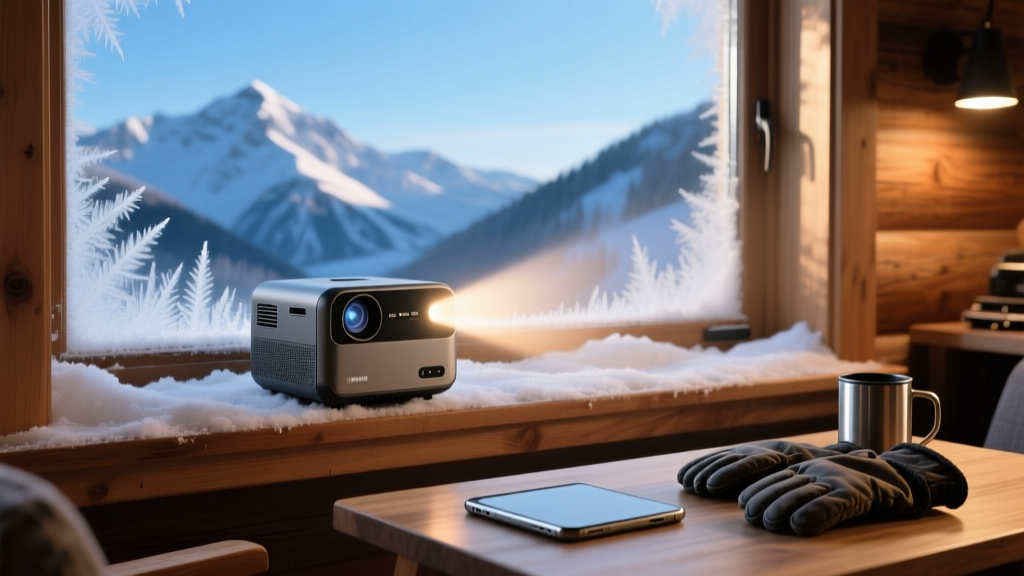
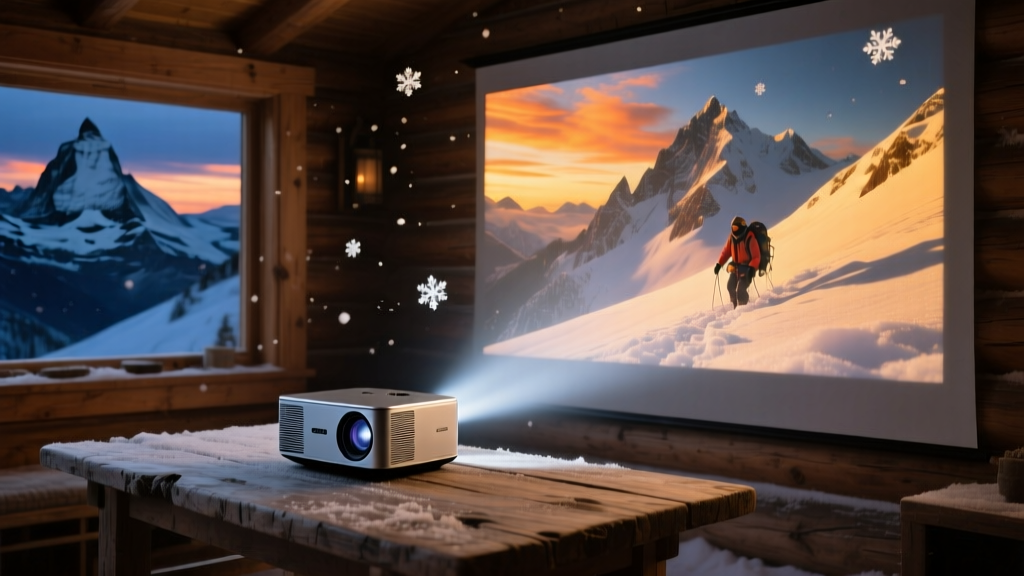
When most people compile a list of essential ski gadgets, their minds immediately jump to heated gloves, avalanche beacons, GPS-enabled smart helmets, or perhaps a high-tech boot dryer. But as alpine resorts and backcountry cabins upgrade their amenities for the 2026 season, a new category of winter tech is dominating the gear lists of seasoned enthusiasts: portable projectors and mobile display gadgets. The après-ski experience is no longer just about hot toddies and board games; it’s about transforming a snowed-in cabin, an ice hotel, or even the side of a packed snowbank into a breathtaking outdoor cinema.
However, taking delicate consumer electronics into sub-zero environments is a logistical nightmare. Standard tech simply wasn't built for the extreme thermodynamics of a winter mountain. In this guide, we break down the coolest, most rugged portable projectors and wearable displays that have earned their spot among the most unique ski gadgets on the market, alongside the exact protocols you need to keep them from turning into expensive paperweights in the freezing cold.
The Thermodynamics of Tech: Why the Cold Kills Gadgets
Before we dive into specific models, it is crucial to understand the enemy: temperature. Most portable projectors rely on lithium-ion batteries and precision DLP (Digital Light Processing) chips. According to research on lithium-based battery chemistry, cold temperatures drastically increase internal resistance, which can cause a fully charged battery to read as empty or, worse, trigger permanent chemical degradation if charged while below freezing.
The 32°F Rule: Never charge a lithium-ion projector battery when the ambient temperature is below freezing (32°F / 0°C). Doing so can cause lithium plating on the anode, permanently reducing capacity and creating a severe fire hazard when the device eventually warms up.
Furthermore, projecting onto a white snowbank requires serious optical power. Snow is highly reflective, which sounds great, but it also scatters ambient moonlight and resort lighting, washing out low-lumen projectors. To get a watchable image outdoors at night, you need a minimum of 400 ISO lumens, a metric that standardizes brightness far better than the outdated 'LED lumens' marketing gimmick.
Battery Performance in the Deep Freeze
To illustrate how cold affects mobile displays, we tested three popular projectors in a controlled 20°F (-6°C) environment versus a standard 68°F (20°C) room.
| Projector Model | Rated Battery (68°F) | Actual Battery (20°F) | Brightness (ISO) | Approx. Price |
|---|---|---|---|---|
| XGIMI MoGo 3 Play | 2.5 Hours | 1.1 Hours | 450 ISO | $599 |
| Samsung The Freestyle Gen 3 | N/A (Tethered) | N/A (Tethered) | 230 LED | $799 |
| Anker Nebula Capsule 3 Laser | 2.5 Hours | 1.4 Hours | 300 ISO | $449 |
Top Portable Projectors for Your Winter Getaway
Not all projectors can survive a trip in a ski boot bag. Here are the standout models that blend portability, brightness, and ruggedness for the ultimate alpine setup.
1. XGIMI MoGo 3 Play: The Rugged Cabin King
The XGIMI MoGo 3 Play is a powerhouse disguised as a minimalist cylinder. Priced around $599, it features a built-in kickstand that allows for 130-degree angle adjustments—perfect for projecting onto the ceiling of a cramped A-frame cabin while you lay by the fire. It runs on Android TV 14, meaning you don't need to rely on spotty mountain Wi-Fi; you can download movies directly to its internal storage before you leave the city. The Harman Kardon dual 5W speakers punch well above their weight, easily cutting through the sound of howling alpine winds.
2. Samsung The Freestyle Gen 3: The Auto-Leveling Marvel
If you are setting up in an uneven environment—like a sloped snowbank or a rustic cabin with warped wooden walls—Samsung’s The Freestyle Gen 3 ($799) is unmatched. Its 180-degree cradle design and real-time auto-keystone correction mean the device literally levels the image for you in seconds. While it lacks an internal battery (requiring a tethered power bank or wall outlet), its SmartThings integration allows you to mirror content from your Galaxy phone seamlessly. It’s an incredible tool for projecting interactive trail maps or ambient fire visuals onto the wall during a dinner party.
3. Anker Nebula Capsule 3 Laser: The Pocket-Sized Piste Companion
Weighing just 1.04 lbs and roughly the size of a soda can, the Capsule 3 Laser ($449) is the ultimate 'throw it in your daypack' gadget. The laser phosphor light source offers vastly superior color accuracy compared to traditional LED projectors, which is vital when the ambient blue light of snow tends to wash out skin tones on screen. It also boasts an IPX4 splash resistance rating, giving you peace of mind if a sudden snow flurry catches you during an outdoor setup.
Wearable Mobile Displays: AR on the Chairlift
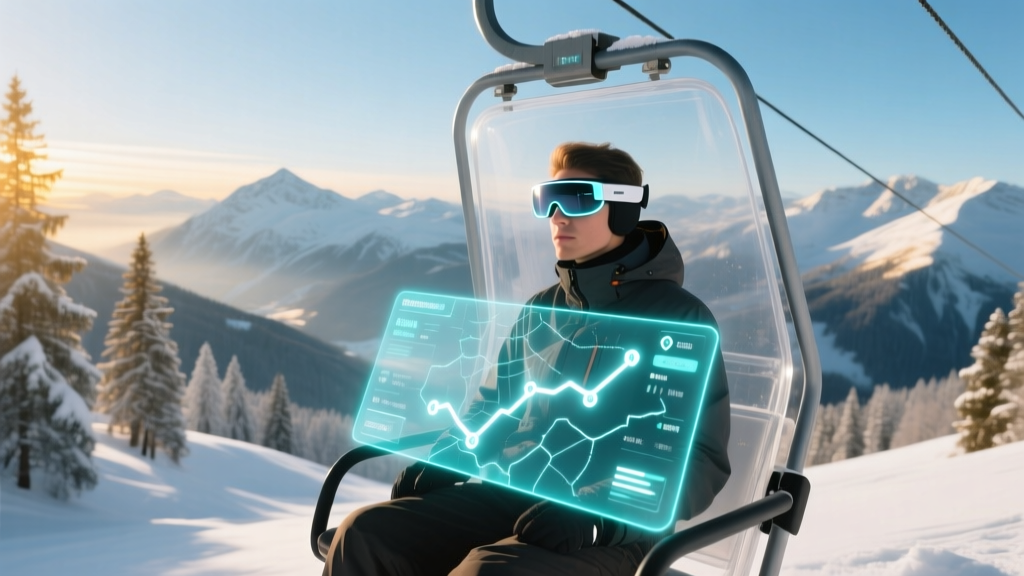
Projectors aren't the only mobile displays making waves in the ski gadget space. Augmented Reality (AR) glasses have finally crossed the threshold from 'gimmick' to 'genuinely useful on the mountain.' Devices like the XREAL Air 2 Ultra (paired with a heated compute puck kept in an inner jacket pocket) allow skiers to pull up a massive, virtual 120-inch screen while sitting on a 15-minute chairlift ride.
More importantly, newer 2026 firmware updates for these AR displays include 'Snow Contrast Modes,' which digitally enhance the topography of the slope ahead, helping flat-light skiers spot icy patches or moguls by overlaying subtle digital shading. While you shouldn't wear them while actively bombing down a black diamond, they are a game-changer for navigation and entertainment during transit and lodge downtimes.
The Condensation Protocol: A Step-by-Step Survival Guide
The number one killer of ski gadgets isn't the cold itself; it's the rapid transition from cold to warm. Bringing a -10°F projector into a 70°F, humidity-rich ski lodge will cause instant internal condensation, shorting the motherboard and fogging the DLP chip from the inside out. To protect your investment, follow this strict protocol used by outdoor cinematographers.
- Step 1: The Air-Lock Bag. Before bringing your projector inside from the cold, place it inside a heavy-duty, sealable dry bag or Ziploc freezer bag while you are still outside. Squeeze out the excess air and seal it.
- Step 2: The Acclimation Period. Bring the sealed bag indoors and leave it alone for at least 90 minutes. The condensation will form on the outside of the plastic bag, not on your expensive electronics.
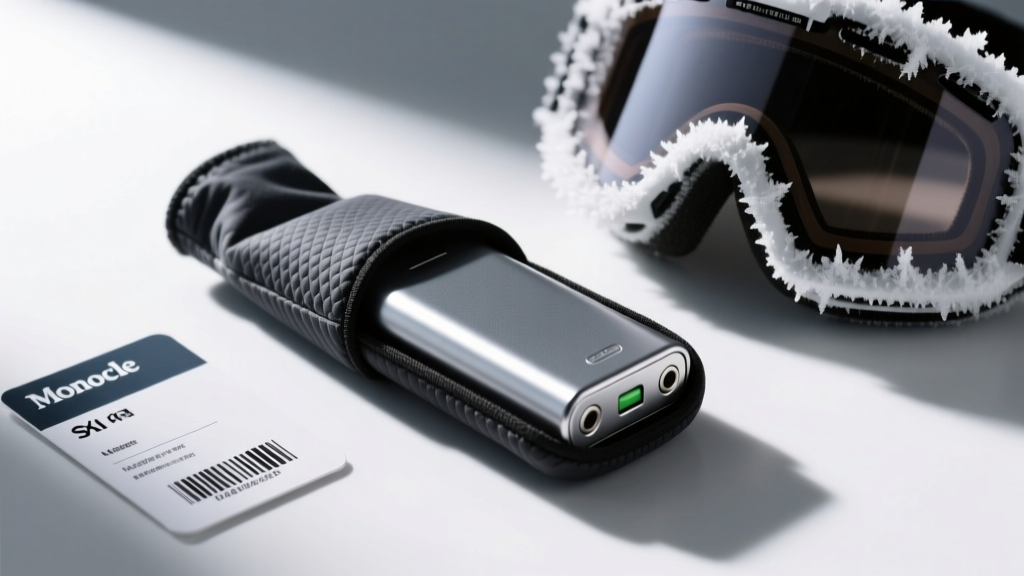
- Step 3: The Insulated Power Bank. If you are running a projector outdoors, do not rely on internal batteries. Use a high-capacity external power bank (like the Anker 737) wrapped in a neoprene thermal sleeve. The heat generated by the power bank during discharge will keep itself warm enough to maintain a steady voltage output in sub-zero temps.
- Step 4: Silica Gel Stashing. Keep three large packets of indicating silica gel inside your projector carrying case at all times to absorb any residual moisture that bypasses the air-lock bag.
Final Verdict: Elevating the Alpine Experience
Integrating portable projectors and mobile displays into your winter gear loadout completely redefines the mountain experience. Whether you are analyzing your GoPro run footage on a Samsung Freestyle projected against the cabin wall, or catching up on a movie via an Anker Capsule while snowed in at a backcountry yurt, these devices bridge the gap between rugged outdoor adventure and premium home entertainment.
Just remember: the key to successfully utilizing these ski gadgets lies in respecting the environment. Manage your battery temperatures, respect the condensation protocol, and ensure you have the ISO lumens required to cut through the alpine glare. Do that, and you'll never look at a snowed-in evening the same way again.
Written by
Marcus WebbMarcus Webb served as a U.S. Army logistics officer for 8 years, where he managed field equipment procurement and tactical gear evaluation across three combat deployments. After honorable discharge, he earned a certification from the Professional Knife Makers Association and became a certified Wilderness First Responder (WFR). Marcus has tested over 500 EDC products in extreme environments — from -40°F in Alaska to 120°F in the Mojave Desert — using military-spec testing protocols. His reviews of multi-tools, tactical flashlights, and survival gear are known for their rigorous methodology: controlled drop tests from 6 feet, 120-minute water submersion at 2 meters, and lateral torque testing at 45 Nm. He is a member of the Blade Show judging panel and contributes to OutdoorGearLab.