9 Cool New Tools and Gadgets for Budget Smart Homes (2026)
Discover the best cool new tools and gadgets for budget smart homes in 2026. We review top Matter hubs, Thread sensors, and smart plugs under $50.
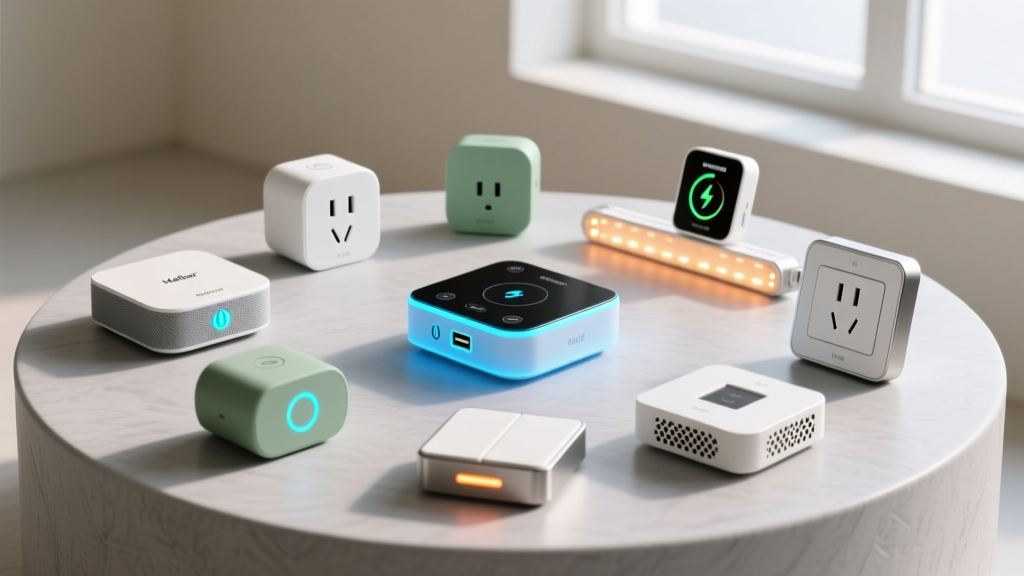
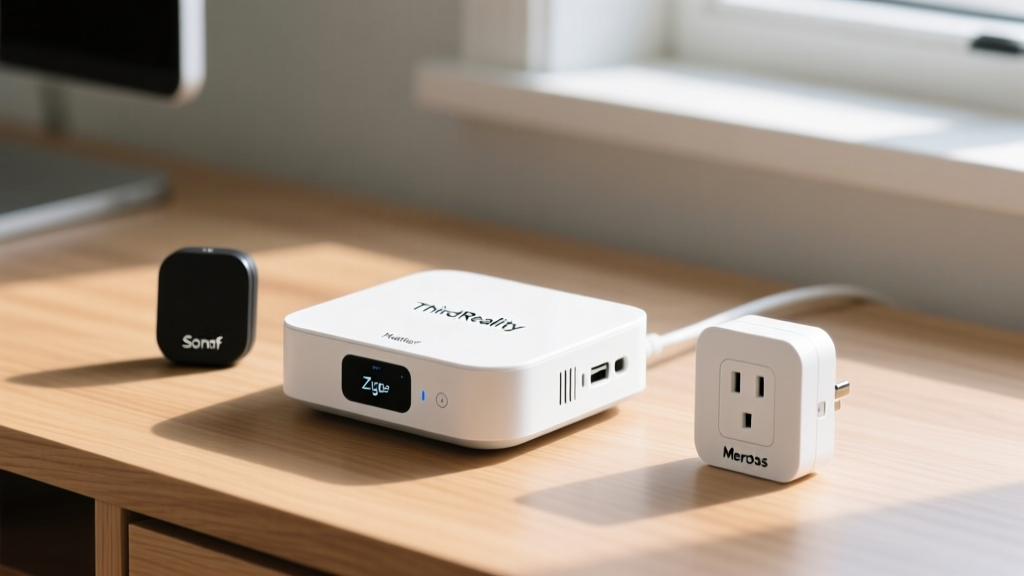
When tech enthusiasts hunt for cool new tools and gadgets, the smart home sector often feels gated behind premium price tags. However, the mass adoption of the Matter 1.3 protocol and the maturation of Thread networking in 2026 have fundamentally shifted the economics of home automation. You no longer need to spend $250 on a flagship bridge or pay a monthly subscription for basic cloud connectivity. This roundup of cool new tools and gadgets proves that building a responsive, local-first smart home on a strict budget is not only possible but yields a more reliable network than the fragmented Wi-Fi setups of the past.
The 2026 Budget Smart Home Stack: What Changed?
The primary driver for budget smart home tech this year is the Connectivity Standards Alliance (CSA) pushing Matter certification down to the silicon level. Chip manufacturers like Espressif and Nordic Semiconductor have released integrated Thread/Zigbee/Matter SoCs (System on Chips) that cost under $3 to implement. This means sub-$20 devices now support local execution, eliminating the 800ms to 1.5s cloud latency that plagued budget smart plugs in previous years. Furthermore, the shift toward local edge-processing means your automations will continue to run even when your ISP drops out.
Category 1: Matter-Certified Hubs & Bridges (The Brains)
Every robust smart home needs a central coordinator to manage mesh networks and translate protocols. Here are the top budget-friendly brains for 2026.
1. ThirdReality Matter Hub (MSR-1)
Price: $29.99 | Protocol: Matter over Thread, Zigbee 3.0
The MSR-1 is the undisputed king of budget hubs. Unlike older hubs that simply bridged Zigbee to Wi-Fi, the MSR-1 acts as a native Thread Border Router. It allows you to onboard Thread-based sensors directly into Apple Home, Home Assistant, or Google Home without a proprietary cloud. Its internal antenna provides a reliable 40-foot indoor range through standard drywall.
2. SwitchBot Smart Hub 2 (Matter Edition)
Price: $39.99 | Protocol: Matter, Wi-Fi, BLE
If you have legacy Bluetooth devices (like smart locks or blind motors), the SwitchBot Hub 2 is essential. It bridges BLE to Matter, exposing your existing SwitchBot ecosystem to local dashboards. It also includes a built-in temperature and humidity sensor, effectively giving you a free environmental monitor alongside your hub.
When setting up your MSR-1, ensure your Zigbee channel is set to 15, 20, or 25. Your 2.4GHz Wi-Fi router should be locked to channel 1, 6, or 11. Overlapping these frequencies is the number one cause of 'dropped' sensor signals in budget setups.
Category 2: Ultra-Cheap Thread & mmWave Sensors (The Nerves)
Motion sensors are outdated; 2026 is the era of presence detection and ultra-low-power Thread connectivity.
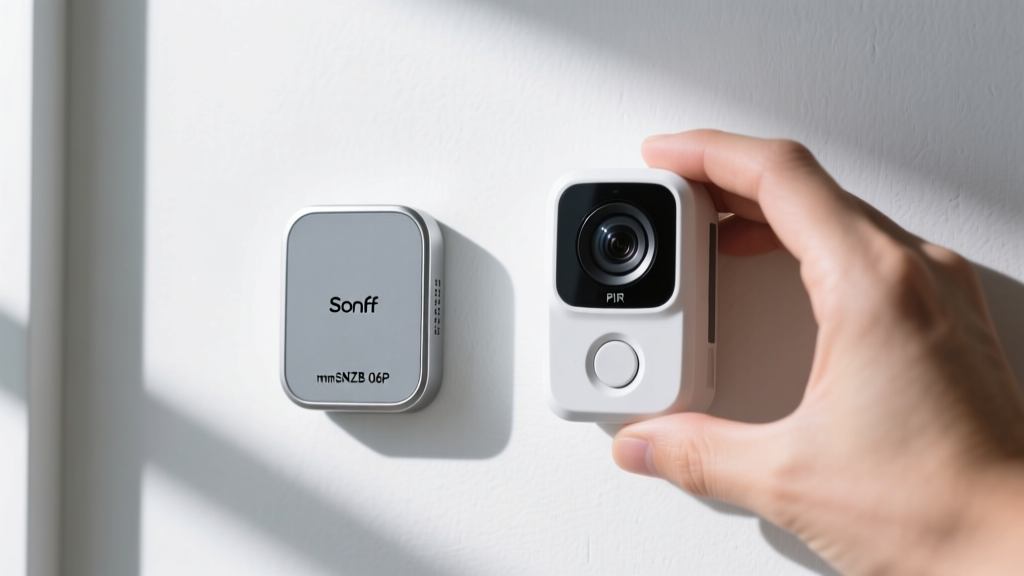
3. Sonoff SNZB-06P mmWave Presence Sensor
Price: $15.99 | Protocol: Zigbee 3.0
Standard PIR (Passive Infrared) sensors turn off the lights when you sit still reading a book. The SNZB-06P uses 24GHz mmWave radar to detect micro-movements, including the physical expansion of your chest while breathing. At under $16, it allows you to map exact 'presence zones' in a room, ignoring pets or ceiling fans.
4. Eve Door & Window (Matter over Thread)
Price: $39.99 | Protocol: Thread
While slightly pricier, Eve's contact sensors use Thread, meaning they actually strengthen your mesh network rather than just consuming bandwidth. The 2026 hardware revision features a 2-year battery life on a standard CR2032 coin cell and boasts a sub-200ms trigger latency for instant security lighting automations.
Category 3: Smart Plugs with Energy Monitoring (The Muscle)
Smart plugs are the easiest entry point into automation, but energy monitoring is what transforms them from simple switches into analytical tools.
5. Shelly Plug US (Gen 3)
Price: $14.99 | Protocol: Wi-Fi / Matter
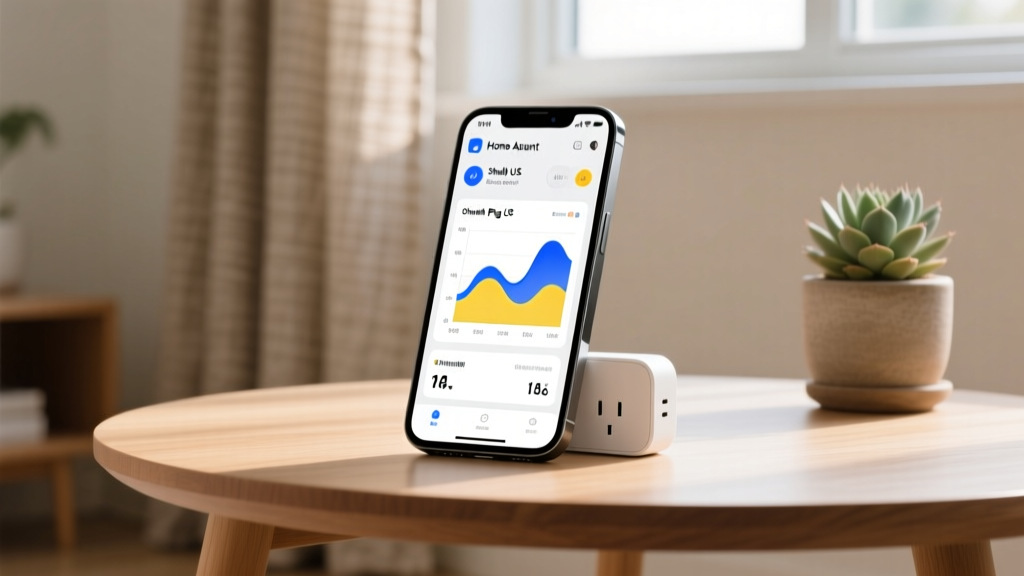
Shelly dominates the budget space by offering 0.1W precision energy monitoring. The Gen 3 plug runs an internal web server, allowing power users to pull JSON data directly into Grafana or Home Assistant without relying on the Shelly cloud. Its compact design ensures it won't block the adjacent outlet.
6. Meross Matter Smart Plug Mini
Price: $15.99 | Protocol: Matter over Wi-Fi
Meross provides a rock-solid 15A relay capable of handling heavy loads like window AC units or space heaters. Crucial setup note: Meross devices strictly require a dedicated 2.4GHz SSID. If your router uses 'band steering' (combining 2.4GHz and 5GHz under one name), the plug's setup will time out at 98%. Create a separate IoT SSID before unboxing.
2026 Budget Device Comparison Matrix
| Device | Price | Protocol | Local Control | Primary Use Case |
|---|---|---|---|---|
| ThirdReality MSR-1 | $29.99 | Thread / Zigbee | Yes (Native) | Core Mesh Coordination |
| SwitchBot Hub 2 | $39.99 | BLE / Matter | Yes (via Matter) | Legacy BLE Bridging |
| Sonoff SNZB-06P | $15.99 | Zigbee 3.0 | Yes (via Hub) | Still-Presence Detection |
| Eve Door & Window | $39.99 | Thread | Yes (Native) | Perimeter Security |
| Shelly Plug US G3 | $14.99 | Wi-Fi / Matter | Yes (Native) | Vampire Power Tracking |
| Meross Matter Plug | $15.99 | Wi-Fi / Matter | Yes (via Matter) | High-Draw Appliance Control |
Building the Automation: 3 Budget Workflows That Actually Work
Buying cool new tools and gadgets is only half the battle; programming them to solve actual problems is where the value lies. Here are three high-ROI automations you can build with the budget stack above.
Workflow 1: The 'Vampire Power' Killer
According to the U.S. Department of Energy, idle electronics account for up to 10% of residential energy use. The Setup: Plug your desktop PC, monitors, and speakers into a power strip connected to the Shelly Plug US. The Logic: If Shelly Plug reports power draw < 15W for more than 10 minutes (indicating the PC is asleep or off), cut the relay power. This eliminates the constant 8W-12W phantom draw from monitor power supplies and speaker amps.
Workflow 2: HVAC Optimization via True Presence
The Setup: Mount the Sonoff mmWave sensor in your home office. The Logic: Standard PIR sensors trigger the AC when you walk in, but turn it off when you sit at your desk for 30 minutes, causing the room to heat up. With the SNZB-06P, the logic is: IF Presence = True AND Room Temp > 72°F, THEN turn on Meross Plug (connected to a smart window AC or fan). The mmWave radar keeps the cooling active as long as you are physically in the room, regardless of movement.
Workflow 3: Security Lighting Failsafe
The Setup: Eve Door & Window sensor on the garage entry door, Shelly Plug controlling a high-lumen work light. The Logic: IF Door = Open AND Time is between 8:00 PM and 6:00 AM AND Lux (from Hub sensor) < 20, THEN turn on Shelly Plug for 5 minutes. Because Eve uses Thread, the latency between the door opening and the light clicking on is imperceptible (under 150ms), providing immediate visual feedback and security.
Never daisy-chain high-draw appliances on budget smart plugs. The Meross and Shelly plugs are rated for 15A (1800W). If you connect a 1500W space heater and a 500W window AC to the same power strip controlled by one plug, you will trip the internal thermal fuse or, worse, melt the plug housing. Always calculate the combined wattage.
Pitfalls to Avoid When Buying Budget Smart Tech
- Ignoring the Thread Group Topology: Thread devices need a Border Router. If you buy five Thread sensors but only have one Apple TV acting as a Border Router on the opposite side of the house, your sensors will drop offline. Always pair Thread sensors with a local hub like the ThirdReality MSR-1.
- Overloading 2.4GHz Wi-Fi: Wi-Fi smart plugs (like Shelly and Meross) do not mesh. If you buy 20 Wi-Fi plugs, you will exhaust your router's DHCP table and airtime. Limit Wi-Fi devices to 10-15 per router, and use Zigbee/Thread for everything else.
- Assuming 'Matter' Means 'Local': Some ultra-cheap, uncertified 'Matter-ready' plugs still require a cloud handshake for initial provisioning. Stick to CSA-certified devices to ensure true local LAN control.
Final Verdict: Where to Allocate Your $150 Budget
If you have exactly $150 to start your 2026 smart home journey, here is the optimal allocation for maximum reliability and information gain:
- $29.99 - ThirdReality MSR-1 Hub (Establishes your local mesh foundation).
- $31.98 - Two Sonoff SNZB-06P mmWave sensors (Solves the 'lights turning off while reading' problem in the living room and office).
- $44.97 - Three Shelly Plug US Gen 3 (Deployed on entertainment centers and computer desks to track and kill vampire power).
- $39.99 - Eve Door & Window (Secures the primary entry point with zero-latency Thread triggers).
Total: $146.93. This stack provides local execution, sub-second latency, energy analytics, and true presence detection, proving that the best cool new tools and gadgets for the smart home are defined by their protocols, not their price tags.
Written by
Emma LarssonEmma Larsson holds an M.A. in International Relations from Sciences Po Paris and a B.A. in Communications from Stockholm University. A digital nomad since 2017, she has worked from over 45 countries across six continents, building deep expertise in portable power solutions, travel routers, compact computing, and connectivity gadgets that survive international travel. Emma is a certified member of the Travel Technology Association and has advised three travel gear startups on product-market fit for remote workers. Her reviews evaluate products against real travel scenarios — TSA compliance, voltage compatibility across 200+ countries, durability through 50+ checked bag cycles, and battery life under airplane mode vs. active use. She has been featured in Condé Nast Traveler's "Tech-Savvy Traveler" series and speaks at Remote Work Summit events.