How to Build a Loadout With the Coolest EDC Gadgets
Learn how to build a functional daily carry. We break down weight, pocket real estate, and how to integrate the coolest EDC gadgets into your loadout.
The Philosophy of a Modern EDC Loadout
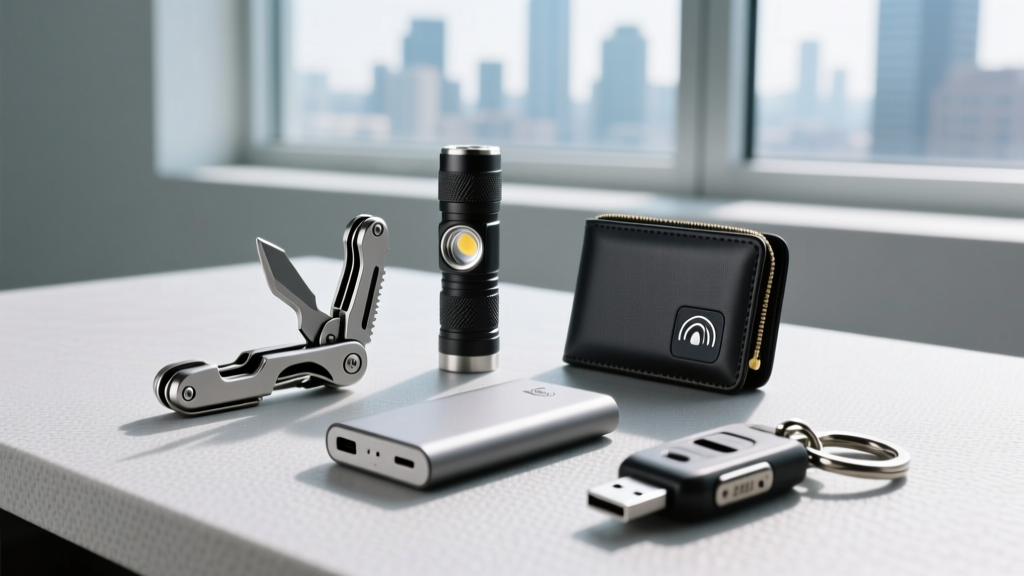
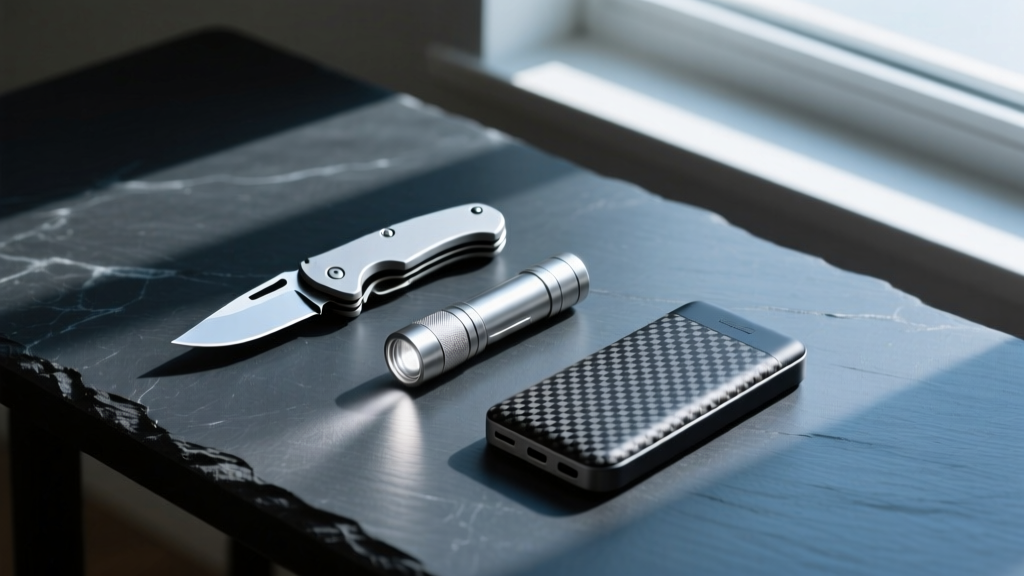
Building a daily carry is no longer just about tossing a pocket knife and a set of keys into your jeans. As we navigate 2026, the everyday carry landscape has evolved into a precise intersection of material science, micro-electronics, and ergonomic design. When enthusiasts hunt for the coolest EDC gadgets, they are rarely looking for mere novelty; they want high-utility tools that solve real-world problems without weighing down their pockets. A successful loadout requires a strategic approach to weight distribution, pocket real estate, and material durability.
This setup and how-to tutorial will guide you through auditing your current carry, selecting a core trinity of tools, and seamlessly integrating advanced tech gadgets into your daily rotation. According to the community experts at Everyday Carry, the most effective loadouts are those that remain completely unnoticeable until the exact moment they are needed.
Step 1: Audit Your Pocket Real Estate and Weight Limits
Before purchasing new gear, you must understand the physical limitations of your clothing. A standard pair of men's denim jeans can comfortably support about 8 to 10 ounces of gear in the front pockets before the fabric begins to sag, stretch, or tear. Furthermore, the thickness of your items dictates how easily you can retrieve them or sit down comfortably.
The Weight vs. Utility Matrix
Use the table below to benchmark your current gear against optimal carry standards. If your total weight exceeds the target, it is time to upgrade to lighter, more advanced materials like Grade 5 Titanium or carbon fiber composites.
| Item Category | Target Weight | Max Thickness | Preferred 2026 Materials |
|---|---|---|---|
| Primary Blade | 2.0 - 3.5 oz | 0.6 inches | CPM MagnaCut, S90V, Titanium |
| Illumination | 1.0 - 2.5 oz | 0.8 inches | Anodized Aluminum, Polycarbonate |
| Multi-Tool / Gadget | 1.5 - 3.0 oz | 0.5 inches | Stainless Steel, Carbon Fiber |
| Tech / Power | 3.0 - 5.0 oz | 0.4 inches | Si/C Anode, Kevlar Weave |
Step 2: Selecting the Core Trinity
Every reliable loadout rests on a foundational trinity: a cutting tool, an illumination source, and a mechanical problem solver. Sourcing the right versions of these items ensures you are prepared for 90% of daily tasks.
The Primary Blade
For a lightweight yet indestructible option, the Benchmade Bugout 535 in S90V steel remains a benchmark. Weighing in at a mere 1.85 ounces, it disappears into the pocket. However, if you prefer the absolute bleeding edge of 2026 metallurgy, look for folders utilizing CPM MagnaCut steel, which offers a superior balance of toughness and corrosion resistance compared to older S35VN variants. Always ensure your knife features a deep-carry wire clip to prevent it from catching on chair arms or car seats.
The Illumination Source
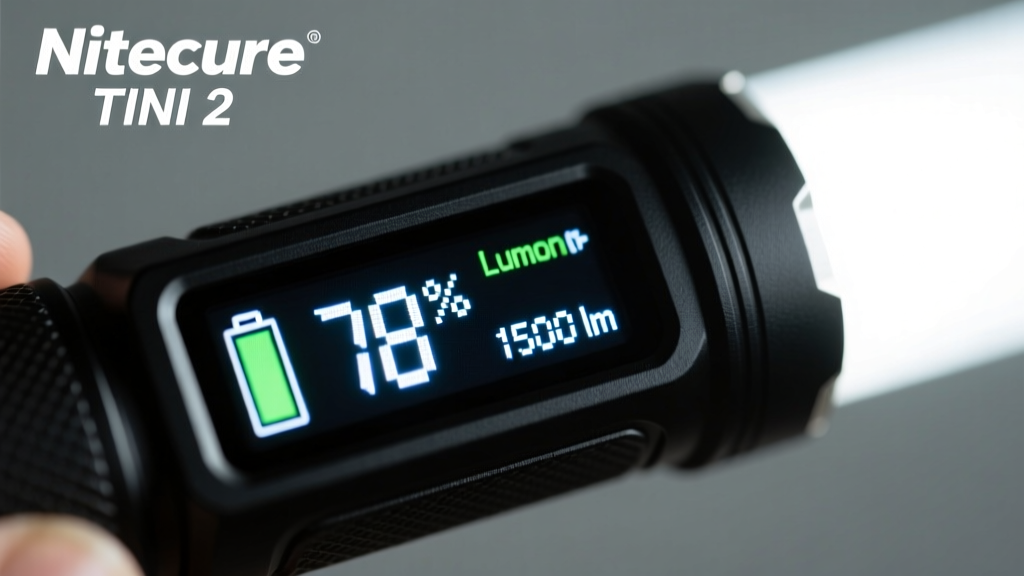
Phone flashlights are insufficient for dedicated tasks due to poor beam profiles and battery drain. The Nitecore TINI 2 is a masterclass in micro-engineering. Weighing just 1.13 ounces, it pushes an astonishing 500 lumens and features a built-in OLED display that shows exact battery percentage and runtime. Its dual-core design and right-angle versatility make it an indispensable anchor for any setup.
The Problem Solver
Skip the bulky, traditional plier-based multi-tools for your front pocket. Instead, opt for a specialized gadget like the Big Idea Design TI Pro. This adjustable wrench and bit driver combo is machined from solid Ti-6Al-4V titanium. It handles everything from tightening loose eyeglass screws to assembling flat-pack furniture, all while weighing under 2.5 ounces.
Step 3: Integrating the Coolest EDC Gadgets
Once your core trinity is established, you can begin layering in the coolest EDC gadgets that elevate your loadout from functional to exceptional. The key here is to focus on micro-tech and modular utility.
- Silicon-Carbon Power Banks: Traditional lithium-ion power banks are too thick for pocket carry. In 2026, silicon-carbon anode technology has allowed brands like Nitecore (with their NPS600) to pack 5000mAh into a carbon-fiber shell that is only 0.4 inches thick and weighs 3.5 ounces. It is the perfect emergency top-up for your phone or smartwatch.
- Slideable Bit Drivers: The WESN Hex Bit Driver is a pocket clip-sized tool that stores six standard 1/4-inch hex bits inside its titanium body. It slides open with a satisfying magnetic detent, offering heavy-duty mechanical leverage without the bulk of a traditional screwdriver.
- Smart Tracking Tags: Integrating an Apple AirTag or Tile Pro into your keychain or bag is mandatory for modern urban carry. To keep it streamlined, use a titanium keychain organizer like the KeySmart MaxTrack, which houses the tracker flush against your keys to prevent rattling and snagging.
Pro Tip: When adding tech gadgets to your carry, always prioritize devices that utilize USB-C Power Delivery (PD). Standardizing your charging cables means you only need to carry one ultra-short, Kevlar-reinforced USB-C to USB-C cable for your power bank, flashlight, and phone.
Step 4: Organizing and Securing the Carry
The coolest EDC gadgets are useless if they are tangled together in the bottom of your pocket, scratching each other's finishes or accidentally turning on. Pocket organization is the final, crucial step of the setup process.
Leather Pocket Slips
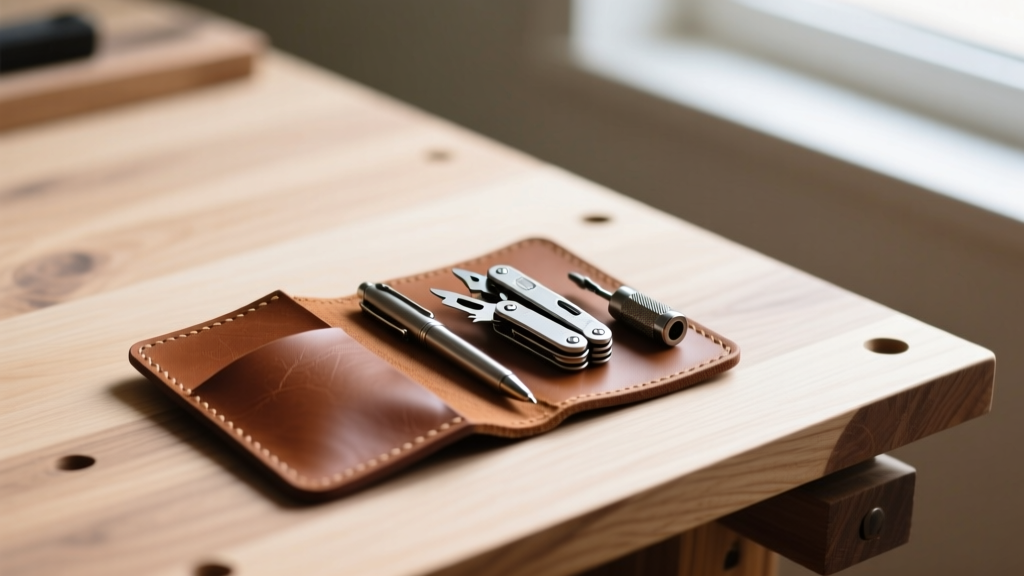
A handmade leather pocket slip from a maker like Ric Leathers or Noble Leather Works acts as a holster for your gear. By sliding your knife, flashlight, and pen into dedicated slots, you create a single, rigid unit that slides easily into your pocket and prevents the items from shifting when you sit or run. Over time, the leather molds to the exact shape of your gadgets, creating a custom friction fit.
Magnetic Pocket Clips
If you prefer to keep items separated, consider using a magnetic pocket holster. These slim, neodymium-magnet-equipped sheaths clip to the inside of your pocket waistband, allowing you to snap your flashlight or multi-tool to the fabric itself. This keeps the gear upright, instantly accessible, and completely frees up the bottom of your pocket for your hands or keys.
Common Failure Modes and How to Avoid Them
Even the most meticulously planned loadouts can fail if you ignore the realities of daily wear and tear. Here are the most common mistakes and their solutions:
1. Pocket Blowout
The Problem: Carrying heavy, sharp-cornered items like titanium multi-tools directly in thin denim or chino pockets eventually causes the fabric to tear at the bottom seam.
The Fix: Always use a pocket slip to distribute the weight and blunt the edges. Alternatively, upgrade your wardrobe to pants featuring reinforced pocket bags, such as those made with Cordura nylon linings.
2. Accidental Activation
The Problem: High-lumen flashlights with stiff clicky switches or unprotected side buttons can turn on inside your pocket, draining the battery and generating dangerous heat.
The Fix: Only carry lights with a 'lockout' feature. For example, holding the side switch on the Olight Perun Mini for three seconds engages a digital lockout. Alternatively, carry lights with recessed tail-cap switches that require a deliberate push to activate.
3. Galvanic Corrosion
The Problem: Storing carbon steel tools or copper accessories directly next to titanium or aluminum gadgets in a humid environment can cause galvanic corrosion, pitting the metal surfaces.
The Fix: Keep dissimilar metals separated using a leather slip, or apply a micro-thin coat of Renaissance Wax to your carbon steel and copper items once a month to seal the pores.
FAQ: Fine-Tuning Your Carry
How often should I rotate my EDC gadgets?
You should perform a full loadout audit every three to four months. Your daily environment dictates your needs; a summer carry focused on hydration and lightweight tools will differ vastly from a winter carry that requires heavier-duty mechanical tools and higher-lumen lighting for early sunsets.
Are expensive materials like Titanium and MagnaCut steel worth the investment?
According to metallurgical data from Blade HQ, premium steels like CPM MagnaCut hold an edge significantly longer and resist rust far better than budget steels like 8Cr13MoV. Similarly, Grade 5 Titanium offers the strength of steel at nearly half the weight. If you use your tools daily, the upfront cost is easily justified by the reduction in maintenance and the elimination of pocket fatigue.
What is the best way to clean my EDC tech gadgets?
For flashlights and power banks, use a microfiber cloth and a small amount of isopropyl alcohol to clean the OLED screens and charging contacts. For mechanical tools and knives, use compressed air to blow out pocket lint from the pivot areas, followed by a single drop of nano-oil to keep the action smooth and silent.
Building the ultimate daily carry is a deeply personal journey. By respecting weight limits, choosing advanced materials, and carefully selecting the coolest EDC gadgets that offer genuine utility, you transform your pockets from a cluttered mess into a highly efficient, modern toolkit.
Written by
Lena ChenLena Chen earned her M.S. in Human-Computer Interaction from Carnegie Mellon University and a B.S. in Electrical Engineering from the University of Washington. She has spent the past decade specializing in smart home architecture and IoT ecosystems, helping over 200 homeowners design fully connected living spaces. Lena is a certified Matter protocol consultant and has published peer-reviewed research on voice-first interface design in the ACM Digital Library. Her reviews of smart home products combine deep technical analysis with real-world usability testing, evaluating everything from Zigbee mesh stability to Alexa skill responsiveness. She regularly speaks at CEDIA Expo and CES smart home panels.