Curating the Perfect Coffee and Tea Kitchen Gadget Set: 2026 Gift Guide
Discover the ultimate coffee and tea kitchen gadget set ideas for 2026. Our expert gift guide features precision brewers, grinders, and matcha tools.
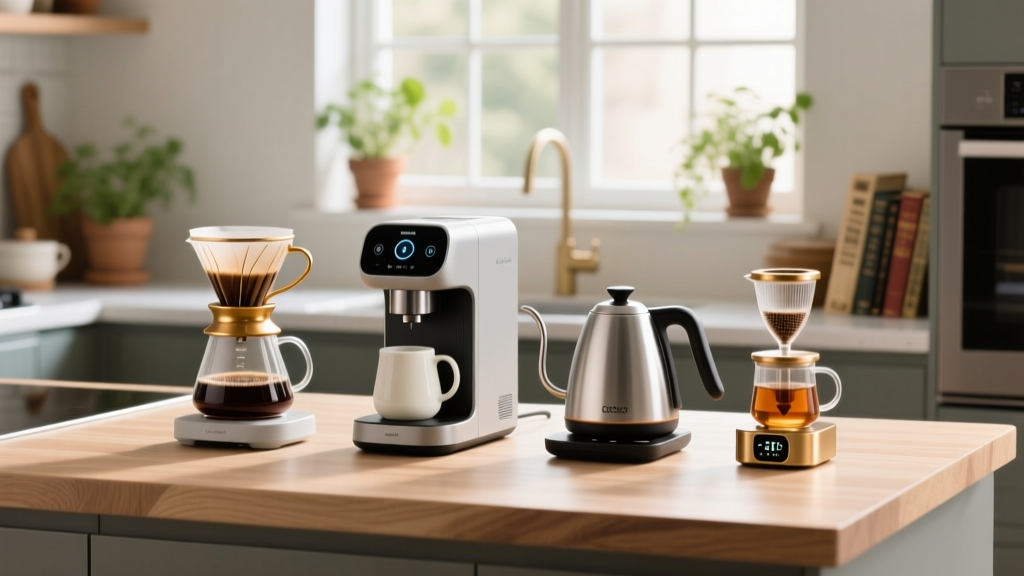
The Problem with Pre-Boxed Barista Kits
Walk into any big-box retailer in November, and you will find aisles stacked with pre-packaged coffee and tea gift boxes. These mass-produced kits typically include a ceramic canister, a cheap blade grinder, a silicone spatula, and a generic French press. While they look appealing under the tree, they fail the enthusiast. Blade grinders produce wildly inconsistent particle sizes, leading to simultaneous over-extraction (bitterness) and under-extraction (sourness) in the same cup. Silicone accessories degrade under high heat, and generic presses lack the thermal mass to maintain brewing temperatures.
If you want to give a gift that actually elevates the recipient's daily ritual, you must abandon the pre-boxed route. Curating a custom coffee and tea kitchen gadget set allows you to select tools that meet professional extraction standards. According to the Specialty Coffee Association (SCA), precise water temperature, uniform particle distribution, and accurate mass measurements are non-negotiable for optimal brewing. This 2026 guide breaks down exactly how to build two distinct, high-performance gadget sets: one for the pour-over coffee purist, and one for the matcha and loose-leaf tea ritualist.
Build 1: The Pour-Over Purist (Precision Coffee)
The pour-over method requires the user to manually control water flow, temperature, and agitation. To gift a setup that guarantees café-quality clarity, you need to focus on thermal stability and grind uniformity. Skip the electric drip machines and focus on manual control tools.
The Core Components
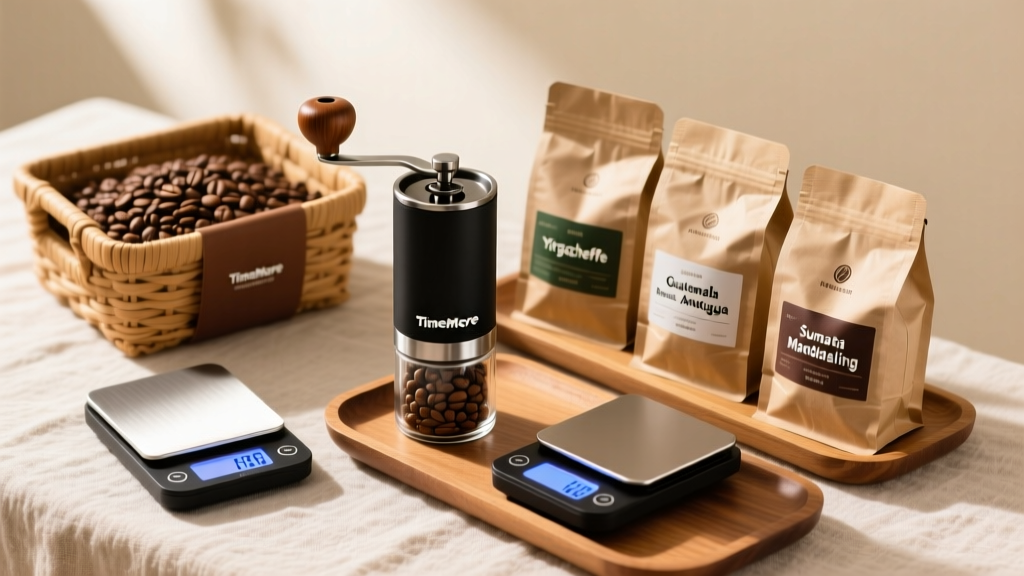
1. The Grinder: Fellow Ode Gen 2 ($345)
Conical burrs often create a "bimodal" particle distribution (lots of fine dust mixed with larger boulders). The Fellow Ode Gen 2 utilizes 64mm flat burrs, which produce a highly uniform, "unimodal" grind. This uniformity is critical for pour-over, as it prevents the fine particles from clogging the paper filter and stalling the drawdown. The Gen 2 model also features an auto-stop single-dose hopper and an ionizer to eliminate static cling, meaning no messy coffee grounds on the recipient's counter.
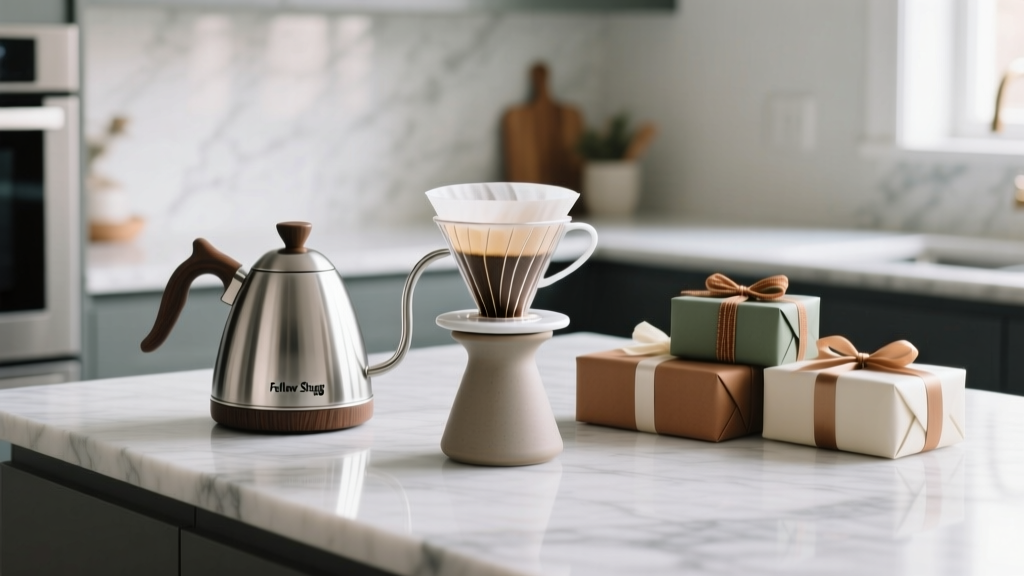
2. The Kettle: Fellow Stagg EKG ($195)
A standard wide-spout kettle dumps water too aggressively, excavating the coffee bed and causing channeling. The Stagg EKG features a 0.5mm gooseneck spout tip engineered for a laminar flow rate of exactly 1.5 grams per second at a standard tilt. The internal PID controller holds water to within 1°F of the target temperature (ideally 200°F–205°F for light roasts) for up to 60 minutes.
3. The Scale: Acaia Lunar ($229)
Baking scales measure in 1-gram increments and update every 500 milliseconds—far too slow for espresso or precision pour-over. The Acaia Lunar boasts a 20-millisecond response time and 0.1-gram accuracy. It also features built-in flow-rate tracking, which helps the recipient replicate their exact pouring cadence every morning.
Pour-Over Set Cost & Spec Matrix
| Component | Recommended Model | Approx. Price (2026) | Critical Spec for Gifting |
|---|---|---|---|
| Electric Grinder | Fellow Ode Gen 2 | $345 | 64mm flat burrs, auto-stop single dose |
| Gooseneck Kettle | Fellow Stagg EKG | $195 | PID temp control, 0.5mm spout tip |
| Brewing Scale | Acaia Lunar | $229 | 20ms response time, 0.1g resolution |
| Dripper | Hario V60 (Copper) | $65 | Copper thermal mass, 60° angle ribs |
Build 2: The Matcha & Loose-Leaf Ritualist (Tea)
Tea preparation is often overlooked in gadget guides, yet the mechanics of steeping and whisking require highly specific tools. A proper tea kitchen gadget set focuses on leaf expansion space, precise thermal presets, and traditional whisking implements.
- The Infuser: Finum Brewing Basket ($15 - $20)
Most novelty tea infusers are too small, restricting the hydration and expansion of whole-leaf teas like oolong or white peony. The Finum basket utilizes an 18/8 stainless steel frame with a 100-micron permanent mesh. This fine mesh is essential for rooibos and honeybush, which feature needle-like leaves that easily escape standard wire strainers. - The Kettle: Breville IQ Kettle Pure ($199)
Unlike coffee, which generally requires a single high-temperature band, tea demands exact thermal precision based on oxidation levels. Green teas scorch and turn bitter at boiling temperatures. The Breville IQ Pure features dedicated, one-touch presets: 175°F for green/white, 185°F for oolong, and 212°F for black/herbal. It also includes a "keep warm" button and a soft-opening lid to prevent steam burns. - The Whisk: Kinto Uni Chasen ($45)
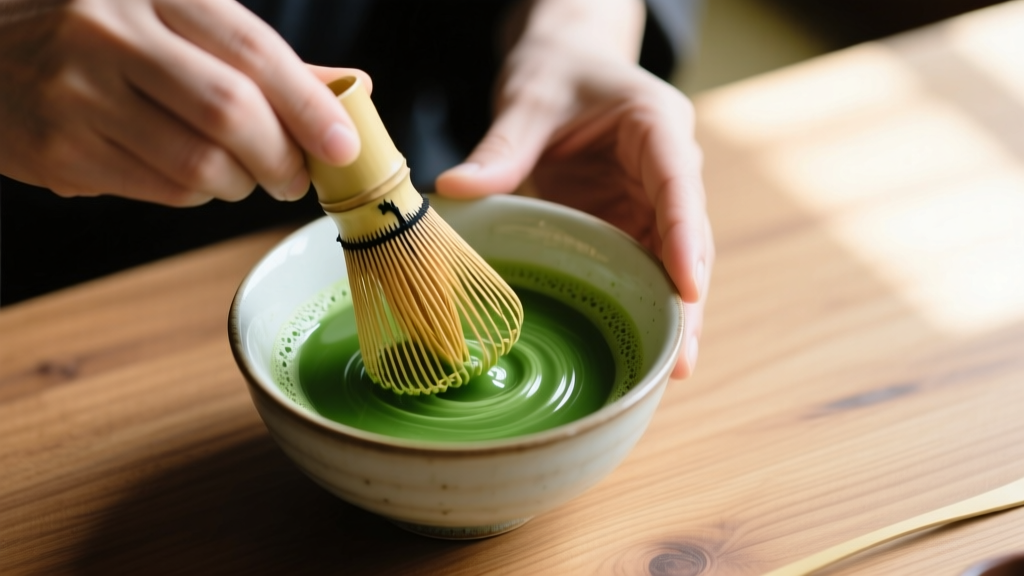
For matcha enthusiasts, the bamboo whisk (chasen) is the centerpiece. Mass-market whisks often use brittle bamboo that splinters after a few uses and feature only 40-50 prongs, resulting in a clumpy, poorly aerated bowl. The Kinto Uni Chasen is carved from a single piece of high-grade, treated bamboo and features 80 hand-tied prongs. This high prong count introduces micro-bubbles, creating a thick, stable crema (foam) on the matcha surface.
If you include a matcha bowl in your set, avoid standard cereal bowls with a curved, narrow base. A proper chawan must have a wide, flat interior base (at least 5 inches in diameter). This flat geometry gives the bamboo whisk enough surface area to glide rapidly in a "W" or "M" motion without striking the sides of the bowl and snapping the delicate tines.
The "Stocking Stuffer" Upgrades: Water Chemistry
The most expensive grinder and kettle cannot compensate for poor water chemistry. Coffee and tea are 98% water. If the recipient lives in an area with heavily chlorinated municipal water or extremely hard well water, their brews will taste flat or chalky, regardless of the gadget quality.
Include a box of Third Wave Water Classic Profile packets ($25 for 12 gallons) in the gift basket. These mineral packets are engineered to add exact ratios of magnesium (which acts as a catalyst to extract flavorful fruit acids from the coffee bean), calcium (which binds to heavier, chocolatey flavor compounds), and sodium bicarbonate (which buffers the water to prevent acidic degradation). According to the SCA Water Quality Standards, targeting a total hardness of 50-175 ppm and an alkalinity of 40-70 ppm is the baseline for specialty extraction. Third Wave Water takes the guesswork out of mineral dosing, making it the ultimate high-impact, low-cost gift add-on.
Packaging Framework: Elevating the Unboxing
How you present a custom kitchen gadget set is just as important as the tools themselves. Avoid wicker baskets wrapped in cellophane; they look cheap and offer zero protection for fragile ceramics or precision electronics.
The Wooden Crate Method
Source a raw, unfinished pine or cedar slat crate from a local woodworking shop or online retailer. Line the interior with unbleached linen or a custom-cut foam insert. The wooden crate serves a dual purpose: it acts as premium, sustainable packaging, and the recipient can repurpose it as countertop storage for their new coffee beans, tea tins, or brewing accessories. Fill the negative space with whole-bean coffee from a local roaster (look for bags with a one-way degassing valve and a "roasted on" date within the last 14 days) or loose-leaf tea stored in opaque, airtight Miron violet glass jars to prevent UV degradation.
By focusing on extraction physics, thermal stability, and material longevity, you transform a simple holiday gift into a permanent upgrade to the recipient's daily kitchen ritual. Skip the generic boxes and build a set that respects the craft of brewing.
Written by
Ryan TanakaRyan Tanaka holds a B.S. in Mechanical Engineering from Oregon State University and is a certified AWS Solutions Architect. He has built over 80 custom electronics projects ranging from CNC machines to IoT sensor networks, and has reviewed development boards, 3D printers, soldering equipment, and maker tools for the past 6 years. Ryan is an active contributor to 12 open-source hardware projects on GitHub and teaches monthly workshops at three hackerspaces across the Pacific Northwest. His reviews combine engineering rigor with accessibility — he evaluates products not just on specs but on documentation quality, community support, and learning curve for beginners. He has presented at Maker Faire Bay Area, Open Hardware Summit, and the Adafruit community showcase, and maintains a popular blog documenting his build processes.