Best Wooden Kitchen Gadgets: Bamboo & Hardwood Buyer Guide
Discover the best wooden and bamboo kitchen gadgets. Compare hardwoods, learn maintenance secrets, and find top eco-friendly cooking tools today.
The Material Science of Sustainable Cooking Tools
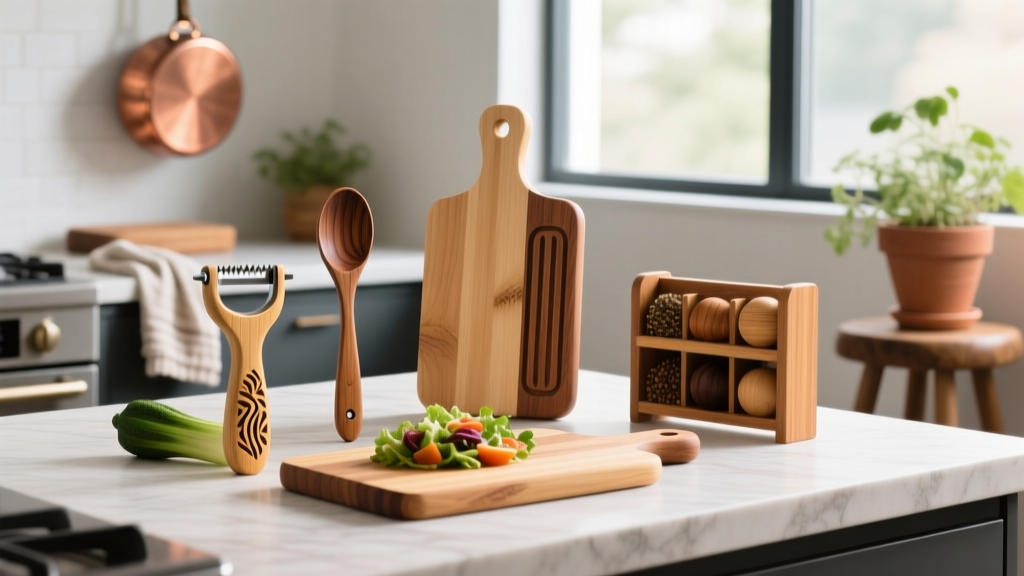
When outfitting a modern kitchen, the shift away from single-use plastics and synthetic polymers has made wooden and bamboo kitchen gadgets a staple for both professional chefs and home cooks. Unlike nylon or silicone, which can degrade and leach microplastics into food at high temperatures, natural cellulosic materials offer inherent heat resistance, structural rigidity, and antimicrobial properties. According to the USDA Food Safety and Inspection Service, dense hardwoods naturally inhibit bacterial growth by drawing moisture and pathogens into the wood grain, where they die off.
However, not all natural materials perform equally under the stress of daily cooking. Choosing the right wooden kitchen gadgets requires understanding the Janka hardness scale, grain porosity, and the chemical adhesives used in manufacturing. This guide breaks down the exact specifications you need to select heirloom-quality tools that will not warp, splinter, or off-gas.
Hardwood vs. Bamboo: The Material Matrix
Bamboo is technically a grass (Phyllostachys edulis), while traditional wooden utensils are milled from deciduous hardwoods. Each material presents distinct trade-offs regarding durability, knife-friendliness, and moisture resistance.
| Material | Janka Hardness (lbf) | Porosity & Grain | Best Use Case | Avg. Price Range |
|---|---|---|---|---|
| Moso Bamboo | 1,380 - 1,410 | Linear, fibrous; requires adhesive lamination | Thin spatulas, scrapers, steamer baskets | $5 - $15 |
| Teak (Tectona grandis) | 1,000 - 1,155 | Tight grain; high natural silica and oil content | Everyday stirring spoons, high-heat turners | $20 - $45 |
| Olive Wood | 2,700 - 2,990 | Extremely dense, non-porous, swirling grain | Serving utensils, tasting spoons, flat scrapers | $25 - $60 |
| Beech (Fagus sylvatica) | 1,300 - 1,450 | Tight, closed grain; low natural oil | Rolling pins, muddlers, heavy-duty mashers | $10 - $25 |
| Acacia | 1,500 - 2,300 | Variable porosity; requires heavy sealing | Salad tongs, serving forks, decorative scoops | $8 - $20 |
The Bamboo Adhesive Problem
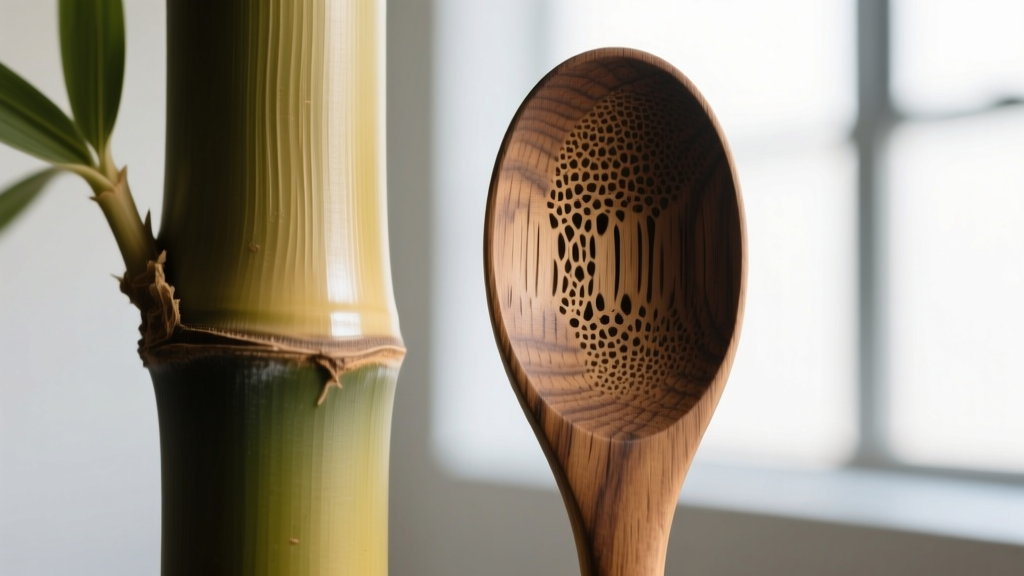
Because bamboo grows as hollow stalks, manufacturing solid bamboo kitchen gadgets requires slicing the stalks into strips and pressing them together with adhesives. The FDA regulates food contact substances, but imported, uncertified bamboo products often use urea-formaldehyde or melamine-based glues to cut costs. When exposed to boiling water or hot oil (above 212°F/100°C), these inferior glues can degrade and off-gas volatile organic compounds (VOCs).
Top Wooden Kitchen Gadgets for Specific Culinary Tasks
Matching the wood species to the mechanical stress of the task is critical for tool longevity.
1. High-Heat Searing and Deglazing: Teak and Beech
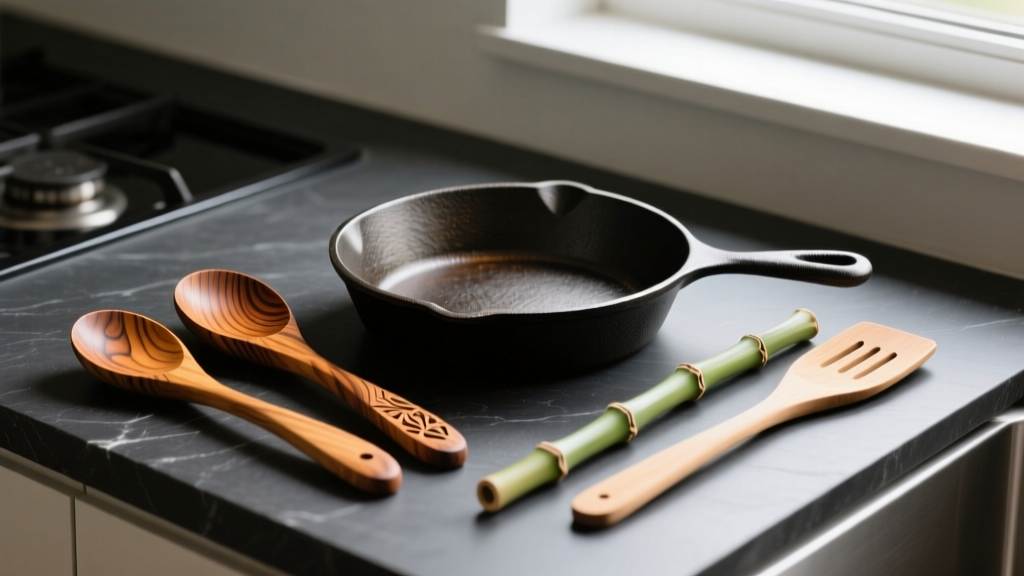
When scraping fond from a cast-iron skillet or stirring a thick reduction, you need a tool with high shear strength and low thermal conductivity. Teak is the gold standard here. Its natural tectoquinones (oils) repel water and fats, preventing the wood from absorbing the flavors of your food. Look for flat-grain teak spatulas with a beveled edge, such as those crafted by Earlywood ($35-$45), which offer the rigidity of metal without scratching enameled cookware like Le Creuset.
2. Delicate Folding and Baking: Olive Wood
Olive wood is incredibly dense and heavy, making it ideal for thin, elegant tools that require a smooth, non-stick surface. An olive wood french whisk or a thin folding spatula will glide through delicate batters without trapping air pockets or absorbing moisture. However, because of its density, olive wood is prone to catastrophic cracking if subjected to rapid temperature changes. Never leave olive wood gadgets soaking in a sink.
3. Precision Scraping and Prep: Moso Bamboo
Bamboo's fibrous structure allows it to be milled exceptionally thin without snapping. A bamboo bench scraper or a thin bamboo spatula is ideal for folding macarons, scraping the sides of glass mixing bowls, or portioning dough. Brands like Bambu Home utilize organic, single-piece bamboo construction (carved from a single stalk rather than laminated) for their smaller scrapers, entirely eliminating the need for glues.
The 3-Step Seasoning and Maintenance Protocol
Wooden kitchen gadgets fail primarily due to improper hydration management. When wood dries out, it shrinks and cracks; when it stays wet, it swells and warps. Follow this exact protocol to maintain the structural integrity of your tools.
- The Wash (Immediate Action): Rinse tools under warm water immediately after use. Use a drop of mild, pH-neutral dish soap. Never use abrasive scouring pads, which open the wood pores and create micro-fissures where bacteria can hide.
- The Dry (Moisture Evaporation): Towel dry immediately, then stand the utensil upright in a well-ventilated ceramic crock. Never lay wet wood flat on a countertop, as the trapped moisture will cause the bottom edge to warp and cup.
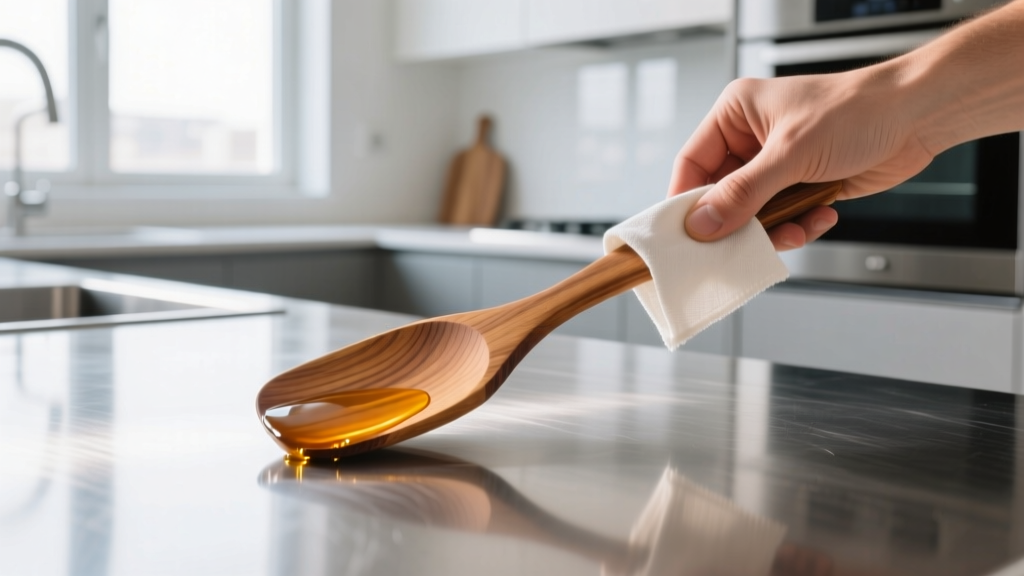
- The Seal (Monthly Hydration): Apply a heavy coat of USP-grade mineral oil or polymerized tung oil. Avoid vegetable oils (olive, canola, coconut), as they contain triglycerides that will oxidize, turn rancid, and impart a sour smell to your food. Let the oil penetrate for 12 hours, then buff off the excess with a lint-free cloth.
Edge Cases: When NOT to Use Wood or Bamboo
While natural materials excel in 90% of kitchen tasks, they are the wrong tool for specific scenarios:
- Raw Meat Preparation: Do not use wooden tongs or forks to handle raw poultry or pork. The porous nature of the grain can harbor Salmonella or Campylobacter if not sanitized properly. Use stainless steel or high-grade silicone for raw protein handling.
- Dishwasher Cycles: The combination of 140°F water, caustic dishwasher detergents, and prolonged heat drying will strip the natural oils from wood and dissolve bamboo laminates in a single cycle. Hand-washing is non-negotiable.
- Deep Frying: While wood won't melt in hot oil, prolonged submersion in 350°F oil will boil the moisture inside the wood grain, causing rapid structural degradation and potential splintering. Use stainless steel spider strainers for deep frying.
Frequently Asked Questions
How can I restore a wooden gadget that has become fuzzy or rough?
The 'fuzz' is raised wood grain caused by water exposure. Once the tool is completely dry, lightly sand it with 400-grit sandpaper or a fine synthetic steel wool pad, moving strictly in the direction of the grain. Wipe away the dust with a damp cloth, let it dry, and immediately apply a sealing coat of mineral oil to lock the fibers down.
Are 'salad bowl finishes' safe for cooking spatulas?
Generally, no. Most commercial 'salad bowl finishes' are actually wiping varnishes that contain polyurethane or alkyd resins suspended in solvents. While food-safe once fully cured, they create a hard plastic film over the wood. When used with high-heat cooking or scraping against cast iron, this film will chip off into your food. Stick to pure mineral oil, beeswax blends, or 100% pure tung oil for tools that will be used in active cooking.
Written by
Jake MorrisonJake Morrison holds a B.S. in Electrical Engineering from UC Berkeley and an MBA from Stanford Graduate School of Business. With over 12 years of hands-on experience in consumer electronics, he previously served as a senior product engineer at a Silicon Valley startup before transitioning to tech journalism. Jake has personally tested and benchmarked over 3,000 gadgets across categories including smartphones, wearables, smart home devices, and audio equipment. His durability testing methodology — involving controlled drop tests, thermal cycling, and water submersion — is widely cited by major tech publications. He is a certified CompTIA A+ technician and a contributing editor to the IEEE Consumer Electronics Magazine.