Eco Knife Sets: The Cleaner Kitchen Gadget Sharpeners of 2026
Discover the best eco-friendly knife sets and sustainable sharpeners. Learn why manual whetstones are a cleaner kitchen gadget for zero-waste prep.
The Hidden Environmental Cost of Your Cutlery Drawer
When building an eco-conscious home, the kitchen is usually the first frontier. We compost scraps, switch to beeswax wraps, and invest in energy-efficient appliances. Yet, one of the most wasteful corners of the culinary space often goes ignored: the cutlery drawer. The average home cook replaces their primary chef's knife every three to five years, not because the steel has failed, but because aggressive, poorly designed sharpening tools have ground the blade away to nothing. Furthermore, motorized electric sharpeners contribute to the growing crisis of small appliance e-waste. According to the Environmental Protection Agency (EPA), small household electronics and motorized gadgets are among the fastest-growing categories of landfill waste, leaking heavy metals and degrading plastics into the soil.
Transitioning to sustainable cutting tools isn't just about buying a knife with a bamboo handle. It requires a holistic approach to metallurgy, handle sourcing, and edge maintenance. By rethinking how we sharpen and care for our blades, we can transform a simple whetstone into the ultimate cleaner kitchen gadget—one that requires zero electricity, produces zero microplastics, and extends the lifespan of your cutlery by decades.
Sustainable Steel and Handle Materials: What to Look For
Not all stainless steel is created equal. The mining and smelting of virgin iron ore carry a massive carbon footprint. However, the World Steel Association reports that steel is the most recycled material on the planet, with modern high-end cutlery increasingly utilizing recycled alloys without sacrificing edge retention.
The Best Eco-Friendly Blade Alloys
- Recycled Sandvik 14C28N: A Swedish steel that frequently incorporates high percentages of recycled scrap. It offers an optimal balance of chromium (14%) for rust resistance and carbon (0.62%) for a razor edge, making it a staple in sustainable mid-tier knife sets.
- High-Carbon VG-MAX: While mining virgin cobalt and vanadium has an environmental cost, VG-MAX holds an edge significantly longer than standard German stainless. A knife that requires sharpening half as often ultimately reduces the abrasive waste and water usage associated with maintenance.
Responsible Handle Composites
Traditional knife handles often rely on endangered tropical hardwoods like Cocobolo or unsustainably harvested Rosewood. For a truly sustainable knife set, look for handles certified by the Forest Stewardship Council (FSC), or opt for innovative synthetic alternatives:
- Richlite: A highly durable composite made from FSC-certified paper layered with a food-safe resin. It is moisture-proof, grippy when wet, and entirely diverts paper waste from landfills.
- Accoya Wood: Radiata pine that has undergone acetylation (a non-toxic process using acetic anhydride). This makes the wood as durable and rot-resistant as teak, but sourced from rapidly renewable, sustainably managed plantations.
- FSC-Certified Pakkawood: A wood/composite hybrid that uses veneers from managed forests, bound with resin to prevent warping and bacterial ingress.
Why a Whetstone is the Ultimate Cleaner Kitchen Gadget
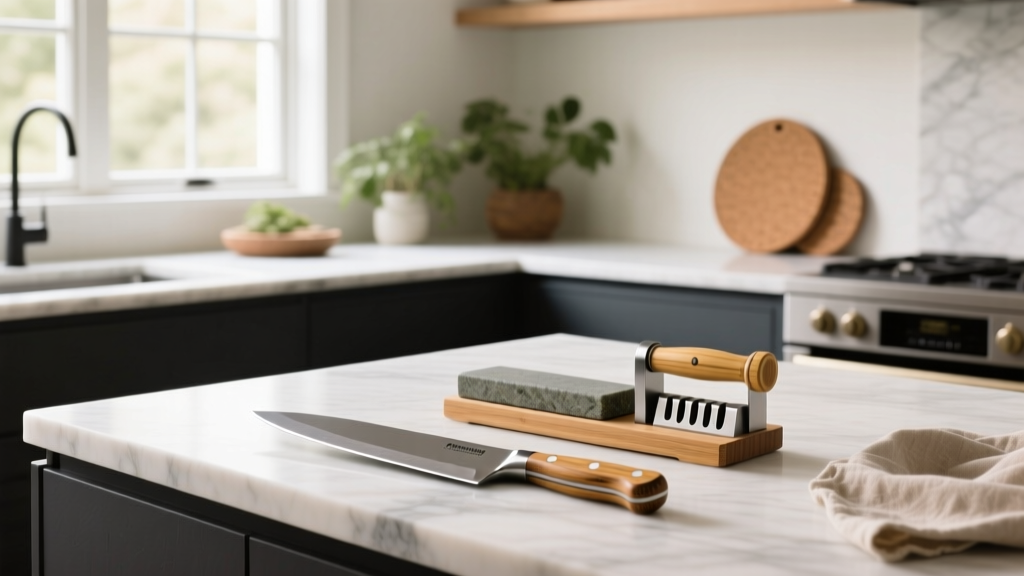
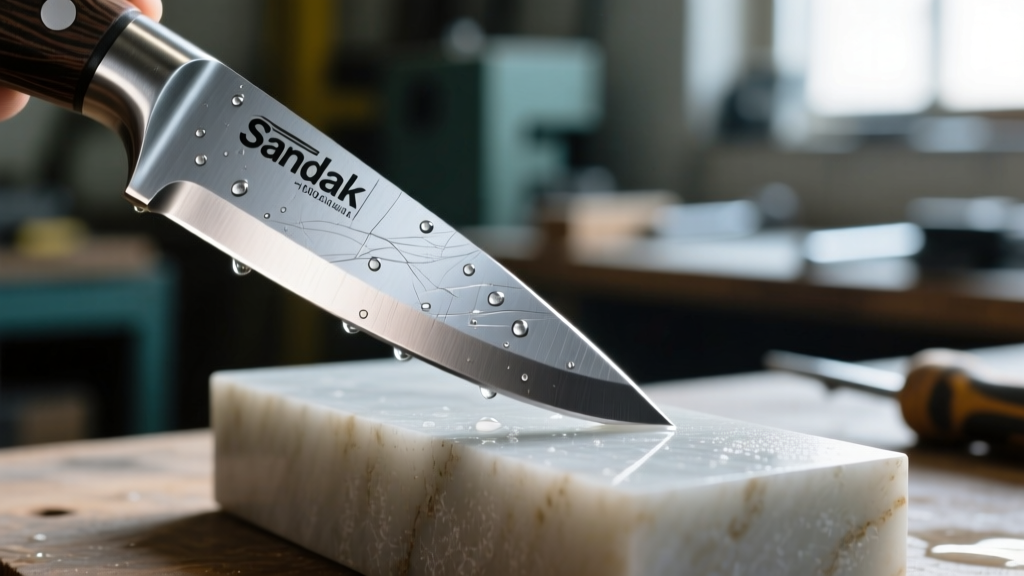
When evaluating your culinary tools for sustainability, a high-grit Japanese water stone emerges as a significantly cleaner kitchen gadget than motorized or carbide alternatives. The philosophy behind a whetstone is rooted in minimalism and precision. Instead of violently tearing away metal, a whetstone uses a slurry of water and loose abrasive particles to gently polish the steel at a microscopic level.
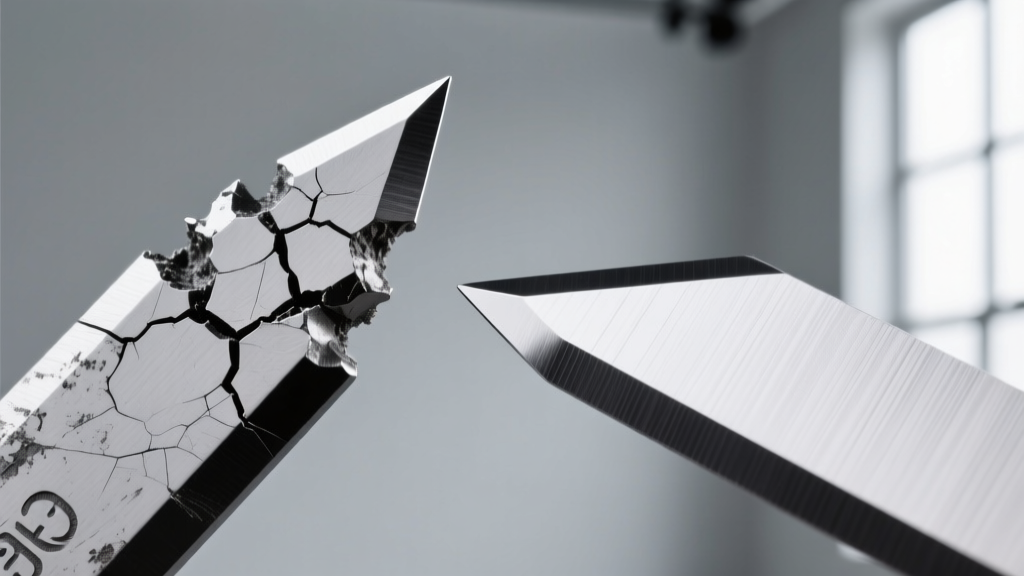
Electric sharpeners rely on motors that draw power and generate heat, which can ruin the heat-treatment (temper) of the knife edge. Pull-through sharpeners are made of injection-molded plastics and tungsten carbide inserts that eventually snap, sending the entire unit to the trash. A high-quality synthetic whetstone, conversely, contains no moving parts, requires no electricity, and can easily last 10 to 20 years before wearing down to an unusable thickness. Furthermore, the byproduct of whetstone sharpening is simply steel dust and water, which safely washes down the drain without introducing microplastics into the water system.
Lifecycle Matrix: Pull-Through vs. Whetstone
| Feature | Carbide Pull-Through Sharpener | Japanese Water Stone (1000/3000 Grit) |
|---|---|---|
| Energy Consumption | Zero (Manual) / High (Electric) | Zero (Fully Manual) |
| Steel Removal Rate | Aggressive (1-2mm per session) | Microscopic (Microns per session) |
| Tool Lifespan | 1-3 Years (Inserts dull/snap) | 10-20+ Years |
| End-of-Life Waste | Mixed plastics and carbide (Landfill) | Inert abrasive dust (Zero toxicity) |
| Edge Quality | Jagged, tears delicate food cells | Mirror polish, clean cellular cuts |
Step-by-Step: The Eco-Friendly Knife Maintenance Routine
Maintaining a sustainable knife set requires shifting from a mindset of 'fixing a dull blade' to 'maintaining a sharp edge.' Here is the exact protocol for maximizing your blade's lifespan while minimizing water and abrasive waste.
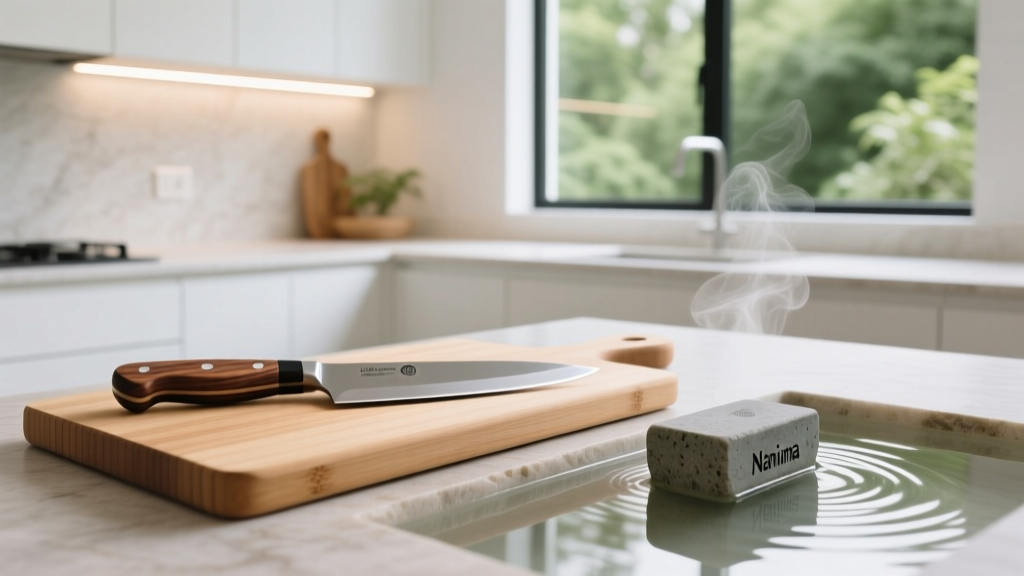
- The Splash-and-Go Method: Older natural stones required 24 hours of soaking. Modern synthetic splash-and-go stones (like the Shapton Glass or Naniwa Chosera series) only require a 30-second spray from a bottle. This conserves water and prevents the stone from degrading in a stagnant bath.
- The 15-Degree Coin Trick: Precision prevents waste. If you sharpen at too steep an angle, you remove unnecessary steel. Place two stacked pennies under the spine of your chef's knife. This elevates the blade to a perfect 15-degree angle against the stone, ensuring you only abrade the exact bevel required.
- Chasing the Burr: Sharpen on a 1000-grit stone using edge-leading strokes until you feel a microscopic 'wire edge' (burr) catch on your thumbnail along the entire length of the blade. This confirms you have reached the apex. Stop immediately; continuing to grind past the burr formation wastes steel and stone.
- Stropping on Upcycled Materials: Instead of buying expensive leather strops loaded with synthetic diamond pastes, use an upcycled piece of thick corrugated cardboard or the back of a legal pad. The natural silicates in the paper provide a gentle polishing action that aligns the edge without removing measurable metal.
Top Sustainable Knife & Sharpener Pairings for 2026
To build a truly zero-waste prep station, you need tools that are engineered for longevity. Here are two highly specific pairings that embody the cleaner kitchen gadget philosophy.
Pairing 1: The Artisan Eco-Setup
The Knife: Tojiro DP Eco-Series 210mm Gyuto (~$115). Features a core of recycled VG-10 steel clad in softer recycled stainless, paired with an FSC-certified Pakkawood handle. The manufacturing facility in Tsubame, Japan, utilizes localized hydroelectric power.
The Sharpener: Naniwa Chosera 1000/3000 Combo Stone (~$160). A professional-grade splash-and-go stone that requires minimal water and will easily outlast a decade of heavy home use.
Why it works: The Tojiro's high-carbon core takes a terrifyingly sharp edge that cleanly slices through produce without crushing cell walls (which reduces food oxidation and waste), while the Naniwa stone ensures that edge is maintained with zero electrical footprint.
Pairing 2: The Modern Minimalist
The Knife: Misen Essentials Chef's Knife (~$85). Forged from high-carbon AUS-8 steel with a sloped bolster that allows for full-blade sharpening, preventing the 'heel gap' that forces premature knife replacement.
The Sharpener: Tumbler Rolling Knife Sharpener (~$110). While not a traditional whetstone, this manual gadget uses magnetic angle guides and diamond-plated steel discs. The discs are replaceable and recyclable, and the system uses zero water, eliminating slurry runoff entirely.
Why it works: For cooks who lack the time to learn whetstone muscle memory, the Tumbler offers a mechanical, non-electric alternative that removes a fraction of the steel compared to pull-through models, keeping the knife out of the landfill for decades.
Expert Insights on Culinary Waste Reduction
"The most sustainable kitchen tool is the one you never have to throw away. When a cook uses a motorized sharpener, they are trading the long-term lifespan of a premium steel blade for three seconds of convenience. Adopting manual, precise abrasion methods isn't just about achieving a better cut; it's a fundamental rejection of planned obsolescence in the culinary space."
Ultimately, curating an eco-friendly kitchen isn't about depriving yourself of modern convenience; it's about making deliberate choices that respect both the materials and the environment. By investing in responsibly sourced knife sets and adopting a manual whetstone as your primary cleaner kitchen gadget for edge maintenance, you drastically reduce your household's micro-waste footprint. The result is a sharper blade, a cleaner conscience, and a cutlery drawer that will serve you for a lifetime.
Written by
David OkaforDavid Okafor is an ASE (Automotive Service Excellence) Master Certified Technician with 15 years of professional experience in vehicle diagnostics, aftermarket electronics installation, and fleet management. He holds an Associate Degree in Automotive Technology from Universal Technical Institute and certifications in mobile electronics (MECP Certified Installer). David has installed and reviewed over 800 car tech products — from OBD2 scanners and dash cams to full infotainment system retrofits — in vehicles ranging from economy compacts to luxury SUVs. His popular YouTube channel "AutoTech David" has over 150,000 subscribers and features detailed installation tutorials and product teardowns. He is a regular contributor to the SEMA Show's aftermarket technology showcase and advises two automotive tech startups on product development.