2026 Gift Guide: 3D Print Kitchen Gadgets for Cutting Surfaces
Discover the best 3D print kitchen gadgets for cutting boards and surfaces. Our 2026 gift guide covers food-safe filaments, epoxy sealing, and custom trivets.
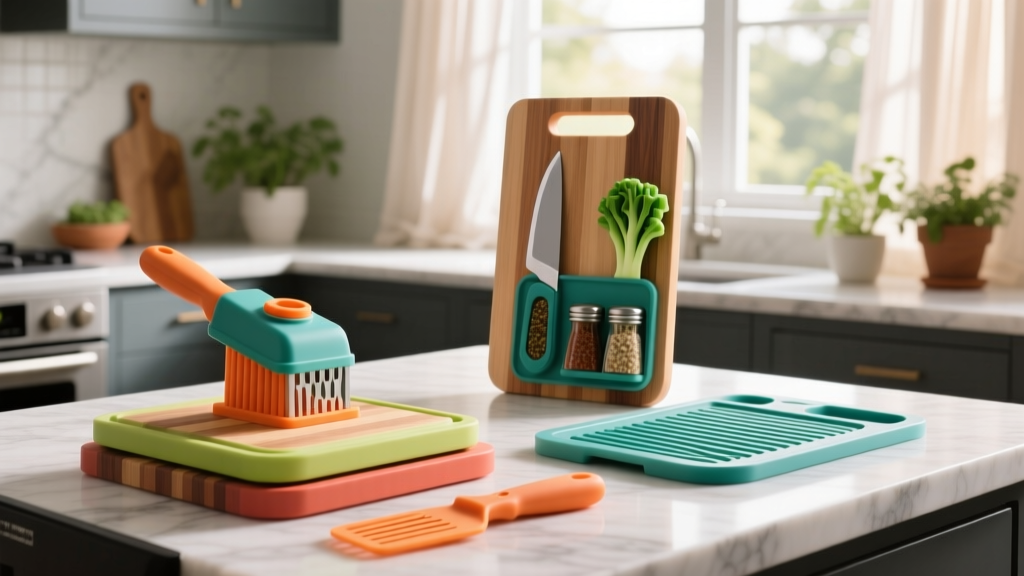
The Bacterial Reality of 3D Printed Cutting Boards
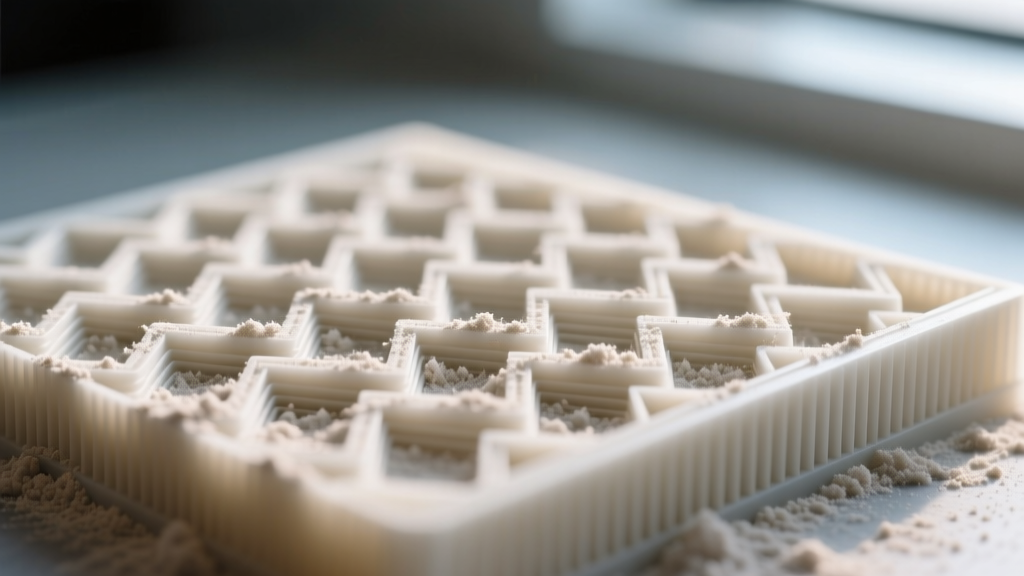
Gifting a maker or a culinary enthusiast often leads to the same question: can you safely 3D print a custom cutting board? The short answer is no, not without significant post-processing. Fused Deposition Modeling (FDM) printers lay down plastic in horizontal lines, typically ranging from 0.16mm to 0.28mm in height. While these layer lines feel smooth to the touch, they create microscopic capillary channels.
Bacteria such as E. coli and Salmonella measure between 1 and 2 micrometers. When a knife scores the surface of a raw 3D printed board, it opens these channels, trapping organic matter and moisture where bacteria thrive. Dishwashers and standard sponges cannot reach into 0.2mm crevices. According to the FDA's guidelines on Food Contact Substances, a material's chemical compliance does not override the physical geometry's ability to harbor pathogens. For a comprehensive breakdown of these physical limitations, the MatterHackers Food Safe 3D Printing Guide details why raw FDM parts fail commercial kitchen sanitation standards.
Standard 3D printer nozzles are made of brass, which contains trace amounts of lead to improve machinability. Printing a cutting board with a standard brass nozzle risks lead particle deposition on the food-contact surface. If your gift recipient insists on printing direct-contact surfaces, they must upgrade to a hardened steel or 316L stainless steel nozzle (like the E3D Nozzle X) to eliminate heavy metal contamination.
Surface Tools That Actually Work: The 2026 Maker’s Wishlist
Instead of a raw cutting board, steer your gifting toward 3D print kitchen gadgets designed for surface protection, organization, and indirect food contact. These projects leverage the strengths of desktop manufacturing without compromising kitchen hygiene.
1. Parametric Hot Trivets and Coasters
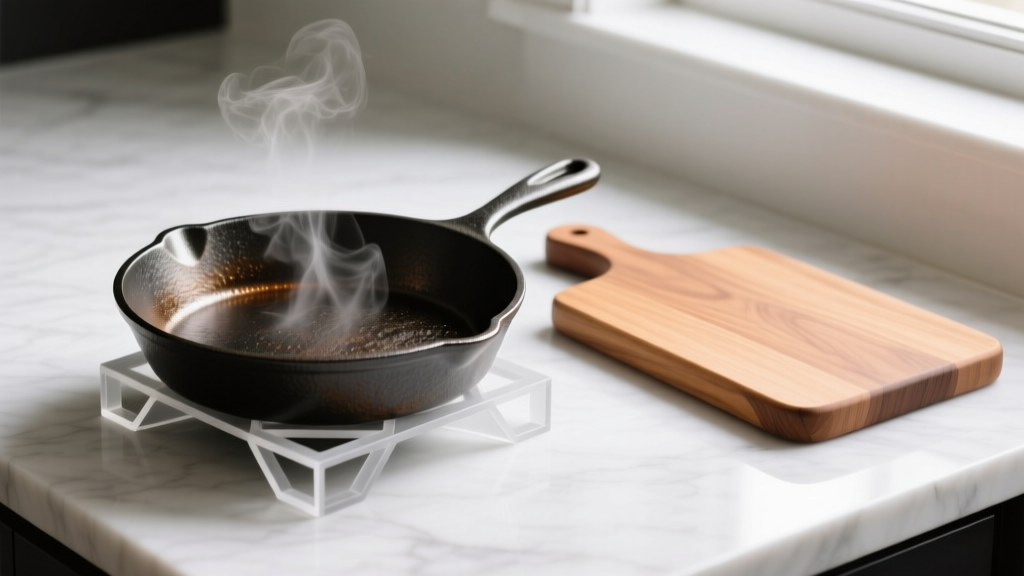
Trivets are the ultimate 3D printed kitchen surface tool. They do not touch raw meat or require knife scoring, bypassing the bacterial trap issue entirely. By gifting a spool of high-temperature filament, you enable the maker to print intricate, parametric Voronoi patterns that dissipate heat from cast-iron skillets and Dutch ovens. PETG (Polyethylene Terephthalate Glycol) softens around 80°C (176°F), making it suitable for warm pots, but for boiling-hot cookware straight from the stove, Polycarbonate (PC) or ABS/ASA blends are required to prevent warping.
2. Custom Magnetic Knife Docks and Board Stands
A highly practical gift is the hardware required to print custom magnetic knife blocks or under-cabinet docking stations. This requires embedding neodymium magnets directly into the print. The ideal gift bundle includes a pack of 10mm x 2mm N52-grade neodymium magnets and a digital caliper for precise cavity measurement.
Pro-Tip for Makers: In slicers like Bambu Studio or PrusaSlicer, use the "Pause for Insert" command at the exact Z-height where the magnet cavity is 0.2mm from the top surface. This allows the maker to drop the magnet in and let the printer bridge the final layers over it, hiding the magnet completely and creating a seamless, wipeable surface.
The Sealing Solution: Gifting the Post-Processing Kit
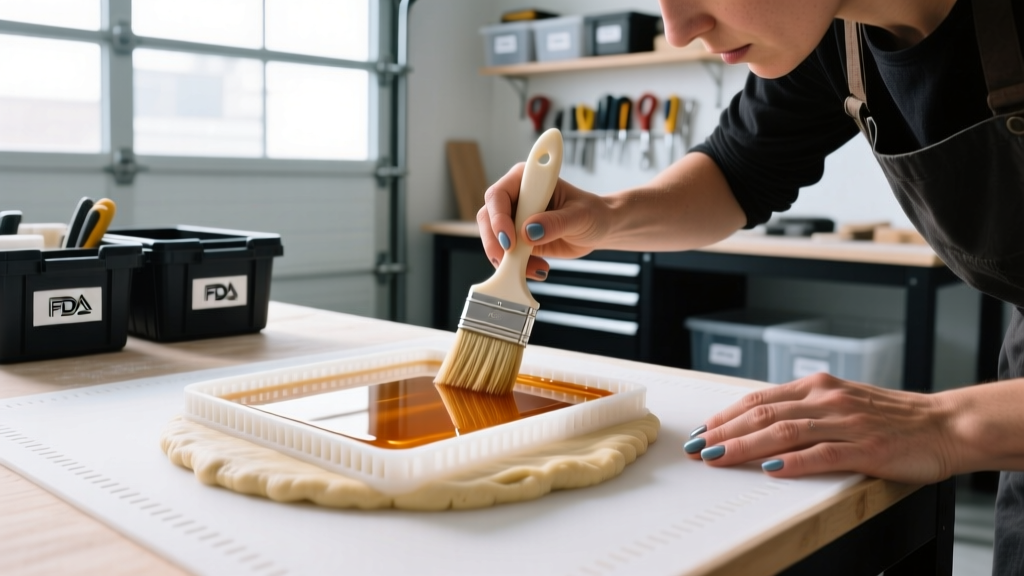
If the recipient is determined to 3D print a direct-contact surface tool—such as a custom dough scraper, a tortilla press plate, or a specialized charcuterie board—they need the right post-processing chemicals. Raw PLA and PETG are not sufficient. The surface must be sealed with a food-safe, high-build epoxy resin to fill the layer lines and create a continuous, non-porous barrier.
The Ultimate Epoxy Sealing Kit Bundle
- ArtResin (16 oz Kit, ~$75): Unlike many hardware store epoxies, ArtResin is specifically formulated to be non-toxic and FDA-compliant for direct food contact once fully cured. It contains no VOCs or fumes, making it safe to apply in a home garage.
- Silicone Mixing Mats and Foam Brushes: Essential for achieving the strict 1:1 volume ratio required for proper cross-linking.
- Butane Torch or Heat Gun: Required to pop micro-bubbles that form during the curing process, ensuring a glass-smooth finish without pitting.
When applied correctly over a 3D printed PLA dough scraper, the epoxy fills the 0.2mm layer lines, creating a surface that can be washed with hot soapy water without retaining flour or moisture.
Comparison Matrix: Filament Selection for Kitchen Surfaces
Choosing the right material is critical for surface tools. Below is a technical breakdown of the most common filaments used for 3D print kitchen gadgets, ranked by their suitability for cutting-adjacent tasks.
| Filament Type | Max Temp Resistance | Dishwasher Safe? | Best Kitchen Application |
|---|---|---|---|
| PLA / PLA+ | 55°C (131°F) | No (Will warp) | Cookie cutters, epoxy-sealed scrapers |
| PETG | 80°C (176°F) | Top-rack only | Trivets, under-cabinet mounts, bag clips |
| ABS / ASA | 100°C (212°F) | Yes | Hot pads, dishwasher-safe organizers |
| Nylon (PA) | 110°C (230°F) | Yes | Hinges, heavy-duty board handles |
Recipient Matching Guide: Which Surface Tool to Gift?
Match your gift to the specific habits and equipment of the recipient. Use this decision framework to select the perfect 3D print kitchen gadget hardware or accessory.
The Baker
Gift: ArtResin Epoxy Kit + Stainless Steel Nozzle.
Why: They will want to print custom dough scrapers, fondant smoothers, and specialized cookie stamps. The epoxy kit allows them to seal these tools for safe, repeated contact with raw dough and sugars.
The Organization Freak
Gift: 2kg Spool of Matte PETG + N52 Magnet Pack.
Why: PETG provides the rigidity needed for modular drawer dividers, custom spice rack inserts, and magnetic under-shelf paper towel holders. The matte finish hides fingerprints in high-traffic kitchen zones.
The Heavy-Duty Chef
Gift: Polycarbonate (PC) Filament + Enclosure Heater.
Why: They regularly move 400°F cast iron and carbon steel pans. Standard PLA trivets will melt instantly on contact. PC filament withstands extreme heat, protecting their expensive quartz or marble countertops from thermal shock.
Sourcing and Maintenance for the Long Term
When purchasing filaments for kitchen surface tools, always verify the manufacturer's Material Safety Data Sheet (MSDS). While the base polymer (like PETG) may be chemically inert, the color pigments added to the filament are often not FDA-approved for food contact. For items that will touch food—even indirectly, like a charcuterie board stand—stick to natural, uncolored filaments or brands that explicitly certify their pigments as non-toxic.
Maintenance is equally critical. 3D printed surface tools should never be cleaned with abrasive scouring pads, which will micro-scratch the plastic and defeat the purpose of any epoxy sealing. Gift a set of soft-bristle dish brushes and a bottle of food-grade mineral oil alongside your hardware bundle to ensure their custom kitchen gadgets remain pristine and hygienic for years to come.
Written by
Lena ChenLena Chen earned her M.S. in Human-Computer Interaction from Carnegie Mellon University and a B.S. in Electrical Engineering from the University of Washington. She has spent the past decade specializing in smart home architecture and IoT ecosystems, helping over 200 homeowners design fully connected living spaces. Lena is a certified Matter protocol consultant and has published peer-reviewed research on voice-first interface design in the ACM Digital Library. Her reviews of smart home products combine deep technical analysis with real-world usability testing, evaluating everything from Zigbee mesh stability to Alexa skill responsiveness. She regularly speaks at CEDIA Expo and CES smart home panels.