Affordable Kitchen Gadgets: Best Stainless Steel Cookware 2026
Discover the best affordable kitchen gadgets in stainless steel cookware and accessories for 2026. Expert picks, metallurgy breakdowns, and budget buys.
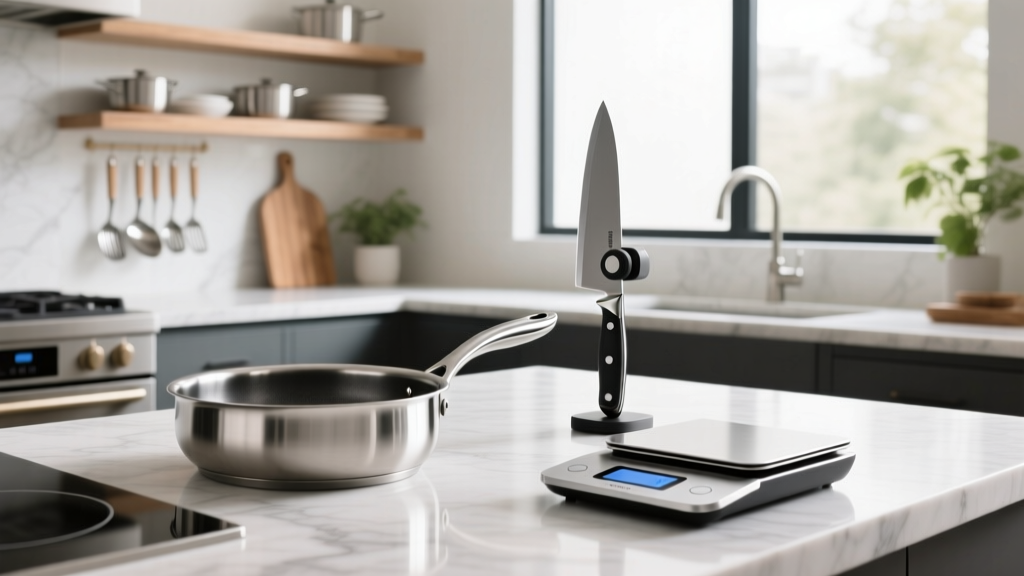
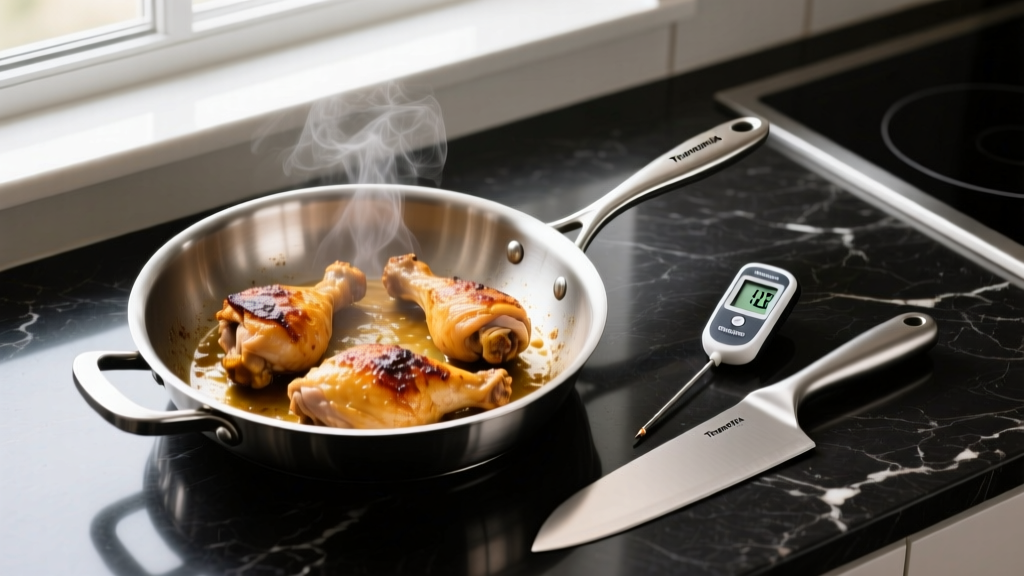
Most home cooks assume achieving a restaurant-quality sear requires dropping $300 on premium French or American heritage brands. That assumption is outdated. By 2026, global manufacturing precision has allowed mid-tier brands to replicate the tri-ply cladding and ergonomic riveting of luxury cookware at a fraction of the cost. When hunting for genuinely affordable kitchen gadgets, stainless steel cookware and prep accessories offer the highest return on investment—provided you know how to read the metallurgical specs. This guide cuts through the marketing fluff to identify the exact budget pans and tools that perform like premium gear, along with the specific failure modes you must avoid.
The Metallurgy of Budget Stainless Steel
To evaluate budget cookware, you must look past the polish and examine the ply structure and alloy composition. Premium brands typically use 304-grade stainless steel (often labeled 18/10, meaning 18% chromium and 10% nickel) for the cooking surface, which offers superior corrosion resistance. However, 304 steel is non-magnetic, rendering it useless for induction cooktops on its own.
To solve this, manufacturers use a tri-ply or 5-ply cladding process. The cooking surface is 18/10 or 18/8 stainless steel, the core is highly conductive aluminum, and the exterior base plate is 400-series stainless steel (18/0), which contains no nickel and is magnetic. The critical differentiator in budget versus premium skillets is the thickness of that aluminum core.
- Premium Pans (e.g., All-Clad D3): ~2.5mm aluminum core. High thermal mass, slower to heat, excellent heat retention for large batches.
- Budget Pans (e.g., Tramontina Tri-Ply): ~1.5mm to 1.8mm aluminum core. Lower thermal mass, heats 15% faster, highly responsive to stove knob adjustments.
Insight: For standard residential gas or induction stoves (15,000–18,000 BTUs), a 1.8mm core is often more efficient than a 2.5mm core, as it requires less energy to reach optimal searing temperatures (400°F–450°F).
2026 Budget Cookware Comparison Matrix
Not all budget stainless steel is created equal. Thin, single-ply pans will warp and scorch food. We tested the most popular affordable options to see which actually deliver tri-ply performance.
| Brand & Model | Core Thickness | 2026 Price Range | Induction Ready | Warp Resistance |
|---|---|---|---|---|
| Tramontina 12" Tri-Ply | 1.8mm | $45 - $55 | Yes (400-series base) | Excellent |
| Cuisinart Chef's Classic 10pc | 1.2mm (Encapsulated base only) | $150 - $180 (Set) | Yes | Moderate |
| Cook N Home 12-Piece | 1.5mm | $90 - $110 (Set) | Yes | Good |
The Undisputed Budget Skillet Champion
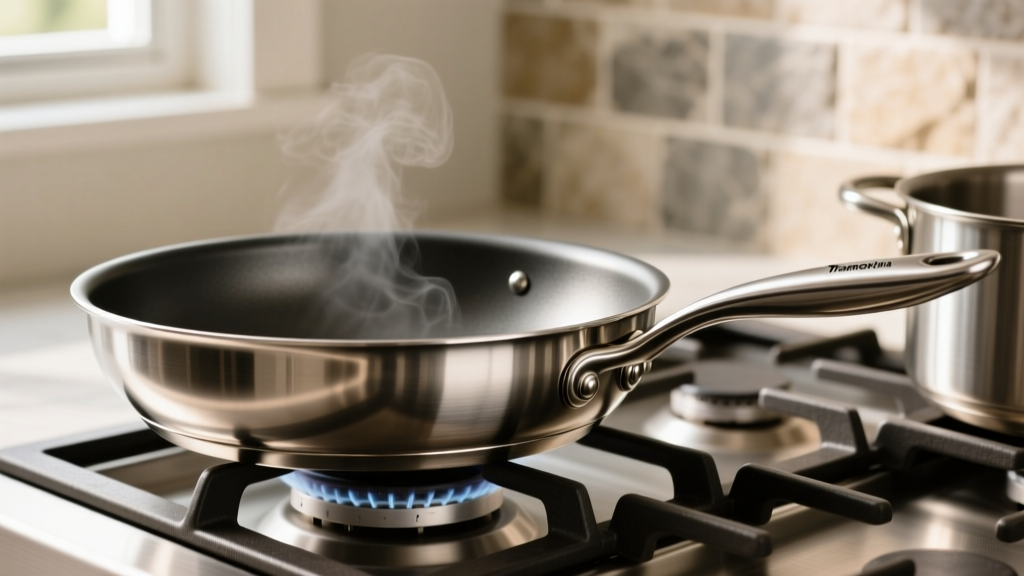
The Tramontina 12-Inch Tri-Ply Clad Skillet remains the gold standard for affordable kitchen gadgets in the cookware space. Priced consistently between $45 and $55, it features full tri-ply cladding that extends all the way up the sidewalls, unlike cheaper "encapsulated base" pans that only have aluminum on the bottom.
Why It Outperforms Its Weight Class
- Flared Rims: The lip is rolled outward, allowing for drip-free pouring of pan sauces and deglazing liquids.
- Triple-Riveted Handles: Uses 3/16-inch stainless steel rivets. While they require occasional cleaning around the seams, they guarantee the handle will not snap off under the weight of a 5-pound roast.
- Responsive Heating: The 1.8mm core allows you to drop the pan temperature rapidly when making delicate egg dishes or finishing a butter-basted steak.
Essential Stainless Accessories Under $25
A great pan is only as good as the tools you use with it. Skip the plastic and silicone utensils that melt or trap odors, and invest in these high-utility stainless steel accessories.
1. Dexter-Russell 6-Inch Stainless Steel Bench Scraper ($12)
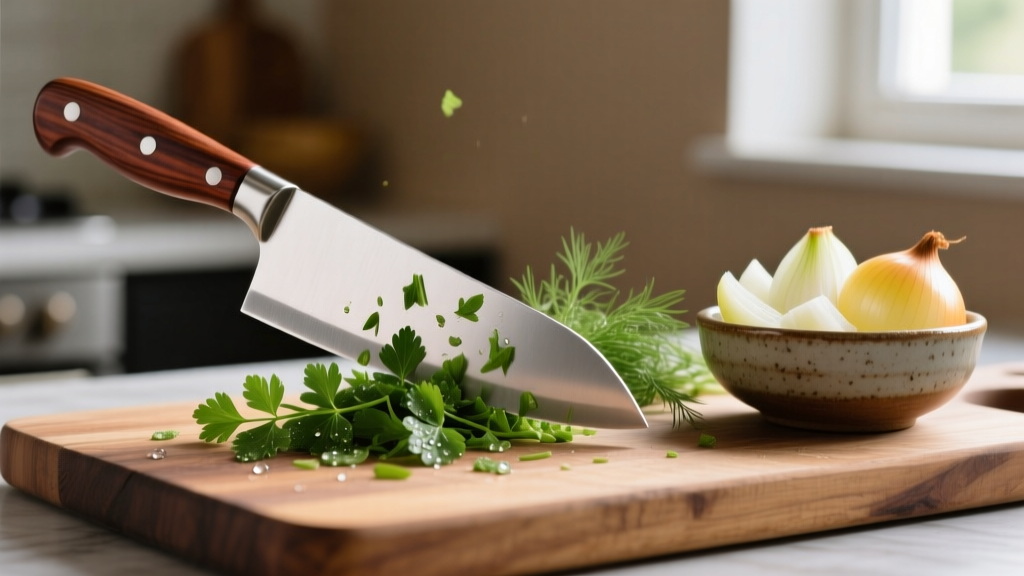
While technically a baking tool, a 304-grade stainless steel bench scraper with a beveled edge is indispensable for savory prep. Use it to transfer chopped alliums from the cutting board to the pan without dropping pieces, or to scrape up fond (the browned bits) from the bottom of your skillet before deglazing. The Dexter-Russell model features a polypropylene handle that withstands commercial dishwasher temperatures up to 180°F.
2. OXO Good Grips 12-Inch Locking Tongs ($14)
Stainless steel tongs are an extension of your hand. The OXO 12-inch model features scalloped edges for a secure grip on slippery proteins like scallops or chicken thighs. The internal spring tension is calibrated to 4.5 pounds of force, reducing hand fatigue during long searing sessions.
3. RSVP International 13-Inch Splatter Screen ($18)
Deep-frying or shallow-frying in a budget skillet can create a mess. This 304-grade stainless steel mesh screen features a micro-perforated design that allows steam to escape (keeping fried foods crispy) while blocking 95% of oil droplets. The collapsible handle fits over pans ranging from 10 to 13 inches.
Thermal Shock and Warping: The Budget Pan Killer
The most common failure mode for affordable stainless steel cookware is warping. Warping occurs when the metal experiences a rapid temperature differential (Delta T) that exceeds its yield strength. Because budget pans have thinner aluminum cores (1.5mm–1.8mm) compared to premium pans, they are more susceptible to this physical stress.
Never plunge a 400°F stainless steel skillet into a sink full of cold water. A Delta T greater than 200°F in under three seconds will permanently deform the base plate, causing the pan to spin on flat electric or induction cooktops. Always let the pan cool on the stove until it is safe to touch (below 120°F) before washing.
To prevent food from sticking—which often leads to aggressive scraping and pan damage—master the Leidenfrost effect. Preheat your dry skillet on medium heat for 3 to 4 minutes. Flick a few drops of water into the pan. If the water sizzles and evaporates instantly, the pan is too cold. If the water forms a single, cohesive bead that glides across the surface like mercury, the pan has reached approximately 320°F–350°F. The microscopic pores of the steel have expanded, creating a temporary non-stick surface. Add your high-smoke-point oil (like avocado or refined safflower) at this exact moment.
Expert Maintenance and Polymerized Oil Removal
Stainless steel is not non-stick, and over time, aerosolized oils and protein bonds will polymerize onto the surface, creating a stubborn, rainbow-colored or brownish film. Standard dish soap will not remove this.
According to the testing protocols at Wirecutter, the most effective chemical agent for this task is Bar Keepers Friend. The active ingredient, oxalic acid, breaks down the molecular bonds of polymerized oils and mineral deposits from hard water without scratching the 304-grade steel. Apply a paste of the powder and water, let it sit for 60 seconds, and scrub with a non-abrasive sponge. For a comprehensive breakdown of daily care, the Serious Eats cleaning guide provides excellent visual benchmarks for pan restoration.
Frequently Asked Questions
Is 18/8 stainless steel safe for cooking acidic foods like tomato sauce?
Yes, but with a caveat. 18/8 steel contains slightly less nickel than 18/10, making it marginally more reactive to highly acidic ingredients (like wine-heavy reductions or long-simmered tomato sauces). If you cook acidic foods for more than two hours, you may notice a faint metallic taste. For quick pan sauces (under 15 minutes), 18/8 is perfectly safe and indistinguishable from 18/10.
Can I use metal utensils on budget tri-ply stainless steel?
Absolutely. Unlike PTFE (Teflon) or ceramic non-stick coatings, 304-grade stainless steel is highly resistant to scratching. Metal spatulas, whisks, and forks will not compromise the structural integrity or safety of the cooking surface. Minor superficial scratching is normal and actually helps build a micro-patina over years of use.
Why does my budget stainless steel pan have a rainbow tint after washing?
The rainbow tint, known as "heat tint," is a harmless layer of chromium oxide that forms when the steel is heated above 300°F. It is not a sign of damage or chemical leaching. It can be easily removed with a splash of white vinegar or a quick scrub with Bar Keepers Friend, though leaving it there will not affect cooking performance.
Written by
Lena ChenLena Chen earned her M.S. in Human-Computer Interaction from Carnegie Mellon University and a B.S. in Electrical Engineering from the University of Washington. She has spent the past decade specializing in smart home architecture and IoT ecosystems, helping over 200 homeowners design fully connected living spaces. Lena is a certified Matter protocol consultant and has published peer-reviewed research on voice-first interface design in the ACM Digital Library. Her reviews of smart home products combine deep technical analysis with real-world usability testing, evaluating everything from Zigbee mesh stability to Alexa skill responsiveness. She regularly speaks at CEDIA Expo and CES smart home panels.