Beyond Best Kitchen Gadgets 2025: Expert Storage Upgrades
Compare beginner and expert kitchen storage gadgets. Discover what the best kitchen gadgets 2025 lists missed, with pro-level organization upgrades.
The Storage Divide: Why Beginners and Experts Buy Differently
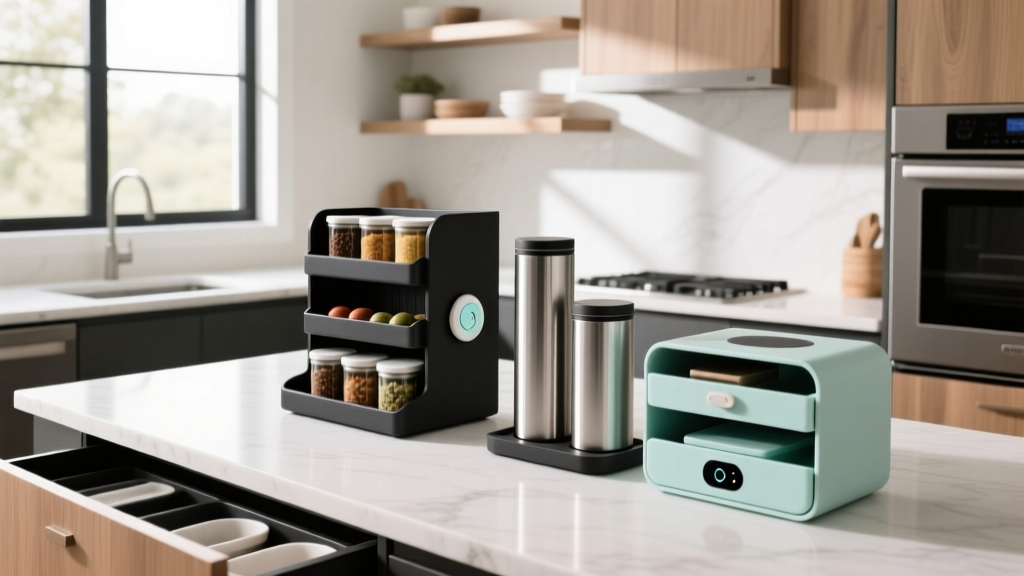
While mainstream roundups for the best kitchen gadgets 2025 heavily feature motorized appliances, smart scales, and multi-cookers, professional chefs know that true culinary efficiency is dictated by storage. A $300 stand mixer is useless if you cannot find your bread flour or if your spices have degraded due to poor containment. As we navigate the kitchen organization landscape in 2026, a stark divide has emerged between beginner-level storage solutions and expert-grade containment systems.
Beginners prioritize aesthetics and immediate accessibility, often falling for clear acrylic bins and bamboo dividers that look pristine on day one but fail under the thermal and mechanical stress of daily cooking. Experts, conversely, prioritize material science, thermodynamics, and pest prevention. This guide deconstructs the kitchen storage ecosystem, contrasting entry-level gadgets with professional upgrades to help you build a workflow that actually lasts.
Level 1: Pantry Containment and Material Science
The pantry is where the gap between amateur and professional storage is most glaring. The primary enemies of dry goods are oxidation, moisture, and pantry pests like the Indian meal moth.
The Beginner Standard: OXO Good Grips POP Containers
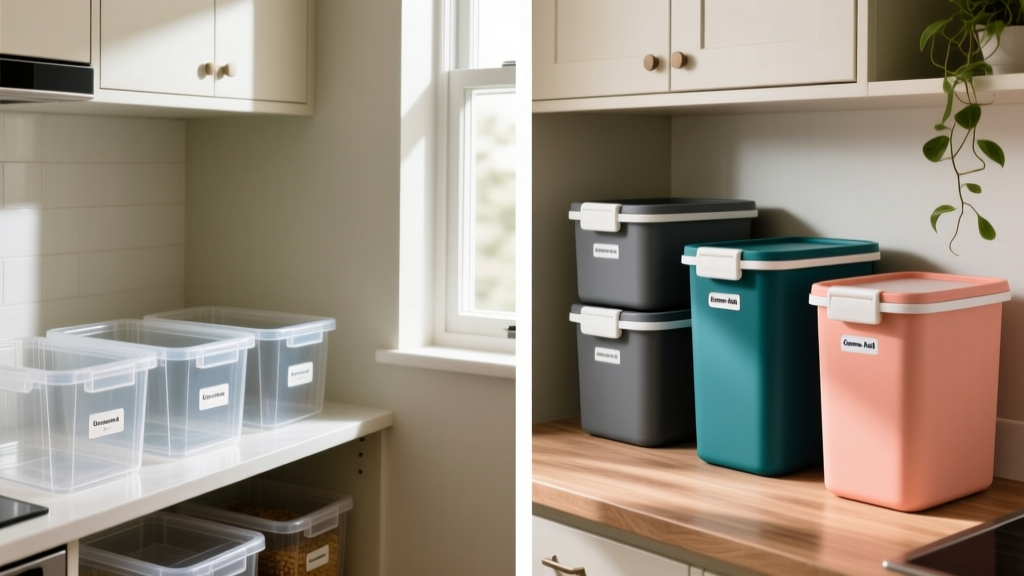
The OXO POP system (typically $15 to $22 per 5-quart container) dominates beginner kitchens. Made from PETG plastic, these containers offer excellent clarity and a satisfying push-button seal. However, PETG is prone to micro-scratching, which clouds the plastic over time. More critically, the mechanical button seal relies on a silicone gasket that compresses and fails after roughly 18 to 24 months of regular use. Furthermore, the intricate lid mechanism traps flour dust and is notoriously difficult to clean, often harboring mold in humid climates.
The Expert Upgrade: Gamma Seal Buckets and Tritan Vaults
Professional kitchens and serious home bakers bypass push-button lids entirely. The expert standard relies on two systems:
- Gamma Seal 5-Gallon Buckets ($12-$18): Made from high-density polyethylene (HDPE), these buckets use a threaded outer ring that screws down onto a heavy-duty O-ring gasket. This creates a 100% airtight, waterproof, and pest-proof seal that will not degrade over decades.
- Vittles Vault Gamma Containers ($35 for 25-quart): For those who need stackability without sacrificing the threaded gamma seal, BPA-free Tritan or heavy-duty PET vaults offer the perfect middle ground, combining shatter resistance with true hermetic sealing.
| Feature | OXO POP (Beginner) | Gamma Seal HDPE (Expert) |
|---|---|---|
| Material | PETG Plastic | Food-Grade HDPE |
| Seal Type | Mechanical Push-Button | Threaded O-Ring Gasket |
| Pest Proofing | Moderate (Larvae can breach lid joints) | Absolute (No micro-gaps) |
| Lifespan | 2-3 Years | 20+ Years |
| Cost per 5 Quarts | ~$18.00 | ~$6.50 (Bucket + Lid) |
Level 2: Drawer and Utensil Organization
The Beginner Trap: Expandable Bamboo Dividers
Expandable bamboo dividers ($20-$30) are the default choice for utensil drawers. While they provide a warm, natural aesthetic, bamboo is a porous organic material. In the high-humidity environment of a kitchen, bamboo absorbs ambient moisture, leading to warping, splintering, and eventually black mold growth in the expansion joints. Additionally, the spring-loaded tension mounts slip every time a heavy tool is dropped into the drawer, requiring constant readjustment.
The Expert Fix: Modular PEI Trays and Magnetic Retention
Culinary professionals treat utensil drawers as tool chests. The 2026 expert approach utilizes two distinct strategies:
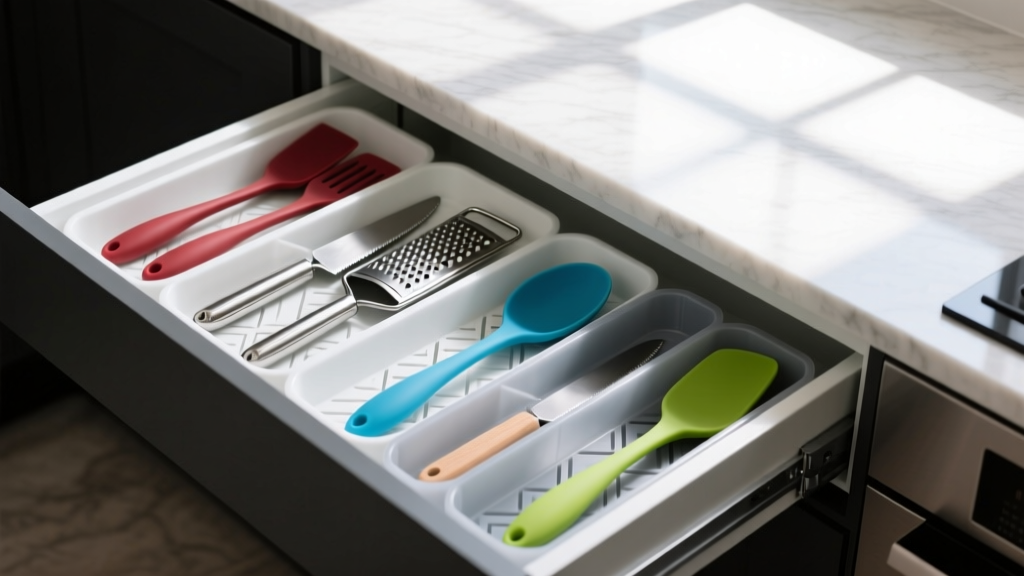
- Modular Polyetherimide (PEI) or Acrylic Trays: Brands like Hafele or custom-cut acrylic inserts from The Container Store ($45-$90 per drawer) use non-porous, dishwasher-safe polymers. These trays are measured to the exact millimeter of the drawer box, eliminating all lateral movement.
- Magnetic Tool Retention: Instead of tossing sharp microplanes, bench scrapers, and offset spatulas into a pile, experts mount neodymium magnetic strips ($25) to the underside of the drawer ceiling or the drawer walls. This keeps cutting edges sharp and prevents metal-on-metal abrasion.
Level 3: Fridge Thermodynamics and Airflow
Refrigerator organization is where food safety intersects with thermodynamics. According to the USDA Food Safety and Inspection Service, a refrigerator must maintain a temperature at or below 40°F (4°C) to inhibit bacterial growth. However, how you pack your fridge drastically alters internal airflow and temperature uniformity.
"The most common mistake home cooks make is treating the refrigerator like a solid shelf unit. Cold air must fall from the top vents and circulate back through the bottom return. Blocking this pathway with solid acrylic bins creates dangerous micro-climates where food spoils prematurely."
— Commercial Refrigeration Design Principles
Beginner Mistake: Solid Acrylic Bins
Solid clear acrylic bins (like the popular ClearSpace lines, $25-$40) look incredibly organized on social media. However, acrylic is a thermal insulator. Lining your fridge shelves with solid-walled plastic blocks the convective airflow, causing the top shelves to freeze while the bottom crisper drawers hover dangerously close to 45°F. Furthermore, as noted in extensive durability testing by Serious Eats, cheap acrylic cracks when exposed to the thermal shock of a hot dishwasher cycle.
Expert Solution: Wire Bins and Borosilicate Glass
Experts optimize for airflow and thermal mass:
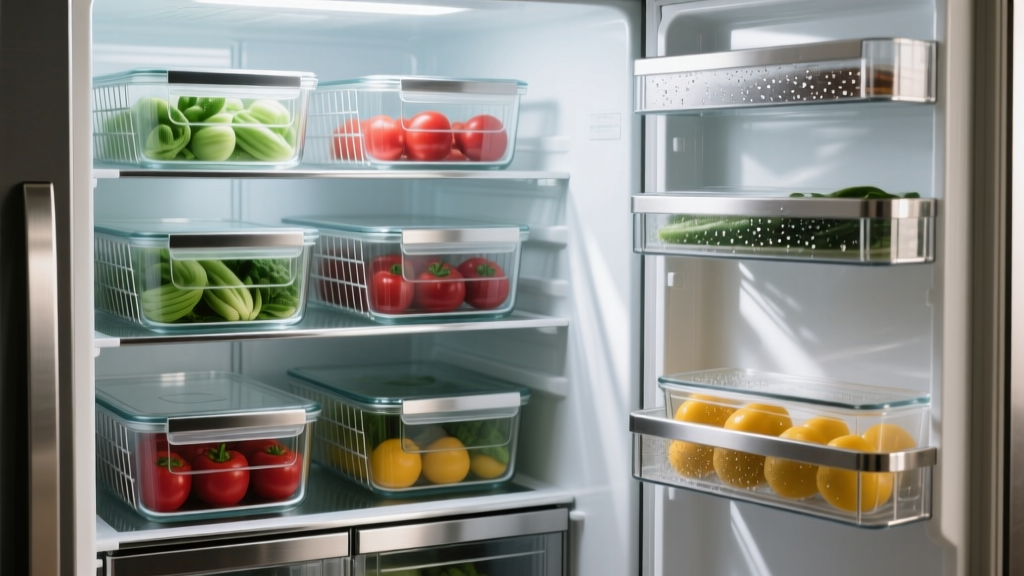
- Stainless Steel Wire Bins ($30-$50): Open-weave wire baskets allow cold air to pass directly through the container, ensuring uniform temperatures across all shelves while still keeping items corralled.
- Borosilicate Glasslock Containers ($15-$25 each): Unlike plastic, glass is completely impermeable to odors and stains. More importantly, glass holds high thermal mass. A fridge stocked with glass containers acts as a thermal sink, stabilizing the internal temperature every time the door is opened, which reduces compressor cycling and saves energy.
Decision Framework: When to Upgrade Your Storage
Not every ingredient requires a $40 hermetic vault. Use this practical decision matrix to allocate your storage budget effectively in 2026:
If storing High-Fat / High-Oil Items (Nuts, Whole Wheat Flour, Brown Rice):
Verdict: Expert Route. These items go rancid due to lipid oxidation at room temperature. Store in vacuum-sealed glass jars in the freezer, or use Gamma-seal buckets with oxygen absorbers in a dark, cool pantry.
If storing Daily-Use Inert Carbs (White Rice, Dried Pasta, Sugar):
Verdict: Beginner Route is acceptable. Standard PETG or Tritan pop-top containers are perfectly fine for items that are consumed within 30 days and are not susceptible to rapid rancidity.
If storing Pungent Alliums and Ferments (Onions, Garlic, Kimchi):
Verdict: Expert Route. Never use plastic. Plastic absorbs sulfur compounds and capsaicin permanently. Use dedicated borosilicate glass containers with silicone seals to prevent cross-contamination of flavors.
Frequently Asked Questions
Are silicone stretch lids worth buying for leftovers?
For short-term storage (under 24 hours), silicone stretch lids ($15 for a set) are an eco-friendly alternative to plastic wrap. However, they do not provide a rigid structural seal. If you are stacking containers in a crowded fridge, the silicone will inevitably peel back at the corners, exposing the food to ambient fridge odors and dehydration. For anything beyond a single day, rigid locking glass is mandatory.
How do I deal with pantry weevils if my current containers failed?
If you discover weevils in your flour, the infestation is likely already in the microscopic crevices of your pantry shelves. The FDA recommends discarding all compromised dry goods, vacuuming the shelves, and wiping them down with a 50/50 white vinegar and water solution. Transfer all new purchases into Gamma-seal HDPE buckets immediately upon returning from the grocery store to quarantine them from potential store-bought microscopic eggs.
What is the best label maker for kitchen containers?
Avoid thermal-printed paper labels, which degrade when exposed to kitchen humidity and dishwater. Experts use vinyl-cut label makers (like the Cricut Joy or Brother P-Touch with laminated TZe tapes, $30-$40). Laminated vinyl tapes withstand aggressive scrubbing, hot water, and oil splatters without peeling or fading.
Written by
Jake MorrisonJake Morrison holds a B.S. in Electrical Engineering from UC Berkeley and an MBA from Stanford Graduate School of Business. With over 12 years of hands-on experience in consumer electronics, he previously served as a senior product engineer at a Silicon Valley startup before transitioning to tech journalism. Jake has personally tested and benchmarked over 3,000 gadgets across categories including smartphones, wearables, smart home devices, and audio equipment. His durability testing methodology — involving controlled drop tests, thermal cycling, and water submersion — is widely cited by major tech publications. He is a certified CompTIA A+ technician and a contributing editor to the IEEE Consumer Electronics Magazine.