Best Gadgets for Elderly Independence and Safety in 2026
Discover the best gadgets for elderly users in 2026. Compare medical alerts, smart home aids, and simplified tech to boost safety and daily independence.
The 2026 Shift: From Reactive Alerts to Ambient Intelligence
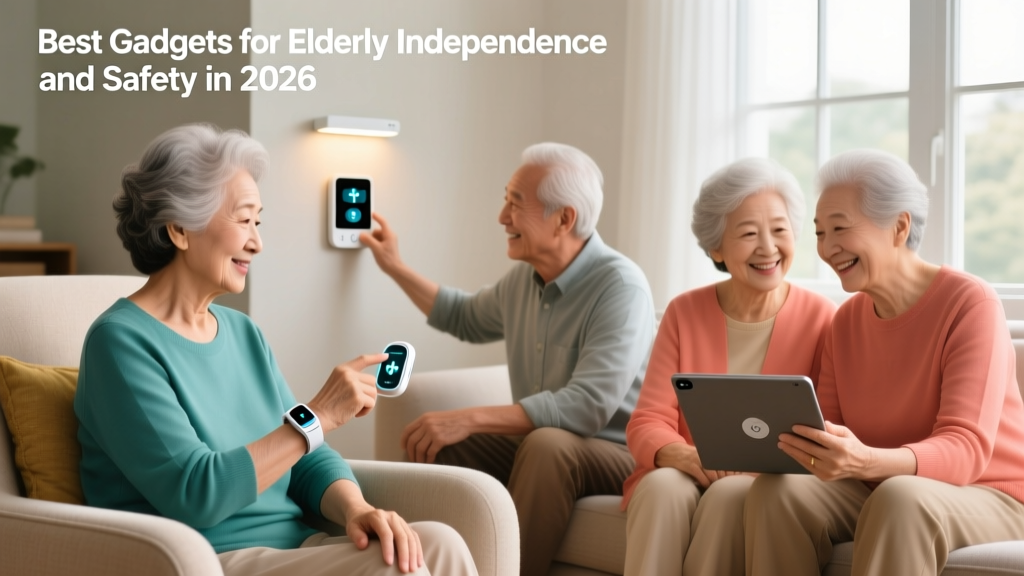
Aging in place requires bridging the gap between physical limitations and environmental demands. The market for gadgets for elderly users has evolved significantly. We have moved past the era of clunky, reactive panic buttons into an ecosystem of proactive, ambient intelligence. Modern senior tech prioritizes dignity, preserving privacy while delivering clinical-grade monitoring and simplified communication. According to the National Institute on Aging (NIA), integrating smart home technology reduces the need for assisted living transitions by addressing mobility and cognitive decline directly in the home environment.
This buyer's guide cuts through marketing jargon to evaluate the hardware, subscription costs, and real-world failure modes of the most effective senior gadgets available today. Whether you are outfitting a home for a parent with early-stage dementia or seeking fall-prevention tech for an active 80-year-old, the right device selection depends on specific physical and cognitive profiles.
Decision Framework: Matching Tech to User Profiles
- High Mobility / Low Cognitive Decline: Focus on proactive health tracking and simplified communication (e.g., Apple Watch Series 10, GrandPad).
- Low Mobility / High Fall Risk: Prioritize passive ambient monitoring and automated medication dispensing (e.g., Vayyar Care, Hero Health).
- Wearable Aversion: Avoid wristbands and pendants. Rely entirely on radar-based room sensors and voice-activated smart displays.
Fall Detection and Emergency Response Systems
Falls remain a leading cause of fatal and nonfatal injuries for older Americans, with the Centers for Disease Control and Prevention (CDC) reporting that over 3 million older adults are treated in emergency departments for fall injuries annually. When selecting a fall detection gadget, you must choose between active wearable monitoring and passive room sensors.
Apple Watch Series 10 vs. Medical Guardian MGMini2
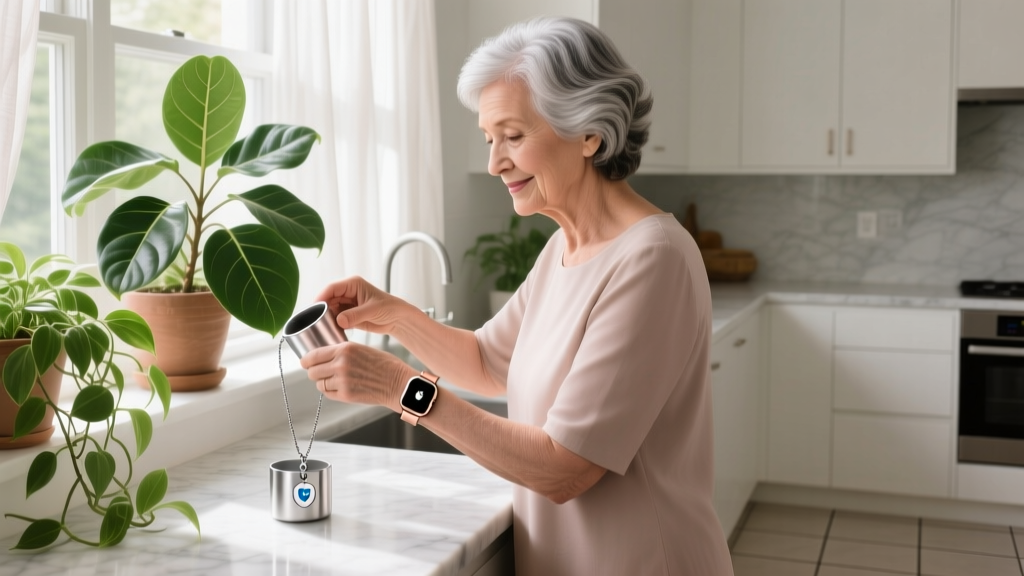
The Apple Watch Series 10 ($399 hardware, no mandatory subscription) utilizes an advanced high-g accelerometer and gyroscope to detect hard falls, automatically initiating an SOS call if the user remains immobile for 60 seconds. Its primary advantage is multi-functionality; it doubles as a health tracker for AFib detection and blood oxygen monitoring. However, its failure mode is battery dependence. If the senior forgets to charge it nightly, the safety net vanishes. Furthermore, users with severe arthritis may struggle with the small digital crown and swipe interfaces.
Conversely, the Medical Guardian MGMini2 ($129.95 hardware + $29.95/month) is a dedicated, lightweight pendant with a 72-hour battery life and built-in GPS. It relies on a 24/7 monitored dispatch center rather than automated algorithms, meaning a human agent verifies the emergency via two-way audio before calling 911. This eliminates false positives from dropped objects, but the monthly fee and the stigma of wearing a visible "help" pendant deter many active seniors.
Privacy-First Ambient Monitoring
Cameras in bedrooms and bathrooms are a massive privacy violation and a frequent point of contention between seniors and their caregivers. The solution in 2026 is mmWave (millimeter-wave) radar technology.
The Vayyar Care system ($300 per sensor, $10/month for alerts) mounts to the wall like a standard smoke detector. It emits 60GHz radio waves to map the room in 3D point clouds, detecting the exact posture and breathing patterns of the occupant without capturing optical images. If a user falls in the shower, Vayyar detects the sudden change in elevation and lack of movement, triggering an alert to the caregiver's smartphone. The critical advantage here is bathroom coverage—the most common site for severe slips—where optical cameras are strictly prohibited. The hardware requires a standard Wi-Fi connection and a nearby power outlet, meaning installation in older homes may require minor electrical routing.
Simplified Communication and Cognitive Engagement
Social isolation accelerates cognitive decline. Standard smartphones, with their constant OS updates, tiny touch targets, and complex app ecosystems, often overwhelm users with mild cognitive impairment. Dedicated senior tablets strip away the friction.
The GrandPad Ecosystem
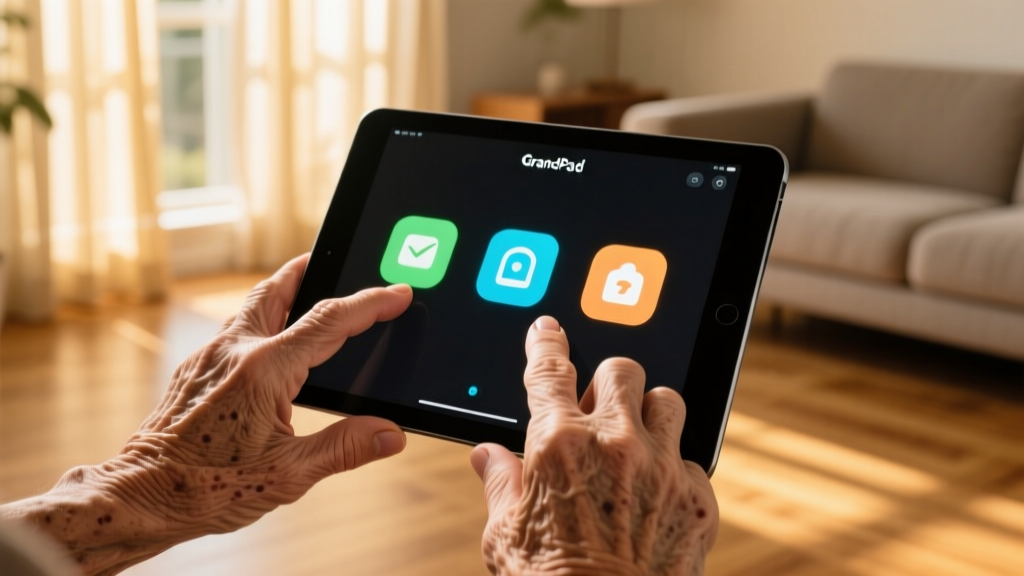
The GrandPad ($89/month, hardware included) is an 8-inch tablet locked into a custom, high-contrast launcher. It eliminates app stores, web browsers, and settings menus. Family members manage the device remotely via a companion app, pushing photos, scheduling video calls, and curating music playlists directly to the senior's screen. The physical dock ensures the tablet is always charging and upright. The primary drawback is the closed ecosystem; you cannot install third-party apps like specialized brain-training games or specific telehealth portals outside their approved network. For users who need absolute simplicity and zero maintenance, the premium subscription is justified.
Automated Medication Management
Medication non-adherence leads to hundreds of thousands of preventable hospitalizations yearly. Pill organizers with flip-lids are insufficient for complex regimens involving 10+ daily pills.
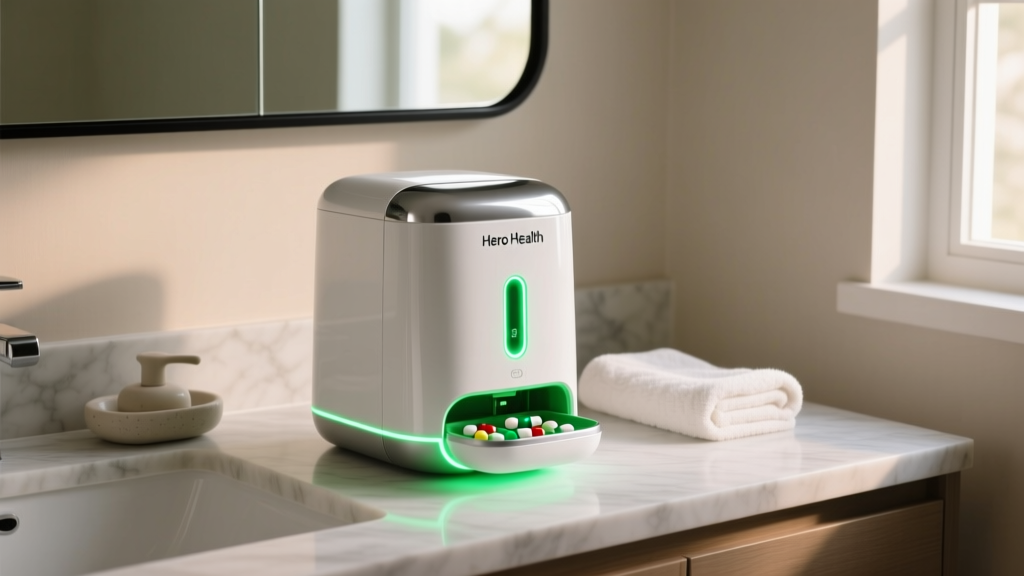
The Hero Health Smart Dispenser ($299 upfront + $99/month subscription) automates the entire process. Caregivers or pharmacists load bulk pills into 16 color-coded, RFID-sealed canisters. At the scheduled time, the machine sorts the exact dosage, drops it into a removable cup, and plays a custom audio chime or calls the user's phone. If the dose is not taken within 30 minutes, the system escalates alerts to the caregiver. The subscription includes unlimited pill cassette refills and 24/7 pharmacist support. The physical footprint is roughly the size of a large coffee maker, requiring dedicated counter space in the kitchen or bathroom.
Comprehensive Comparison Matrix
| Device Category | Top Model (2026) | Upfront Cost | Monthly Fee | Best For |
|---|---|---|---|---|
| Wearable Alert | Apple Watch Series 10 | $399 | $0 (Cellular plan req.) | Active, tech-comfortable seniors |
| Pendant Alert | Medical Guardian MGMini2 | $129.95 | $29.95 | High fall-risk, low tech literacy |
| Ambient Radar | Vayyar Care | $300 | $10.00 | Wearable-averse, bathroom monitoring |
| Smart Tablet | GrandPad | $0 (Included) | $89.00 | Social isolation, mild dementia |
| Med Dispenser | Hero Health | $299 | $99.00 | Complex polypharmacy regimens |
Navigating Medicare Advantage and OTC Benefits
Out-of-pocket costs for senior gadgets can be mitigated through insurance. As of 2026, many Medicare Advantage (Part C) plans include expanded Over-The-Counter (OTC) and supplemental home safety benefits. While standard Medicare Part B covers medical alert systems only if prescribed as durable medical equipment (DME) under very strict criteria, private Medicare Advantage plans frequently offer annual allowances (often $150 to $500) that can be applied toward approved safety devices, including simplified tablets and basic fall-detection pendants. Always request a current OTC catalog from your specific plan administrator before purchasing, as approved vendor lists update quarterly.
Frequently Asked Questions
Do ambient radar sensors like Vayyar work through walls?
No. Millimeter-wave radar cannot penetrate standard drywall or concrete. You must install one sensor per room you wish to monitor. Hallways and large open-concept living spaces may require strategic placement to avoid blind spots caused by large furniture blocking the line-of-sight radio waves.
What happens to smart gadgets during a Wi-Fi or power outage?
Devices reliant on Wi-Fi (like GrandPad and Vayyar) will fail to send remote alerts if the internet drops, though local alarms may still sound. For critical life-safety devices, look for models with built-in cellular backups. The Medical Guardian MGMini2 uses AT&T cellular networks, bypassing home Wi-Fi entirely, making it vastly superior for rural areas with unstable broadband.
Can multiple family members access the monitoring dashboards?
Yes. Platforms like Hero Health and Vayyar Care allow the primary account holder to invite unlimited "care circle" members. You can assign different permission tiers, such as giving a live-in spouse full administrative control while restricting an out-of-state sibling to view-only daily activity summaries and emergency push notifications.
Written by
Jake MorrisonJake Morrison holds a B.S. in Electrical Engineering from UC Berkeley and an MBA from Stanford Graduate School of Business. With over 12 years of hands-on experience in consumer electronics, he previously served as a senior product engineer at a Silicon Valley startup before transitioning to tech journalism. Jake has personally tested and benchmarked over 3,000 gadgets across categories including smartphones, wearables, smart home devices, and audio equipment. His durability testing methodology — involving controlled drop tests, thermal cycling, and water submersion — is widely cited by major tech publications. He is a certified CompTIA A+ technician and a contributing editor to the IEEE Consumer Electronics Magazine.