7 Budget Gadgets for the Elderly That Actually Work in 2026
Discover the top budget gadgets for the elderly in 2026. We review affordable, easy-to-use tech under $60 that boosts safety and daily independence.

The Reality of Aging in Place on a Fixed Income
Outfitting a home for aging in place often carries a premium price tag, with medical alert systems and smart home hubs easily exceeding $300 in upfront hardware costs plus monthly subscriptions. However, maintaining independence does not require enterprise-grade geriatric technology. By targeting specific friction points—medication adherence, fall prevention, remote control complexity, and item tracking—caregivers and seniors can deploy highly effective, budget-friendly alternatives.
This 2026 roundup isolates seven gadgets for the elderly that retail strictly under $60. Each selection is evaluated on three criteria: zero-subscription operation, tactile accessibility for users with limited dexterity or vision, and immediate deployment without professional installation.
Environmental Safety and Fall Prevention
Falls remain the leading cause of fatal and non-fatal injuries for older Americans. According to the National Institute on Aging, environmental hazards like poor lighting account for a significant percentage of domestic falls. Addressing this requires automated, zero-interaction lighting.
| Gadget | Core Function | Price (2026) | Key Specification |
|---|---|---|---|
| LEPOWER Motion Sensor Night Light (2-Pack) | Pathway illumination | $14.99 | 3000K Warm White, 120° PIR |
| LiveFine Automatic Pill Dispenser | Medication adherence | $39.99 | 28-compartment, 80dB alarm |
LEPOWER Motion Sensor Night Lights
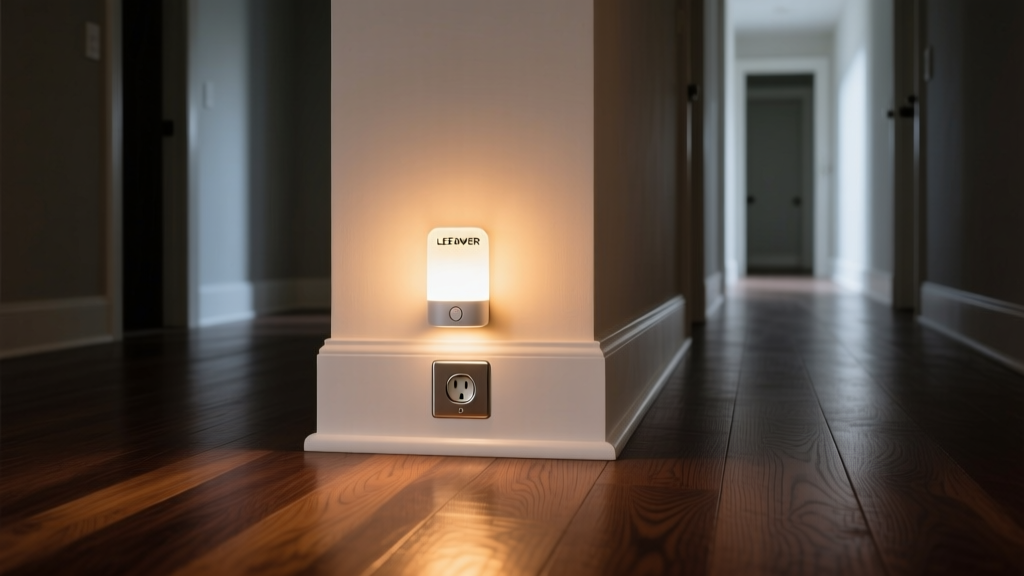
Standard night lights require manual toggling or rely on ambient light sensors that fail in shadowed hallways. The LEPOWER plug-in units utilize a 120-degree passive infrared (PIR) sensor that detects body heat and movement up to 10 feet away. Crucially, they emit a 3000K warm white light. Cool white (5000K+) light suppresses melatonin production, which can disrupt the sleep cycles of seniors who wake up for midnight bathroom trips. At $14.99 for a two-pack, they provide immediate, maintenance-free pathway illumination.
LiveFine Automatic Pill Dispenser with Alarm
Pill organizers with flip-lids require the user to remember to open them. The LiveFine dispenser ($39.99) solves this with a 28-compartment rotating tray locked behind a clear plastic dome. Caregivers pre-load a full week of medications, set the digital timer, and the device rotates to the correct compartment while sounding an 80dB alarm. If the user fails to take the dose, the tray will not advance, preventing accidental double-dosing—a common and dangerous error in cognitive decline cases. It runs on 3 D-cell batteries, lasting approximately six months.
Simplifying the Living Room Interface
Modern smart TVs and cable boxes require navigating nested menus with remotes featuring 40+ indistinguishable buttons. This causes frustration and often leads to seniors abandoning television viewing altogether, contributing to social isolation.
Flipper Big Button Universal Remote
The Flipper Remote ($34.99) strips away the clutter. It features only six massive, color-coded buttons: Power, Volume, Channel, Mute, and a numeric pad. The genius of the design lies in its magnetic slide cover. Advanced functions (like input switching or menu navigation) are hidden behind a sliding panel. A caregiver can program the remote to turn on the TV and cable box simultaneously with a single button press, then slide the magnetic cover down, physically preventing the user from accidentally changing the TV input to an empty HDMI channel.

Amazon Echo Pop
At $39.99, the Echo Pop is the most cost-effective voice assistant for seniors who struggle with touchscreens. Its hemispherical design projects sound upward, ensuring clear audio even for users with mild presbycusis (age-related hearing loss).
- Pros: Zero physical buttons required; 'Drop-In' feature allows family members to instantly broadcast their voice into the room like an intercom for emergency check-ins; physical mic-mute button provides privacy assurance.
- Cons: Requires a stable 2.4GHz Wi-Fi connection; the LED light ring is smaller and harder to see from across the room compared to the larger Echo Dot.
"Voice-activated technology significantly reduces the cognitive load for seniors with mild motor impairments or arthritis, allowing them to control their environment without the physical strain of manipulating small switches or touchscreens." — Adapted from occupational therapy guidelines on assistive technology.
Cognitive Support and Item Tracking
Tile Mate (2024/2025 Edition)
Misplacing essential items like keys, wallets, or hearing aid cases induces severe anxiety in seniors living alone. The Tile Mate ($24.99) utilizes Bluetooth Low Energy (BLE) with a 250-foot range. While the app is useful for caregivers, the primary benefit for the senior is the reverse-find feature. By pressing the physical button on the Tile Mate attached to their keychain, it triggers their paired smartphone to ring at 120dB, even if the phone is on silent mode. This bidirectional tracking eliminates the need for the senior to navigate a smartphone app when they have lost their primary communication device.
Fancii Daylight LED Handheld Magnifier
Reading prescription labels or mail becomes difficult as macular degeneration or cataracts progress. The Fancii Daylight magnifier ($22.99) uses a shatterproof 10x optical acrylic lens surrounded by three energy-efficient LEDs. Unlike cheap glass magnifiers that distort at the edges, the acrylic provides edge-to-edge clarity. The LEDs are calibrated to 5600K (daylight), which provides the highest contrast ratio for reading small, low-contrast text like the gray print on amber pharmacy bottles.
Communication Without the Smartphone Learning Curve
Alcatel GO FLIP 4
Smartphones are overwhelming for many older adults, yet basic 3G flip phones are now obsolete due to global network sunsets. The FCC mandates 4G VoLTE compatibility for all active cellular devices. The Alcatel GO FLIP 4 ($59.99) bridges this gap. It features a physical T9 keypad, a 2.8-inch display, and runs on KaiOS. It supports WhatsApp and basic GPS, but its primary value is the tactile, familiar clamshell design. Answering a call requires simply flipping the lid open; ending it requires snapping it shut. There are no accidental pocket-dials, no software updates to manage, and the 1350mAh battery lasts up to four days on standby.
Total Budget Impact and ROI
Deploying all seven of these gadgets totals approximately $237.93. Compared to a single month of a premium monitored medical alert system (which often costs $40-$60/month plus $100 activation), this hardware stack pays for itself in under five months. More importantly, it addresses the root causes of domestic accidents and isolation through proactive environmental design rather than reactive emergency monitoring. For caregivers and seniors looking to maximize independence without draining retirement funds, these targeted, sub-$60 devices offer the highest return on investment available in 2026. For further reading on optimizing the home environment, the National Council on Aging provides extensive, free checklists for senior home safety audits.
Written by
Jake MorrisonJake Morrison holds a B.S. in Electrical Engineering from UC Berkeley and an MBA from Stanford Graduate School of Business. With over 12 years of hands-on experience in consumer electronics, he previously served as a senior product engineer at a Silicon Valley startup before transitioning to tech journalism. Jake has personally tested and benchmarked over 3,000 gadgets across categories including smartphones, wearables, smart home devices, and audio equipment. His durability testing methodology — involving controlled drop tests, thermal cycling, and water submersion — is widely cited by major tech publications. He is a certified CompTIA A+ technician and a contributing editor to the IEEE Consumer Electronics Magazine.