Best Problem-Solving Gadgets for Seniors to Boost Daily Independence
Discover practical, problem-solving gadgets for seniors that tackle medication tracking, fall prevention, and hearing support to boost daily independence.
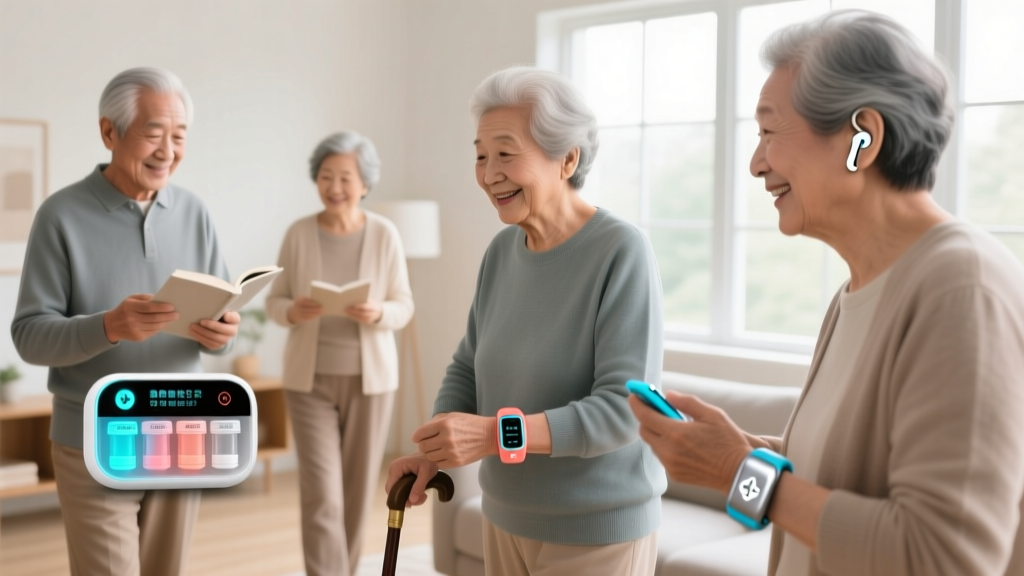
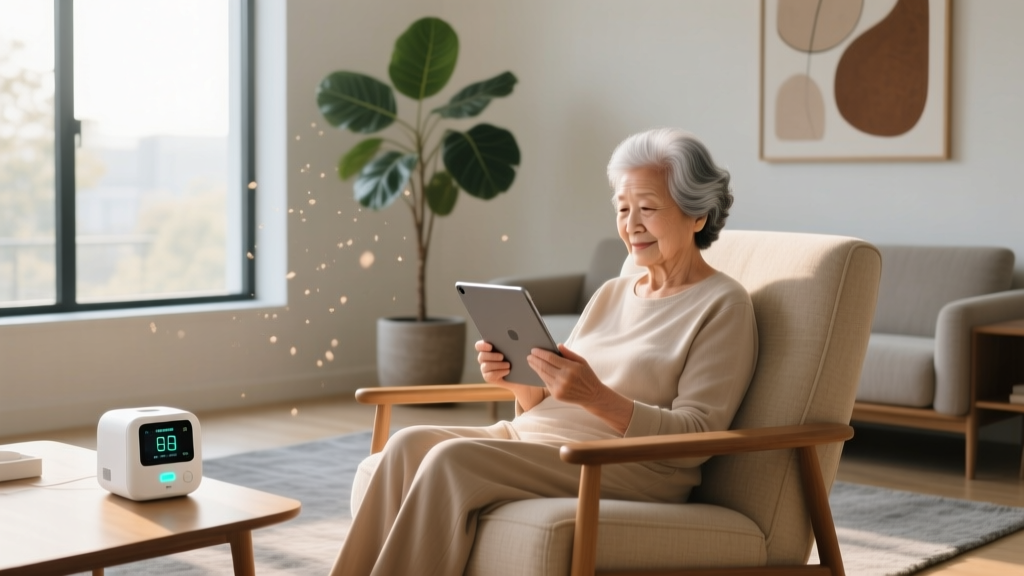
The Core Challenges of Aging in Place
Aging in place requires more than just grab bars and ramp installations. The modern senior faces compounding daily friction points: managing complex polypharmacy regimens, navigating dimly lit hallways at night, and struggling to hear conversations over background noise. According to the National Institute on Aging, falls remain the leading cause of fatal and nonfatal injuries for older Americans, while medication errors account for hundreds of thousands of emergency room visits annually. The most effective gadgets for seniors do not just add convenience; they act as critical infrastructure for independence by solving specific, high-risk daily problems.
Solving Medication Mismanagement and Adherence
Polypharmacy—taking five or more medications daily—introduces severe risks of missed doses or accidental double-dosing. Standard plastic pill organizers rely entirely on memory and manual dexterity, both of which decline with age. Smart dispensers solve this by automating the physical distribution and providing remote monitoring for caregivers.
Pick 1: Hero Health Smart Dispenser
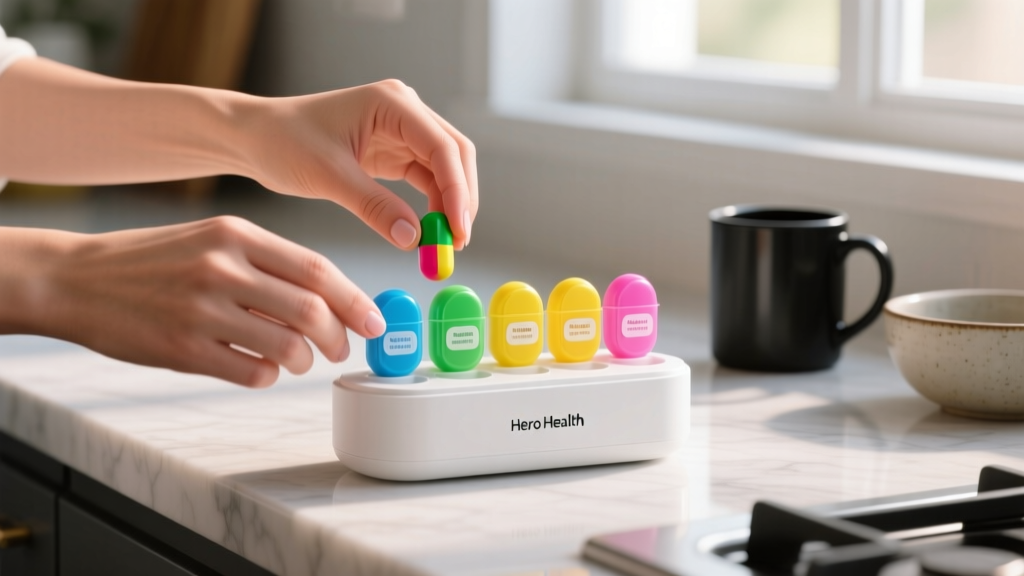
The Hero Health Smart Dispenser is a closed-loop system designed for complex regimens. Unlike open trays, Hero uses pre-sorted, barcode-scanned medication pods loaded into a countertop device. At the scheduled time, the machine drops the exact pills into a small cup and triggers an audio-visual alert.
- Cost: $299 upfront hardware fee plus a $99/month subscription (includes the medication sorting service and caregiver app).
- Failure Mode & Edge Case: The primary failure point is humidity-induced pill clumping inside the pods. If you live in a high-humidity environment (above 60% RH), keep the device in a climate-controlled room, not a bathroom. Additionally, if the home Wi-Fi drops, the device relies on an internal cellular backup to send alerts, but caregivers must ensure the SIM remains active via the dashboard.
Pick 2: MedMinder Maya
For seniors who prefer using their pharmacy's standard packaging or have cognitive resistance to new, robotic-looking devices, the MedMinder Maya is the practical alternative. It is a Wi-Fi-enabled, lockable pillbox with separate compartments that light up and beep when it is time to take a dose.
- Cost: $69 upfront plus $30/month for the monitoring service.
- Practical Advantage: It accommodates irregularly shaped pills, inhalers, and liquid medication vials that cannot fit into automated sorting machines. Caregivers receive a text message if a compartment is not opened within a 60-minute window.
Mitigating Fall Risks Without Sacrificing Privacy
Traditional medical alert pendants only work if the senior is conscious and able to press the button. Optical cameras solve the detection problem but introduce unacceptable privacy violations in bedrooms and bathrooms. The practical solution lies in millimeter-wave radar technology.
Pick 3: Vayyar Care Radar Sensor
The Vayyar Care sensor uses 60GHz radio frequency waves to map the volumetric space of a room. It detects the distinct biomechanical signature of a human fall without capturing any optical images, making it entirely safe for bathrooms and bedrooms.
- Cost: Approximately $300 per sensor, with no mandatory monthly subscription for basic local alerts, though caregiver app integration may require a facility-level license for enterprise users.
- Edge Case (Pets): The 60GHz radar is calibrated to ignore dogs and cats under 40 lbs. However, a large dog jumping onto a bed or sofa can mimic the volumetric displacement of a human fall. If you have large breeds, mount the sensor in rooms where pets are restricted.
Overcoming Hearing Fatigue and Isolation
Untreated hearing loss accelerates cognitive decline and increases isolation. Historically, prescription hearing aids cost upwards of $4,000 a pair. Following the FDA's authorization of Over-The-Counter (OTC) hearing aids, seniors with mild-to-moderate hearing loss now have access to clinical-grade amplification at a fraction of the cost.
Pick 4: Lexie B2 Powered by Bose
The Lexie B2 is a Receiver-in-Canal (RIC) OTC hearing aid that utilizes Bose's acoustic architecture. It is specifically engineered for seniors who struggle with the 'cocktail party effect'—the inability to isolate human speech in noisy environments like restaurants.

- Cost: $799 per pair (frequently discounted to $699).
- Clinical Specifics: The B2 is FDA-cleared for perceived mild-to-moderate hearing loss (typically 25 to 40 decibels of threshold shift). It features a self-fitting audiogram test via the companion smartphone app, allowing users to adjust specific frequency bands (e.g., boosting high-frequency consonants like 's' and 'f' without amplifying low-frequency background hums).
- Maintenance Gotcha: RIC hearing aids are highly susceptible to earwax (cerumen) blocking the micro-receiver. Users must clean the wax guard weekly with the provided loop tool; failure to do so is the number one cause of 'dead device' support tickets.
Practical Comparison Matrix
| Gadget | Primary Problem Solved | Upfront Cost | Recurring Cost | Setup Difficulty |
|---|---|---|---|---|
| Hero Health Dispenser | Polypharmacy adherence | $299 | $99/mo | Low (Service handles sorting) |
| MedMinder Maya | Basic medication reminders | $69 | $30/mo | Medium (Manual pill loading) |
| Vayyar Care | Unconscious fall detection | ~$300 | None (Basic) | High (Precise wall mounting) |
| Lexie B2 OTC | Mild-moderate hearing loss | $799 | None | Medium (App-based fitting) |
Edge Cases and Troubleshooting
What happens to smart gadgets during a power outage?
Dependence on electricity and Wi-Fi is the Achilles heel of aging-in-place technology. The MedMinder Maya contains an internal lithium-ion backup battery that lasts up to 48 hours and will continue to beep for scheduled doses, though it cannot send caregiver SMS alerts without Wi-Fi. The Vayyar Care sensor does not have a battery backup; for critical fall detection, it should be plugged into a dedicated Uninterruptible Power Supply (UPS) rated for at least 500VA to ensure coverage during multi-day grid failures.
Adapting tech for cognitive decline
When selecting gadgets for seniors with early-stage dementia, prioritize passive monitoring over active engagement. A senior with cognitive decline will eventually stop pressing buttons on a medical alert pendant or interacting with a medication app. Radar sensors and automated dispensers remove the cognitive load entirely, ensuring safety protocols function regardless of the user's mental state.
Ultimately, the most practical gadgets for seniors are those that integrate seamlessly into their existing routines. By targeting specific vulnerabilities—medication errors, undetected falls, and sensory isolation—with precision hardware, families can extend safe, independent living by years, delaying or entirely preventing the transition to assisted living facilities.
Written by
Nina PetrovaNina Petrova holds a Master's degree in Child Development from the Erikson Institute and a B.S. in Nursing from the University of Illinois at Chicago. She worked as a pediatric nurse for 6 years before transitioning to family technology consulting, bringing clinical rigor to her evaluations of kid-friendly gadgets, educational toys, and parental control software. Nina has reviewed over 400 children's tech products, testing each for safety compliance (CPSC and ASTM standards), developmental appropriateness across age groups, screen-time impact, and data privacy practices. She serves on the Children's Technology Review advisory board and has testified before the FTC on children's data protection in connected toys. Her reviews are trusted by parents and educators alike for their evidence-based approach to balancing technology benefits with child safety.