Best Childrens Kitchen Gadgets to Gift in 2026: Safe & Smart
Discover the best childrens kitchen gadgets for 2026. This gift guide features ASTM-compliant tools, smart scales, and safe tech for young chefs.

The Shift to Functional Culinary Tech for Kids
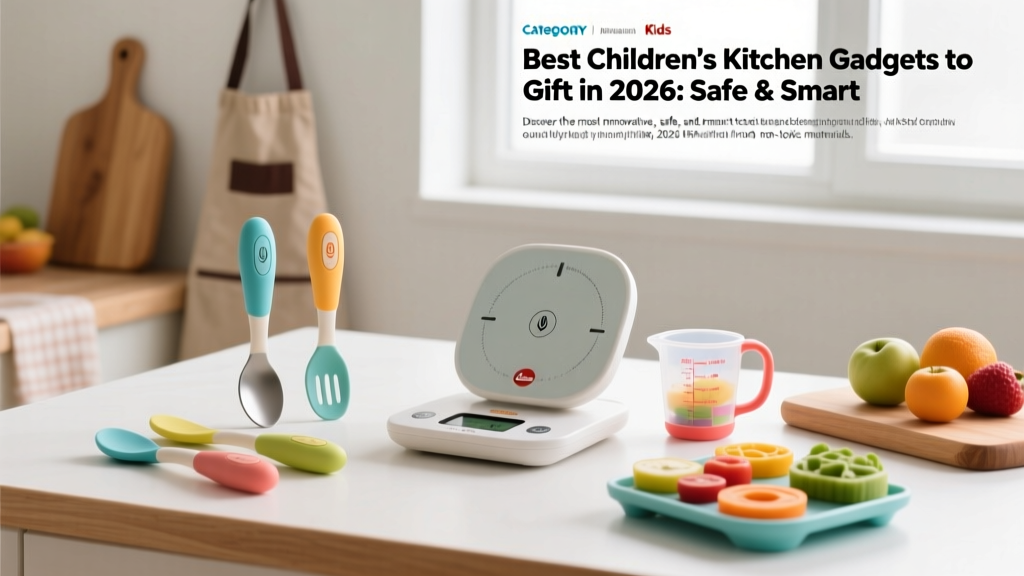
Gifting culinary tools to children has evolved far beyond plastic play-food and dull butter knives. In 2026, the market for childrens kitchen gadgets focuses on functional, tech-enabled, and ergonomically correct devices that teach real-world skills while adhering to strict safety standards. Parents and educators are prioritizing gadgets that bridge the gap between tactile learning and digital literacy, such as Bluetooth-enabled scales that guide recipes via tablets, and motorized tools with automated shut-off features. Selecting the right equipment requires navigating material safety regulations, ergonomic grip dimensions, and age-appropriate heat tolerances.
Age-Based Gadget Selection Matrix
Matching the gadget to the child's fine motor development and cognitive stage is critical for both safety and engagement. Use this matrix to determine the appropriate category of childrens kitchen gadgets based on age and skill level.
| Age Group | Motor & Cognitive Focus | Recommended Gadget Category |
|---|---|---|
| Ages 3-5 | Sensory exploration, basic grip strength | Nylon cutting tools, silicone molds, manual juicers |
| Ages 6-9 | Measurement, fraction math, digital literacy | Smart scales, digital thermometers, app-guided timers |
| Ages 10-13 | Heat management, motorized prep, precision | Cordless blenders, induction-safe sensors, precision scales |
Top Smart & Safe Kitchen Gadgets for 2026
1. Drop Smart Kitchen Scale (Best for Tech-Integrated Baking)
The Drop Smart Kitchen Scale (Model: DR-001, $99.00) transforms abstract fraction math into visual, interactive baking. Connecting via Bluetooth 4.0 to the Drop Kitchen app on iOS and Android, the scale provides real-time visual feedback on a tablet or smartphone. Instead of reading '1.5 cups of flour,' the child watches a digital progress bar fill up as they pour, stopping exactly at the target weight with 1mm accuracy. This eliminates the mess of overflowing measuring cups and teaches precision. The scale features a seamless, spill-proof polycarbonate surface that wipes clean instantly, avoiding the crevices where flour and bacteria accumulate in traditional mechanical scales.
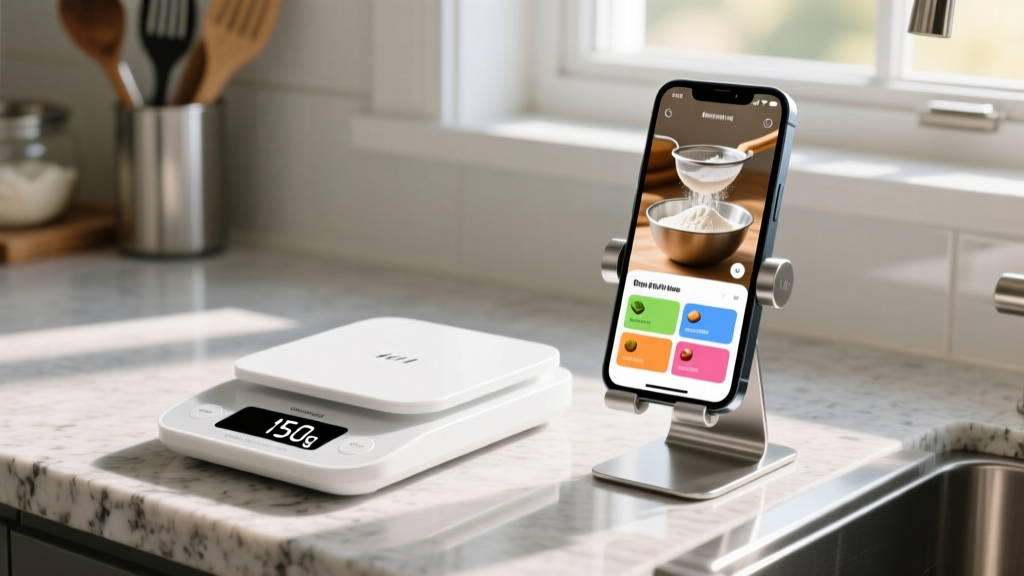
- Pros: Gamifies measurement; eliminates fraction confusion; seamless waterproof surface; syncs with hundreds of kid-friendly recipes.
- Cons: Requires a separate tablet or smartphone; premium price point compared to basic digital scales.
2. Curious Chef 3-Piece Nylon Knife Set (Best for Early Prep Skills)
For children aged 4 to 7, the Curious Chef 3-Piece Nylon Knife Set ($14.99) provides a safe introduction to cutting mechanics. Unlike stainless steel blades, these knives are constructed from high-density, BPA-free nylon with a serrated edge designed to grip the skin of tomatoes and cucumbers without piercing human epidermal layers. The handles feature a 22mm grip diameter, specifically engineered for the smaller hand span of young children, promoting a proper 'claw grip' technique. The set includes a paring, utility, and chef knife, all of which are top-rack dishwasher safe and heat resistant up to 400°F (204°C).
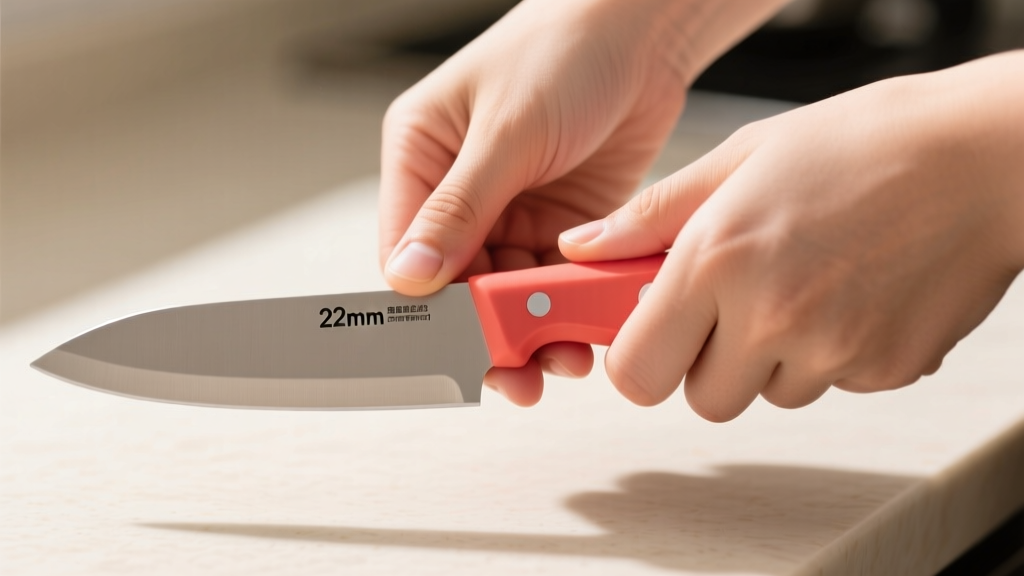
- Pros: ASTM F963 compliant; ergonomic 22mm grip; cuts produce but not skin; highly affordable entry point.
- Cons: Nylon blades dull over time with heavy use on hard root vegetables like raw carrots or potatoes.
3. NutriBullet GO Cordless Blender (Best for Motorized Safety)
Motorized appliances pose a significant cord-pull hazard in busy kitchens. The NutriBullet GO Cordless Blender ($59.00) eliminates this risk entirely. Powered by a 7.4V rechargeable lithium-ion battery, it delivers up to 20 blends per charge via USB-C. The 10oz capacity is perfectly sized for a child's single-serving smoothie or pancake batter. Crucially, it features a magnetic safety interlock system: the blade base will not engage unless it is perfectly aligned and locked into the cup, preventing accidental activation during assembly. The motor auto-shuts off after 60 seconds to prevent overheating, aligning with NFPA Kitchen Fire Safety recommendations for minimizing unattended heat and motor friction risks.
- Pros: Zero cord-pull hazard; USB-C charging; magnetic safety interlock; 60-second auto-shutoff.
- Cons: Limited to soft fruits and liquids; cannot crush heavy ice or frozen acai blocks without prior thawing.
4. ThermoWorks ThermoPop 2 (Best for Heat Safety & Precision)
Teaching children to cook proteins safely requires reliable temperature monitoring. The ThermoWorks ThermoPop 2 ($35.00) is a digital instant-read thermometer with a 2-second response time and an IP66 waterproof rating. The rotating digital display allows a child to read the temperature from any angle without contorting their wrist near hot surfaces. The probe is housed in a splash-proof casing, and the backlit screen automatically activates in dim lighting. By setting the customizable alarm to FDA-recommended safe minimum internal temperatures (e.g., 165°F for poultry), children learn critical food safety protocols without relying on visual guesswork.
- Pros: 2-second read time; rotating backlit display; IP66 waterproof; customizable temperature alarms.
- Cons: Probe must be hand-washed; the CR2032 battery requires a small screwdriver to replace.
Maintenance and Hygiene Protocols for Kids' Gadgets
Proper maintenance extends the lifespan of childrens kitchen gadgets and prevents bacterial growth. Follow these specific care instructions based on material composition:
- Nylon & Polypropylene (Knives, Spatulas): Top-rack dishwasher safe. Avoid the bottom rack, where heating elements can exceed 160°F and warp the structural integrity of the handles.
- Silicone (Molds, Scrapers): Highly heat resistant (up to 500°F). Can be sterilized in boiling water for 3 minutes if used for raw meat prep.
- Smart Electronics (Scales, Thermometers): Never submerge. Clean with a 70% isopropyl alcohol wipe to sanitize food-contact surfaces without damaging capacitive touchscreens or Bluetooth antennas.
Frequently Asked Questions
Are stainless steel knives ever appropriate for children?
Yes, but typically not until ages 9 to 12, and only with specific safety modifications. Brands like Opinel offer the 'Le Petit Chef' set ($45.00), which includes a stainless steel blade paired with a physical finger guard ring and a learning tool that forces the child's fingers into a safe, curved position away from the cutting edge.
Do smart kitchen scales require a constant internet connection?
No. Most smart scales, including the Drop scale, utilize Bluetooth Low Energy (BLE) to connect directly to a local device. Once a recipe is loaded in the app, the scale functions perfectly even if the home Wi-Fi network drops, making them reliable for off-grid cooking or camping trips.
How do I sanitize wooden cutting boards used by kids?
Wooden boards are naturally antimicrobial but require proper care. After washing with mild soap, spray the surface with undiluted white vinegar, let it sit for 5 minutes, and wipe dry. Do not use bleach on porous wood, as it degrades the cellulose fibers and leaves toxic residue that can transfer to food.
Written by
Jake MorrisonJake Morrison holds a B.S. in Electrical Engineering from UC Berkeley and an MBA from Stanford Graduate School of Business. With over 12 years of hands-on experience in consumer electronics, he previously served as a senior product engineer at a Silicon Valley startup before transitioning to tech journalism. Jake has personally tested and benchmarked over 3,000 gadgets across categories including smartphones, wearables, smart home devices, and audio equipment. His durability testing methodology — involving controlled drop tests, thermal cycling, and water submersion — is widely cited by major tech publications. He is a certified CompTIA A+ technician and a contributing editor to the IEEE Consumer Electronics Magazine.