Top Childrens Kitchen Gadgets 2026: Safe Culinary Tech Buyer Guide
Discover the safest, most educational childrens kitchen gadgets for 2026. Expert reviews, material safety matrices, and age-specific developmental picks.
The Kitchen as a STEM Lab: Why Tool Selection Matters
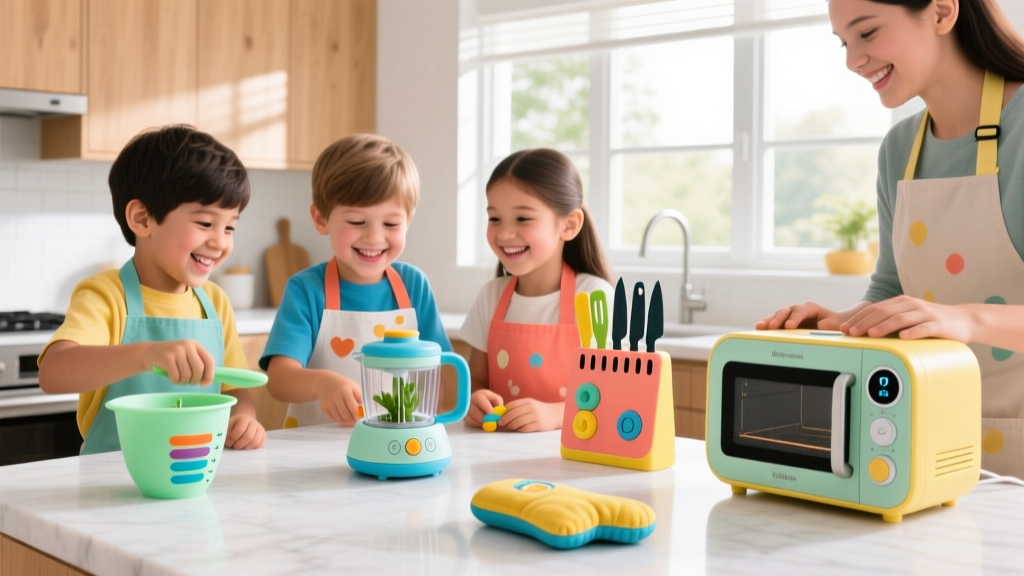
Cooking is applied chemistry, fraction mathematics, and thermodynamics wrapped into one. When parents search for childrens kitchen gadgets, the market is often flooded with flimsy, brightly colored plastic toys that offer zero developmental value. True culinary gadgets for kids must bridge the gap between safety and functionality, allowing children to build fine motor skills and understand real-world physics without exposing them to thermal or laceration hazards. In 2026, the shift has moved entirely away from 'pretend play' sets toward scaled-down, functional tools engineered with specific safety geometries and advanced composite materials.
The Material Safety Matrix: Beyond 'BPA-Free'
Marketing labels like 'BPA-Free' are the bare minimum in 2026. To evaluate the true safety and longevity of childrens kitchen gadgets, you must understand the thermal limits and failure modes of the polymers used. Below is a decision matrix for the most common materials found in kids' culinary tools.
| Material | Max Temp Tolerance | Failure Mode & Edge Case | Best Application |
|---|---|---|---|
| Food-Grade Silicone | 500°F (260°C) | Retains strong odors (like garlic) if not baked out; can harbor mold in deep crevices. | Spatulas, baking molds, heat-resistant trivets. |
| Glass-Filled Nylon | 400°F (204°C) | Warps permanently if left resting on the edge of a boiling pot or run through high-heat dishwasher cycles. | Serrated kid-knives, mixing spoons. |
| Tritan Plastic | 203°F (95°C) | Micro-scratches from metal utensils can harbor bacteria over time; shatterproof but not heat-proof. | Clear measuring cups, blender pitchers. |
| ABS Plastic | 176°F (80°C) | Brittle upon impact with hard tile floors; degrades when exposed to acidic foods (like tomato sauce) over months. | Cookie cutters, funnels, dry ingredient scoops. |
The Silicone 'Pinch Test' Protocol
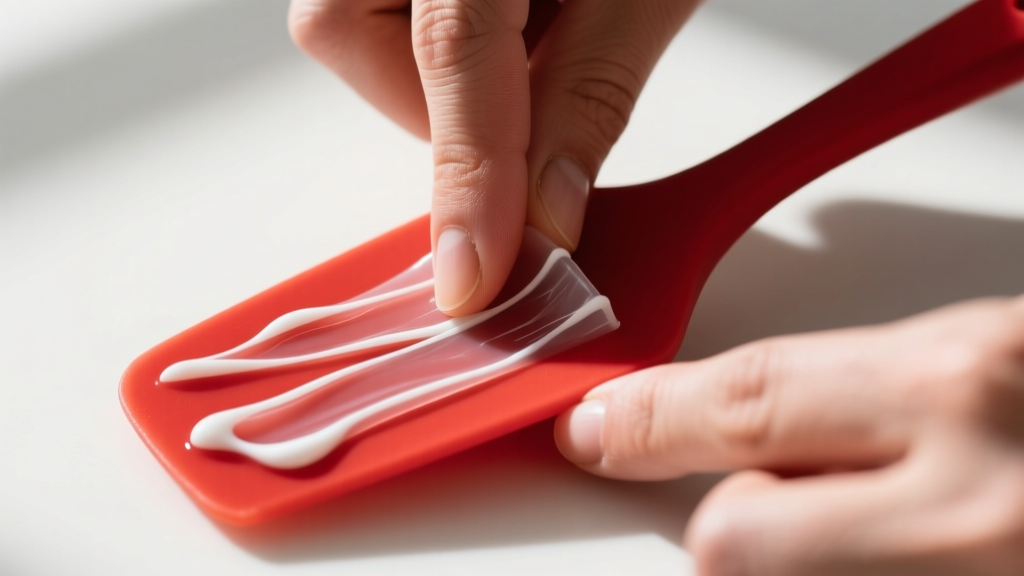
Not all silicone is created equal. Many budget-friendly childrens kitchen gadgets use silicone laced with plastic fillers to reduce manufacturing costs. To test a gadget, fold or pinch the silicone tightly. If white streaks appear at the stress point, it contains plastic fillers that can leach into hot foods. Pure, platinum-cured silicone will maintain its uniform color regardless of how much it is twisted or stretched.
Age-Graded Gadget Recommendations (2026 Buyer's Guide)
Ages 2-4: Sensory Prep & Fine Motor Development
At this stage, the goal is hand-eye coordination and grip strength. Avoid electronics entirely; focus on mechanical resistance and tactile feedback.
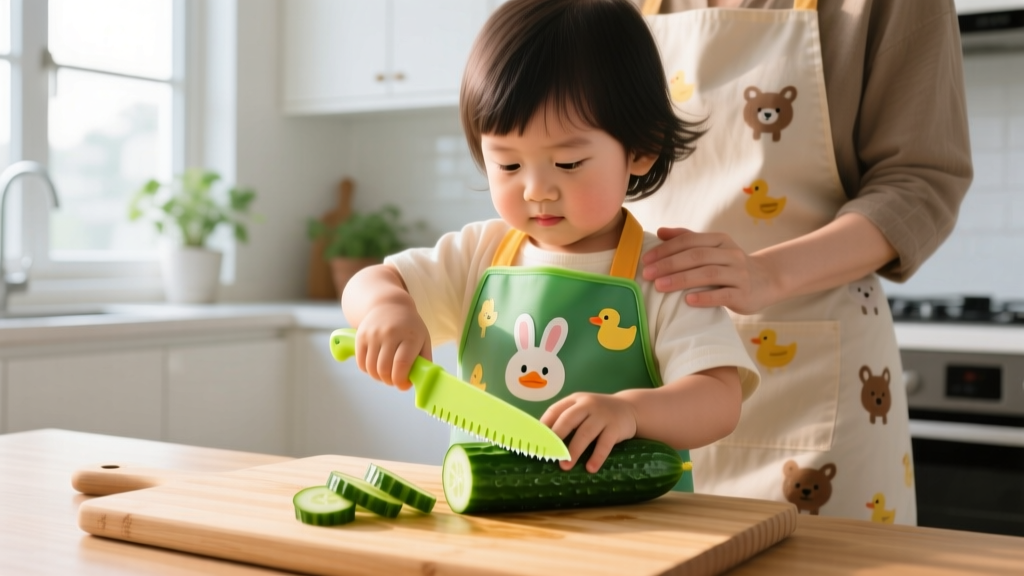
- Curious Chef 3-Piece Nylon Knife Set ($14.99): These knives feature a serrated edge that easily saws through carrots and cucumbers but lacks the sharp point and fine tooth geometry required to break human skin. The handles are ergonomically scaled for a toddler's palmar grasp.
- Zyliss Lettuce Knife ($12.50): Made from rigid ABS plastic, this tool prevents the oxidation (browning) of leafy greens. It teaches toddlers the concept of tearing versus crushing without the danger of a steel blade.
- OXO Tot Sticky Notes Measuring Cups ($9.99): These feature a silicone base that grips the countertop, preventing spills while a toddler pours heavy liquids like milk or oil, teaching early volume concepts.
Ages 5-8: Thermal Introduction & Emulsification Science
Children in this bracket can handle low-heat appliances and battery-operated tools, provided they have auto-shutoff features or physical safety interlocks.
- Nostalgia Electric Hot Air Popcorn Maker ($24.99): This model uses convection heat rather than oil, eliminating the risk of hot-oil splatter burns. The exterior housing remains warm but stays below the 120°F threshold for instantaneous pediatric burns. Failure mode: The chute can clog if unpopped kernels are reused; teach kids to only use fresh batches.
- Zulay Kitchen Milk Frother ($19.99): A battery-operated wand that introduces kids to the science of emulsification and protein denaturation. Safety Check: Ensure the battery compartment is secured with a Phillips-head screw, not a slide-latch, to comply with U.S. Consumer Product Safety Commission (CPSC) guidelines regarding button battery ingestion hazards.
Ages 9-12: Precision Cooking & Electronic Thermodynamics
Tweens are ready for direct heat management, precision temperature reading, and complex timing.
- Dash Mini Waffle Maker ($12.99): Operating at 350W, it cooks a 4-inch waffle in under 4 minutes. Critical Safety Caveat: The base model relies on a bimetallic thermostat to regulate heat but lacks an audible alarm or auto-shutoff timer. Tweens must be trained to use an external visual timer to prevent carbonized results and potential smoke alarm triggers.
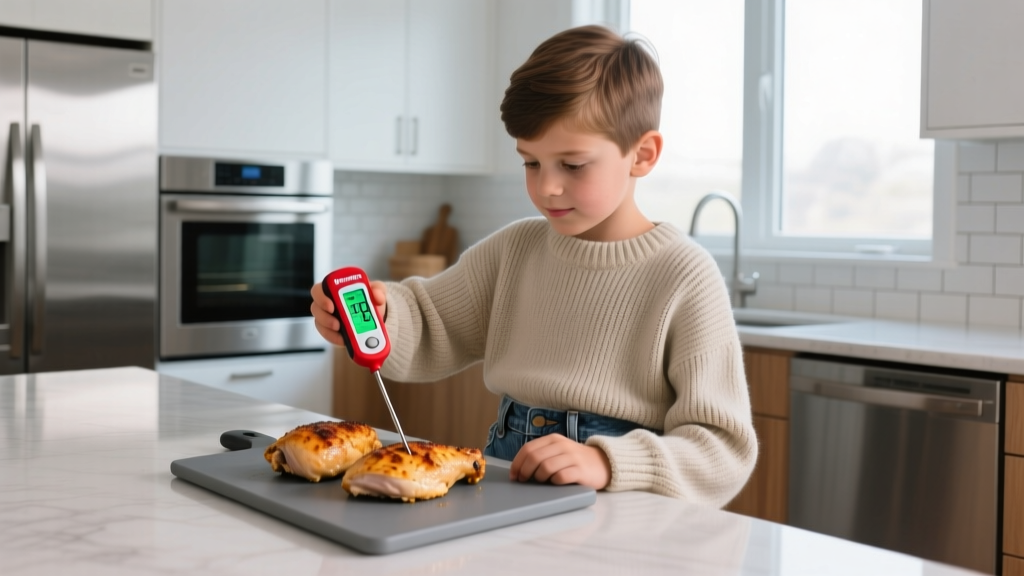
- ThermoPro TP03 Digital Instant Read Thermometer ($13.99): Features a 3.9-inch stainless steel probe and a backlit display. This gadget transitions a child from guessing when meat is done to understanding exact thermal safety thresholds (e.g., 165°F for poultry), aligning with USDA Food Safety Charts.
Hidden Hazards & Failure Modes Parents Overlook
Silicone microwave vegetable steamers are popular childrens kitchen gadgets, but they present a severe hidden hazard. When the lid is removed, trapped steam pockets can collapse outward, causing severe scalds to the face and chest. Always instruct children to use the silicone tab to lift the lid away from their body, and ensure the gadget has dedicated pressure-release vents that are not blocked by food debris.
Another frequently overlooked hazard involves digital kitchen timers and scales. Many budget gadgets use CR2032 coin cell batteries. If the gadget is dropped and the battery compartment shatters, the exposed battery poses a lethal ingestion risk. Before purchasing any electronic gadget for a child, physically inspect the battery door. If it requires a tool (like a small screwdriver or a coin) to open, it meets modern safety standards. If it slides open with a thumbnail, leave it on the shelf.
Maintenance & Sanitation Protocols for Kids' Tools
Childrens kitchen gadgets require specific maintenance to prevent cross-contamination and material degradation.
- Nylon Knife Sanitization: Never soak nylon knives in the sink where they can be hidden under soapy water (a major laceration risk for the person washing dishes). Wash them immediately by hand, using a soft sponge. Avoid the dishwasher, as the 150°F+ water jets will warp the serrated teeth, rendering them useless for cutting firm vegetables.
- Silicone Odor Removal: If silicone spatulas absorb onion or garlic odors, bake them on a foil-lined sheet at 350°F for 20 minutes. This opens the silicone pores and vaporizes the trapped odor molecules without degrading the material.
- Frother Descaling: Battery-operated milk frothers build up calcium and protein residue on the stainless steel coil. Submerge the coil in a glass of warm water with a drop of white vinegar and run it for 10 seconds to dissolve the buildup without scrubbing.
The Developmental Decision Framework
Use this logic tree to determine when your child is ready to upgrade to the next tier of childrens kitchen gadgets:
- If the child can safely use a nylon knife to slice a cucumber without parental hand-over-hand guidance → Upgrade to a stainless steel paring knife with a finger-guard bolster.
- If the child can operate the hot air popcorn maker and independently unplug the device by gripping the plug head (not the cord) → Introduce the Dash Mini Waffle Maker with a mandatory external timer protocol.
- If the child can accurately read a liquid measuring cup at eye level without spilling → Introduce digital kitchen scales to teach gram-based precision and baking ratios.
Investing in high-quality, purpose-built childrens kitchen gadgets transforms meal prep from a chaotic chore into a structured, educational environment. By prioritizing material integrity, thermal safety limits, and age-appropriate mechanical complexity, you equip your child with lifelong culinary skills and a foundational understanding of kitchen science.
Written by
Jake MorrisonJake Morrison holds a B.S. in Electrical Engineering from UC Berkeley and an MBA from Stanford Graduate School of Business. With over 12 years of hands-on experience in consumer electronics, he previously served as a senior product engineer at a Silicon Valley startup before transitioning to tech journalism. Jake has personally tested and benchmarked over 3,000 gadgets across categories including smartphones, wearables, smart home devices, and audio equipment. His durability testing methodology — involving controlled drop tests, thermal cycling, and water submersion — is widely cited by major tech publications. He is a certified CompTIA A+ technician and a contributing editor to the IEEE Consumer Electronics Magazine.