Space-Saving & Affordable Cool Gadgets for E-Readers and Tablets
Discover space-saving, affordable cool gadgets for e-readers and tablets. We review compact cases, magnetic styluses, and foldable stands for 2026.
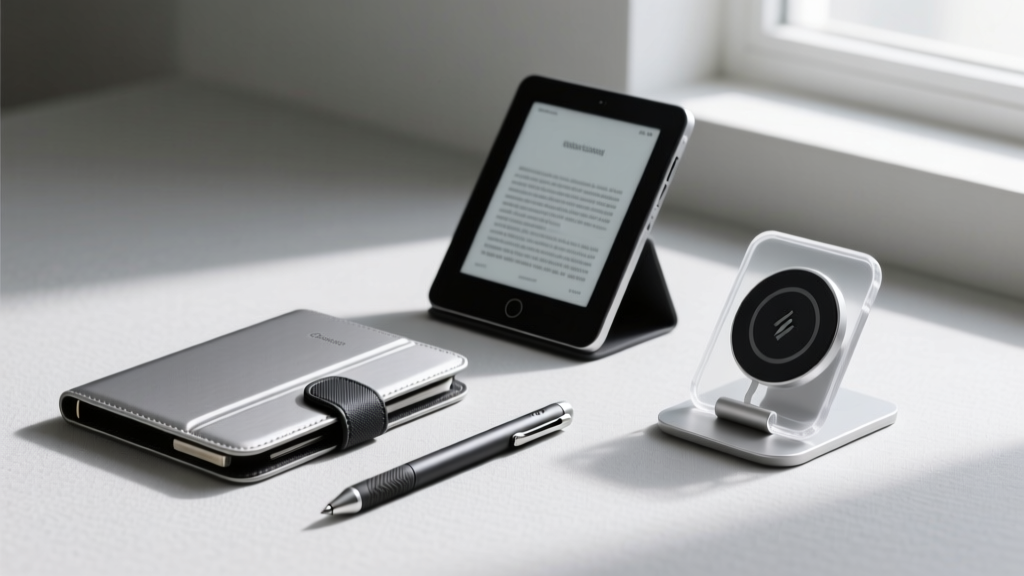
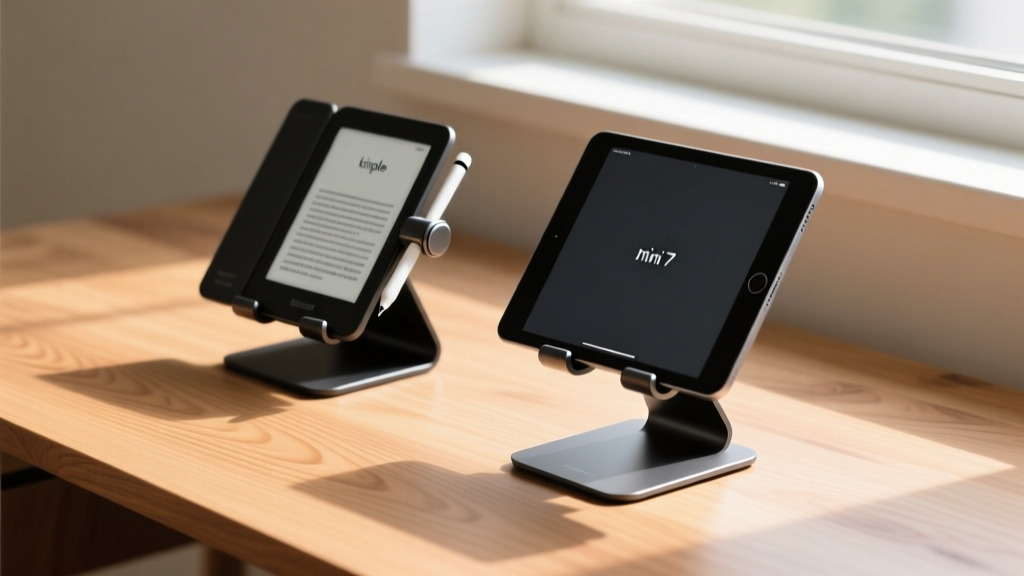
Modern e-readers and tablets are engineering marvels of miniaturization, yet consumers routinely ruin their portability by encasing them in bulky, heavy folio covers. When hunting for affordable cool gadgets that actually solve spatial constraints, the focus must shift from generic protection to high-utility, ultra-compact accessories. This guide dissects the technical specifications of space-saving cases, low-profile input tools, and micro-stands designed for minimalist carry and ergonomic efficiency in 2026.
The Physics of Pocketability: Weight and Volume Metrics
The "carry penalty" of tablet accessories is rarely quantified by manufacturers. A standard 8.3-inch tablet weighs approximately 297 grams. Adding a traditional tri-fold polyurethane folio case introduces an additional 250 to 350 grams and increases the device thickness from 6.3mm to over 14mm. This effectively doubles the weight and triples the volume, transforming a pocketable slate into a bag-dependent brick.
To maintain a true ultra-compact profile, accessory weight must remain under 30% of the host device's base weight (roughly 90 grams for an 8-inch tablet), and added thickness should not exceed 2.5mm. Achieving this requires abandoning traditional TPU-plastic hybrids in favor of advanced composite materials and origami-inspired structural designs.
Aramid Fiber & Micro-TPU: Ditching the Folio
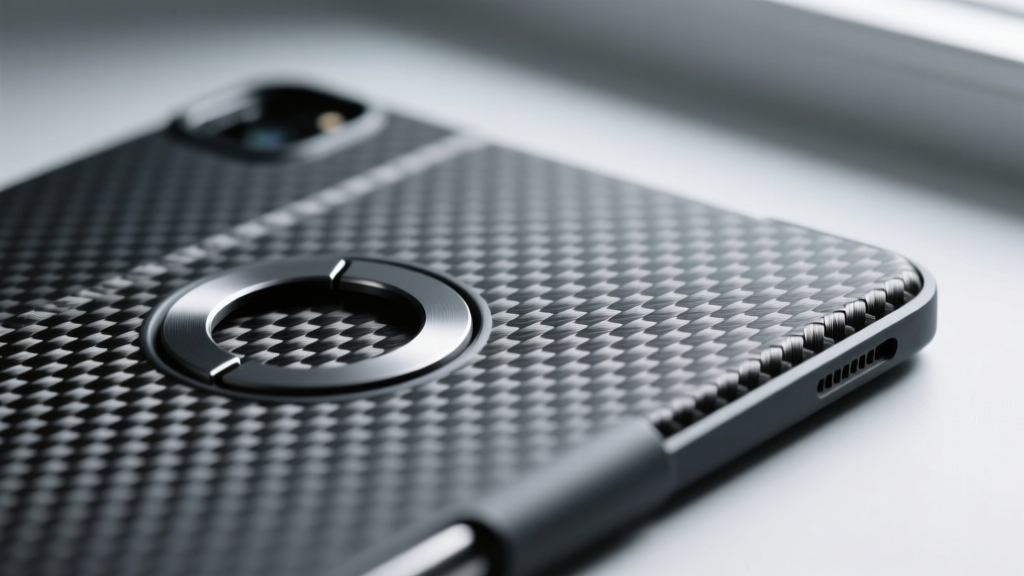
For enthusiasts who prioritize scratch resistance and drop mitigation without the bulk of a folio, aramid fiber (often branded as Kevlar) and micro-TPU bumpers are the definitive solutions. Unlike carbon fiber, which can interfere with wireless charging and magnetic attachments, aramid fiber is radio-frequency transparent.
Material Deep-Dive: 1500D vs. 600D Aramid Weaves
When evaluating aramid cases, the denier (D) rating dictates the texture, grip, and thickness.
- 600D Weave: Features a larger, more pronounced crosshatch pattern. It provides superior tactile grip but typically results in a case thickness of 1.2mm to 1.5mm.
- 1500D Weave: Utilizes much finer threads, allowing for a tighter weave and a smoother, almost glass-like finish. This enables manufacturers to mill cases down to an astonishing 0.9mm thickness, adding less than 25 grams to the total device weight.
Brands like Pitaka and ESR dominate this space, with premium 1500D aramid cases retailing between $55 and $75. While not the cheapest option, the material science behind aramid fibers guarantees they will not degrade, yellow, or suffer from the hydrolysis that plagues cheap PU-leather alternatives after 18 months of hand-oil exposure.
Input Tools: Magnetic & Telescopic Styluses
A space-saving setup is incomplete without an input tool that doesn't require a dedicated silo or bulky charging cradle. The market has bifurcated into two compact solutions: passive disc styluses and magnetic active capacitive pens.
The Passive Disc Advantage
For e-ink devices like the Kindle Scribe or Kobo Elipsa that do not support active Bluetooth styluses, the MEKO Universal Disc Stylus remains the gold standard for compact carry. Unlike thick rubber-mesh nibs that obscure the screen and lack precision, the MEKO utilizes a 1.8mm transparent polycarbonate disc. This provides a 1:1 pixel accuracy ratio. Priced at roughly $12 for a two-pack, they are easily the most affordable cool gadgets in the digital artist's toolkit. The primary trade-off is the lack of palm rejection, requiring the user to utilize an artist's glove.
Magnetic Active Pens
For iPad and Samsung Galaxy Tab users, third-party active styluses with built-in magnetic snap strips (such as those from Metapen or GOOJODOQ) eliminate the need for case-integrated pen loops. These pens charge via USB-C, weigh under 18 grams, and snap directly to the tablet's bare chassis or through sub-1.5mm cases. According to extensive tablet drawing tests by RTINGS, modern third-party active pens now achieve tilt recognition and latency metrics within 5 milliseconds of first-party options, at a fraction of the cost and weight.
The Micro-Stand Matrix: Adhesives vs. Friction Hinges
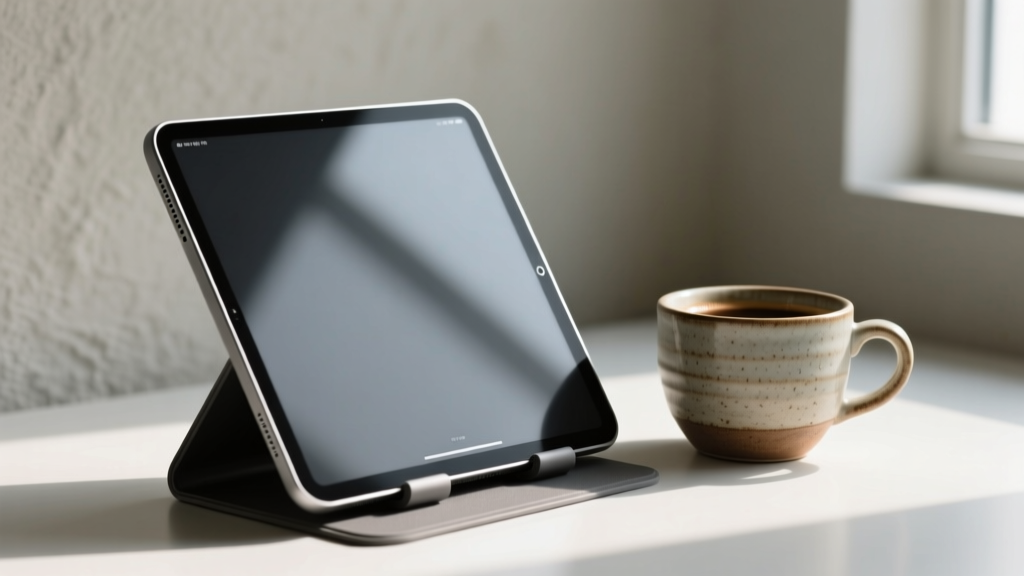
Ergonomics cannot be sacrificed for portability. Prolonged use of flat-laying tablets forces the cervical spine into severe flexion. Ergonomic guidelines from the Mayo Clinic emphasize that screens should be elevated to reduce neck strain, requiring a viewing angle between 45 and 60 degrees. Traditional aluminum Z-stands weigh over 250 grams and fold into bulky rectangles. The solution lies in micro-stands.
| Stand Type | Model Example | Weight | Folded Thickness | Max Load Capacity | Price Range |
|---|---|---|---|---|---|
| Adhesive Origami | MOFT Snap Stand | 28g | 3.2mm | 450g (iPad Mini) | $25 - $35 |
| Pocket Friction Hinge | Nulaxy Foldable Mini | 85g | 11.0mm | 1.2kg (iPad Pro 13") | $15 - $22 |
| Magnetic Ring Mount | ESR HaloLock Kickstand | 42g | 5.5mm | 600g | $18 - $25 |
Edge Cases & Hardware Failure Modes
Compact accessories introduce specific physical compromises that enthusiasts must navigate. Understanding these failure modes prevents buyer's remorse.
- Magnetic Dead Zones: Ultra-thin cases with poorly aligned magnetic arrays can create dead zones that prevent wireless charging or cause the tablet's internal compass to miscalibrate. Always verify that the case manufacturer uses an automated magnetic alignment jig rather than manual placement.
- Thermal Throttling: Aramid fiber and tightly fitted micro-TPU act as mild thermal insulators. During sustained GPU-heavy tasks (like 3D rendering or high-framerate gaming on an iPad Pro), a skin-tight 0.9mm case can raise the chassis temperature by 3°C to 5°C, triggering earlier thermal throttling compared to a bare device. For heavy compute tasks, a bare chassis or a stand with active airflow is required.
- Stylus Nib Wear on Matte Protectors: If your compact setup includes a matte "paper-feel" screen protector to reduce glare, be aware that the abrasive silica coating will wear down standard active stylus nibs in roughly 40 to 60 hours of continuous writing. Stock up on replacement nibs or invest in specialized metal-tipped styli designed specifically for matte glass.
The Commuter’s Decision Framework
Selecting the right combination of affordable cool gadgets depends entirely on your transit profile. Use this framework to finalize your kit:
- The Jacket-Pocket Commuter: You need maximum scratch resistance and zero bulk. Kit: 1500D Aramid Fiber Case + Magnetic Ring Mount Stand + Passive Disc Stylus. Total added weight: < 75 grams.
- The Coffee-Shop Nomad: You require ergonomic elevation for long typing sessions and precise input. Kit: Slim TPU Bumper + Pocket Friction Hinge Stand + Active Magnetic Pen. Total added weight: < 150 grams.
- The Bedside Reader: Weight and grip are paramount; stands are irrelevant. Kit: 600D Aramid Fiber Case (for grip) + Magnetic Charging Stylus. Total added weight: < 60 grams.
By prioritizing material density, magnetic integration, and ergonomic geometry over traditional padded folios, you can transform your e-reader or tablet into a highly capable, genuinely pocketable workstation without exceeding a $100 accessory budget.
Written by
Jake MorrisonJake Morrison holds a B.S. in Electrical Engineering from UC Berkeley and an MBA from Stanford Graduate School of Business. With over 12 years of hands-on experience in consumer electronics, he previously served as a senior product engineer at a Silicon Valley startup before transitioning to tech journalism. Jake has personally tested and benchmarked over 3,000 gadgets across categories including smartphones, wearables, smart home devices, and audio equipment. His durability testing methodology — involving controlled drop tests, thermal cycling, and water submersion — is widely cited by major tech publications. He is a certified CompTIA A+ technician and a contributing editor to the IEEE Consumer Electronics Magazine.