Compact Camp Gadgets: Space-Saving Tablet & E-Reader Accessories
Discover the best space-saving camp gadgets for your e-reader and tablet. We review ultra-compact cases, magnetic stands, and minimalist styluses.
The Intersection of Minimalist Travel and Digital Reading
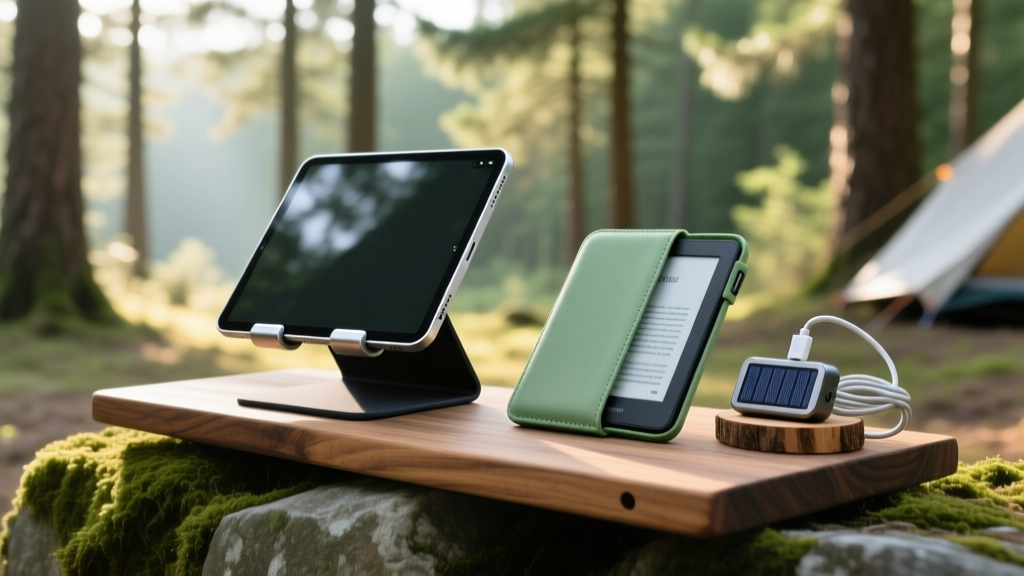
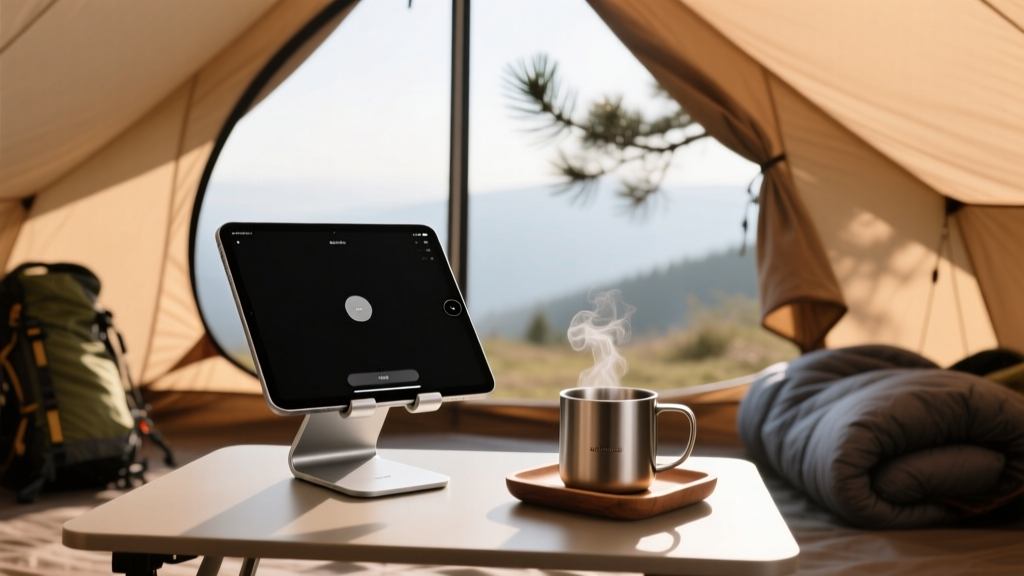
As we navigate the 2026 outdoor season, the line between rugged backcountry exploration and digital connectivity has never been thinner. Tech enthusiasts are increasingly bringing high-resolution e-readers like the Kindle Scribe 2 and powerhouse tablets like the iPad Pro M4 into the wild. However, the accessories that make these devices usable at home—bulky keyboard folios, heavy aluminum desktop stands, and sprawling charging docks—are entirely impractical for the trail, the RV, or the hammock.
When assembling your list of essential camp gadgets, you must prioritize space-saving, multi-functional, and ultra-lightweight solutions. The goal is to achieve maximum utility with zero footprint. In this guide, we break down the most innovative, compact cases, origami-style stands, and tethered styluses that transform your tablet or e-reader into the ultimate outdoor companion without weighing down your pack.
Multi-Functional Cases: Armor Meets Utility
The first rule of compact packing is consolidation. If your case cannot double as a stand, a grip, or a storage sleeve, it is wasting precious volume in your gear bag. Modern camp gadgets must serve at least two purposes.
The Hybrid Case Contenders
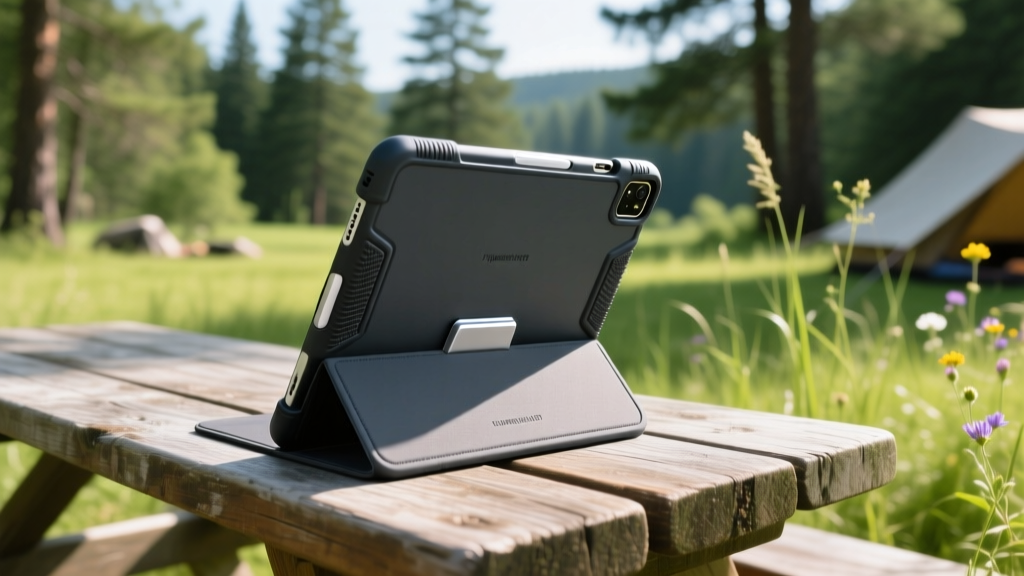
For tablet users, the Zugu Alpha Series remains the gold standard for rugged, space-saving design. Unlike traditional trifold folios that flop over in a light breeze or require a wide base, the Zugu uses a hidden magnetic rail system. It adds only 0.45 inches of thickness to your device and weighs a mere 11.2 ounces. More importantly, its footprint when deployed is exactly the same as the tablet itself, making it perfect for the narrow fold-out tables of an RV or the uneven ground of a tent vestibule.
For e-reader enthusiasts, the Fintie SlimShell with Hand Strap for the Kindle Scribe is a revelation. Weighing just 4.8 ounces, it features a built-in elastic hand strap that allows you to read securely while lying in a hammock, completely eliminating the need for a separate tabletop stand during relaxed campsite hours.
| Accessory Type | Product Model | Weight | Added Thickness | Base Footprint | Price (2026) |
|---|---|---|---|---|---|
| Case/Stand Hybrid | Zugu Alpha Series (11") | 11.2 oz | 0.45 in | Device Edge-to-Edge | $59.99 |
| E-Reader Hand Strap | Fintie SlimShell (Scribe) | 4.8 oz | 0.20 in | N/A (Handheld) | $24.99 |
| MagSafe Stand | MOFT Snap Floating | 2.3 oz | 0.25 in | 2.5 x 2.5 in | $34.00 |
| Folding Aluminum | Twelve South Compass Pro | 6.1 oz | N/A | 4.0 x 1.5 in (Folded) | $79.99 |
Zero-Footprint Stands: Origami and Magnetic Solutions
According to Wirecutter's extensive testing on tablet ergonomics, a good stand must elevate the screen to eye level to prevent neck strain. But how do you achieve this in a campervan or on a sleeping bag without packing a heavy metal arm?
The MagSafe Revolution
If your tablet is equipped with a MagSafe-compatible case (or you are using an iPhone 16 Pro Max as a secondary e-reader), the MOFT Snap Floating Stand is arguably one of the most ingenious camp gadgets on the market. When folded flat, it measures just 0.25 inches thick—roughly the thickness of three credit cards. It snaps magnetically to the back of your device and unfolds into a sturdy, floating easel. Because it relies on the device's own center of gravity and magnetic lock, it requires virtually zero desk space, making it ideal for balancing on your knee or a narrow cooler lid.
The Pocket-Sized Aluminum Alternative
For non-magnetic devices, the Twelve South Compass Pro folds down into a cylinder the size of a pocket knife (4.0 x 1.5 inches). Machined from aerospace-grade aluminum, it can be staked into soft dirt using a spare tent peg through its hinge loop for added wind resistance—a brilliant hack for beach camping or windy alpine environments.
Expert Insight: When packing for backcountry trips, every ounce matters. By choosing a MagSafe-compatible tablet case and a snap-on stand, you eliminate the need for a dedicated mechanical kickstand, saving up to 8 ounces and 12 cubic inches of pack space while maintaining perfect viewing angles.
Stylus Management: Tethers, Magnets, and Miniatures
Dropping an $80 stylus in the tall grass or losing it in the folds of a sleeping bag is a rite of passage for outdoor tech users. Standard styluses are long, thin, and impossible to pack securely without a dedicated sleeve.
Compact & Tethered Solutions
For digital journaling and map marking, consider the Adonit Dash 4 Pro. Unlike the elongated Apple Pencil Pro, the Dash 4 Pro features a pocket clip and a slightly thicker, shorter barrel (5.5 inches) that easily slides into the pen loop of a field notebook or a tactical jacket pocket. Priced around $49.99, it offers excellent palm rejection without the anxiety of losing a premium first-party accessory in the wild.
If you must use an official stylus, invest in a silicone tether loop that adheres to your tablet case via 3M VHB tape. By looping a paracord lanyard through the tether and the stylus cap, you ensure your stylus remains physically attached to your device, even when packing up camp in the dark.

Power & Lighting: The Ultimate Camp Gadget Add-Ons
An e-reader or tablet is only as good as its battery and your ability to see the screen. The REI Co-op Journal frequently highlights the importance of dedicated, low-lumen lighting for nighttime camp reading to preserve night vision and avoid disturbing tent-mates.
- Clip-on Amber Reading Lights: The Gekkotech Amber Clip Light (1.2 oz) filters out blue light, preserving your melatonin production for a better night's sleep in the backcountry. It clips directly onto the Zugu or Fintie cases without adding bulk.
- Ultra-Slim Power Banks: Ditch the brick. The Anker Nano Power Bank (10K, 30W) with a built-in USB-C connector plugs directly into the bottom of your tablet. This eliminates the need to pack a separate charging cable, reducing your tech kit by one critical point of failure.
The 'One-Bag' Tech Packing Framework
To truly master the art of compact tech travel, adopt this decision framework before every trip:
- Audit the Environment: Will you be on a flat surface (RV table) or an uneven one (hammock, sleeping bag)? Choose the MOFT Snap for uneven, the Compass Pro for flat.
- Eliminate Cables: Prioritize accessories with built-in connectors or magnetic wireless charging capabilities.
- Consolidate Protection: Your case must provide drop protection AND viewing angles. Never pack a 'sleeve' and a 'stand' separately.
FAQ: E-Readers and Tablets in the Wild
Are e-readers better than tablets for camping?
For pure reading, e-readers like the Kindle Scribe or Kobo Elipsa 2E are superior due to their E-Ink displays, which are perfectly legible in direct, harsh sunlight and offer battery life measured in weeks rather than hours. However, for digital nomads needing to edit photos, mark up PDF maps, or watch downloaded media in a tent, a tablet with an anti-glare matte screen protector is the better choice.
How do I protect my tablet screen from dust and sand?
Sand is the enemy of glass. When not in use, store your tablet in a microfiber-lined dry bag. For active use, apply a Paperlike Matte Screen Protector; not only does it reduce glare, but its slightly textured surface makes it much easier to wipe away fine dust and campfire ash without scratching the underlying glass.
Can I use MagSafe accessories on non-Apple tablets?
Yes. You can purchase universal magnetic rings (usually around $8) that adhere to the back of any Kindle, Kobo, or Android tablet case. This instantly unlocks the entire ecosystem of ultra-compact MagSafe camp gadgets, including the MOFT stands and magnetic power banks mentioned above.
Written by
Nina PetrovaNina Petrova holds a Master's degree in Child Development from the Erikson Institute and a B.S. in Nursing from the University of Illinois at Chicago. She worked as a pediatric nurse for 6 years before transitioning to family technology consulting, bringing clinical rigor to her evaluations of kid-friendly gadgets, educational toys, and parental control software. Nina has reviewed over 400 children's tech products, testing each for safety compliance (CPSC and ASTM standards), developmental appropriateness across age groups, screen-time impact, and data privacy practices. She serves on the Children's Technology Review advisory board and has testified before the FTC on children's data protection in connected toys. Her reviews are trusted by parents and educators alike for their evidence-based approach to balancing technology benefits with child safety.