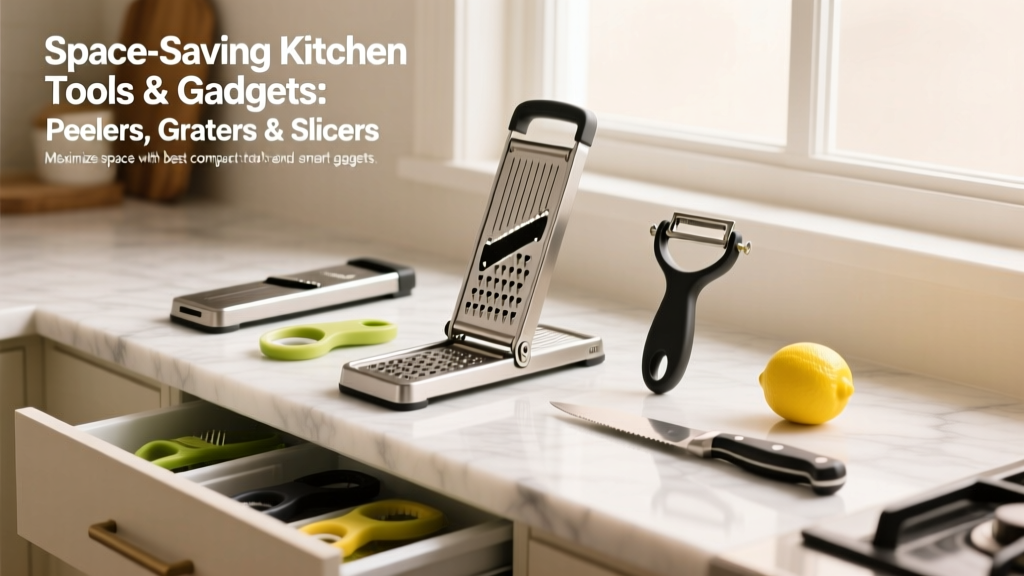
Space-Saving Kitchen Tools & Gadgets: Peelers, Graters & Slicers
Maximize drawer space with the best compact kitchen tools & gadgets. We review flat-fold graters, narrow mandolines, and space-saving peelers.
The Spatial Reality of Modern Prep Work
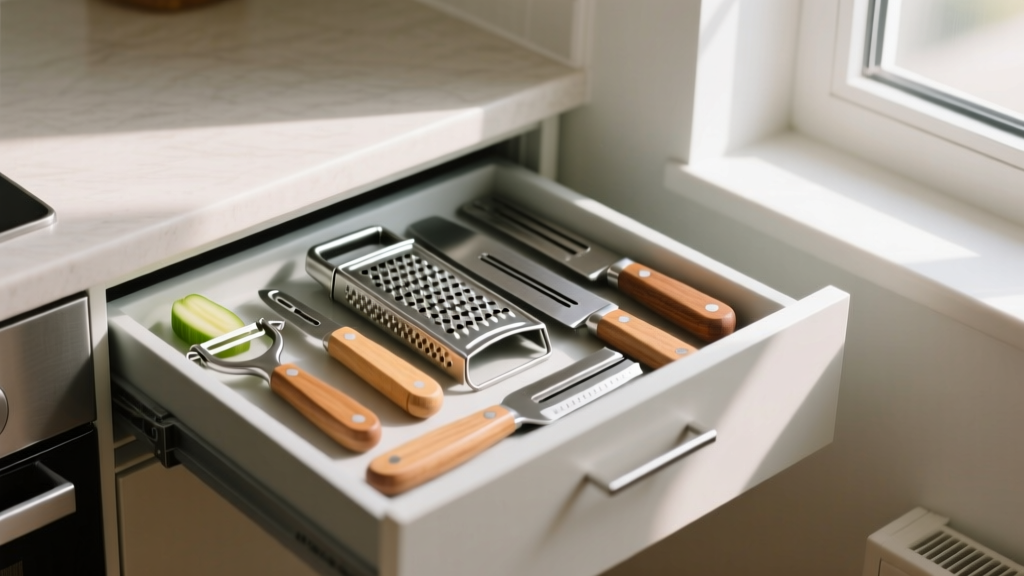
Standard kitchen drawers in urban apartments, galley kitchens, and RVs typically offer between 12 and 18 linear inches of usable depth per tier. Traditional prep tools ignore this constraint entirely. A standard stainless steel box grater consumes a 6x4x9-inch volume, while wide-winged Y-peelers and bulky plastic mandoline sleds create drawer gridlock. When optimizing small-footprint kitchens, every millimeter of storage matters. The solution is not to abandon essential prep tasks, but to replace volumetric tools with flat-packing, collapsible, and narrow-profile alternatives.
In this guide, we evaluate the most efficient space-saving kitchen tools & gadgets for peeling, grating, and slicing, focusing on exact storage dimensions, material durability, and specific failure modes associated with compact designs.
Flat-Packing Your Peelers: Carbon Steel vs. Folding Hinges
The most efficient peelers eliminate the wide, looping handles found on standard Y-peelers. By reducing the tool to a straight, low-profile stick, you can stack them flat in a utensil divider or slip them into a knife block.
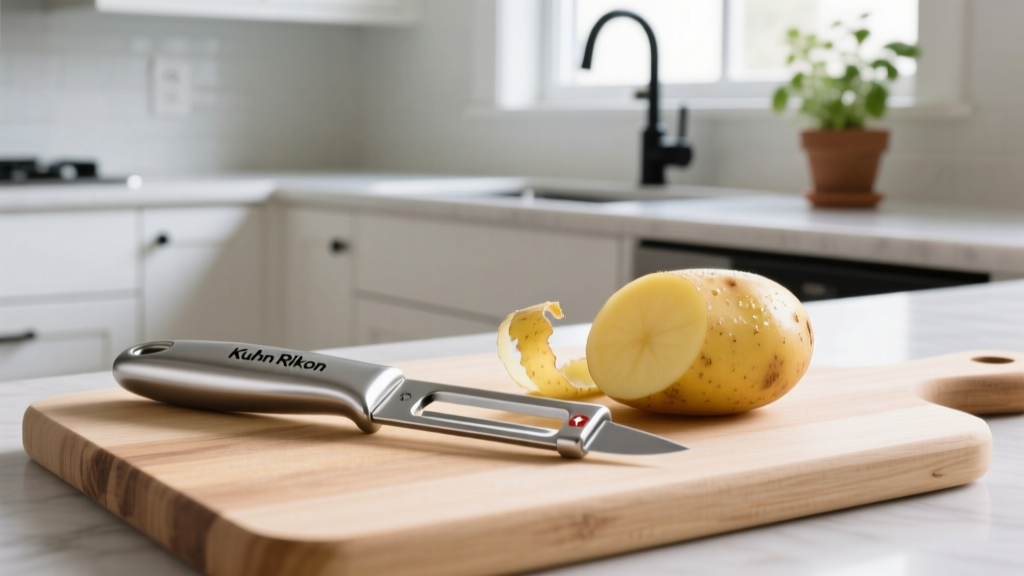
Kuhn Rikon Original Swiss Peeler
Measuring just 4.5 x 1 x 0.5 inches, the Kuhn Rikon Swiss Peeler is the benchmark for minimal storage. Its high-carbon steel blade is exceptionally sharp and maintains an edge far longer than standard 304 stainless steel. Priced between $12 and $15 in 2026, it is an inexpensive upgrade that takes up less volume than a standard marker pen.
Because the Kuhn Rikon uses high-carbon steel, it will oxidize and rust if left soaking in a sink or placed in a dishwasher. You must hand-wash and towel-dry it immediately after use. If surface rust appears, scrub the blade with a baking soda paste and a stiff brush to restore it.
Joseph Joseph Pivot Y-Peeler
If you prefer the ergonomic leverage of a Y-peeler, the Joseph Joseph Pivot solves the storage issue with a folding mechanism. The wings fold inward, reducing its footprint from 6.5 inches down to a compact 3.5 x 2 x 0.75 inches. At roughly $10, it is ideal for camping kits or shallow RV drawers. However, the pivot joint can accumulate starchy residue from potatoes if not rinsed immediately, eventually stiffening the hinge.
According to extensive testing by Serious Eats, straight-handle peelers like the Swiss model consistently outperform Y-peelers on hard-skinned produce like butternut squash due to better downward force distribution.
Grating Without the Bulk: Collapsible and Flat Profiles
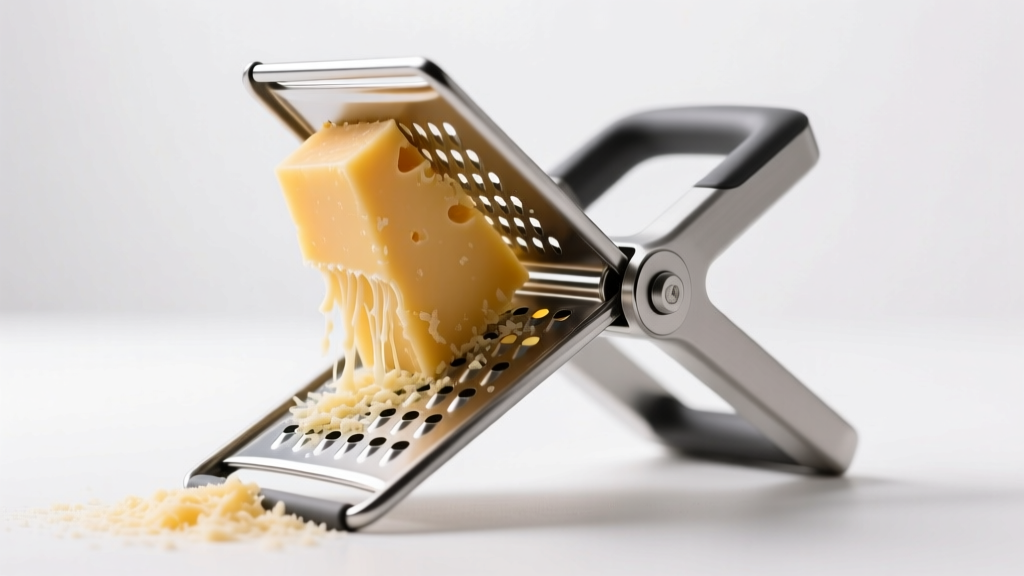
Box graters are notorious space hogs. The modern approach to compact grating involves either collapsible multi-sided designs or ultra-thin flat graters that slide into vertical slots.
Joseph Joseph FoldFlat Grater
This gadget unfolds into a four-sided box grater but collapses completely flat for storage. When folded, it measures just 10 x 4.5 x 0.5 inches. It features coarse, medium, fine, and slicing zones, effectively replacing four separate tools. It retails for about $22.
- Pros: Reduces storage volume by 80% compared to a standard box grater; non-slip base.
- Cons: The folding hinges are prone to clogging with hard cheeses or sticky root vegetables. You must run hot water through the hinges immediately after grating.
Microplane Premium Classic Zester/Grater
While not collapsible, the Microplane Classic (12.5 x 1.5 x 1 inches) is incredibly thin. Because it lacks a bulky box frame, it can easily slide into the back of a drawer, hang on a magnetic strip, or slot into a knife block. Priced around $18, its photo-etched blades produce fluffy, unbruised parmesan and zest without clogging. For a comprehensive breakdown of grater efficiency and blade geometry, Wirecutter's grater guide confirms that photo-etched flat graters outperform stamped box graters in both yield and cleaning time.
| Model | Type | Stored Dimensions (Inches) | Approx. Price |
|---|---|---|---|
| Joseph Joseph FoldFlat | Collapsible 4-Sided | 10 x 4.5 x 0.5 | $22 |
| Microplane Premium Classic | Flat Blade | 12.5 x 1.5 x 1.0 | $18 |
| Standard Box Grater | Fixed 4-Sided | 9.5 x 6.0 x 4.0 | $15 |
Slicing and Mandolines for Tight Drawers
Traditional French mandolines with heavy stainless steel frames and wide sleds are impossible to store in a standard shallow drawer. Japanese-style mandolines offer a radically different, space-efficient geometry.
Benriner Handy Mandoline Slicer (No. 64)
The Benriner Handy is remarkably narrow, measuring just 2.5 inches across the blade and 11.5 inches in total length. This narrow profile allows it to be stored vertically in a standard knife block or slipped into a narrow utensil divider slot. Priced between $38 and $45, it features a continuously adjustable dial that lets you set slice thickness from 0.5mm to 5mm with exact precision.
Use a tension rod or an adjustable bamboo drawer divider to create a 3-inch wide vertical slot in your drawer. The Benriner fits perfectly upright in this slot, keeping the razor-sharp blade protected and freeing up horizontal drawer space for wider items.
While the Benriner is a favorite among professional chefs for its compact footprint, Serious Eats' mandoline review notes that the narrow 2.5-inch blade width requires you to cut larger vegetables like russet potatoes in half before slicing, trading a minor prep step for massive storage savings.
Compact kitchens often mean cramped prep zones. The Benriner's hand guard uses small prongs that can slip on wet, round vegetables. Always use a cut-resistant Kevlar glove (such as the Stark SafeCut Level 5 glove, approx. $12) when operating a narrow mandoline in a tight galley kitchen where your elbows might bump surrounding countertops.
The Ultimate Compact Prep Matrix
When outfitting a small kitchen, prioritize tools that serve multiple functions or collapse entirely. Below is a decision matrix for selecting your space-saving kitchen tools & gadgets based on your specific spatial constraints.
| Spatial Constraint | Recommended Peeler | Recommended Grater | Recommended Slicer |
|---|---|---|---|
| Deep drawers with narrow dividers | Kuhn Rikon Swiss Peeler | Microplane Classic | Benriner Handy |
| Shallow drawers (under 2 inches deep) | Joseph Joseph Pivot | Joseph Joseph FoldFlat | Dash Mini Mandoline |
| Wall-mounted / Magnetic storage | Any stainless straight peeler | Microplane Classic | Not recommended |
Maintenance Protocols for Compact Gadgets
Compact kitchen tools & gadgets often rely on hinges, folding joints, and exposed high-carbon steel to achieve their small footprints. These design choices require specific maintenance protocols to prevent premature failure.
1. Hinge Flushing
For any folding gadget (like the Joseph Joseph grater or pivot peeler), starches and proteins will act like glue in the joints. Keep a stiff-bristled nylon brush (like the OXO Good Grips Palm Brush) next to your sink. Immediately after use, run the hinge under hot water while aggressively brushing the joint before the food particles dehydrate.
2. Carbon Steel Passivation
If you opt for high-carbon steel peelers for their superior edge retention, you must manage oxidation. After washing and drying, occasionally wipe the blade with a micro-thin layer of food-grade mineral oil before placing it in the drawer. This creates a moisture barrier that prevents rust in humid kitchen environments.
3. Blade Guard Integrity
Narrow mandolines like the Benriner often come with flimsy plastic blade covers that warp in the dishwasher. Never wash these covers in the dishwasher. Hand wash them to maintain the precise friction fit that protects your fingers when reaching into a crowded, compact drawer.
Written by
Tom ReynoldsTom Reynolds holds a CFA (Chartered Financial Analyst) designation and a B.S. in Finance from the University of Texas at Austin. Before entering tech journalism, he spent 6 years as a quantitative analyst at a hedge fund, building cost-benefit models for consumer product investments. Tom has maintained a proprietary database of over 10,000 tech deals for the past 8 years, developing his signature "penny-per-feature" evaluation framework that calculates the true value proposition of every gadget. His budget gadget reviews are known for their financial rigor — he tracks price history across 15+ retailers, calculates cost-per-use over 3-year lifespans, and identifies the exact inflection point where premium features justify their markup. Tom's deal alerts have saved his readers an estimated .3 million since 2018.