How to Configure Cool Survival Gadgets for a Wilderness EDC
Learn how to configure and integrate cool survival gadgets like the Garmin inReach Mini 2 and BioLite CampStove into a reliable wilderness EDC kit.
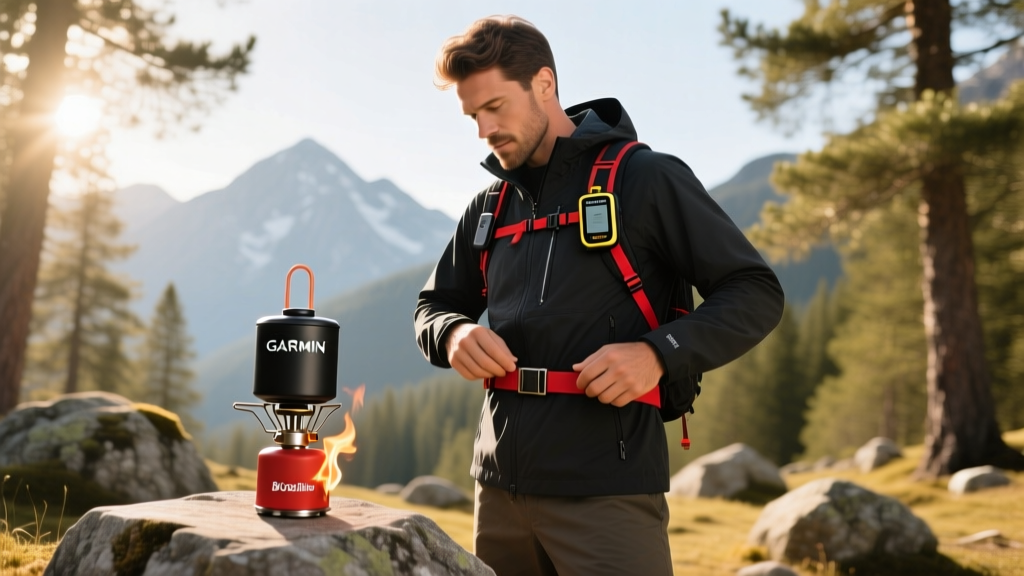
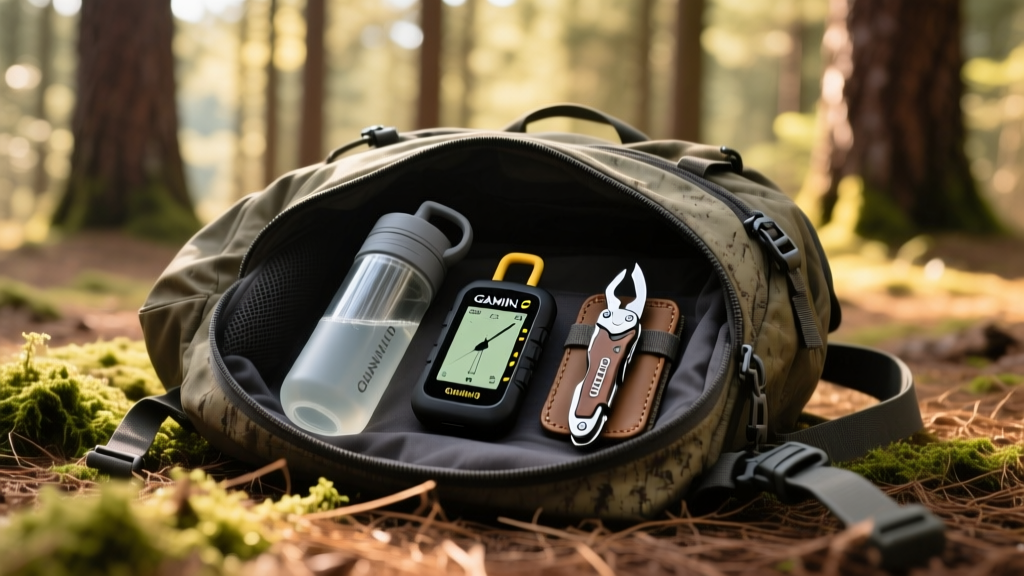
The Philosophy of Tech-Enhanced Wilderness EDC
Purchasing high-end backcountry technology is only the first step in emergency preparedness. A gadget straight out of the box is a liability if you have not calibrated it to your specific physiological metrics, environmental conditions, and operational tempo. According to FEMA's emergency preparedness guidelines, functional redundancy and regular maintenance are the cornerstones of any reliable survival kit. When integrating cool survival gadgets into your Everyday Carry (EDC) or bug-out bag, you must transition from a passive consumer to an active technician. This guide details the exact configuration protocols for four critical categories of wilderness survival tech: satellite communication, water purification, thermoelectric power, and advanced metallurgy tools.
Step 1: Satellite Communication Redundancy (Garmin inReach Mini 2)
The Garmin inReach Mini 2 relies on the Iridium satellite network, which operates on L-band frequencies (1616 to 1626.5 MHz). Unlike GPS which only receives signals, Iridium requires two-way transmission, meaning signal obstruction is your primary failure point.
Configuration Protocol:
- Firmware and Wi-Fi Sync: Before leaving grid coverage, connect the device to Wi-Fi and update the firmware via the Garmin Explore app. The 2026 firmware updates significantly reduce the time-to-first-fix (TTFF) for the internal GPS module.
- Custom SOS Messaging: Do not rely on the default SOS blank slate. Pre-program your emergency contact tree with specific medical data (e.g., 'Blood Type O+, Penicillin Allergy, Right Knee Meniscus Tear').
- Tracking Interval Optimization: Set the tracking interval to 10 minutes rather than the default 30. While this reduces the battery life from 30 days to approximately 14 days, it provides search and rescue (SAR) teams with a much tighter breadcrumb trail in the event of a sudden incapacitation.
Step 2: Water Purification Calibration (Grayl GeoPress)
While chemical treatments take 30 minutes and UV pens require clear water and batteries, the Grayl GeoPress offers immediate, broad-spectrum purification. It utilizes a three-stage matrix: activated carbon, ion exchange, and ultrafiltration membranes rated to 0.1 microns. However, improper pressing technique is the leading cause of membrane rupture in the field.
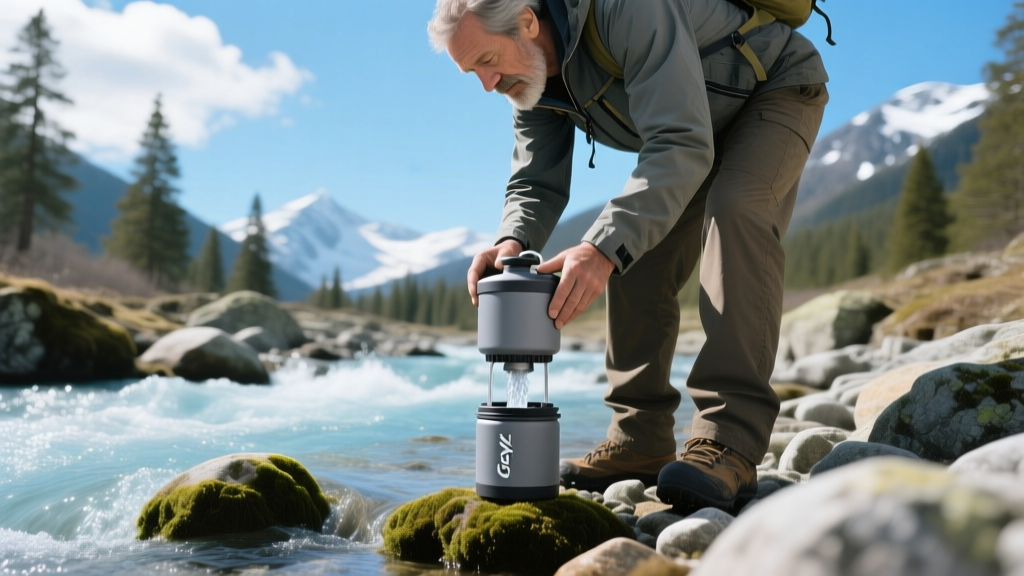
The 15-Pound Press Technique:
The GeoPress requires approximately 15 pounds of downward force to push water through the dense filter matrix. Relying solely on arm strength leads to fatigue and uneven pressure, which can cause the inner O-ring to bypass.
- Stance: Place the base of the purifier on a flat, stable surface (a rock or the ground).
- Leverage: Grip the outer handles firmly, place the heel of your dominant hand on the inner press lid, and lean your upper body weight forward.
- Timing: A full 24 oz press should take exactly 15 seconds. If it takes longer than 25 seconds, the filter is clogged with silt and requires backflushing.
"When drawing water from glacial runoff or silty alpine streams, always pre-filter the water through a bandana before filling the GeoPress outer cup. This prevents large particulate matter from prematurely clogging the 0.1-micron membrane, extending the cartridge lifespan closer to its maximum 65-gallon (250L) rating." - Backcountry Water Safety Protocols
Step 3: Thermoelectric Power Generation (BioLite CampStove 2+)
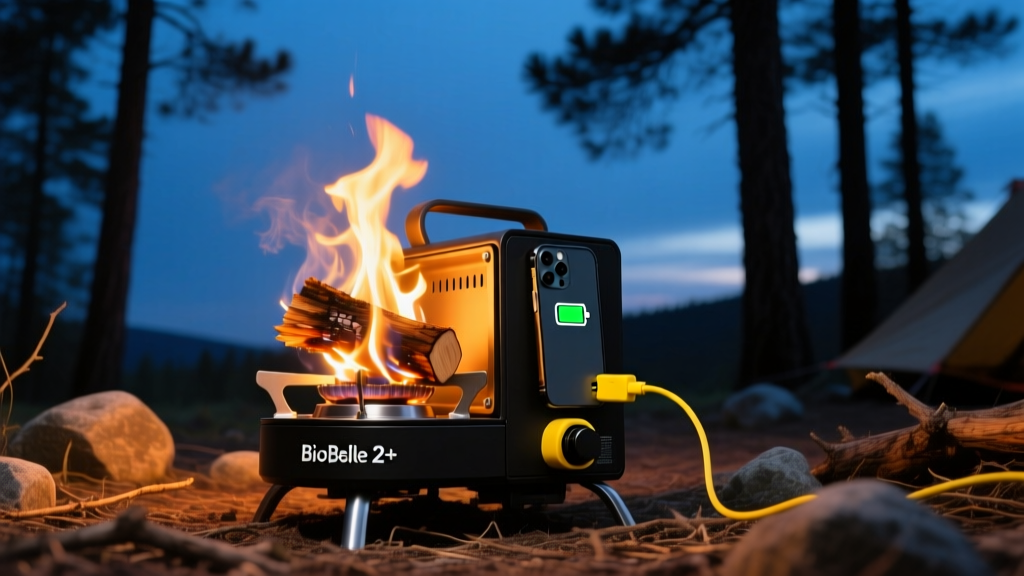
The BioLite CampStove 2+ is a marvel of off-grid engineering, converting heat from a wood fire into 3 watts of continuous electricity via a thermoelectric generator (TEG). The internal 3350 mAh lithium-ion battery stores this power for USB charging. However, the TEG module requires a specific thermal differential to operate efficiently.
Priming and Fan Speed Management:
The stove features an internal fan with four speed settings. Mismanaging these speeds will either starve the fire of oxygen or cool the TEG module too rapidly, halting power generation.
- Speed 1 (Startup & Charging): Use this setting when lighting the fire and when your primary goal is charging a device. The low airflow allows the combustion chamber to reach the critical 1,000°F threshold required to activate the thermoelectric module.
- Speed 4 (Boiling): Only switch to maximum airflow when you need to boil water rapidly (1 liter in 4.5 minutes). Warning: Running the fan on Speed 4 without a pot on top will draw heat away from the TEG and drastically reduce USB power output.
- Ash Management: After every three burns, use the included ash poker to clear the air intake holes at the base of the burn chamber. Clogged intakes cause the internal fan to overwork, draining the battery instead of charging it.
Wilderness EDC Gadget Matrix
| Gadget Model | Base Weight | Power / Energy Source | Maintenance Interval | Approx. Cost (2026) |
|---|---|---|---|---|
| Garmin inReach Mini 2 | 3.5 oz | Internal Li-ion (USB-C) | Firmware check pre-trip | $399 + $15/mo sub |
| Grayl GeoPress | 15.9 oz | Kinetic (Manual Press) | Replace filter at 250L | $99 |
| BioLite CampStove 2+ | 33 oz | Thermoelectric / Wood | Ash clearing every 3 burns | $179 |
| Leatherman ARC | 8.6 oz | Kinetic (Manual) | Pivot tensioning / Oiling | $229 |
Step 4: Metallurgy and Tool Tensioning (Leatherman ARC)
The Leatherman ARC represents a massive shift in multi-tool metallurgy, utilizing CPM MagnaCut steel for the primary blade. MagnaCut offers an exceptional balance of toughness, edge retention, and corrosion resistance, scoring between 60-62 HRC on the Rockwell scale. However, this premium steel requires specific maintenance protocols that differ from standard 420HC blades.
Pivot Tensioning and Deployment:
Out of the box, the ARC's plier head and knife pivot may feel stiff due to factory-applied corrosion inhibitors. Do not force the one-handed deployment.
- Use the included Torx bit to back out the main blade pivot screw by exactly one-quarter turn.
- Apply a single drop of synthetic pivot oil (like Nano-Oil 10W) to the phosphor bronze washers.
- Open and close the blade 50 times to distribute the lubricant, then re-tighten the pivot screw until there is zero side-to-side blade play while still allowing gravity-assisted closing.
The 5-Minute Shakedown Drill
According to REI's backcountry safety experts, stress degrades fine motor skills by up to 40% during an actual emergency. To ensure your cool survival gadgets function when you are exhausted, cold, or injured, you must conduct the 'Shakedown Drill'.
Once a month, set a timer for five minutes in a completely dark room or while wearing heavy winter gloves. Your objective is to:
- Deploy the Leatherman ARC one-handed and cut a piece of 550 paracord.
- Assemble the Grayl GeoPress and execute a dry-press to verify the O-ring seal and muscle memory.
- Power on the Garmin inReach Mini 2, navigate to the tracking menu, and initiate a test check-in message.
By rigorously configuring and stress-testing these gadgets, you transform them from expensive novelties into a cohesive, life-saving ecosystem. For further reading on emergency water disinfection protocols when your primary filter fails, consult the EPA's emergency water treatment guidelines. True preparedness is not about the gear you own; it is about the intimate knowledge of how that gear operates at its absolute limits.
Written by
Emma LarssonEmma Larsson holds an M.A. in International Relations from Sciences Po Paris and a B.A. in Communications from Stockholm University. A digital nomad since 2017, she has worked from over 45 countries across six continents, building deep expertise in portable power solutions, travel routers, compact computing, and connectivity gadgets that survive international travel. Emma is a certified member of the Travel Technology Association and has advised three travel gear startups on product-market fit for remote workers. Her reviews evaluate products against real travel scenarios — TSA compliance, voltage compatibility across 200+ countries, durability through 50+ checked bag cycles, and battery life under airplane mode vs. active use. She has been featured in Condé Nast Traveler's "Tech-Savvy Traveler" series and speaks at Remote Work Summit events.