Cool Ice Fishing Gadgets Solving Real Hardwater Problems 2026
Discover the best cool ice fishing gadgets for 2026 that solve real hardwater problems, from sub-zero battery drains to blind hole-hopping.
The Hardwater Reality: Why Standard Gear Fails
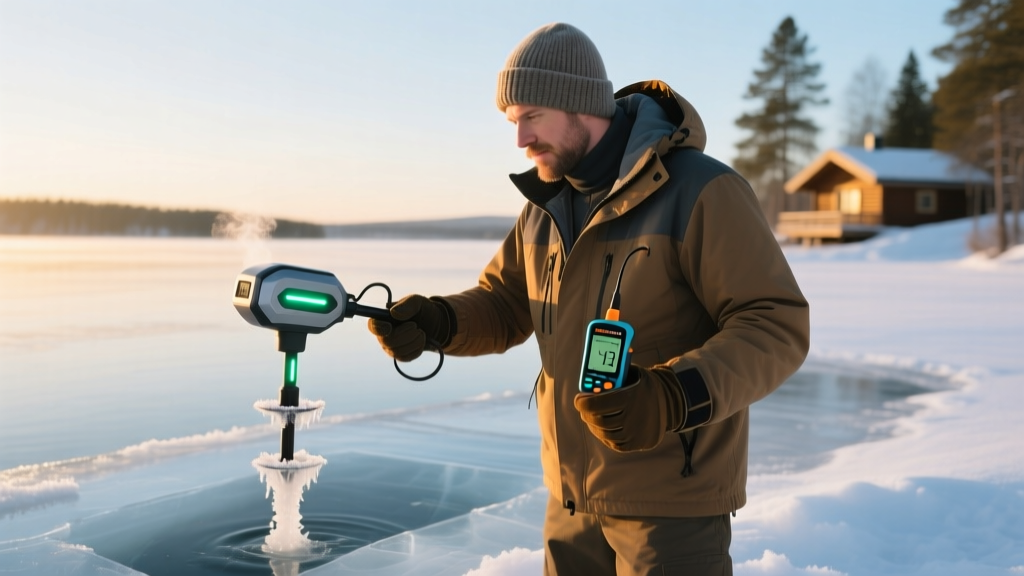
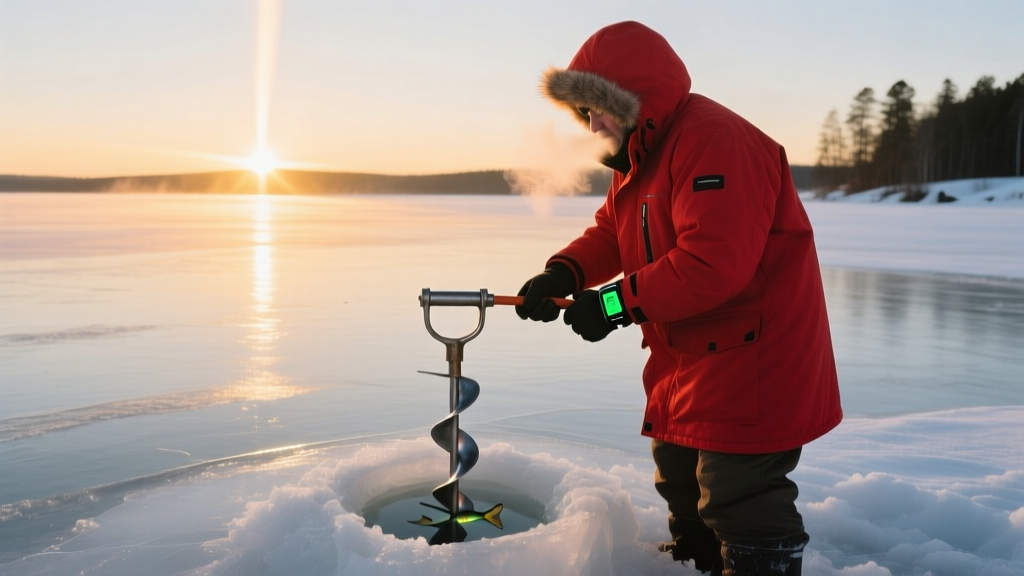
Ice fishing is an exercise in thermal management and mechanical persistence. When air temperatures plummet below zero, standard open-water gear fails in predictable, frustrating ways. Lithium-ion batteries experience severe voltage sag, metal skimmers freeze into solid blocks of slush, and blind hole-hopping burns daylight. The most effective cool ice fishing gadgets are not novelty items; they are targeted problem-solvers engineered for sub-zero abuse. This guide breaks down the specific hardwater failures that ruin trips and the exact 2026 tech that mitigates them.
Problem 1: Blind Hole-Hopping & Wasted Time
Drilling twenty holes with a gas or lithium auger only to find empty mud flats is the fastest way to kill a morning. Traditional flashers are excellent for deep water, but dragging a 40-pound sled from hole to hole to check 12 feet of water is inefficient.
The Fix: Deeper PRO+ 2 Castable Sonar
The Deeper PRO+ 2 ($299) bridges the gap between mobility and high-resolution bottom mapping. Weighing just 3.2 ounces, it casts up to 330 feet and utilizes 3-frequency CHIRP sonar (100-400 kHz). The critical advantage for ice anglers is the built-in GPS bathymetry mapping. You can drop it down a hole, scan the surrounding 100-foot radius for weed lines and drop-offs, and map the contour directly to your smartphone before you even set your tip-ups.
Problem 2: Electronics Dying in Sub-Zero Air
Cold weather exponentially increases the internal resistance of lithium-ion cells. A power bank that easily charges a smartphone three times at 70°F might fail to deliver a single full charge at 10°F because the battery management system (BMS) cuts power to prevent lithium plating—a permanent degradation mechanism detailed by Battery University.
The Fix: Nitecore NB10000 Gen 3 Carbon Fiber Power Bank
To keep your GPS and sonar apps alive, you need a power source that resists thermal transfer. The Nitecore NB10000 Gen 3 ($45) uses a 3D carbon fiber shell rather than aluminum. Carbon fiber is a thermal insulator, meaning the battery's internal heat generated during discharge is trapped inside the casing rather than radiating into the freezing air. Furthermore, the shell won't freeze to your bare skin or gloves when you pull it from your pocket. It delivers 20W USB-C PD output, enough to fast-charge a cold-drained smartphone while it sits in an inner chest pocket close to your body heat.
Cold-Weather Power Matrix: Standard vs. Carbon-Shell Banks
| Feature | Standard Aluminum 10k Bank | Nitecore NB10000 Gen 3 |
|---|---|---|
| Shell Material | Anodized Aluminum | 3D Carbon Fiber |
| Thermal Conductivity | High (Loses heat rapidly) | Low (Traps internal heat) |
| Weight | 8.1 oz | 5.2 oz |
| Sub-Zero Output | Severe voltage sag / BMS shutoff | Maintains discharge curve longer |
Problem 3: Slush Re-Freezing and Snagging Lines
Even in thick ice, drilling creates a slurry of ice chips that immediately begins to fuse back together. Standard metal skimmers drop the slush, but the wet metal blade freezes solid within minutes, forcing you to chip it against the ice to clean it.
The Fix: Frabill Thermal Insulated Ice Skimmer
The Frabill Thermal Skimmer ($15) solves this with a deceptively simple design: the aluminum blade is encased in a closed-cell foam sheath. This insulation prevents the ambient air from freezing the moisture on the blade. Slush slides off the foam-coated edge without sticking, and the skimmer remains functional even after sitting on the ice for an hour in single-digit temperatures. It is a mandatory, low-cost upgrade for anyone fishing shallow, slush-heavy early-ice conditions.
Problem 4: Spooking Fish with Flasher Noise
Ice flashers are phenomenal for deep water, but in shallow weeds (under 15 feet), the constant pinging and mechanical whir of the transducer cable can spook pressured panfish and bass. Furthermore, flashers only tell you that a fish is there, not how it is reacting to your lure.
The Fix: Aqua-Vu Micro 5 Plus DVR
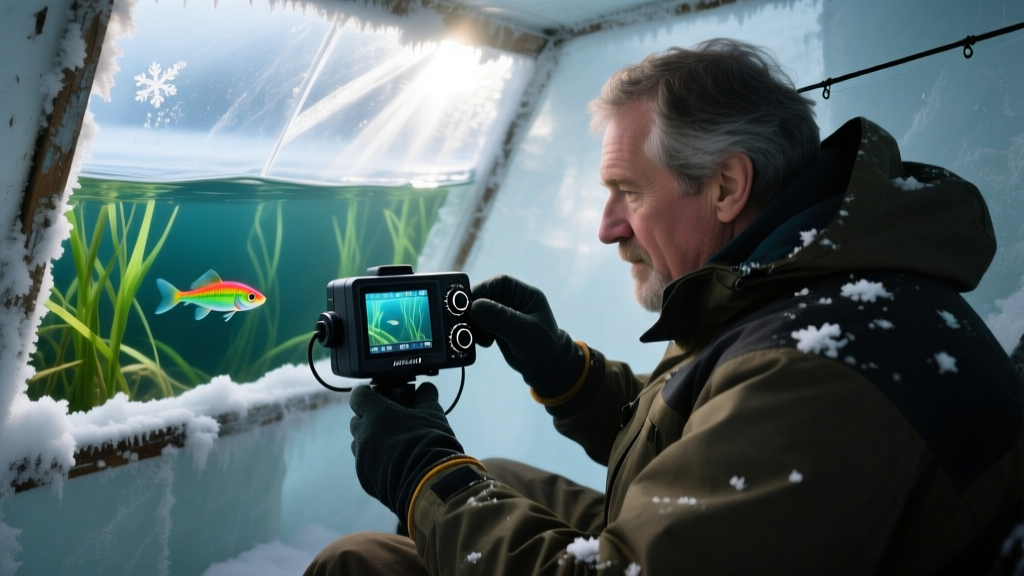
For shallow-water finesse, the Aqua-Vu Micro 5 Plus DVR ($249) provides visual confirmation of fish behavior. The 5-inch LCD screen features a built-in DVR, allowing you to record the exact moment a bluegill inhales or rejects your tungsten jig. The optical lens is optimized for low-light, stained water conditions typical of late-season ice. By watching the screen, you can adjust your cadence in real-time—jigging higher to pull fish up from the weeds, or dead-sticking when they show up but refuse to bite.
The Non-Negotiable: Ice Safety Tech
No gadget replaces the fundamental physics of ice formation. Early and late-season ice is highly variable, and snow cover can insulate the surface, creating dangerously thin pockets over moving water or spring-fed areas. The Minnesota Department of Natural Resources mandates a minimum of 4 inches of clear, solid ice for walking, and 5-7 inches for snowmobiles. Always carry a spud bar to check thickness every 50 feet when moving onto new structure, and wear a flotation-assist suit like the Striker Ice Apex.
"Ice is never 100% safe. Temperature swings, underwater currents, and snow cover create localized weak spots that cannot be seen from the surface." — MN DNR Ice Safety Guidelines
Ice Fishing Gadget Maintenance Checklist
Sub-zero environments are hostile to electronics. Follow this post-trip protocol to ensure your gear survives the 2026 season:
- Transducer Care: Wipe down sonar transducers with a silicone cloth. Never use chemical de-icers, which can degrade the epoxy housing.
- Battery Storage: Store lithium power banks at 50% charge in a climate-controlled room (65°F). Storing them fully charged or fully depleted in freezing garages accelerates capacity loss.
- Camera Lenses: Allow underwater camera lenses to acclimate to room temperature before wiping them. Wiping a freezing lens with a warm cloth will cause micro-fractures in the anti-reflective coating.
Frequently Asked Questions
Can I charge my lithium power bank while it is freezing outside?
No. Charging a lithium-ion battery below 32°F (0°C) causes lithium plating on the anode, which permanently reduces capacity and creates internal short-circuit risks. Always warm the power bank in an inner pocket or heated shelter before plugging it into a wall or solar charger. Discharging (using it to charge your phone) in the cold is generally safe, provided the battery isn't completely frozen solid.
Do castable sonars work through the ice without drilling a hole?
No. Castable sonars like the Deeper PRO+ 2 rely on acoustic waves traveling through liquid water. Ice, especially if it contains air bubbles or snow layers, scatters and absorbs the sonar signal, rendering it useless. You must drop the transducer into open water or use a specialized ice-fishing flasher with a dedicated ice transducer that can be frozen into a shallow puddle on top of the ice.
What is the best light for night ice fishing?
For hands-free lure tying and hole clearing, the Nitecore Tiki GITI ($30) is ideal. It outputs 300 lumens, features a USB-C rechargeable battery, and includes a high-CRI (Color Rendering Index) mode that allows you to accurately see the color of your jigs and soft plastics in the dark, which is critical for matching specific hatch patterns.
Written by
Emma LarssonEmma Larsson holds an M.A. in International Relations from Sciences Po Paris and a B.A. in Communications from Stockholm University. A digital nomad since 2017, she has worked from over 45 countries across six continents, building deep expertise in portable power solutions, travel routers, compact computing, and connectivity gadgets that survive international travel. Emma is a certified member of the Travel Technology Association and has advised three travel gear startups on product-market fit for remote workers. Her reviews evaluate products against real travel scenarios — TSA compliance, voltage compatibility across 200+ countries, durability through 50+ checked bag cycles, and battery life under airplane mode vs. active use. She has been featured in Condé Nast Traveler's "Tech-Savvy Traveler" series and speaks at Remote Work Summit events.