Cool Automotive Gadgets for Eco-Friendly Driving: 2026 Guide
Discover the best cool automotive gadgets for 2026 that promote eco-friendly driving, from solar TPMS to recycled organizers and smart OBD2 eco-scanners.

The aftermarket automotive accessory industry is undergoing a massive pivot. While past decades prioritized sheer performance or aesthetic novelty, the 2026 landscape demands functional sustainability. When sourcing cool automotive gadgets for modern vehicles, the focus has shifted toward reducing carbon footprints, optimizing energy consumption, and utilizing recycled materials. Whether you drive a battery electric vehicle (BEV), a plug-in hybrid (PHEV), or a highly efficient internal combustion engine (ICE) vehicle, integrating eco-conscious technology into your daily commute yields measurable environmental and financial returns.
Smart OBD2 Scanners: Gamifying Eco-Driving
Aggressive acceleration and hard braking can lower your fuel economy by 15% to 30% at highway speeds, according to data from the U.S. Department of Energy. Smart On-Board Diagnostics (OBD2) scanners have evolved from simple code-readers into real-time eco-driving coaches that interface directly with your smartphone via Bluetooth Low Energy (BLE).
The FIXD V2 Eco-Tracker
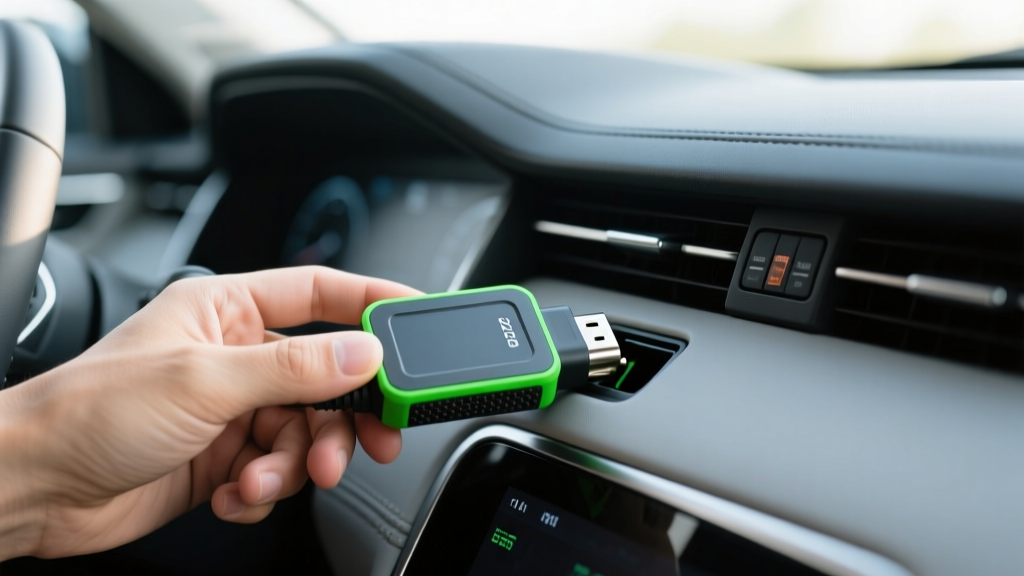
Priced at $59.99, the FIXD V2 sensor plugs into the standard ISO 15031-5 diagnostic port found in all post-1996 vehicles. Unlike basic scanners that only read check-engine lights, the FIXD V2 monitors the Controller Area Network (CAN bus) for real-time Mass Air Flow (MAF) and Short-Term Fuel Trim (STFT) data. The companion app translates this telemetry into a 'Green Driving Score,' penalizing rapid throttle spikes and rewarding regenerative braking coasting in hybrids.
Solar-Powered Tire & Pressure Management
Tire rolling resistance accounts for roughly 20% of a vehicle's total energy consumption. Under-inflated tires drop fuel efficiency by 0.2% for every 1 PSI below the optimal threshold, while simultaneously accelerating tread wear and increasing microplastic shedding into the environment. Traditional battery-powered Tire Pressure Monitoring Systems (TPMS) require frequent lithium coin cell replacements, creating e-waste.
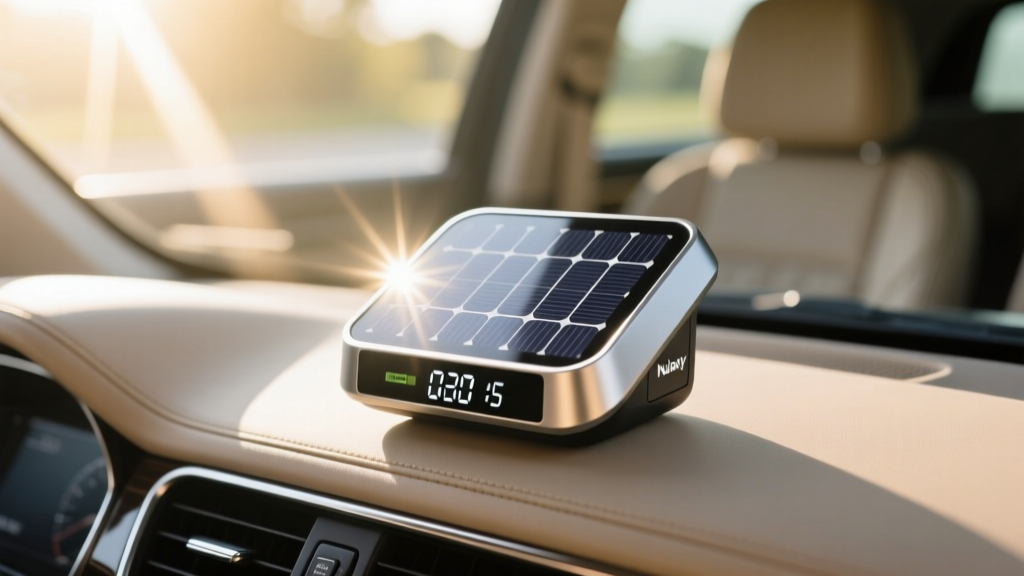
Nulaxy NX-TPMS9 Solar System
The Nulaxy NX-TPMS9 ($35.99) eliminates battery waste by utilizing a high-efficiency monocrystalline silicon solar panel integrated into the dashboard display unit. The external valve-cap sensors transmit pressure and temperature data via 433 MHz radio frequency. Crucially, the system features an automatic temperature compensation algorithm. As ambient temperatures drop by 10°F, tire pressure naturally decreases by 1 PSI; the NX-TPMS9 adjusts its warning thresholds dynamically to prevent false alarms while ensuring your tires remain at the exact OEM-specified pressure for minimal rolling resistance.
| Feature | Standard Battery TPMS | Nulaxy Solar TPMS |
|---|---|---|
| Power Source | CR1632 Lithium Coin Cells | Monocrystalline Solar + USB-C Backup |
| Battery Lifespan | 12-18 Months (Creates E-Waste) | Indefinite (Zero E-Waste) |
| Temp Compensation | Rare (Causes False Alarms) | Dynamic Algorithm Included |
Recycled & Biodegradable Interior Organizers
The interior of a vehicle is a high-wear environment, typically dominated by virgin plastics and synthetic petrochemical fabrics. Sustainable automotive organization requires materials that can withstand extreme UV exposure and temperature fluctuations without relying on new petroleum extraction.
Sea to Summit Recycled Trash Dry Sack
At $24.95, the Sea to Summit 10L Trash Dry Sack is constructed from 100% recycled 70D nylon with a TPU (Thermoplastic Polyurethane) lamination. Unlike cheap vinyl car trash cans that off-gas volatile organic compounds (VOCs) when baked in summer heat, the recycled nylon and TPU combination is chemically stable, odorless, and completely waterproof. It features a hypalon roll-top closure that seals in odors from food waste, preventing the need for chemical air fresheners that degrade cabin air quality.
Patagonia Black Hole Auto Caddy
For backseat organization, the Patagonia Black Hole Auto Caddy ($45.00) is built from 100% post-consumer recycled ripstop polyester with a PFC-free DWR (Durable Water Repellent) finish. Traditional DWR coatings rely on perfluorinated chemicals, which are persistent environmental toxins. Patagonia's PFC-free alternative ensures that as the organizer wears down from friction and use, it does not leach 'forever chemicals' into your vehicle's ecosystem.
Portable Solar Power Stations for Zero-Idle Camping
One of the most environmentally damaging habits among road-trippers and car-campers is 'idling'—leaving the engine running to power cabin air conditioning, charge devices, or run a portable fridge. Idling an ICE vehicle consumes between 0.2 to 0.5 gallons of fuel per hour, emitting unnecessary CO2 and particulate matter. The Environmental Protection Agency strictly advises against idling, noting that restarting an engine uses less fuel than idling for just 10 seconds.
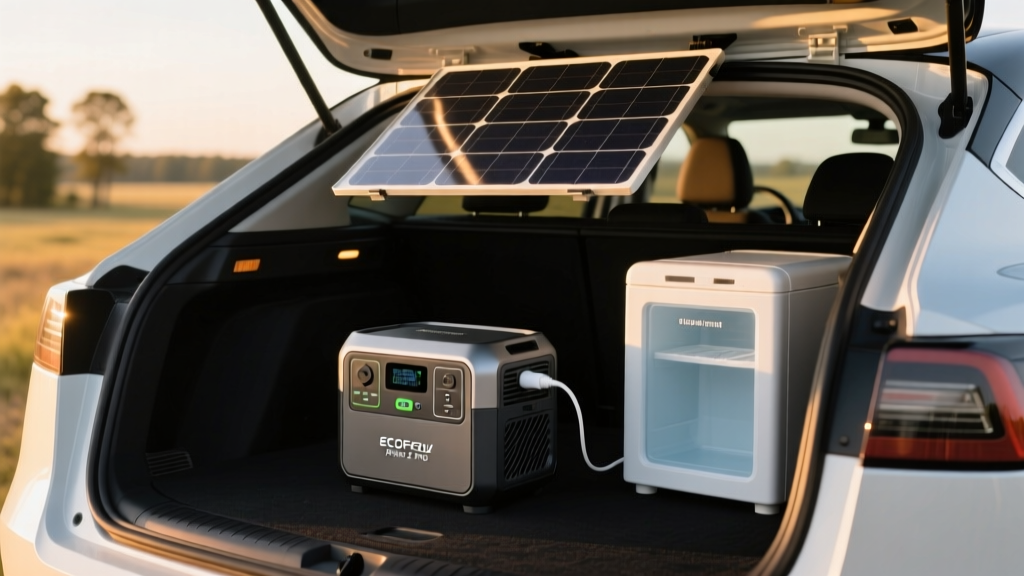
EcoFlow River 2 Pro + 110W Portable Solar Panel
The EcoFlow River 2 Pro ($499.00) utilizes Lithium Iron Phosphate (LiFePO4) battery chemistry. Unlike standard NMC (Nickel Manganese Cobalt) lithium-ion batteries that degrade after 800 cycles and rely on conflict-mineral-heavy cobalt, LiFePO4 cells offer over 3,000 charge cycles to 80% capacity and use abundant, non-toxic iron and phosphate. With a 768Wh capacity, it can run a 45W 12V portable car fridge for over 15 hours. Paired with the EcoFlow 110W foldable monocrystalline solar panel ($199.00), you can achieve true zero-emission, off-grid power for tailgating and camping without tapping into your vehicle's 12V auxiliary battery or idling the engine.
Decision Matrix: Which Eco-Gadget Fits Your Drivetrain?
Not all sustainable gadgets provide the same ROI across different vehicle types. Use this matrix to prioritize your purchases based on your specific drivetrain.
- Internal Combustion Engine (ICE): Prioritize the FIXD V2 OBD2 Scanner to monitor fuel trims and the Nulaxy Solar TPMS to maintain optimal tire pressure. These two gadgets alone can recover up to 10% of lost fuel efficiency.
- Plug-in Hybrid (PHEV): Focus on the Sea to Summit Recycled Organizers and the EcoFlow River 2 Pro. Maximizing your electric-only range means minimizing weight and avoiding engine idling for accessory power.
- Battery Electric Vehicle (BEV): BEVs already feature built-in TPMS and eco-coaching. Invest heavily in the EcoFlow Solar setup to offset the carbon footprint of your road trips, and use PFC-free interior accessories to maintain a non-toxic cabin environment.
FAQ: Sustainable Auto Accessories
Do solar TPMS sensors work in cloudy or winter conditions?
Yes. Modern monocrystalline solar panels on units like the Nulaxy NX-TPMS9 are highly efficient in diffuse light. Furthermore, they include internal supercapacitors and USB-C backup charging ports. Even in extreme winter conditions with heavy snow cover, a single 2-hour USB-C charge will sustain the dashboard receiver for months, as the external valve sensors operate on ultra-low-power sleep modes between transmissions.
Can LiFePO4 power stations be safely stored in a car during summer?
LiFePO4 chemistry is significantly more thermally stable than NMC lithium-ion, with a thermal runaway threshold exceeding 518°F (270°C). However, prolonged exposure to cabin temperatures above 113°F (45°C) will accelerate long-term degradation. Store the EcoFlow River 2 Pro in the trunk or under a seat, out of direct greenhouse sunlight, to maximize its 10-year lifespan.
"The transition to sustainable driving isn't just about what powers the wheels; it's about the entire ecosystem of the vehicle. Every accessory we add should either reduce energy demand, eliminate waste, or improve aerodynamic and rolling efficiency." — U.S. Department of Energy EV Infrastructure Guidelines
Written by
Emma LarssonEmma Larsson holds an M.A. in International Relations from Sciences Po Paris and a B.A. in Communications from Stockholm University. A digital nomad since 2017, she has worked from over 45 countries across six continents, building deep expertise in portable power solutions, travel routers, compact computing, and connectivity gadgets that survive international travel. Emma is a certified member of the Travel Technology Association and has advised three travel gear startups on product-market fit for remote workers. Her reviews evaluate products against real travel scenarios — TSA compliance, voltage compatibility across 200+ countries, durability through 50+ checked bag cycles, and battery life under airplane mode vs. active use. She has been featured in Condé Nast Traveler's "Tech-Savvy Traveler" series and speaks at Remote Work Summit events.