Cool Bathroom Gadgets: Beginner vs Expert WFH Upgrades
Discover how remote workers optimize their spaces with cool bathroom gadgets. We compare beginner impulse buys against expert-grade smart integrations.
The WFH Ecosystem: Why Your Adjacent Bathroom Matters
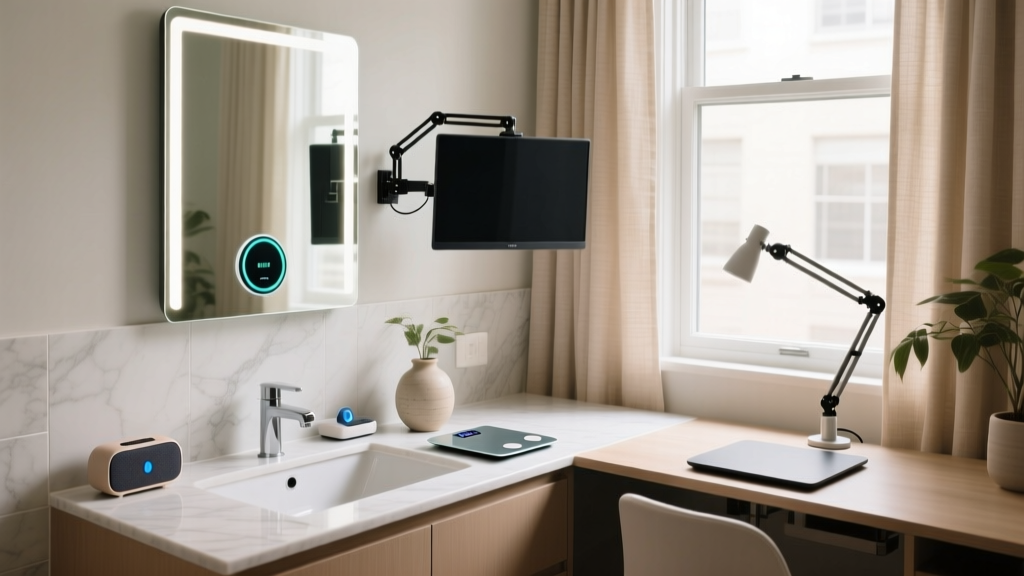
For remote workers, the transition between deep work blocks and personal time often hinges on the spaces immediately surrounding the home office. The en-suite or adjacent bathroom is no longer just a utility room; it is a critical reset zone for morning video call prep, mid-day stress relief, and evening wind-down routines. When searching for cool bathroom gadgets to enhance this space, professionals typically split into two distinct camps: beginners who chase viral, battery-operated gimmicks, and experts who invest in hardwired, integrated infrastructure.
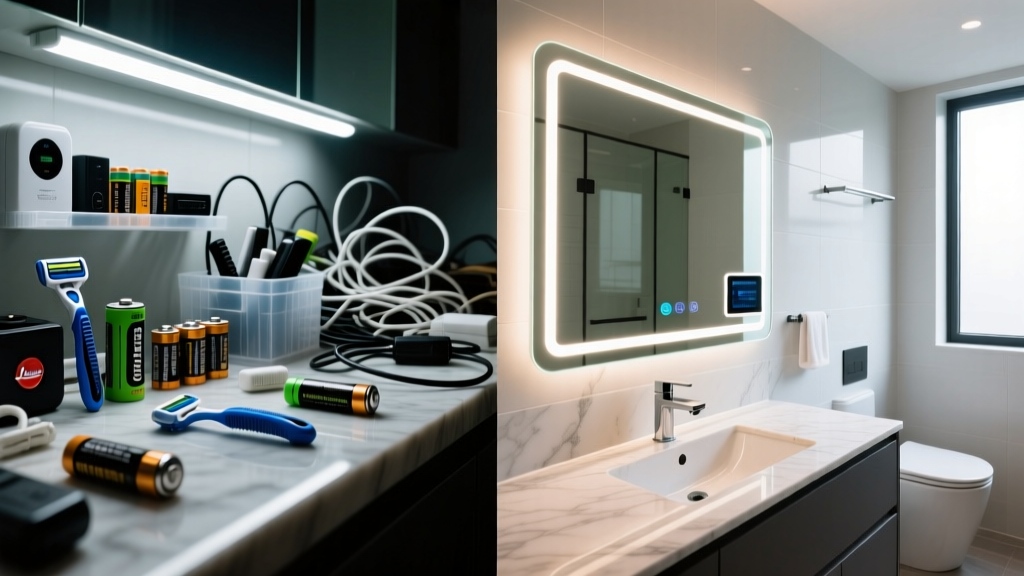
The beginner approach prioritizes low upfront costs and zero-installation convenience, resulting in a cluttered counter of devices that fail within months due to humidity ingress or battery drain. The expert approach treats the bathroom as an extension of the smart home office, prioritizing IP (Ingress Protection) ratings, Color Rendering Index (CRI) for camera-ready lighting, and Matter-over-Thread ecosystem compatibility. Below, we dissect the technical divide between amateur impulse buys and professional-grade bathroom upgrades.
Morning Prep: Lighting and Smart Mirrors
Lighting dictates how you present yourself on early morning Zoom calls. Shadows and poor color accuracy project an unprofessional image, yet this is where beginners consistently cut corners.
The Beginner Trap: Battery-Operated Vanity Lights
Novices often purchase stick-on LED mirror lights or cheap Bluetooth mirrors powered by AA batteries. These fail on three fronts. First, they lack the lumen output required for task lighting (minimum 1,500 lumens for a double vanity). Second, they rarely exceed a CRI of 80, resulting in washed-out skin tones on webcams. Third, they lack an IP rating, meaning ambient shower humidity eventually corrodes the battery contacts, causing flickering and total failure.
The Expert Standard: High-CRI Hardwired Smart Mirrors
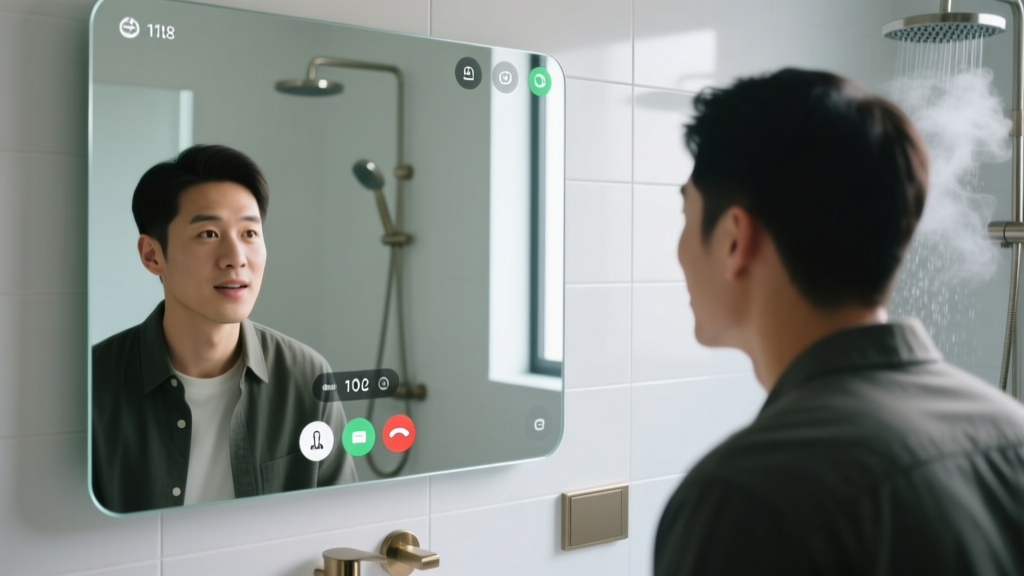
Experts install hardwired smart mirrors, such as the Séura Reflection series or Capello Smart Mirrors, directly into a 120V wall junction box. These units feature edge-lit LEDs with a CRI of 90+, ensuring accurate color rendition for morning grooming and camera prep. According to the U.S. Department of Energy, high-CRI lighting is essential in spaces where visual accuracy impacts daily tasks. Furthermore, expert-grade mirrors include integrated capacitive defoggers tied to the shower's humidity sensor, and embedded displays that sync with your home office calendar via Wi-Fi, allowing you to review your daily agenda while brushing your teeth.
Climate Control: Heating and Ventilation
Temperature fluctuations disrupt focus. Stepping out of a hot shower into a drafty bathroom spikes cortisol, counteracting the stress-relief benefits of the break.
Beginner vs. Expert Heating Solutions
- Beginner: Freestanding plug-in towel warmers and space heaters. They consume massive floor space, pose tripping hazards, and trigger GFCI (Ground Fault Circuit Interrupter) nuisance trips when steam accumulates on the plug prongs.
- Expert: Radiant floor heating mats (like Schlüter Ditra-Heat) installed beneath the tile, paired with hardwired heated towel rails. Experts also upgrade to smart exhaust fans like the Panasonic WhisperSense, which utilizes a built-in humidity sensor to automatically clear steam without requiring manual switch operation, protecting the home office's adjacent drywall from mold.
The Shower Experience: Flow vs. Precision
The shower is the ultimate WFH reset button. However, the gadgets used to control water delivery separate the amateurs from the professionals.
The Gimmick: Ionic Bead Showerheads
Beginners are lured by transparent, high-pressure showerheads filled with ceramic 'ionic' beads. While they temporarily increase pressure by restricting flow through micro-holes, they violate EPA WaterSense efficiency guidelines, clog rapidly in hard-water areas, and offer zero temperature regulation. When a colleague flushes a toilet or the washing machine kicks on, the water temperature wildly fluctuates.
The Upgrade: Digital Thermostatic Valves
Experts bypass the showerhead gimmicks and invest in the valve behind the wall. Digital thermostatic valves, such as the Kohler Anthem or Moen U, use thermistors to monitor water temperature 10 times per second. Unlike standard pressure-balancing valves that merely reduce hot water when cold water pressure drops, thermostatic valves actively modulate the mix to maintain an exact temperature (e.g., 102°F). Experts program specific presets: a brisk 98°F 'wake up' shower before the morning stand-up, and a 104°F 'muscle recovery' shower after an evening workout.
| Feature | Beginner Gadget (Ionic Showerhead) | Expert Upgrade (Thermostatic Valve) |
|---|---|---|
| Installation | Tool-free, screws onto existing arm | Requires rough-in plumbing and tile work |
| Temperature Control | None (subject to house pressure drops) | Digital precision (± 0.5°F variance) |
| Lifespan | 3-6 months (clogs with mineral scale) | 15+ years (replaceable thermostatic cartridge) |
| Average Cost | $25 - $45 | $800 - $1,400 (including installation) |
Hygiene Automation: Touchless Tech That Lasts
Touchless technology minimizes the spread of pathogens and keeps surfaces clean, but the power source dictates long-term viability.
The Solenoid Valve Problem
Beginners buy battery-operated touchless faucets and soap dispensers. These devices rely on a solenoid valve to open and close the water flow. When the AA batteries begin to die, the voltage drops below the threshold required to hold the solenoid closed, resulting in a continuous, slow leak that floods the vanity. Furthermore, replacing batteries in a humid environment requires constantly opening the control box, introducing moisture to the circuit board.
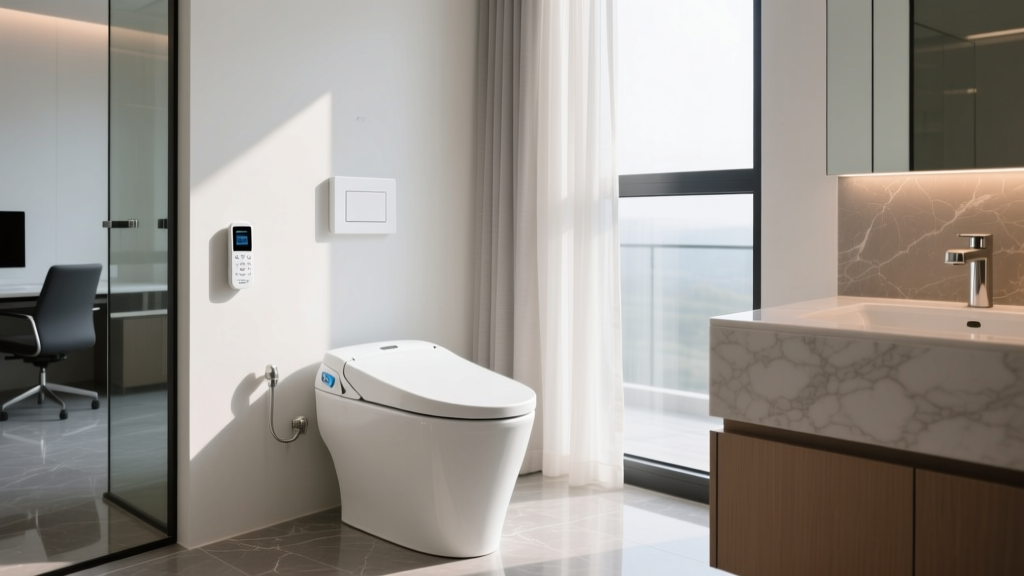
Experts specify AC-powered touchless fixtures, such as the Moen MotionSense Wave or commercial-grade Sloan optical faucets, hardwired to an under-sink transformer. For the toilet, experts install integrated smart bidets like the Toto Washlet S5. These units require a dedicated GFCI outlet but provide instantaneous heated water (via an internal ceramic core heater), oscillating nozzles, and EWATER+ electrolyzed water misting that sanitizes the bowl between uses. This eliminates the need for harsh chemical cleaners, keeping the bathroom environment pristine with zero manual intervention.
The Verdict: Budgeting for the Executive Washroom
Upgrading your home office adjacent bathroom requires a shift in mindset from 'buying gadgets' to 'investing in infrastructure.' While the beginner route might cost under $200 in assorted Amazon impulse buys, the failure rate and daily friction of dead batteries and clogged nozzles destroy the ROI. The expert route requires an upfront capital expenditure of $3,000 to $6,000 for hardwired mirrors, thermostatic valves, and radiant heating, but it yields a decade of frictionless, automated comfort. For the remote worker whose time and focus are their most valuable assets, the expert-grade washroom is not a luxury; it is a necessary optimization of the daily workflow.
Written by
David OkaforDavid Okafor is an ASE (Automotive Service Excellence) Master Certified Technician with 15 years of professional experience in vehicle diagnostics, aftermarket electronics installation, and fleet management. He holds an Associate Degree in Automotive Technology from Universal Technical Institute and certifications in mobile electronics (MECP Certified Installer). David has installed and reviewed over 800 car tech products — from OBD2 scanners and dash cams to full infotainment system retrofits — in vehicles ranging from economy compacts to luxury SUVs. His popular YouTube channel "AutoTech David" has over 150,000 subscribers and features detailed installation tutorials and product teardowns. He is a regular contributor to the SEMA Show's aftermarket technology showcase and advises two automotive tech startups on product development.