6 Unique Cheap Gadget Finds for Men Under $50 (2026)
Discover 6 unique cheap gadget finds for men in 2026. From 400-lumen keychain lights to smart IR blasters, these under $50 gems deliver massive value.
The 2026 Philosophy of Budget Tech: Why 'Cheap' Doesn't Mean 'Junk'
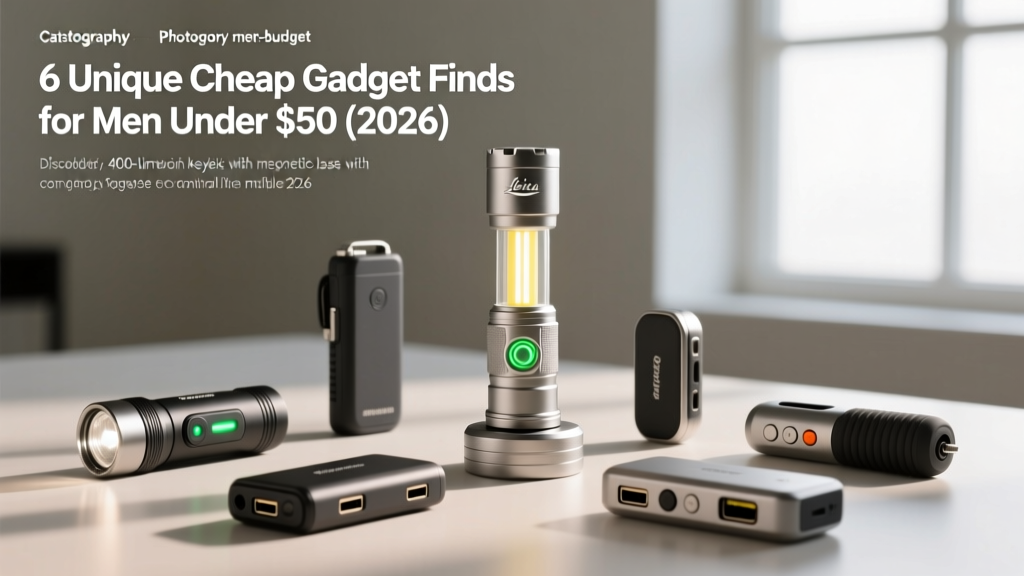
In the current tech landscape of 2026, flagship gadgets routinely demand upwards of $1,000. But for the pragmatic man, the real innovation isn't happening at the top of the market—it's happening in the sub-$50 tier. Supply chain optimizations and the maturation of Gallium Nitride (GaN) and high-density LED technologies have trickled down, creating a golden era for the budget-conscious EDC (Everyday Carry) enthusiast. When we talk about a cheap gadget in this guide, we aren't referring to disposable e-waste. We are talking about hyper-functional, value-packed tools that punch wildly above their price class. Whether you are upgrading your pocket dump or automating your apartment, here are six unique, hidden-gem gadgets under $50 that deliver undeniable utility.
1. Fenix E05R: The 400-Lumen Pocket Sun
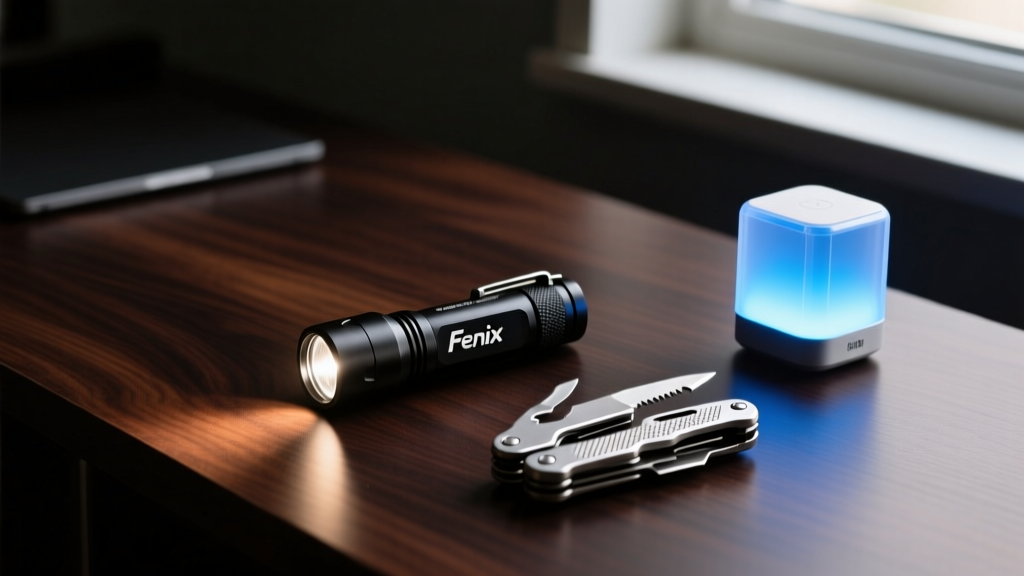
Keychain flashlights are a dime a dozen, but the Fenix E05R remains the undisputed king of the micro-light category. Priced right around $34.95, this isn't just a novelty; it's a serious illumination tool. It pushes an astonishing 400 lumens from a Cree XP-G3 S4 LED, powered by a built-in 450mAh lithium-polymer battery.
Real-World Performance & Edge Cases
What makes the E05R a standout cheap gadget is its user interface and charging mechanism. Unlike competitors that require you to unscrew the bezel to swap proprietary batteries, the E05R features a hidden, integrated USB-C port. You simply unscrew the head to reveal the port, plug it in, and charge it directly. The magnetic tail cap allows you to stick it to a car hood during a midnight oil change or a breaker box during a power outage.
- Max Output: 400 Lumens (Turbo)
- Beam Distance: 66 Meters
- Water Resistance: IP68 (Submersible to 2 meters)
- Edge Case Warning: On Turbo mode, the light will automatically step down to 150 lumens after 3 minutes to prevent thermal throttling and protect the LED. This is a feature, not a flaw.
2. Anker Nano 30W (A1652): The Cable-Killer Charger
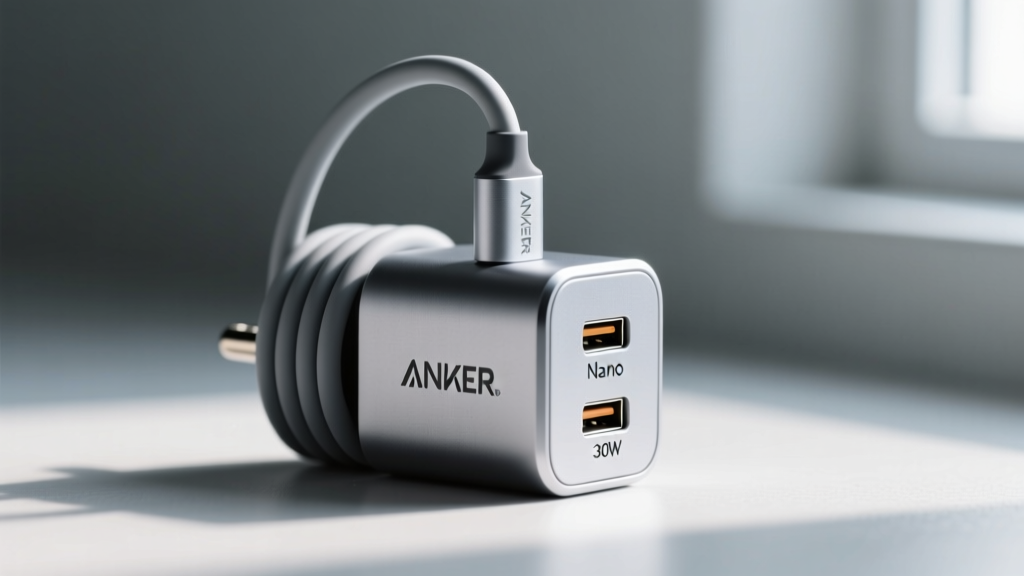
Carrying a wall brick and a separate cable is an outdated habit. The Anker Nano 30W (Model A1652), retailing for roughly $19.99, solves the dongle dilemma with an integrated, foldable USB-C cable that doubles as a carrying lanyard. Weighing a mere 1.4 ounces (39g), it utilizes 3rd-generation GaN tech to shrink the internal transformer footprint.
Expert Insight: GaN chargers run hot by design due to their extreme power density. The Anker A1652's internal thermal management system actively monitors core temps, throttling the wattage slightly if the ambient temperature exceeds 45°C. If it feels warm to the touch while fast-charging a flagship phone, it is operating exactly as engineered.
It supports PPS (Programmable Power Supply), meaning it can trigger Samsung's 'Super Fast Charging' protocol, not just standard USB-PD. For twenty bucks, it is the ultimate travel companion, eliminating the need to pack a separate cable for your phone, earbuds, or smartwatch.
3. Pebblebee Tag: The Rechargeable 'Find My' Hero
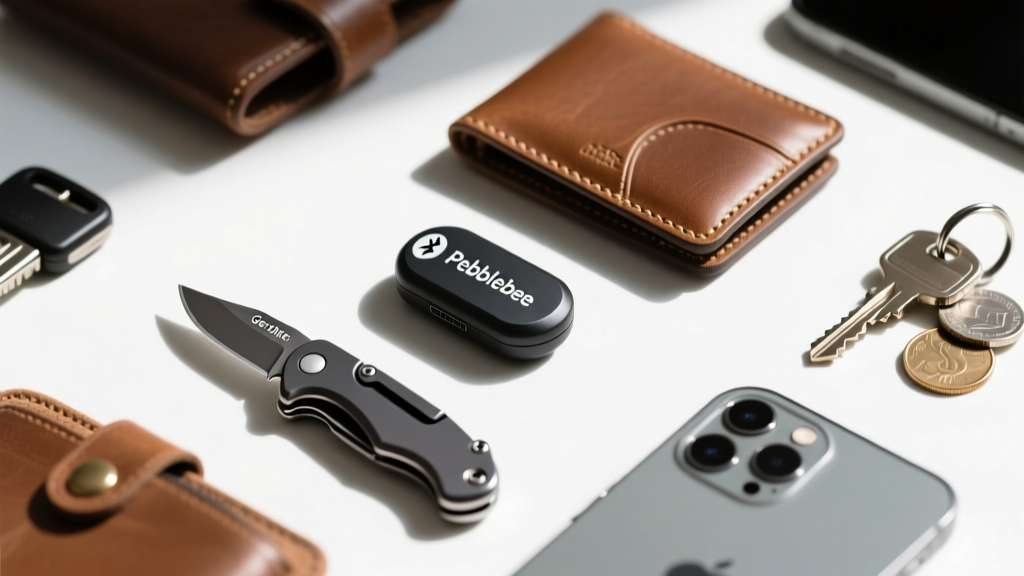
Apple's AirTag is great, but the reliance on CR2032 coin batteries is a recurring tax on your wallet and the environment. Enter the Pebblebee Tag (2025 Refresh), available for about $29.99. It integrates natively with Apple's 'Find My' network but introduces a feature Apple refuses to implement: a rechargeable battery.
Comparison: Pebblebee vs. The Giants
| Feature | Pebblebee Tag | Apple AirTag | Chipolo ONE Spot |
|---|---|---|---|
| Network | Apple Find My | Apple Find My | Apple Find My |
| Power Source | USB-C Rechargeable | CR2032 Replaceable | CR2032 Replaceable |
| Battery Life | Up to 8 Months | ~1 Year | Up to 2 Years |
| Water Resistance | IPX6 (Washable) | IP67 (Submersible) | IPX5 (Splash-proof) |
| Street Price | $29.99 | $29.00 | $28.00 |
The IPX6 rating means you can accidentally leave it in your jeans and run it through the washing machine without bricking the device. As Tom's Guide notes in their tracker roundup, the shift toward rechargeable trackers is the most significant quality-of-life improvement in the EDC tracking space for 2026.
4. Gerber Dime: The Pocket-Sized Problem Solver
Multi-tools are often bulky, heavy, and relegated to a glovebox. The Gerber Dime ($24.00) is a butterfly-opening micro-tool designed specifically for the front pocket or keychain. At just 2.25 inches closed and weighing 2.2 ounces, it packs 12 distinct tools into a footprint smaller than a standard Zippo lighter.
Blade Steel & Durability Metrics
Gerber utilizes 3Cr13MoV stainless steel for the Dime's implements. While it won't hold an edge like premium CPM-S30V, it is highly corrosion-resistant and incredibly easy to sharpen in the field with a ceramic rod. The standout feature, however, is the dedicated wire cutter. Unlike the wire cutters on the $200 Leatherman Charge+ which are meant for soft copper, the Dime's cutters are angled and reinforced to cleanly snip 14-gauge wire and paracord without chipping the blade edges. It is the quintessential cheap gadget for minor, everyday repairs.
5. Baseus Smart IR Remote (2nd Gen): Dumb to Smart in Seconds
You don't need to buy a $300 smart AC unit or a $150 smart TV to have a modern, automated home. The Baseus Smart IR Remote (2nd Gen) costs roughly $17.99 and acts as a universal bridge between your smartphone and any infrared-controlled device in your home.
Connecting via 2.4GHz Wi-Fi, this small, matte-black puck downloads over 50,000 IR code libraries from the cloud. You can map your 'dumb' window AC unit, ceiling fan, and older soundbar to a single app interface. More importantly, it supports IFTTT and basic scene automation. You can set a geofence trigger so that when your phone crosses a 1-mile radius from your apartment, the IR hub automatically powers on your AC and sets it to 72°F. For under twenty dollars, it is the highest-ROI smart home device on the market.
Decision Matrix: Which Cheap Gadget Fits Your EDC?
To help you allocate your budget, here is a quick decision framework based on your daily friction points.
| Gadget | Best For... | Weight | Primary Power |
|---|---|---|---|
| Fenix E05R | Night walkers, mechanics, campers | 1.0 oz (28g) | USB-C Rechargeable |
| Anker Nano 30W | Minimalist travelers, commuters | 1.4 oz (39g) | Wall Outlet (GaN) |
| Pebblebee Tag | Forgetful owners, gym-goers | 0.3 oz (8g) | USB-C Rechargeable |
| Gerber Dime | DIYers, office workers, handymen | 2.2 oz (62g) | N/A (Manual) |
| Baseus IR Hub | Renters, smart-home beginners | 3.5 oz (99g) | Micro-USB Tethered |
Frequently Asked Questions
Is there a difference between 'budget' and 'cheap' gadgets?
Yes. In tech journalism, 'cheap' often implies poor build quality and planned obsolescence. 'Budget' refers to a low price point achieved by stripping away non-essential features (like RGB lighting or premium packaging) while retaining high-quality core components. The items on this list are budget gems, not cheap junk.
Where is the best place to buy these specific models?
For items like the Fenix E05R and Gerber Dime, buying directly from the manufacturer or authorized dealers (like Amazon's official brand storefronts or specialized EDC shops like BladeHQ) ensures you get a valid warranty. As highlighted in Wired's EDC gear guide, avoiding third-party marketplace sellers is crucial for avoiding counterfeit flashlight batteries and sub-par steel alloys.
Will these gadgets work with older devices?
Absolutely. The Anker Nano 30W is backward compatible with older USB-PD devices (charging them at 18W or 12W safely), and the Baseus IR hub specifically targets legacy 'dumb' appliances that rely on standard 38kHz infrared signals, bridging the gap between 1990s tech and 2026 smart home ecosystems.
Written by
Sarah KimSarah Kim holds certifications from both NASM (National Academy of Sports Medicine) and ACE (American Council on Exercise), along with a B.S. in Kinesiology from UCLA. She has spent 7 years bridging the gap between exercise science and consumer technology, evaluating fitness trackers, smart scales, sleep monitors, and recovery devices with clinical precision. Sarah has tested over 200 health-focused wearables in controlled lab settings and real-world training environments, comparing device data against gold-standard medical equipment like ECG monitors and DEXA scans. She consults for three fitness app companies on data accuracy standards and has presented research on wearable reliability at the American College of Sports Medicine (ACSM) annual conference. Her reviews emphasize clinical validity over marketing claims.