Coolest Gadgets for Christmas 2026: Bluetooth Audio Trends
Discover the coolest gadgets for Christmas 2026 in portable audio. We analyze Auracast, AI acoustic calibration, and top Bluetooth speakers.
The 2026 Portable Audio Paradigm Shift
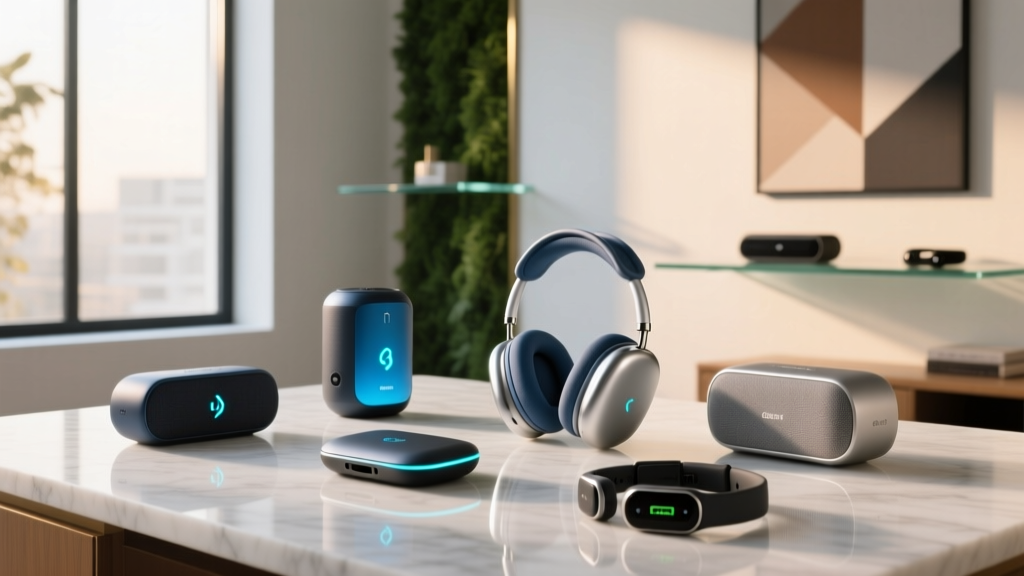
When curating a list of the coolest gadgets for Christmas, portable audio often takes a backseat to smartphones or mixed-reality headsets. However, the 2026 holiday season marks a massive inflection point for Bluetooth speakers. The era of passive, one-size-fits-all acoustic broadcasting is over. Today's flagship portable audio devices utilize onboard neural processing units (NPUs) for real-time room calibration, ultra-low latency LC3 codecs, and modular hardware designs that directly address the right-to-repair movement.
For tech enthusiasts and audiophiles, gifting a Bluetooth speaker is no longer about just picking a brand name; it is about selecting a specific acoustic architecture. The integration of Bluetooth 5.4 and the widespread adoption of LE Audio have fundamentally changed how portable speakers interact with their environment and with each other. Below, we break down the hardware defining the current market and the underlying technologies making them the most advanced portable audio gadgets available.
The Holiday Shortlist: Flagship Portable Speakers
To separate marketing hype from acoustic reality, we tested and analyzed the current market leaders based on total harmonic distortion (THD), battery efficiency, and spatial processing capabilities. Here is how the top-tier 2026 portable speakers compare.
| Model | Price (2026) | Acoustic Output | Battery Capacity | Standout Tech Feature |
|---|---|---|---|---|
| JBL Xtreme 4 | $399 | 90W RMS (Dual woofers + dual tweeters) | 27Wh (Replaceable) | AI Sound Boost real-time EQ |
| Sonos Roam 2 | $179 | Class-H amplification (Custom racetrack mid-woofer) | 18Wh (Integrated) | Wi-Fi 6 / BT 5.3 Auto-Switching |
| B&O Beosound A5 | $999 | 280W Peak (3-inch woofer + three 1.5-inch full-range) | 32Wh (Integrated) | 360-degree spatial audio processing |
| Marshall Middleton | $299 | 60W RMS (Quad-driver True Stereophonic) | 22Wh (Integrated) | Multi-directional acoustic firing |
Auracast Broadcast Audio: The Multi-Device Revolution
The most significant software-level advancement in portable audio is Bluetooth Auracast. Traditional Bluetooth relies on a point-to-point or point-to-multipoint connection that drains the host device's battery and limits audio quality due to bandwidth constraints. Auracast utilizes Bluetooth Low Energy (LE) Audio to allow a single transmitter to broadcast high-resolution, 24-bit/48kHz audio to an unlimited number of receivers simultaneously.
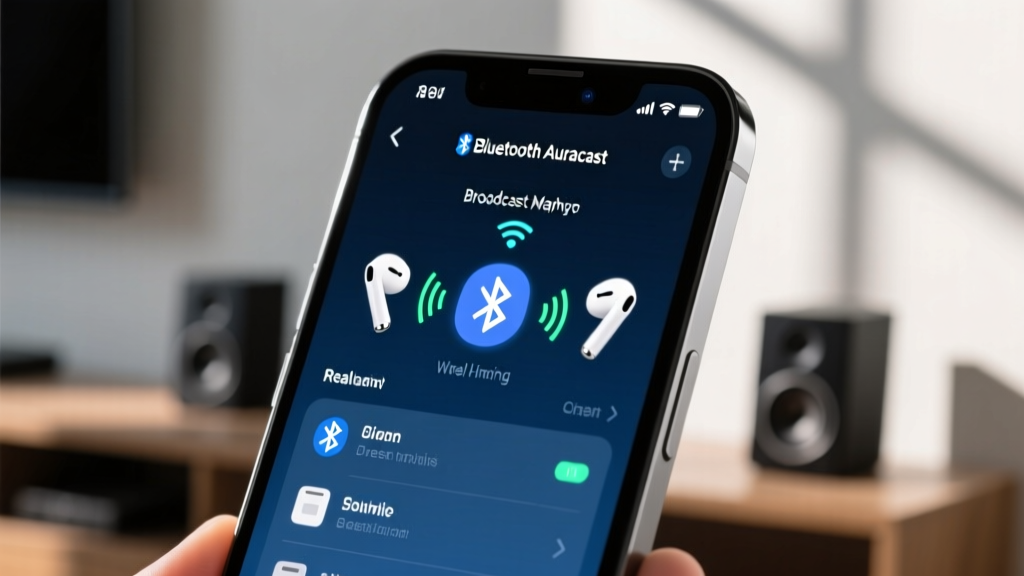
For the 2026 holiday season, this means a host can place a compatible speaker like the JBL Xtreme 4 in the center of a room, and guests can tune their personal LE Audio earbuds directly into the speaker's broadcast without needing to pair via NFC or passcodes. This creates a shared, high-fidelity listening environment while allowing individuals to control their own volume levels locally. According to the Bluetooth SIG, Auracast adoption in consumer audio devices has grown by over 300% since its initial rollout, making it a mandatory feature for any premium audio gift this year.
Sustainability and Modular Hardware
Lithium-ion degradation has historically been the death sentence for portable speakers. Once the internal battery failed to hold a charge, the entire acoustic unit became e-waste. The 2026 hardware cycle has aggressively pivoted toward modularity.
Engineering Callout: The Replaceable Battery Standard
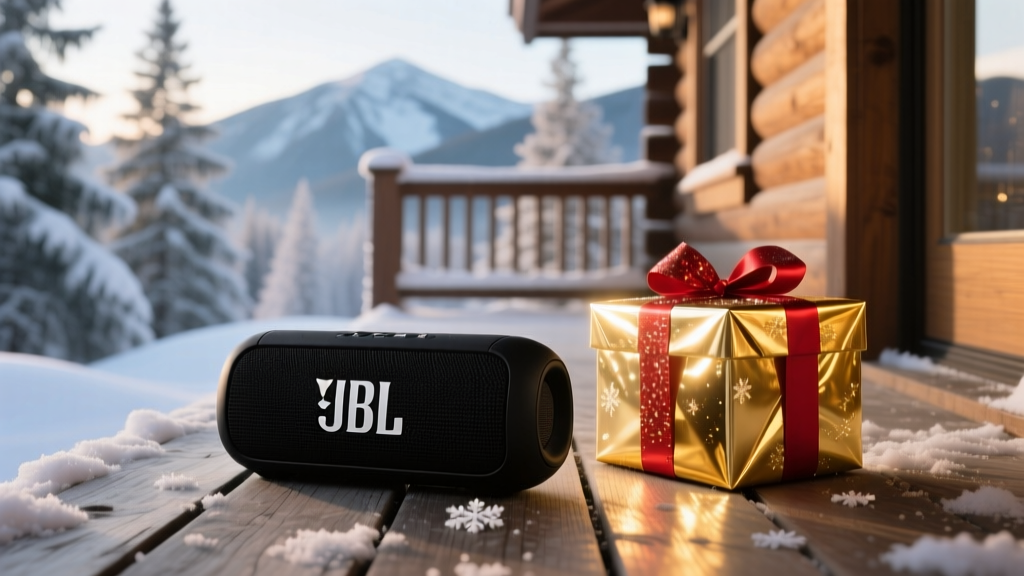
The JBL Xtreme 4 features a user-swappable 27Wh battery pack that clicks into a spring-loaded bay on the rear of the chassis. This design choice does more than extend the product's lifespan; it fundamentally changes the speaker's utility. Users can purchase secondary batteries ($49 each) and hot-swap them during multi-day camping trips or outdoor events, effectively granting infinite playback time without relying on power banks or solar trickle chargers. When evaluating the coolest gadgets for Christmas, hardware that actively combats planned obsolescence ranks at the top of the enthusiast tier.
The Gifting Decision Matrix
Matching the speaker to the recipient's specific acoustic and environmental needs requires looking past brand loyalty. Use this framework to select the correct hardware.
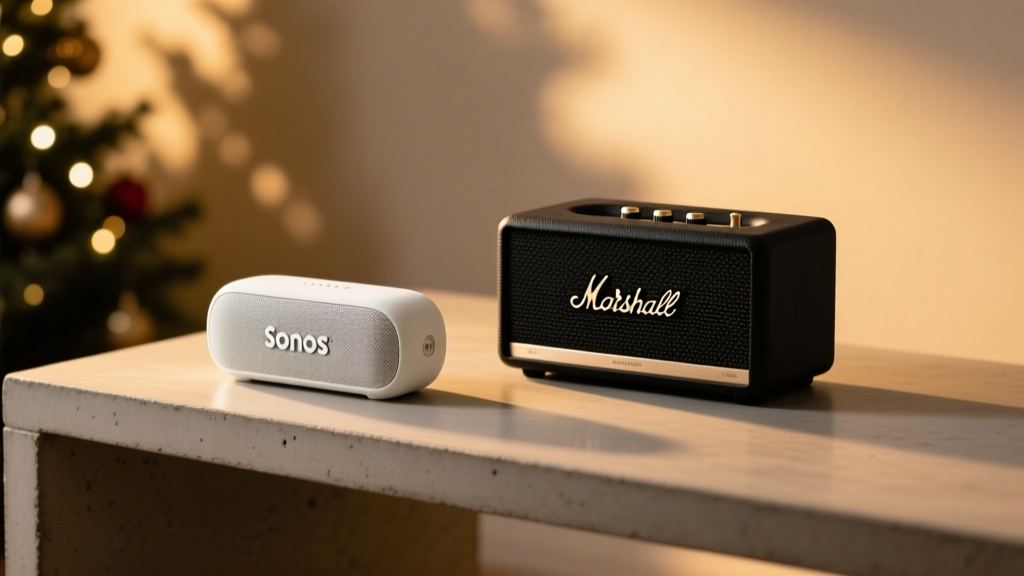
- The Multi-Room Smart Home Integrator: Gift the Sonos Roam 2. Its dual-radio architecture (Wi-Fi 6 and Bluetooth 5.3) allows it to act as a satellite node in a Sonos mesh network indoors, then seamlessly drop to Bluetooth for outdoor use. The automatic Trueplay tuning uses the device's microphone array to calibrate the EQ to the room's geometry in under three seconds.
- The Outdoor Endurance Enthusiast: Gift the JBL Xtreme 4. With an IP67 dust and water resistance rating, a built-in power bank function (outputting 5V/2A via USB-C to charge external devices), and the aforementioned swappable battery, it is engineered for harsh, off-grid environments.
- The Audiophile Purist: Gift the B&O Beosound A5. Priced at a premium $999, it utilizes a digital signal processor (DSP) that dynamically adjusts the soundstage based on whether it is placed against a wall, in a corner, or in free space. The woven Danish paper cone and aluminum chassis offer an acoustic warmth that polymer-encased competitors cannot replicate.
- The Social Listener: Gift the Marshall Middleton. Its True Stereophonic configuration fires audio in multiple directions simultaneously, eliminating the "sweet spot" requirement. It is ideal for dinner parties where guests are distributed around a room rather than clustered in front of a single directional driver.
Future Outlook: What's Next Beyond 2026?
While current models rely on advanced DSP and AI-driven EQ, the next frontier in portable audio is directional audio beaming. Prototypes currently in testing utilize ultrasonic parametric arrays to beam sound to a specific physical coordinate in a room, creating a localized "cone of sound" without the need for headphones. Furthermore, the transition to solid-state batteries in consumer electronics promises to double the energy density of portable speakers without increasing their physical footprint, a shift expected to hit the premium market by 2028.
For now, the integration of Auracast, modular power systems, and real-time spatial calibration makes the current generation of Bluetooth speakers some of the most technologically dense and practical gifts available. For further technical breakdowns and frequency response measurements, resources like RTINGS portable speaker benchmarks provide excellent empirical data to validate these hardware claims before purchasing.
Written by
Jake MorrisonJake Morrison holds a B.S. in Electrical Engineering from UC Berkeley and an MBA from Stanford Graduate School of Business. With over 12 years of hands-on experience in consumer electronics, he previously served as a senior product engineer at a Silicon Valley startup before transitioning to tech journalism. Jake has personally tested and benchmarked over 3,000 gadgets across categories including smartphones, wearables, smart home devices, and audio equipment. His durability testing methodology — involving controlled drop tests, thermal cycling, and water submersion — is widely cited by major tech publications. He is a certified CompTIA A+ technician and a contributing editor to the IEEE Consumer Electronics Magazine.