Coolest Tech Gadgets 2025: Budget Mini PCs and SBCs Still Dominating
Discover the coolest tech gadgets 2025 that remain top budget mini PCs and SBCs in 2026. Deep dives into RK3588, Ryzen 8000, and Intel N100 compact nodes.
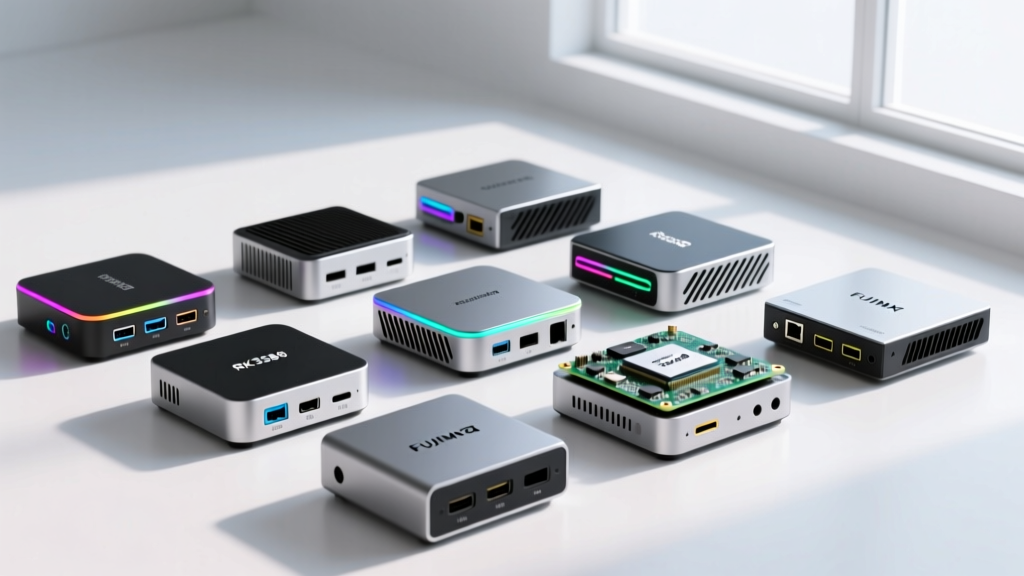
The Compact Compute Revolution: Beyond the Hype
When tech publications compiled their lists of the coolest tech gadgets 2025 had to offer, the headlines were dominated by AI lapel pins and spatial computing headsets. But for hardware enthusiasts, home lab builders, and DIY engineers, the real revolution happened quietly on the desktop. The miniaturization of high-performance compute nodes reached an inflection point, and now in 2026, the pricing on these compact powerhouses has settled into the ultimate budget-friendly sweet spot. Whether you are building a low-power Home Assistant server, a retro-gaming console, or a silent daily-driver workstation, the current landscape of single-board computers (SBCs) and micro-PCs offers unprecedented performance per dollar.
This roundup ignores the overhyped wearables and focuses strictly on the silicon that actually gets work done. We are breaking down the three dominant architectures—ARM SBCs, ultra-low-power x86, and high-performance mobile x86—to help you allocate your budget precisely where it matters.
Decision Framework: Which Architecture Fits Your Node?
Before dropping cash on hardware, map your workload to the correct silicon architecture. Buying a 65W Ryzen mini PC for a simple Pi-Hole DNS server is a waste of electricity and capital, just as trying to run an x86 Docker container on an ARM SBC will lead to dependency hell.
The Enthusiast Routing Matrix
- Choose ARM (RK3588/BCM2712): If your workload is GPIO-dependent, requires ultra-low idle power (<3W), or involves edge-AI inference using dedicated NPUs. Ideal for robotics, custom IoT clusters, and lightweight media endpoints.
- Choose Intel N100 (x86 Low-Power): If you need native x86 virtualization (Proxmox/ESXi), hardware transcoding via Intel QuickSync, or are building a pfSense/OPNsense router. Ideal for home routing, NAS appliances, and smart home hubs.
- Choose AMD Ryzen 7000/8000 (x86 High-Perf): If you need multi-threaded compilation, local LLM inference via iGPU, or a zero-compromise daily desktop experience. Ideal for homelab hypervisors, CI/CD runners, and compact workstations.
The ARM SBC King: Orange Pi 5 Plus (16GB)
While the Raspberry Pi 5 remains the most recognizable name in the SBC space, the Orange Pi 5 Plus has cemented itself as the undisputed performance king for enthusiasts who refuse to compromise on I/O. Powered by the Rockchip RK3588 SoC, this board features a big.LITTLE architecture (four Cortex-A76 and four Cortex-A55 cores) paired with a 6-TOPS NPU. According to detailed silicon analysis by WikiChip's RK3588 documentation, the chip's 8nm process allows it to sustain multi-core Geekbench 6 scores that rival older desktop-class Intel Core i5 processors, all while drawing less than 10 watts under load.
The I/O Advantage and Storage Gotchas
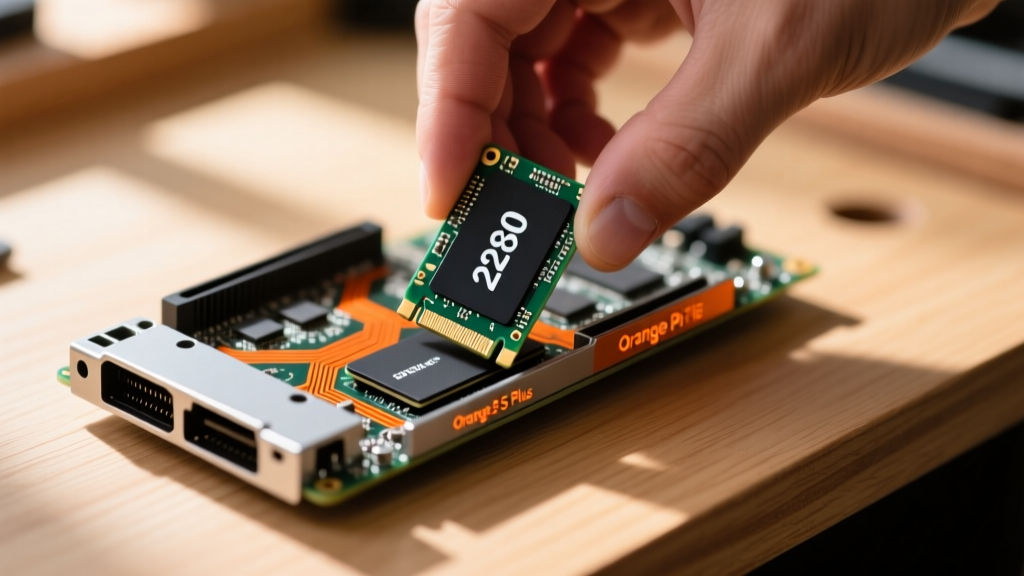
The critical differentiator for the Orange Pi 5 Plus is its full PCIe 3.0 x4 lanes dedicated to the M.2 2280 NVMe slot. Unlike boards that bottleneck storage through USB 3.0 bridges, this setup delivers sequential read speeds exceeding 3,200 MB/s. However, enthusiasts must avoid a common trap: booting from microSD. The UHS-I SD interface will severely throttle OS responsiveness. Always flash your OS (like Armbian or Joshua Riek's custom Ubuntu Rockchip) directly to an NVMe drive via the SPI flash bootloader.
Budget Reality: The 16GB model currently hovers around $125. Factor in an additional $15 for the official active cooling module; the RK3588 will thermal throttle within 45 seconds of a Cinebench run without active airflow.
The x86 Daily Driver: Beelink SER8 (Ryzen 7 8745HS)
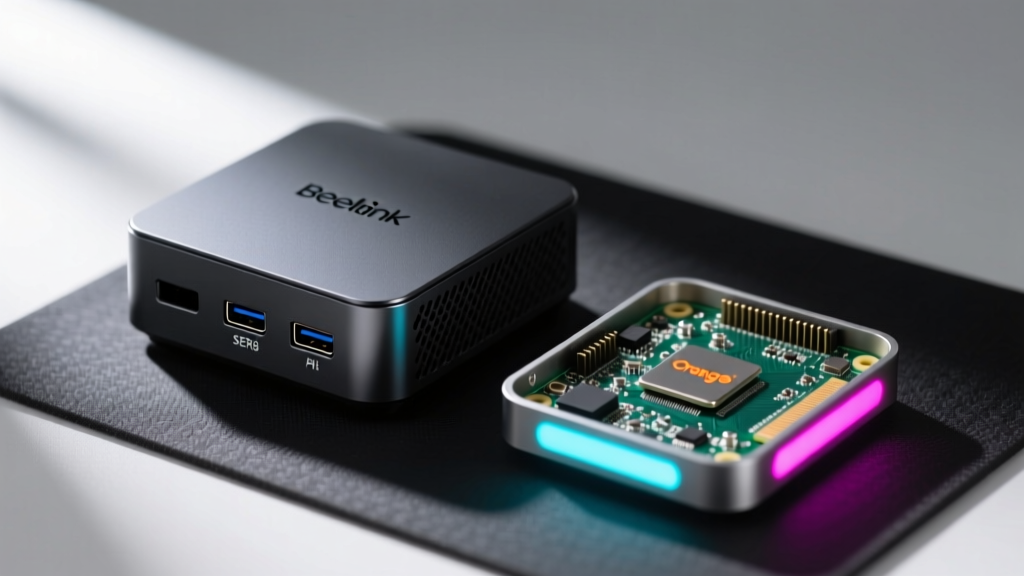
For those who need a full desktop environment without the footprint of a traditional tower, the Beelink SER8 represents the pinnacle of the 2025 compact desktop wave, now available at aggressive 2026 price points. Equipped with the AMD Ryzen 7 8745HS (8 cores, 16 threads, Zen 4 architecture) and Radeon 780M integrated graphics, this unit punches far above its $380 price tag.
Thermal Engineering and RAM Limitations
Beelink's implementation of the vapor chamber cooling system in the SER8 allows the 54W TDP processor to sustain boost clocks of 4.9 GHz without acoustic whine. The bottom metal chassis acts as a passive heatsink, keeping surface temperatures below 40°C even during sustained AV1 video encoding. However, buyers must pay close attention to the RAM configuration. The Radeon 780M iGPU relies heavily on memory bandwidth for graphics performance. Ensure you purchase a kit with dual-channel DDR5-5600MHz SO-DIMMs. Running a single 32GB stick instead of two 16GB sticks will slash your iGPU gaming and compute performance by up to 35%.
The Ultra-Budget Appliance: GMKtec NucBox G3 (Intel N100)
If your goal is to set up a dedicated Home Assistant server or a low-power Proxmox node, the Intel N100-based micro-PCs are unmatched. The GMKtec NucBox G3 and similar Beelink S12 Pro models can be found for roughly $140 to $160, fully loaded with 16GB of DDR4 and a 500GB NVMe drive.
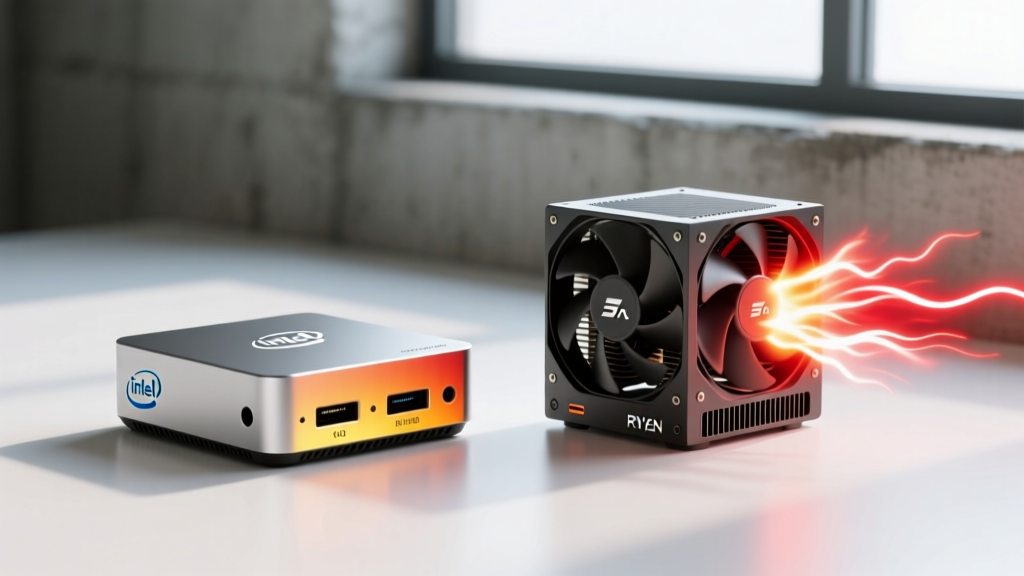
The Intel N100 (Alder Lake-N) features 4 E-cores and a mere 6W base TDP. Its secret weapon for home lab enthusiasts is the Intel UHD Graphics engine, which supports AV1 hardware decoding and Intel QuickSync. This allows a $150 N100 box to transcode multiple 4K Plex streams simultaneously while keeping CPU utilization under 20%. The primary limitation here is the single-channel memory controller and limited PCIe lanes, restricting you to one NVMe drive and one 2.5-inch SATA SSD.
Spec & Value Comparison Matrix
| Device / Architecture | Processor / SoC | RAM & Storage | Best Use Case | Approx. Price |
|---|---|---|---|---|
| Orange Pi 5 Plus (ARM) | Rockchip RK3588 (8-Core) | 16GB LPDDR4X / BYO NVMe | Edge AI, Robotics, Clusters | $125 (Board only) |
| GMKtec NucBox G3 (x86) | Intel N100 (4 E-Cores) | 16GB DDR4 / 500GB NVMe | Plex, Home Assistant, Routing | $150 |
| Beelink SER8 (x86) | AMD Ryzen 7 8745HS | 32GB DDR5 / 1TB NVMe | Proxmox Hypervisor, Daily PC | $380 |
Critical Edge Case: SBC Power Supply Unit (PSU) Failures
When deploying ARM SBCs like the Raspberry Pi 5 or Orange Pi 5, never rely on generic USB-C phone chargers. Voltage drops below 4.8V under transient loads will cause silent filesystem corruption on your boot drive. Always use the official 27W USB-C PD power supply or a high-quality 5V/5A barrel adapter with 18AWG cabling to prevent phantom reboots and degraded NAND lifespans.
Final Verdict: Allocating Your 2026 Budget
The hardware released during the coolest tech gadgets 2025 cycle has matured into a highly stable, deeply discounted ecosystem for compact computing. If your priority is raw virtualization and desktop replacement, the Beelink SER8 at $380 is an unmitigated bargain that eliminates the need for a mid-tower build. For network and smart home appliances, the Intel N100 micro-PCs remain the undisputed champions of efficiency. Meanwhile, tinkerers pushing the boundaries of embedded AI and custom hardware interfaces will find the RK3588-based Orange Pi 5 Plus to be an endlessly capable canvas. Choose the silicon that matches your workload, invest in proper thermal management, and your compact node will run silently for years to come.
Written by
Emma LarssonEmma Larsson holds an M.A. in International Relations from Sciences Po Paris and a B.A. in Communications from Stockholm University. A digital nomad since 2017, she has worked from over 45 countries across six continents, building deep expertise in portable power solutions, travel routers, compact computing, and connectivity gadgets that survive international travel. Emma is a certified member of the Travel Technology Association and has advised three travel gear startups on product-market fit for remote workers. Her reviews evaluate products against real travel scenarios — TSA compliance, voltage compatibility across 200+ countries, durability through 50+ checked bag cycles, and battery life under airplane mode vs. active use. She has been featured in Condé Nast Traveler's "Tech-Savvy Traveler" series and speaks at Remote Work Summit events.