Tech Gadgets Crossword: Beginner vs Expert Portable Power
Solve the tech gadgets crossword with our beginner vs expert portable power guide. Compare power banks, solar chargers, and car adapters for 2026.
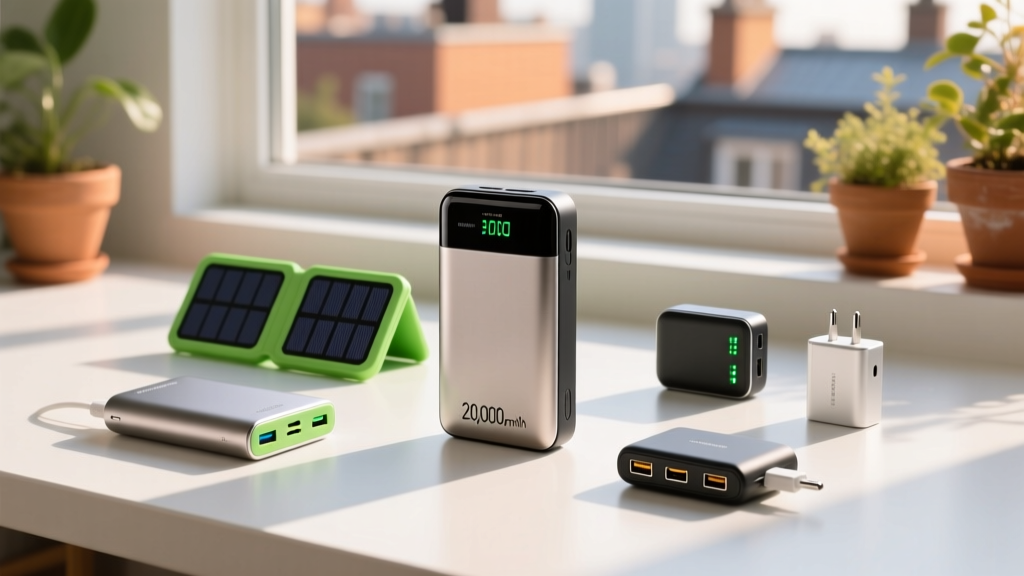
When enthusiasts tackle a tech gadgets crossword, the clues for portable power often seem straightforward: look for high capacity, multiple ports, and fast charging. However, the reality of battery chemistry, voltage step-up inefficiencies, and thermal throttling creates a puzzle that separates casual users from true power experts. In 2026, the portable power market has matured significantly. USB-C PD 3.1 is now the baseline, and 21700 lithium-ion cells have largely replaced older 18650 formats in premium gear.
This guide dissects the portable power ecosystem—power banks, solar chargers, and car adapters—through a comparative lens. We will contrast the surface-level metrics beginners rely on with the deep technical specifications experts use to make purchasing decisions.
1-Across: The Beginner's Approach to Portable Power
Beginners typically evaluate power banks using a single metric: milliamp-hours (mAh). A common entry-level purchase is the Anker PowerCore Slim 10000 (retailing around $25). It is lightweight, inexpensive, and advertises enough capacity to recharge a standard smartphone twice. The beginner's solar choice is often a generic $30 foldable 20W panel from Amazon, while their car adapter is a basic $10 dual USB-A 12V plug.
The '10,000 mAh' Conversion Trap
The primary failure point in beginner logic is ignoring voltage conversion. Internal lithium-ion cells operate at a nominal 3.7V. To charge a device via USB, the power bank's internal circuitry must step that voltage up to 5V (or higher for fast charging). This step-up process generates heat and incurs energy loss.
A 10,000 mAh battery at 3.7V holds 37 Watt-hours (Wh) of energy. Assuming an optimistic 85% conversion efficiency, the usable energy is roughly 31.4 Wh. When stepped up to 5V, the actual deliverable capacity is approximately 6,280 mAh—nearly 40% less than the advertised number.
Beginners also overlook solar panel ratings. A cheap '20W' solar panel rarely exceeds 8W to 10W in real-world conditions due to subpar monocrystalline cell quality and the absence of an integrated charge controller to manage voltage fluctuations.
4-Down: The Expert's Focus on Protocols and Chemistry
Experts ignore the mAh marketing figure and look directly at Watt-hours (Wh), cell topology, and supported USB Power Delivery (PD) protocols. According to the USB Implementers Forum, the shift to PD 3.1 has introduced Extended Power Range (EPR) capabilities, pushing USB-C limits to 140W, 180W, and even 240W. Experts buy gear that leverages these protocols.
Cell Chemistry: 21700 vs. 18650
While budget banks use older 18650 cylindrical cells or cheaper lithium-polymer pouches, expert-tier power banks like the CukTech 20 (25,000mAh, 140W output, ~$65) utilize high-density 21700 NCA (Nickel Cobalt Aluminum) cells. These cells offer superior energy density, lower internal resistance, and better thermal stability under high-draw scenarios.
Programmable Power Supply (PPS)
Experts look for PPS support within the PD standard. PPS allows the power bank to dynamically adjust voltage in 20mV increments. This is critical for triggering proprietary fast-charging standards like Samsung's Super Fast Charging 2.0 (45W), which requires a precise 11V/3A or 11V/4.05A handshake. A standard PD 3.0 bank without PPS will default to a slower 25W or 15W charge, a nuance beginners entirely miss.
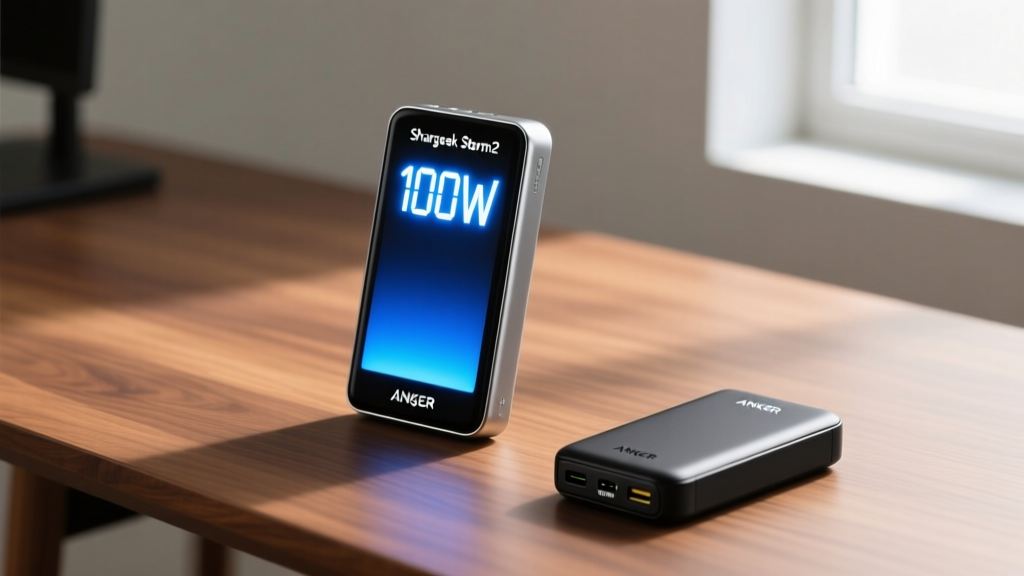
For those who demand absolute telemetry, the Shargeek Storm2 ($129) remains a benchmark. It features a transparent chassis, an IPS screen displaying real-time voltage, amperage, and temperature per port, and utilizes custom smart-control chips to prevent over-discharge. Detailed teardowns and testing by publications like Tom's Hardware consistently highlight how premium telemetry prevents battery degradation over time.
The Solar and Car Adapter Matrix
The divergence between novice and expert choices becomes even more apparent when moving away from wall-outlet power banks and into environmental harvesting (solar) and vehicle integration (car adapters).
| Category | Beginner Gear (Surface Specs) | Expert Gear (Deep Specs) |
|---|---|---|
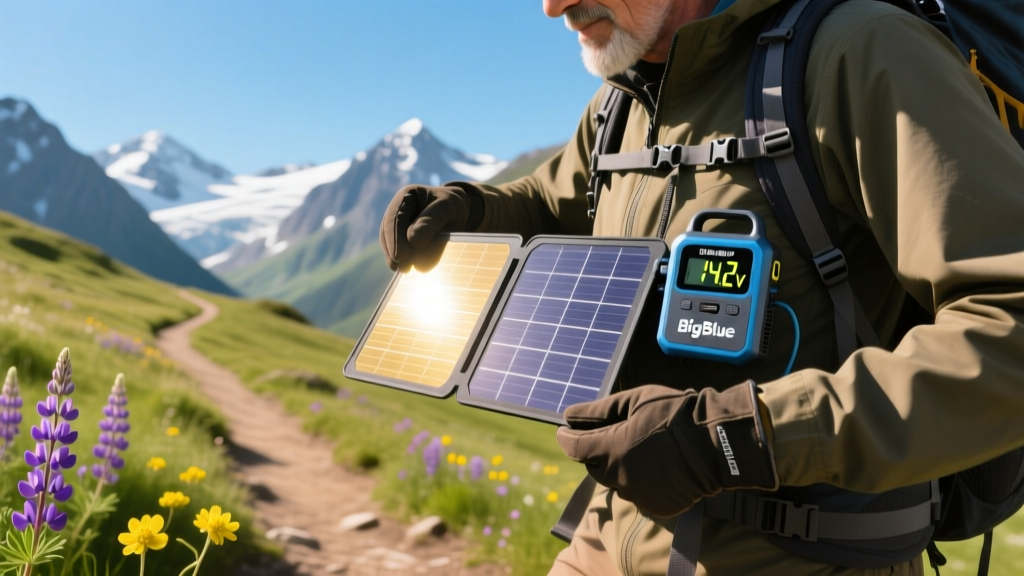
| Solar Charger | Generic 20W Foldable ($30). No ammeter, PET laminate, severe output drop under partial shade. | BigBlue 28W SunPower ($69). Features a digital ammeter, ETFE coating for UV resistance, and bypass diodes to mitigate shading losses. |
| Car Adapter | Dual USB-A 12V Plug ($10). Shared 12W (5V/2.4A) max output, basic over-current protection. | Baseus 160W PD Car Charger ($45). 100W USB-C PD single-port draw, independent circuitry, zinc alloy housing for heat dissipation. |
| Power Station | Heavy Lead-Acid 'Jump Starter' ($50). 12V output only, massive self-discharge rate, weighs 15+ lbs. | EcoFlow River 2 ($299). LiFePO4 chemistry (3000+ cycles), 256Wh capacity, 600W pure sine wave inverter, X-Stream fast charging. |
Edge Cases and Real-World Failure Modes
Expertise in portable power is largely defined by understanding how gear fails in edge cases. RTINGS testing protocols frequently expose these real-world limitations that spec sheets hide.
1. Thermal Throttling in Car Adapters
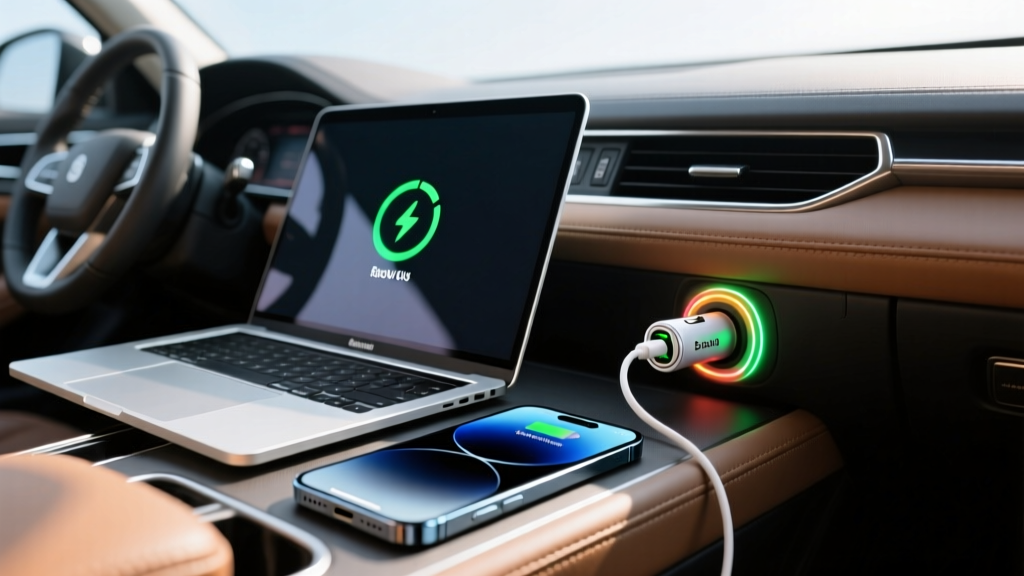
A vehicle's 12V accessory socket (cigarette lighter) is typically fused at 10A or 15A. Drawing a continuous 160W from a premium car charger pushes the physical limits of the socket's metal contacts. Inexpensive adapters lack thermal sensors; as the internal MOSFETs heat up, resistance increases, leading to voltage sag or, in worst-case scenarios, melting the 12V plug housing. Expert adapters like the Baseus 160W utilize potted thermal compounds and active negotiation to throttle the PD handshake down to 65W if internal thermistors detect temperatures exceeding 75°C.
2. Solar Panel Shading and Bypass Diodes
Monocrystalline solar cells are wired in series. If a single cell on a beginner's solar panel is covered by a leaf or shadow, the entire panel's output drops to near zero because the shaded cell acts as a resistor. Expert panels incorporate bypass diodes at the junction box. These diodes allow the current to bypass the shaded string of cells, ensuring the unshaded strings continue to produce power. Furthermore, experts know to pair solar panels with a dedicated MPPT (Maximum Power Point Tracking) charge controller rather than plugging them directly into a power bank's basic PWM (Pulse Width Modulation) input.
3. The LiFePO4 vs. NMC Trade-off
While NMC (Nickel Manganese Cobalt) cells offer the highest energy density for backpacking, they degrade faster. Experts choosing basecamp or car-camping power stations now exclusively specify LiFePO4 (Lithium Iron Phosphate) chemistry. LiFePO4 is heavier but guarantees over 3,000 charge cycles to 80% capacity, compared to the 500-800 cycles typical of NMC.
The 'Crossword' Cheat Sheet: Decision Framework
Use this framework to fill in the blanks for your specific portable power needs in 2026:
- If you commute daily and need phone top-ups: Buy a 10,000mAh NMC power bank with magnetic Qi2 wireless charging (e.g., Anker MagGo). Prioritize weight and magnetic alignment over raw wattage.
- If you travel with a laptop and need wall-replacement: Require a minimum 65W PD output, 20,000mAh (74Wh) capacity to stay under TSA flight limits, and PPS support. The CukTech 15 or Shargeek Storm2 are optimal.
- If you are off-grid hiking for 3+ days: Abandon heavy power stations. Pair a 28W ETFE-coated solar panel with a 10,000mAh power bank. Use the solar panel exclusively during peak sun hours (10 AM - 2 PM) to top off the bank, never charging the phone directly from the panel's fluctuating voltage.
- If you are outfitting a vehicle for road trips: Install a hardwired 12V dual-battery isolator rather than relying solely on the accessory socket, and use a LiFePO4 portable station (like the EcoFlow River 2) to run AC appliances without draining the car's starter battery.
Solving the portable power puzzle requires looking past the bold numbers on the box. By prioritizing cell chemistry, conversion efficiency, and protocol compatibility, you transition from simply buying batteries to engineering a reliable, off-grid power ecosystem.
Written by
Emma LarssonEmma Larsson holds an M.A. in International Relations from Sciences Po Paris and a B.A. in Communications from Stockholm University. A digital nomad since 2017, she has worked from over 45 countries across six continents, building deep expertise in portable power solutions, travel routers, compact computing, and connectivity gadgets that survive international travel. Emma is a certified member of the Travel Technology Association and has advised three travel gear startups on product-market fit for remote workers. Her reviews evaluate products against real travel scenarios — TSA compliance, voltage compatibility across 200+ countries, durability through 50+ checked bag cycles, and battery life under airplane mode vs. active use. She has been featured in Condé Nast Traveler's "Tech-Savvy Traveler" series and speaks at Remote Work Summit events.