2026 Drone Trends: Navigating the Tech Gadget Discovery World
Explore 2026 drone trends in the tech gadget discovery world. We analyze AI camera drones, sub-250g FPV builds, and next-gen accessories.
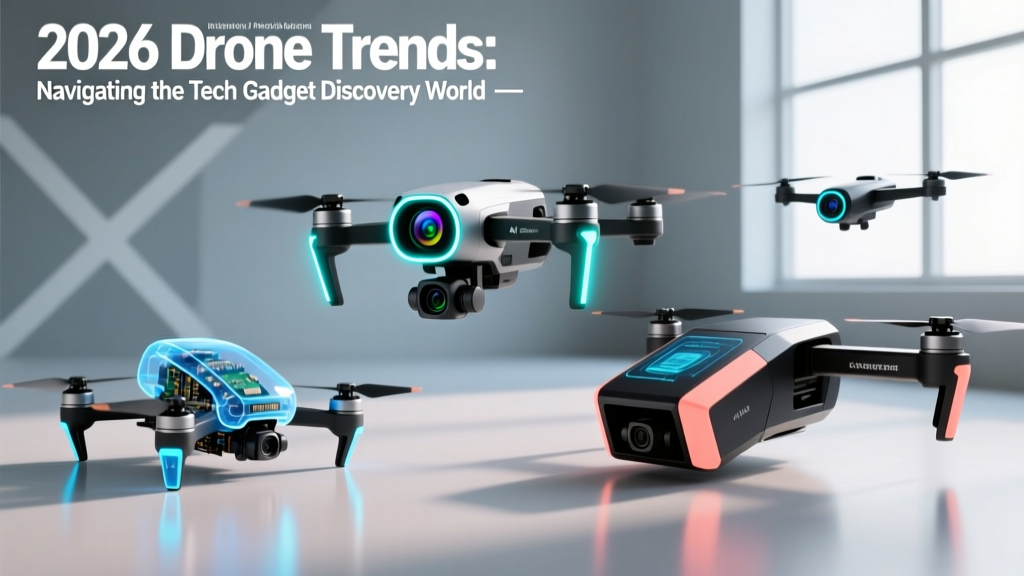
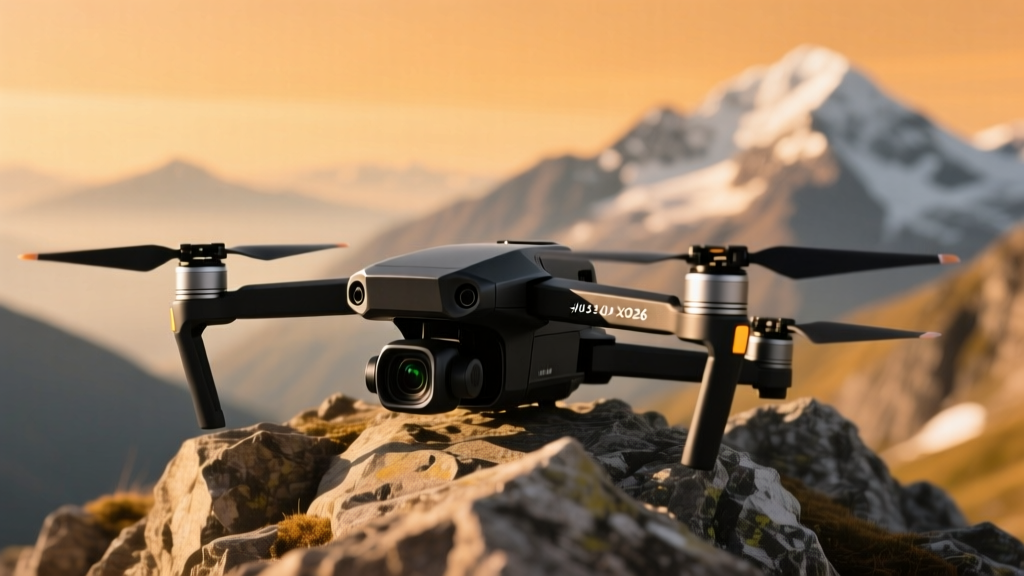
For enthusiasts navigating the tech gadget discovery world, the drone sector represents the most dynamic intersection of advanced hardware and computational software. As we move through 2026, the unmanned aerial vehicle (UAV) market has shifted away from mere hardware spec bumps toward highly specialized, AI-driven ecosystems. Whether you are capturing cinematic 8K ProRes footage, threading a 3-inch cinewhoop through an abandoned warehouse, or mapping agricultural plots with multispectral sensors, this year's drone gadgets demand a deeper technical understanding than ever before.
The AI-Driven Camera Drone Renaissance
The era of relying solely on optical superiority is over. In 2026, the defining feature of premium camera drones—such as the latest iterations in the DJI Mavic and Autel EVO lines—is the integration of dedicated Neural Processing Units (NPUs) directly on the mainboard. These NPUs handle real-time computational photography, executing multi-frame noise reduction and HDR merging at 4K/120fps without dropping a single frame.
Sensor Scaling and Bitrate Ceilings
We are now seeing 1-inch CMOS sensors standardized in the sub-500g class, a form factor that previously required bulky, heavy airframes. The engineering breakthrough lies in folded optics and stacked sensor architecture, which reduces the physical depth of the lens assembly. Consequently, drones weighing under 499 grams are now outputting 200Mbps H.265 10-bit D-Log video. This provides colorists with over a billion colors per channel, effectively eliminating the banding artifacts that plagued earlier 8-bit sensors during heavy grading in post-production.
FPV Racing and Cinewhoops: The Sub-250g Mandate
In the First-Person View (FPV) and racing drone space, regulatory weight limits have entirely dictated hardware innovation. The 250-gram threshold remains the global sweet spot for avoiding stringent registration and Remote ID broadcasting requirements in numerous jurisdictions. This has triggered an arms race in miniaturization among manufacturers like iFlight, GEPRC, and BetaFPV.
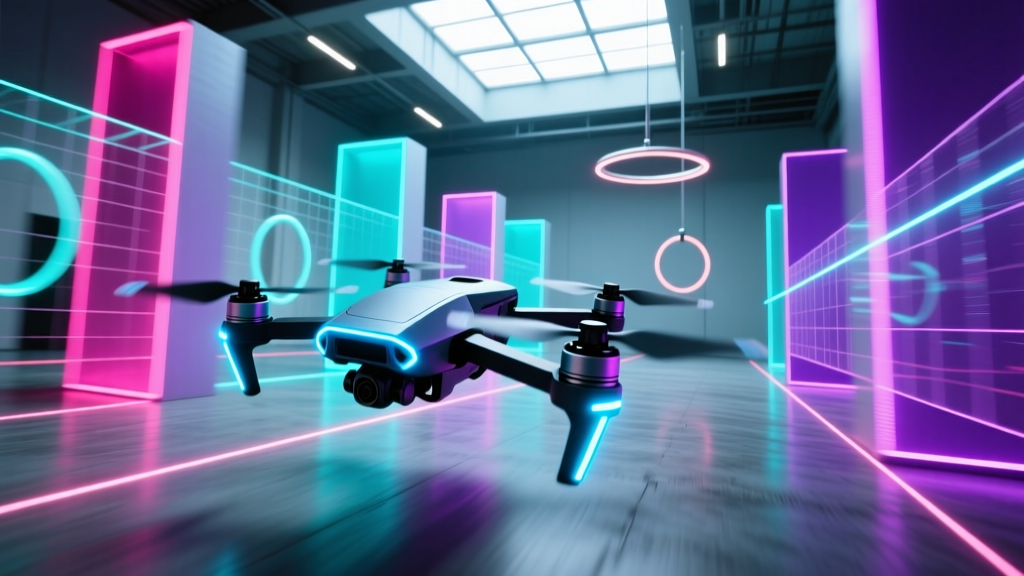
The VTX and Goggle Ecosystem Shift
The analog video transmission era is officially on life support. Digital HD systems now dominate, but the 2026 landscape is fractured between proprietary ecosystems. The latest DJI O4 transmission system offers an industry-leading 15km range with sub-20ms latency, but it requires a closed ecosystem. Conversely, open-protocol systems like Walksnail Avatar HD 2 and HDZero provide competitive 1080p/100fps feeds while allowing pilots to mix and match components from different manufacturers.
| VTX System | Max Resolution / FPS | Latency | Weight (VTX + Cam) | Ecosystem Type |
|---|---|---|---|---|
| DJI O4 Air Unit | 1080p / 120fps | ~18ms | 38g | Closed / Proprietary |
| Walksnail Avatar HD 2 | 1080p / 100fps | ~22ms | 34g | Semi-Open |
| HDZero Halo Pro | 1080p / 60fps | <1ms | 29g | Open / Uncompressed |
For pure racers prioritizing zero-latency stick feel over recording quality, HDZero remains the undisputed champion, utilizing uncompressed digital video to achieve sub-millisecond latency. However, for freestyle pilots and cinematic drone operators, the Walksnail and DJI systems provide the necessary onboard DVR recording capabilities to capture high-bitrate flight footage without carrying a separate GoPro.
Next-Generation Accessories: Solid-State Power and Magnetic Optics
A drone is only as capable as its supporting accessories, and 2026 has introduced two critical upgrades that drastically alter flight logistics.
Silicon-Anode Battery Chemistry
Traditional Lithium-Polymer (LiPo) batteries have hit their energy density ceiling. The introduction of silicon-anode and semi-solid-state battery packs by accessory brands like Tattu and CNHL has shifted the paradigm. These packs offer a 25% to 30% increase in energy density compared to standard 6S 1300mAh LiPos, without increasing the physical footprint. Priced between $89 and $120 per pack, they allow 5-inch freestyle drones to extend flight times from the traditional 3.5 minutes to nearly 5 minutes, while maintaining the voltage sag characteristics required for aggressive acrobatic maneuvers.
Magnetic Variable ND Systems
Screw-on Neutral Density (ND) filters are a relic of the past. The current standard utilizes magnetic, snap-on variable ND mounts (ranging from ND8 to ND256). These mounts weigh under 12 grams and allow pilots to swap filtration in seconds without risking damage to the delicate gimbal motors. More importantly, the 2026 iterations feature multi-coated optical glass that eliminates the cross-polarization 'X' artifact that plagued early variable ND designs.
Regulatory Realities: Network Remote ID in 2026
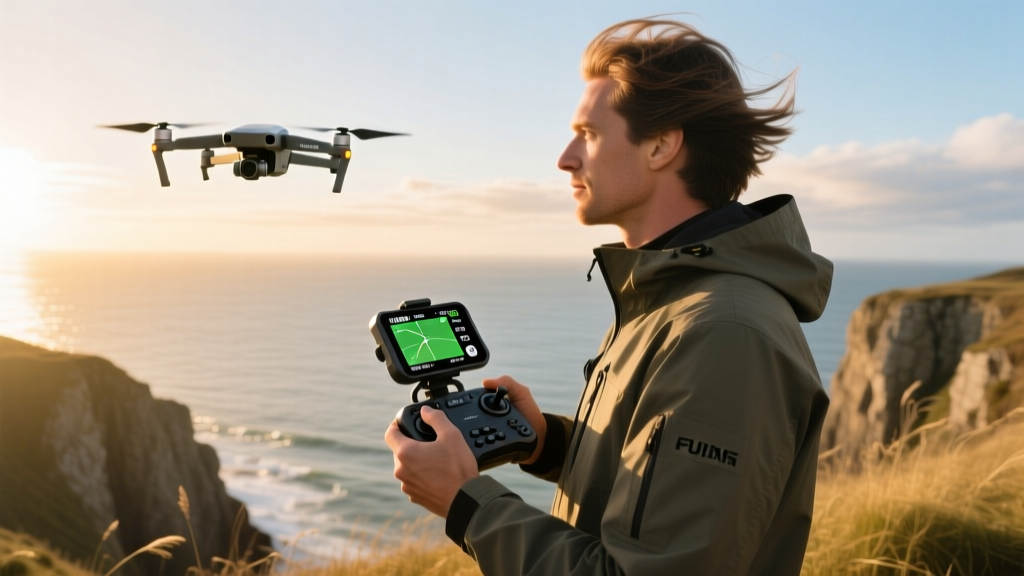
You cannot discuss drone gadgets without addressing the legal framework governing them. The FAA Remote ID guidelines and the EASA drone regulations in Europe have fully matured from their initial rollout phases into strict, actively enforced mandates.
"By 2026, Broadcast Remote ID is no longer sufficient for commercial operations in controlled airspace. Network Remote ID, which transmits telemetry via cellular LTE/5G networks directly to aviation authorities, is now the baseline requirement for Beyond Visual Line of Sight (BVLOS) waivers."
Hardware manufacturers have responded by integrating Remote ID transmitters directly into the main flight controller PCBs, eliminating the need for bulky, external zip-tied modules that ruin the center of gravity on lightweight racing quads.
The Future Horizon: Hydrogen Cells and Swarm Mapping
Looking toward the latter half of the decade, the tech gadget discovery world is already teasing the next frontier: consumer-accessible hydrogen fuel cells and localized swarm mapping. While currently confined to enterprise inspection drones, micro-hydrogen cells are being scaled down for the prosumer market, promising flight times exceeding 120 minutes for heavy-lift cinema drones. Simultaneously, localized mesh-networking accessories are allowing solo operators to deploy three or four sub-250g mapping drones simultaneously, cutting large-area photogrammetry times by 75%. For the dedicated tech enthusiast, mastering these emerging protocols today will define the competitive edge of tomorrow's aerial operations.
Written by
Jake MorrisonJake Morrison holds a B.S. in Electrical Engineering from UC Berkeley and an MBA from Stanford Graduate School of Business. With over 12 years of hands-on experience in consumer electronics, he previously served as a senior product engineer at a Silicon Valley startup before transitioning to tech journalism. Jake has personally tested and benchmarked over 3,000 gadgets across categories including smartphones, wearables, smart home devices, and audio equipment. His durability testing methodology — involving controlled drop tests, thermal cycling, and water submersion — is widely cited by major tech publications. He is a certified CompTIA A+ technician and a contributing editor to the IEEE Consumer Electronics Magazine.