Eco-Friendly Tech Gadget Gifts: Sustainable Home Office Picks for 2026
Discover the best eco-friendly tech gadget gifts for 2026. Upgrade your home office with sustainable peripherals, solar chargers, and energy-saving smart plugs.


The Hidden Cost of Traditional Tech Gifting
The global appetite for consumer electronics generates staggering environmental consequences. According to the Global E-waste Monitor, the world produces over 62 million metric tons of electronic waste annually, with only a fraction formally documented and recycled. When selecting tech gadget gifts for colleagues, clients, or remote-working friends, defaulting to virgin-plastic peripherals and energy-hungry accessories inadvertently contributes to this crisis.
Fortunately, the 2026 hardware landscape has shifted. Manufacturers are now leveraging closed-loop recycling, post-consumer recycled (PCR) plastics, and ultra-low-power chipsets. This guide curates highly specific, eco-friendly tech gadget gifts that deliver genuine home office utility without the environmental guilt. We evaluate these picks based on material lifecycle, energy efficiency, and verifiable third-party certifications rather than superficial greenwashing.
Category 1: Phantom Load Eliminators (Smart Energy Plugs)
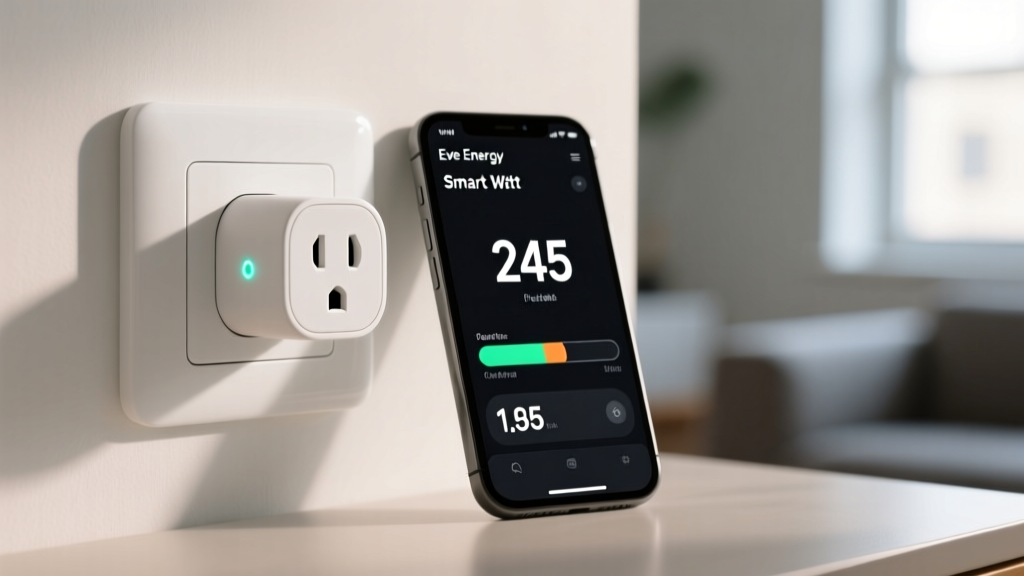
A typical home office suffers from "vampire power" or phantom loads—electricity consumed by devices in standby mode. The U.S. EPA notes that plug loads can account for up to 10% of residential energy use. A desktop PC drawing 5W in sleep mode and a monitor drawing 3W wastes roughly $7.00 annually per workstation at the 2026 national average of $0.17/kWh. Gifting a smart energy monitor plug eliminates this waste while providing actionable data.
Top Sustainable Smart Plug Picks
| Product | Protocol | Energy Monitoring | Price (MSRP) | Best For |
|---|---|---|---|---|
| Eve Energy (Matter) | Thread / Matter 1.3 | Yes (Real-time & Projections) | $39.95 | Apple Home & Matter-native setups |
| TP-Link Kasa EP25 | Wi-Fi 2.4GHz | Yes (Historical & Daily) | $24.99 (4-pack) | Budget-friendly multi-room deployments |
| Meross Smart Plug Mini | Wi-Fi / HomeKit | No | $15.99 | Basic scheduling & remote kill-switch |
Category 2: Closed-Loop Peripherals and Audio
Keyboards, mice, and headsets are the most frequently replaced items in a home office, making them prime candidates for sustainable material innovation. When sourcing eco-friendly tech gadget gifts in this category, look for specific PCR percentages and modular repairability.
Logitech Signature M650s & MX Keys Mini
Logitech has aggressively integrated PCR plastics into its lineup. The Signature M650s mouse is constructed with up to 64% PCR plastic and ships in FSC-certified, plastic-free packaging. Priced around $39.99, it features a two-year battery life on a single AA cell, drastically reducing alkaline battery waste. For typists, the MX Keys Mini ($99.99) utilizes 30% PCR plastic across its chassis and features smart backlighting that only activates when hands approach the chassis, preserving charge cycles.
House of Marley Smile Jamaica Earth
Audio gear is notoriously difficult to recycle due to the blending of rare-earth magnets, copper, and glued plastics. House of Marley circumvents this with their Smile Jamaica Earth series ($49.99). These earbuds are crafted from REGRIND silicone, recycled aluminum, and REWIND fabric (a blend of recycled PET bottles and organic cotton). More importantly, they are designed for disassembly, and the company offers a take-back program where old audio gear is refurbished or stripped for raw materials.
Category 3: Off-Grid and Solar Desk Power
For the remote worker who loves to set up their laptop on a sunlit patio or a bright bay window, solar-powered tech accessories make exceptional, forward-thinking gifts. However, not all solar chargers are created equal; the distinction between monocrystalline and polycrystalline cells dictates real-world usability.
"Polycrystalline panels degrade significantly when partially shaded by window frames or tree branches. For home office window use, monocrystalline cells with bypass diodes are non-negotiable to maintain USB-C PD output stability." — Renewable Energy Hardware Review, 2025
Anker SOLIX PS100 Portable Solar Panel
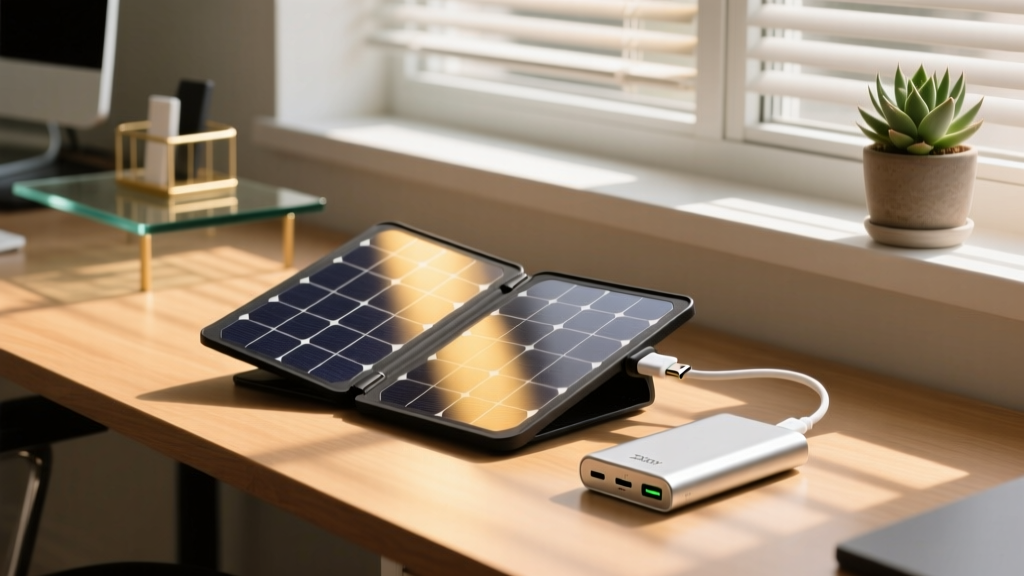
Retailing at $129, the Anker SOLIX PS100 features high-efficiency monocrystalline cells that fold into a compact, kickstand-equipped sleeve. It outputs up to 20W via USB-C, enough to trickle-charge a modern ultrabook (like a MacBook Air or Dell XPS 13) while in sleep mode, or rapidly charge a 10,000mAh power bank. The housing utilizes rugged, weather-resistant recycled polymers, ensuring the gift survives both indoor spills and outdoor coffee shop commutes.
Greenwashing vs. Genuine Sustainability: A Buyer's Matrix
When shopping for eco-friendly tech gadget gifts, brands often use vague terms like "earth-friendly" or "green" without substantiation. Use this decision matrix to verify legitimate environmental claims before purchasing.
| Certification / Claim | What It Actually Means | Verification Source |
|---|---|---|
| EPEAT Gold | Meets strict criteria for material selection, design for end-of-life, and corporate performance. Requires minimum PCR content and toxic material reduction. | EPEAT Registry |
| TCO Certified | Focuses on both environmental manufacturing limits and social responsibility in the supply chain, alongside ergonomic design. | TCO Certified Directory |
| Carbon Neutral Product | The company has measured the product's footprint and purchased offsets. (Warning: Does not mean the product itself is low-impact; offsets can be unreliable). | Look for ISO 14068 compliance |
| FSC-Certified Packaging | Packaging is sourced from responsibly managed forests, and uses soy-based inks instead of petroleum-based. | FSC Database |
Frequently Asked Questions
Are bamboo desk accessories actually sustainable?
Bamboo is a highly renewable grass that grows without pesticides and regenerates from its own roots. However, the sustainability of a bamboo monitor stand or laptop tray depends entirely on the binding resins used. Cheap bamboo products use urea-formaldehyde glues that off-gas VOCs into your home office. When gifting bamboo tech accessories, verify that the manufacturer uses water-based, formaldehyde-free adhesives and finishes with natural tung or linseed oil rather than polyurethane.
How do I recycle old tech gadgets responsibly if I upgrade my home office?
Never throw lithium-ion batteries or circuit boards in municipal trash. Use the e-Stewards or R2 (Responsible Recycling) directories to find certified local recyclers. These certifications ensure that your old tech is not illegally exported to developing nations, but is instead processed in facilities with strict environmental and worker safety controls. Many manufacturers, including Apple and Dell, also offer prepaid mail-back trade-in and recycling programs.
Do eco-friendly tech gifts cost more than standard electronics?
While the upfront R&D costs for closed-loop manufacturing can result in a 5% to 15% premium on niche sustainable brands, mainstream peripherals (like Logitech's PCR lines or TP-Link's smart plugs) are priced identically to their non-sustainable counterparts. The premium is usually absorbed by the manufacturer to meet corporate ESG (Environmental, Social, and Governance) targets, meaning you can gift high-quality, sustainable tech without exceeding a standard gifting budget.
Written by
Marcus WebbMarcus Webb served as a U.S. Army logistics officer for 8 years, where he managed field equipment procurement and tactical gear evaluation across three combat deployments. After honorable discharge, he earned a certification from the Professional Knife Makers Association and became a certified Wilderness First Responder (WFR). Marcus has tested over 500 EDC products in extreme environments — from -40°F in Alaska to 120°F in the Mojave Desert — using military-spec testing protocols. His reviews of multi-tools, tactical flashlights, and survival gear are known for their rigorous methodology: controlled drop tests from 6 feet, 120-minute water submersion at 2 meters, and lateral torque testing at 45 Nm. He is a member of the Blade Show judging panel and contributes to OutdoorGearLab.