Essential Gadgets for Hackers: 2026 Hardware Buyer's Guide
Discover the best gadgets for hackers in 2026. This guide covers SDR tools, network injectors, and hardware gear with exact specs.
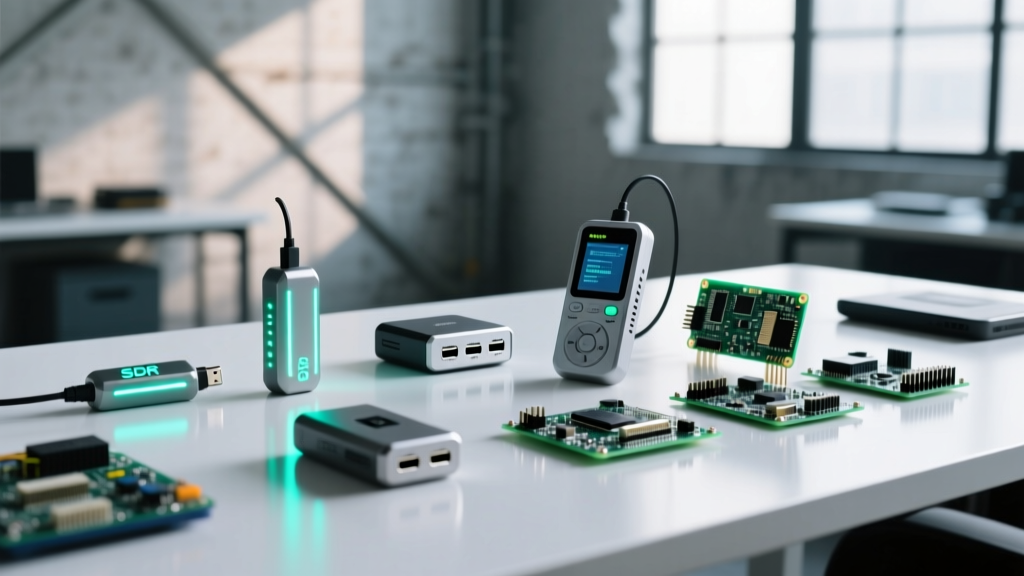
Building a physical penetration testing and hardware hacking lab requires moving beyond software exploits into the realm of radio frequencies, logic protocols, and physical layer manipulation. The market for security research hardware has matured significantly, shifting from niche, hand-soldered prototypes to polished, production-grade instruments. However, this proliferation of tools makes it difficult to separate essential diagnostic equipment from overpriced novelty items.
This buyer's guide dissects the core categories of hardware security tools available in 2026, providing exact chipset specifications, current pricing, and operational limitations to help you allocate your budget effectively.
The Core Computing & SDR Arsenal
Software-Defined Radio (SDR) and multi-tool transceivers form the backbone of modern RF analysis. When selecting an SDR, the primary decision hinges on whether you need a standalone, portable field tool or a high-bandwidth desktop research instrument.
Flipper Zero vs. HackRF One: Field vs. Lab
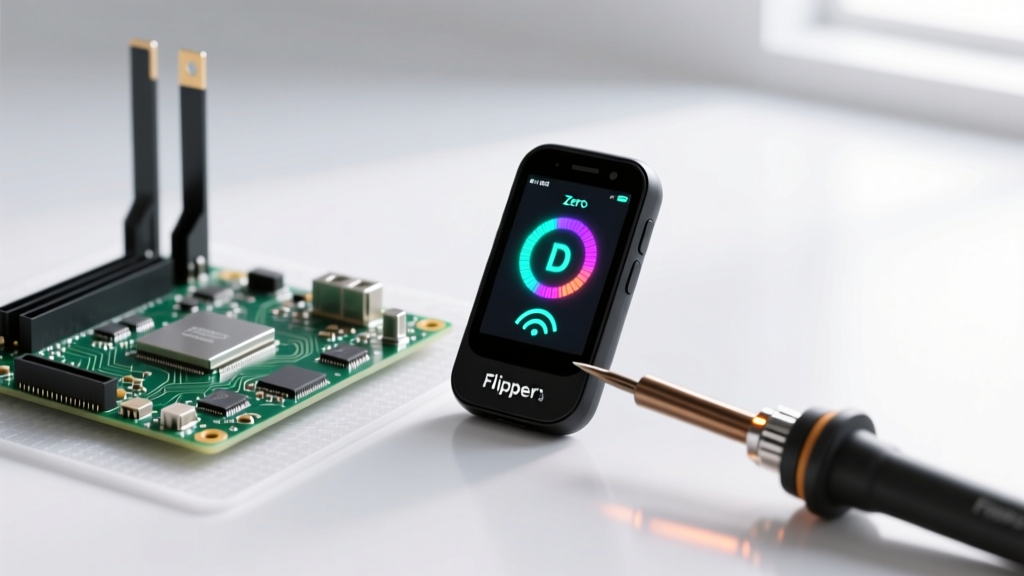
The Flipper Zero ($169) has dominated the portable multi-tool space due to its integrated sub-1 GHz transceiver, 125 kHz RFID, NFC, and GPIO capabilities. It excels at quick field assessments: capturing garage door rolling codes (for replay analysis), cloning legacy access badges, and interacting with UART/JTAG debug ports. However, its sub-1 GHz CC1101 chip is limited to a 2 MHz bandwidth, making it useless for analyzing wideband signals like Wi-Fi or LTE.
Conversely, the HackRF One ($350) by Great Scott Gadgets remains the gold standard for portable wideband SDR. According to the official Great Scott Gadgets documentation, the HackRF One operates from 1 MHz to 6 GHz with a 20 MHz bandwidth and 8-bit ADC resolution. It is a half-duplex transceiver, meaning it can either transmit or receive at any given time, but not simultaneously. This limitation is rarely a bottleneck for security researchers capturing handshakes or analyzing IoT telemetry.
| Specification | Flipper Zero | HackRF One |
|---|---|---|
| Price (2026) | $169 | $350 |
| Frequency Range | 300-928 MHz (Sub-1 GHz) | 1 MHz - 6 GHz |
| Max Bandwidth | 2 MHz | 20 MHz |
| Duplex Mode | Half-Duplex | Half-Duplex |
| Primary Use Case | Field access control & IoT triage | Wideband signal analysis & SDR research |
Network & Wireless Injection Tools
Wi-Fi auditing requires adapters capable of monitor mode and packet injection. The critical factor here is not the brand name printed on the plastic shell, but the internal chipset and its driver support in modern Linux kernels (specifically Kali and Parrot OS).
The Chipset Divide: RTL8812AU vs. AR9271
For years, the Atheros AR9271 was the undisputed king of Wi-Fi auditing. In 2026, it is effectively obsolete for modern engagements. The AR9271 only supports 2.4 GHz 802.11n networks. With the mass adoption of Wi-Fi 6 (802.11ax) and WPA3 on 5 GHz bands, you need a dual-band adapter.
The Alfa Network AWUS036ACH (approximately $45) utilizes the Realtek RTL8812AU chipset. This chipset supports 2.4 GHz and 5 GHz bands, 802.11ac protocols, and has robust driver support for packet injection. When purchasing, verify the adapter includes dual 5dBi SMA antennas; signal gain is critical when attempting to capture WPA3 SAE handshakes from a distance. Avoid adapters with internal, non-detachable antennas, as they lack the dBm output required to reliably send deauthentication frames to modern enterprise access points.
Automated Enterprise Auditing
For automated rogue access point detection and enterprise pivoting, the Hak5 WiFi Pineapple Mark VII ($199) remains a staple. It streamlines the Karma attack (now implemented as PineAP) by automating probe request logging and SSID spoofing. The Mark VII's internal dual-band radios allow it to simultaneously manage a control connection while broadcasting honeypot networks on other channels.
Hardware Hacking & Logic Analysis
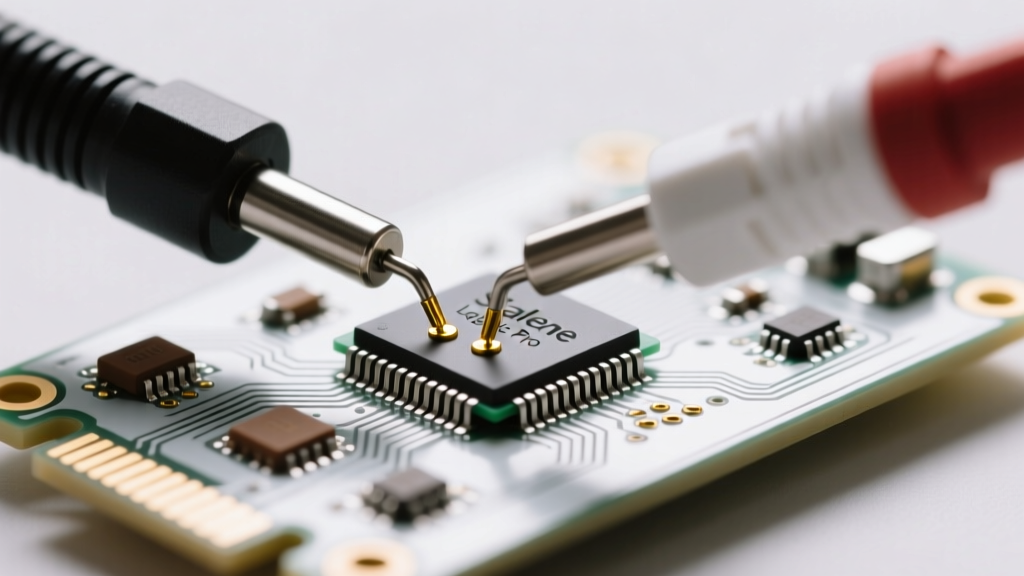
When assessing IoT devices, automotive ECUs, or industrial control systems, firmware extraction is often the primary objective. This requires intercepting communication between a microcontroller and its peripheral memory (like SPI NOR Flash) or debugging via JTAG/SWD.
Logic Analyzers: Saleae vs. DSLogic
A logic analyzer captures digital signals over time, allowing you to decode protocols like SPI, I2C, and UART. The Saleae Logic Pro 8 ($499) is the industry benchmark. It offers a 500 MS/s (megasamples per second) sampling rate on 8 digital channels and includes analog channel support. This high sampling rate is mandatory when analyzing high-speed SPI flash chips operating at 100 MHz or higher; a lower sampling rate will result in aliased, unreadable data.
For makers and researchers on a strict budget, the DreamSourceLab DSLogic Plus ($150) provides a compelling alternative. It offers 16 digital channels at up to 1 GS/s (in half-channel mode). While the hardware is capable, the open-source DSView software lacks the polished, automated protocol decoders found in Saleae's Logic 2 software. Expect to spend more time manually verifying SPI clock polarity (CPOL/CPHA) and bit-ordering when using the DSLogic.
2026 Hardware Lab Budget Tiers
Entry-Level (Scripting & Basic RF): $250 - $400
Intermediate (Network & IoT Triage): $800 - $1,200
Professional (Full Spectrum & Firmware Extraction): $2,500+
Physical Entry & RFID Cloning
Physical security assessments frequently involve bypassing access control systems. Modern corporate environments utilize high-frequency (13.56 MHz) smart cards like MIFARE DESFire EV3 or HID iCLASS SE, which feature robust cryptographic protections against simple cloning.
The Proxmark3 RDV4.01 Standard
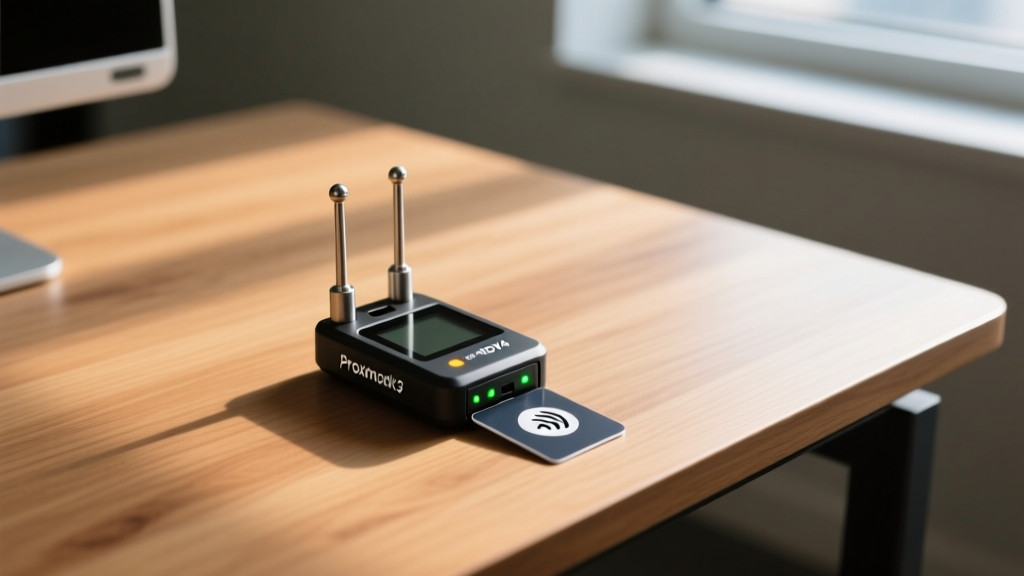
The Proxmark3 RDV4.01 (approximately $350 from authorized resellers) is the definitive tool for RFID research. Unlike older iterations, the RDV4 features a modular antenna design, an onboard FPC (FPGA) for high-speed signal processing, and a built-in battery for untethered field operations. It supports both Low Frequency (125 kHz) and High Frequency (13.56 MHz) protocols.
Buyer Beware: The market is flooded with $60 Proxmark3 clones from unauthorized marketplaces. These clones frequently suffer from poorly tuned LF antennas, missing SPI flash memory (required for standalone mode), and incompatible firmware. Always purchase the RDV4 variant with the official RRG (RFID Research Group) firmware pre-installed to ensure compatibility with modern MIFARE DESFire and EMV credit card analysis commands.
Lockpicking: Peterson vs. Sparrows
For mechanical bypasses, tool steel quality and handle ergonomics dictate success. Peterson Manufacturing picks (using 0.025" thick government steel) offer unparalleled feedback and durability, resisting snapping in tight keyways. Sparrows Lock Picks provides excellent mid-tier options, particularly their Tuxedo Royale set, which features a specialized matte black oxide finish that reduces glare and friction inside the lock cylinder.
Decision Framework: What to Buy First?
Allocating a hardware budget requires aligning your purchases with your specific engagement types. Use this framework to prioritize your acquisitions:
- Web & Cloud Pentesters pivoting to IoT: Start with a Bus Pirate v5 ($35) for basic UART/SPI interaction and a DSLogic Plus ($150) to visualize the protocols before investing in high-end logic analyzers.
- Red Teamers focusing on Physical/RF: The Flipper Zero ($169) paired with a Proxmark3 RDV4 ($350) covers 90% of initial access control bypass and sub-1 GHz telemetry capture scenarios.
- Network Infrastructure Auditors: Invest heavily in the Alfa AWUS036ACH ($45) and a WiFi Pineapple Mark VII ($199), allocating the remaining budget to a high-gain directional Yagi antenna for long-range WPA3 handshake capture.
Firmware Analysis & The Next Step
Once you have successfully dumped firmware via SPI flash or intercepted a JTAG session, the hardware phase concludes and the reverse engineering phase begins. The OWASP Firmware Security Testing Methodology (FSTM) provides a rigorous, standardized framework for analyzing the extracted binaries, identifying hardcoded credentials, and mapping out the device's attack surface.
Hardware hacking is an iterative discipline. The gadgets outlined above are not magic wands; they are precision instruments that require a deep understanding of electrical engineering, radio frequency physics, and protocol architecture. Invest in the tools that match your current operational requirements, master their underlying protocols, and expand your arsenal only when a specific engagement demands greater capability.
Written by
Nina PetrovaNina Petrova holds a Master's degree in Child Development from the Erikson Institute and a B.S. in Nursing from the University of Illinois at Chicago. She worked as a pediatric nurse for 6 years before transitioning to family technology consulting, bringing clinical rigor to her evaluations of kid-friendly gadgets, educational toys, and parental control software. Nina has reviewed over 400 children's tech products, testing each for safety compliance (CPSC and ASTM standards), developmental appropriateness across age groups, screen-time impact, and data privacy practices. She serves on the Children's Technology Review advisory board and has testified before the FTC on children's data protection in connected toys. Her reviews are trusted by parents and educators alike for their evidence-based approach to balancing technology benefits with child safety.