Smart Gadgets for Cars: 2026 Trends in AI Dashcams & HUD Tech
Explore the top smart gadgets for cars in 2026. We analyze AI dashcams, AR head-up displays, and EV CAN bus telemetry trends for modern automotive tech.
The Shift from Passive to Predictive: 2026's Core Paradigm
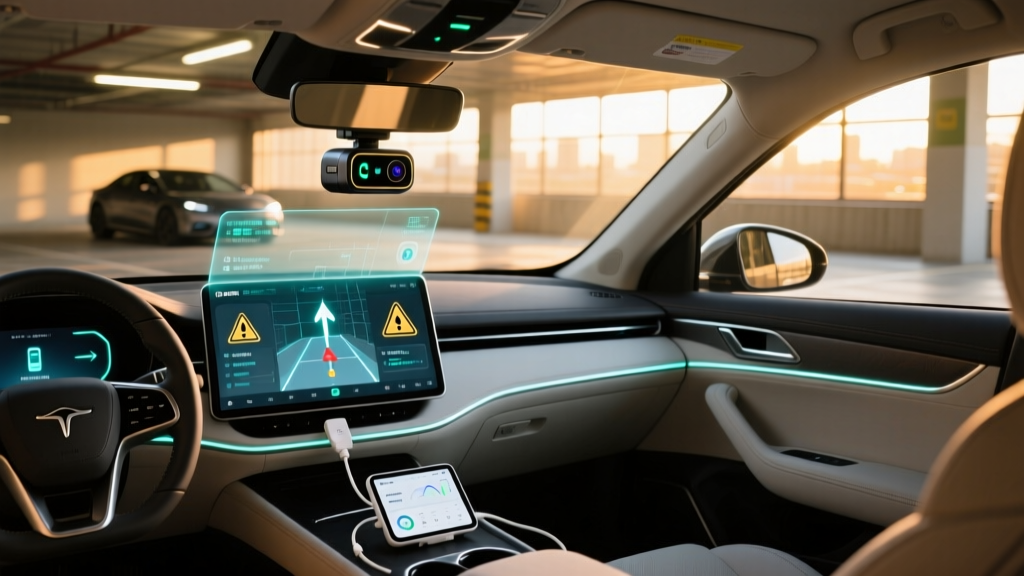
The landscape of gadgets for cars has fundamentally shifted from passive recording and basic display to predictive, edge-computed intelligence. In 2026, the most valuable automotive accessories do not just capture data; they process it locally via onboard Neural Processing Units (NPUs) to reduce cloud reliance, minimize latency, and enhance driver situational awareness. For enthusiasts and daily commuters alike, understanding the hardware specifications driving these devices is critical to avoiding overpriced, underperforming legacy tech.
According to the Insurance Institute for Highway Safety (IIHS), aftermarket Advanced Driver Assistance Systems (ADAS) and smart monitoring gadgets are increasingly bridging the gap between older vehicles and modern factory-equipped safety suites. However, the integration of these systems requires precise power management and an understanding of vehicle-specific data buses.
AI Edge-Computing Dashcams: Beyond Loop Recording
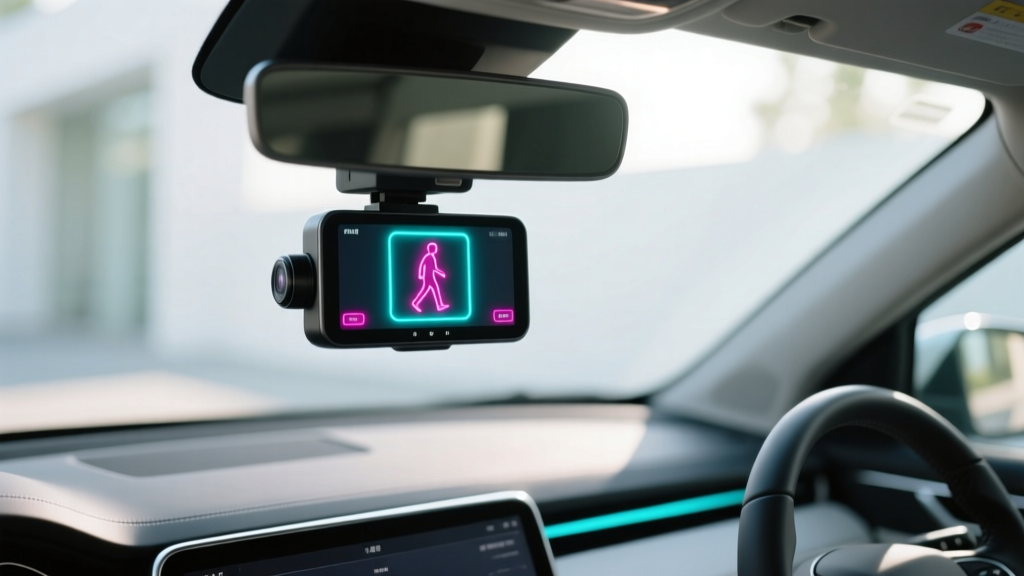
The era of basic 1080p loop recording is over. The 2026 dashcam market is dominated by 4K sensors operating at 60fps, utilizing Sony STARVIS 2 architecture for near-nightvision low-light performance. But the true differentiator in modern gadgets for cars is edge computing.
Local NPU Processing vs. Cloud Uploads
Older smart dashcams uploaded hours of raw footage to the cloud for incident detection, resulting in massive data caps and $15-$25 monthly subscription fees. Current models equipped with Ambarella CV3-AD or Novatek NT9853x chipsets process video locally. The NPU identifies license plates, faces, and impact events in real-time, blurring privacy-sensitive data locally and uploading only 10-second encrypted incident clips via Wi-Fi 6E or 5G tethering.
Never purchase a high-end dashcam in 2026 that relies on Lithium-Ion batteries for parking mode power. Cabin temperatures can exceed 140°F (60°C) in summer, causing Li-Ion cells to swell, degrade, or vent. Premium units now exclusively use supercapacitors, which endure extreme thermal cycling and provide the 3-5 seconds of burst power needed to safely write the final video file to the microSD card after ignition loss.

Aftermarket AR HUDs: Laser Beam Scanning vs. Combiner Glass
Head-Up Displays (HUDs) have evolved from gimmicky reflective plastic screens to sophisticated Augmented Reality (AR) navigation overlays. When evaluating AR HUDs as essential gadgets for cars, buyers must understand the optical projection method, as it dictates visibility and windshield compatibility.
The Ghosting Problem and LBS Solutions
Standard TFT combiner HUDs ($50–$150) project an image onto a small piece of flip-up plastic. They suffer from severe washout in direct sunlight. Mid-tier DLP (Digital Light Processing) units project directly onto the windshield, but because modern car windshields are laminated double-pane glass, DLP projections often create a distracting 'ghost' double-image unless an expensive, custom-fitted polarization film is applied to the glass.
The 2026 solution is Laser Beam Scanning (LBS). LBS HUDs use MEMS (Micro-Electro-Mechanical Systems) mirrors to draw the image directly onto the windshield with polarized laser light, entirely eliminating the ghosting effect on double-pane glass without the need for aftermarket films.
| HUD Technology | Avg Price Range | Daylight Visibility | Windshield Ghosting | Installation |
|---|---|---|---|---|
| TFT Combiner | $40 - $120 | Poor (Washes out) | N/A (Uses plastic screen) | Plug-and-Play (12V) |
| DLP Direct Projection | $180 - $350 | Good | Severe (Requires wedge film) | Hardwire + Film Application |
| LBS (Laser Beam Scanning) | $450 - $850 | Excellent (High Nits) | None (Polarized beam) | Hardwire + OBD-II Sync |
EV Battery Telemetry & CAN Bus Sniffers
As electric vehicle adoption matures, standard OBD-II scanners have become largely obsolete for EV diagnostics. The U.S. Department of Energy notes that lithium-ion battery degradation is non-linear and highly dependent on cell-level thermal management and voltage variance. Standard OBD-II PIDs (Parameter IDs) cannot access the proprietary CAN (Controller Area Network) bus gates where battery management system (BMS) data lives.
Reading Delta Voltage via Aftermarket Bridges
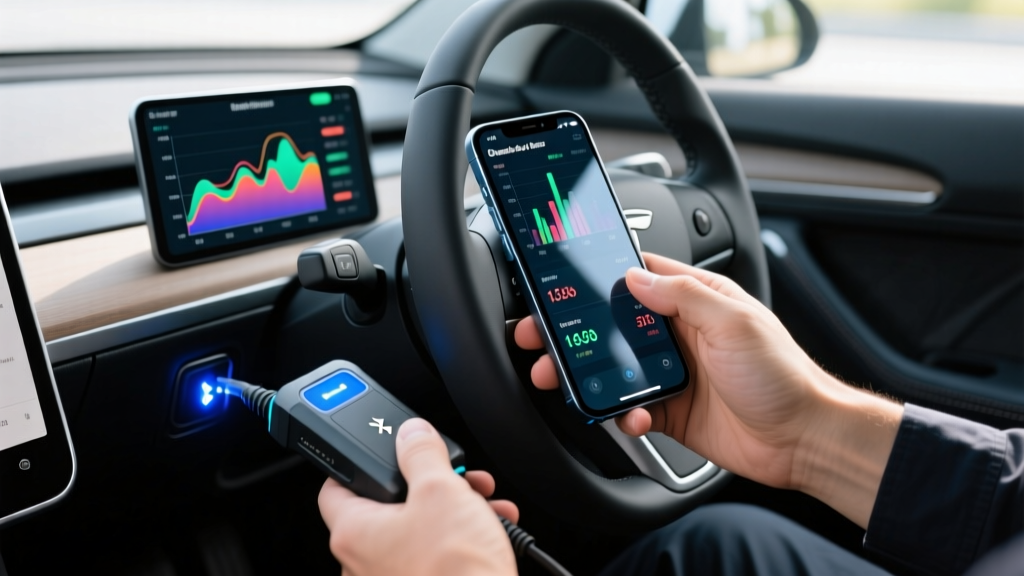
The most advanced gadgets for cars in the EV space are BLE-to-CAN bridges (such as the Macchina A0 or specialized EV dongles from OBDeleven). These devices bypass standard OBD protocols and sniff raw hexadecimal CAN frames. For an EV owner, the critical metric to monitor is 'Delta Voltage'—the millivolt (mV) difference between the highest and lowest cell groups in the battery pack.
- 0-20mV Delta: Optimal health, well-balanced modules.
- 21-40mV Delta: Normal variance under heavy acceleration or fast DC charging.
- >50mV Delta (Under Load): Indicates a failing cell module, internal resistance buildup, or a degraded cooling circuit requiring immediate warranty inspection.
Power Management: The Hidden Bottleneck in Modern Car Gadgets
Running an AI dashcam, an LBS HUD, and a CAN bus telemetry bridge simultaneously pushes the limits of standard vehicle electrical systems. The traditional 12V cigarette lighter port is typically fused at 10A to 15A (120W-180W) and is prone to voltage drop when the engine is off.
Fused Hardwire Kits and Low-Voltage Cutoffs
Hardwiring gadgets directly to the fuse box using an 'Add-A-Circuit' tap is mandatory for 2026 tech stacks. However, the most critical specification on a hardwire kit is the adjustable Low-Voltage Cutoff (LVC). Setting the LVC incorrectly based on your car's battery chemistry will result in a dead vehicle.
Standard Flooded Lead-Acid: Set LVC to 12.2V or 12.4V. Dropping below 12.0V risks sulfation and permanent cranking-amp loss.
AGM (Absorbent Glass Mat) / Start-Stop Batteries: Set LVC to 11.8V or 12.0V. AGM batteries can safely discharge deeper without damage, but drawing them below 11.6V will still trigger the vehicle's immobilizer security lockouts.
2026 Buyer's Decision Framework
When selecting aftermarket gadgets for cars, use this conditional framework to match the tech to your specific vehicle profile:
- If you drive a pre-2020 ICE vehicle without factory ADAS: Prioritize an AI dashcam with forward-collision warnings and lane-departure alerts powered by a Sony STARVIS 2 sensor. Budget: $250-$400.
- If you drive a modern EV (Tesla, Rivian, Hyundai Ioniq): Skip the dashcam (most have built-in sentry modes) and invest in a BLE-to-CAN bus telemetry bridge and an LBS AR HUD for speed and charging telemetry. Budget: $500-$800.
- If you track your car or drive in extreme climates: Ensure every gadget utilizes supercapacitors over Li-Ion, and use high-temperature Teflon wiring for hardwire kits to prevent insulation melting near the firewall. Budget: $150-$300 for premium installation materials.
The integration of edge computing, laser optics, and raw CAN bus access has transformed the aftermarket auto-tech space. By focusing on hardware-level specifications—NPUs, LBS polarization, and AGM-specific voltage cutoffs—drivers can build a highly predictive, reliable tech stack that outperforms factory-installed options.
Written by
Lena ChenLena Chen earned her M.S. in Human-Computer Interaction from Carnegie Mellon University and a B.S. in Electrical Engineering from the University of Washington. She has spent the past decade specializing in smart home architecture and IoT ecosystems, helping over 200 homeowners design fully connected living spaces. Lena is a certified Matter protocol consultant and has published peer-reviewed research on voice-first interface design in the ACM Digital Library. Her reviews of smart home products combine deep technical analysis with real-world usability testing, evaluating everything from Zigbee mesh stability to Alexa skill responsiveness. She regularly speaks at CEDIA Expo and CES smart home panels.