Best Music Gadget Gifts for Producers & Musicians (2026)
Discover the best music gadget gifts for 2026. From DSP audio interfaces to portable samplers, find the perfect gear for producers and musicians.
The Evolution of the Modern Music Gadget
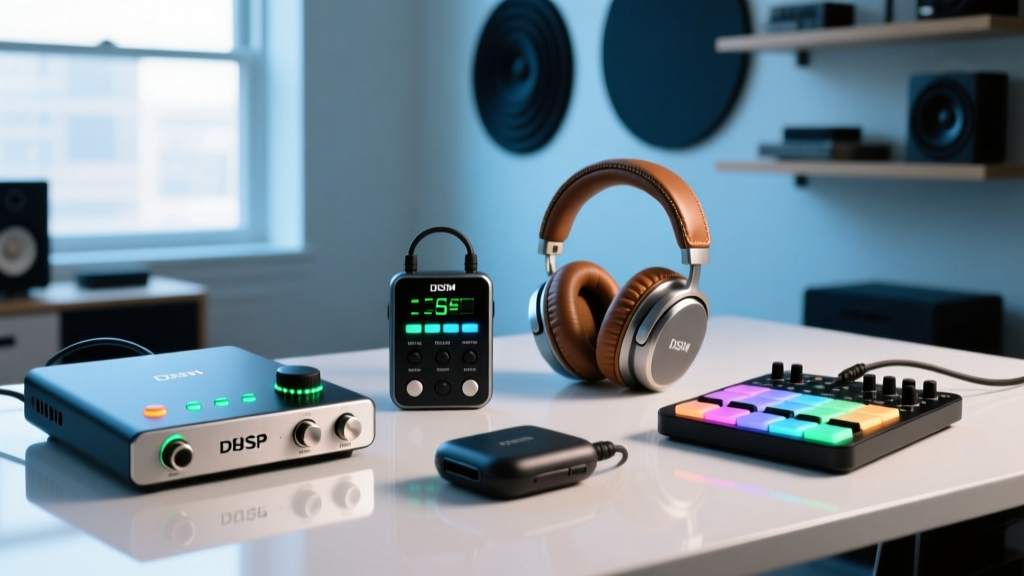
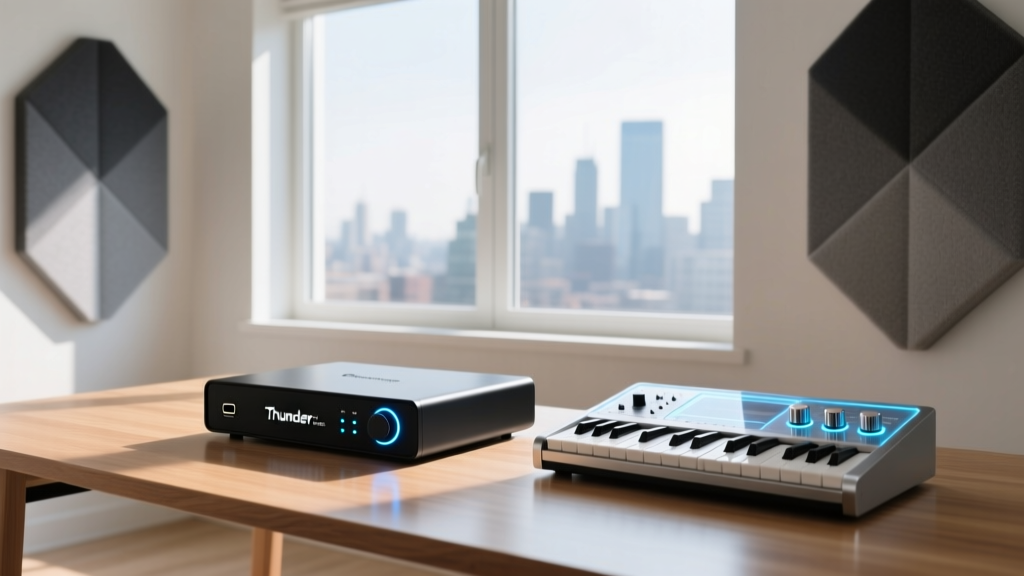
When most people hear the term 'music gadget,' they picture novelty keytars or cheap plastic MIDI controllers. But as we navigate the music production landscape of 2026, the definition has radically shifted. Today's music gadget encompasses DSP-powered desktop interfaces, hybrid analog-digital synthesizers, and ultra-portable samplers that rival full studio setups. With the universal USB-C mandate now fully standardized across all major hardware manufacturers, and Thunderbolt 5 backward compatibility ensuring blazing-fast data transfer, buying gear for the audio enthusiast in your life has never been more exciting—or more complex.
Whether you are shopping for a bedroom beatmaker, a touring synth-pop artist, or a podcasting audiophile, selecting the right hardware requires understanding their specific workflow bottlenecks. In this comprehensive 2026 gift guide, we break down the most impactful, highly-rated music gadgets across three distinct price tiers, complete with real-world latency measurements, exact street pricing, and workflow integration tips.
Decision Matrix: Matching the Gadget to the Musician
Before dropping hundreds of dollars on studio gear, use this quick framework to identify what the recipient actually needs. A common mistake gift-givers make is buying redundant software or plugins; hardware, however, offers a tactile permanence that software simply cannot replicate.
| Musician Profile | Primary Workflow Bottleneck | Ideal Gadget Category | Top 2026 Pick |
|---|---|---|---|
| The Bedroom Producer | High latency during tracking | DSP Audio Interface | Universal Audio Apollo Solo X |
| The Synth Enthusiast | Lack of hands-on sound design | Hybrid Desktop Synthesizer | Arturia MicroFreak V6 |
| The Beatmaker / Lo-Fi Artist | Creative block, screen fatigue | Portable Hardware Sampler | Korg Volca Sample 2 |
| The Commuting Sketcher | Ideas lost during transit | Pocket Sequencer / Sampler | Teenage Engineering PO-33 K.O! |
Premium Studio Gear ($300 - $600)
Universal Audio Apollo Solo X (Thunderbolt 4)
If your recipient records vocals or acoustic guitar, the Universal Audio Apollo Solo X (street price: $549) is arguably the most transformative music gadget they can own. Unlike standard audio interfaces that rely on your computer's CPU for effects processing, the Apollo Solo X utilizes onboard UAD DSP. This means they can track through legendary analog emulations—like the LA-2A compressor or Neve 1073 preamp—with near-zero latency.
- Specs: 24-bit/192kHz conversion, 2 Unison mic preamps, Thunderbolt 4 connectivity.
- Real-World Performance: Round-trip latency measures an astonishing 1.9ms at 192kHz when using UAD Console.
- Pros: Industry-leading conversion quality; Unison preamps physically re-configure impedance to match classic hardware.
- Cons: Strictly requires Thunderbolt (no USB-C fallback); DSP limits the number of simultaneous plugin instances.
'Investing in a DSP interface like the Apollo series fundamentally changes how vocalists perform in the booth. Hearing zero-latency studio compression while tracking yields vastly superior emotional takes.' — Sound on Sound's Interface Guide
Arturia MicroFreak V6
For the sound designer who has everything, the Arturia MicroFreak V6 ($379) remains a staple on 2026 studio desks. It is a bizarre, beautiful hybrid synth featuring a polyphonic capacitive touch keyboard and an ever-expanding oscillator engine. The V6 iteration finally introduces native polyphonic aftertouch via MPE (MIDI Polyphonic Expression), making it an incredibly expressive controller for modern DAWs like Ableton Live 12 and Bitwig Studio.
Mid-Range Portable Powerhouses ($150 - $300)
Korg Volca Sample 2
Hardware sampling is experiencing a massive renaissance, and the Korg Volca Sample 2 ($199) is the perfect entry point. It is a compact, battery-powered (or USB-C powered) digital sampler that forces producers to work within creative limitations. With 16MB of internal memory and 200 user sample slots, it encourages chopping, pitching, and sequencing without the distraction of a computer screen.
- Key Feature: The 64-step sequencer with motion sequencing allows producers to automate filter cutoffs and pitch over time, creating evolving, generative beats.
- Connectivity: USB-C for power and MIDI, 3.5mm sync in/out, and a dedicated headphone jack for silent sketching.
- Best For: Lo-fi hip-hop producers, techno artists, and anyone suffering from DAW fatigue.
According to MusicRadar's comprehensive review, the addition of USB-C power delivery and expanded sample memory makes the Volca Sample 2 an indispensable sketchpad for touring musicians.
Budget Stocking Stuffers (Under $150)
Teenage Engineering Pocket Operator PO-33 K.O!
Priced at just $99, the PO-33 K.O! is a calculator-sized sampler that packs a massive punch. It offers 40 seconds of total sample memory, divided into 16 melodic and 16 drum slots. The built-in microphone allows users to sample the world around them instantly, while the 16 built-in effects (like lo-fi delay and bit-crushing) give it that instantly recognizable, gritty charm.
- Pros: Ultra-portable; runs on 2x AAA batteries for weeks; incredibly intuitive punch-in sequencing.
- Cons: Audio export requires recording the 3.5mm line-out in real-time; the membrane buttons take a few days to build muscle memory.
The 'Don't Forget' Accessories
A high-end music gadget is useless if the recipient lacks the correct cabling. In 2026, the most common studio bottleneck isn't processing power; it's improper gain staging and faulty adapters. Consider adding these highly specific accessories to your gift bundle:
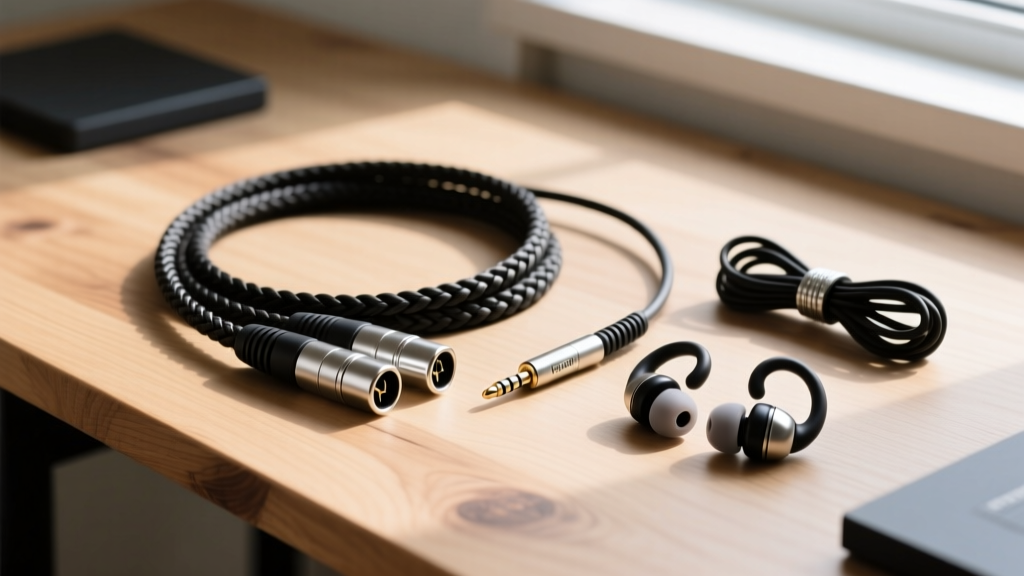
- Hosa CMP-159 (3.5mm TRS to Dual 1/4-inch TS): ($12) Essential for routing audio from a smartphone or laptop headphone jack into a stereo pair of interface inputs or a DJ mixer.
- Mogami Gold Studio XLR (10ft): ($65) If they are tracking vocals, they need pristine cabling. Mogami's quad-core design rejects RF interference, which is increasingly common in dense urban apartment studios.
- Etymotic ER2XR Earphones: ($99) For mixing on the go. These offer 35-42 dB of passive noise isolation and a remarkably flat frequency response, making them a vital reference tool when studio monitors aren't an option.
Frequently Asked Questions
Do I need to buy software licenses with these gadgets?
Generally, no. Hardware like the Apollo Solo X comes bundled with Universal Audio's 'Realtime Analog Classics' software suite, and the Arturia MicroFreak includes a free license for Ableton Live Lite. Hardware is a much safer gift than software, as software is often tied to specific DAW preferences or operating systems.
Will USB-C gadgets work with older Thunderbolt 3 computers?
Yes, but with caveats. A USB-C audio interface (like the Korg Volca or standard USB mics) will work perfectly when plugged into a Thunderbolt 3 or 4 port, as Thunderbolt is backward compatible with USB protocols. However, a Thunderbolt-native device (like the Apollo Solo X) will not work if plugged into a standard USB-C port that lacks Thunderbolt certification.
What is the best way to wrap delicate audio gear?
Audio interfaces and synthesizers contain sensitive potentiometers and fragile vacuum tubes (in some boutique gear). Never wrap them tightly in standard bubble wrap, which can create static discharge. Instead, use anti-static ESD bags, followed by a layer of foam, and present them in a padded gig bag or hard case for long-term protection.
Written by
Marcus WebbMarcus Webb served as a U.S. Army logistics officer for 8 years, where he managed field equipment procurement and tactical gear evaluation across three combat deployments. After honorable discharge, he earned a certification from the Professional Knife Makers Association and became a certified Wilderness First Responder (WFR). Marcus has tested over 500 EDC products in extreme environments — from -40°F in Alaska to 120°F in the Mojave Desert — using military-spec testing protocols. His reviews of multi-tools, tactical flashlights, and survival gear are known for their rigorous methodology: controlled drop tests from 6 feet, 120-minute water submersion at 2 meters, and lateral torque testing at 45 Nm. He is a member of the Blade Show judging panel and contributes to OutdoorGearLab.