Has Your Travel Gadget Gone Extinct? 2026 Portable Espresso Guide
Upgrade your backcountry brew. We test the best 2026 portable espresso makers, from battery-heated tech to manual trail classics, for every season.
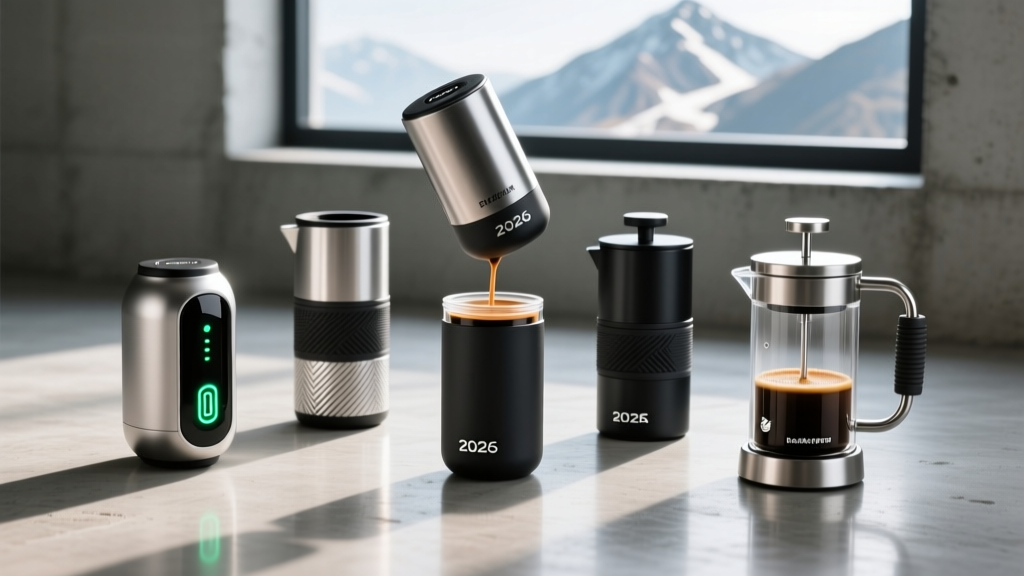
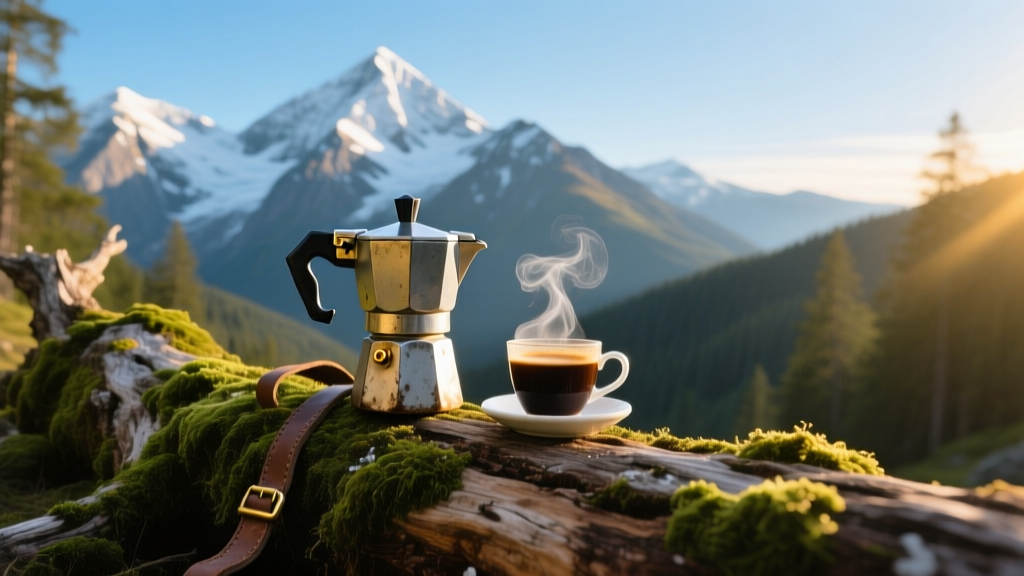
The Evolution of Trailside Brewing
For outdoor enthusiasts, the morning ritual is sacred. But if you are still relying on bulky, outdated percolators or settling for subpar instant coffee packets, you might be asking yourself: has your favorite travel gadget gone the way of the dinosaur? The landscape of portable espresso and travel coffee gadgets has undergone a massive technological leap by 2026. We are no longer compromising on crema, pressure, or temperature stability just because we are miles away from the nearest power grid. Whether you are summiting a 14er in the summer or ice climbing in the dead of winter, modern backcountry coffee tech bridges the gap between a high-end cafe and the great outdoors.
In this comprehensive guide, we break down the physics, battery tech, and mechanical engineering behind the top portable espresso makers on the market. We will explore exact pressure ratings, battery degradation in sub-zero temperatures, and the essential accessories you need to build the ultimate off-grid coffee station.
Manual vs. Electric: The 2026 Showdown
The biggest debate in the outdoor coffee community remains the power source. Do you rely on your own kinetic energy, or do you trust lithium-ion batteries in unpredictable environments? Below is a data-driven comparison of the leading models dominating the trails this year.
| Model | Type | Max Pressure | Heating Capability | Weight | Est. Price (2026) |
|---|---|---|---|---|---|
| Outin Nano | Electric | 20 Bar | Yes (3-4 mins) | 600g | $139 |
| Wacaco Nanopresso | Manual | 18 Bar | No (Pre-heat req.) | 336g | $69.90 |
| Conqueco Portable | Electric | 15 Bar | Yes (4-5 mins) | 650g | $159 |
| Staresso SP200 | Manual/Hybrid | 15-20 Bar | No (Pre-heat req.) | 450g | $89 |
The Battery-Powered Heaters: Outin Nano & Conqueco
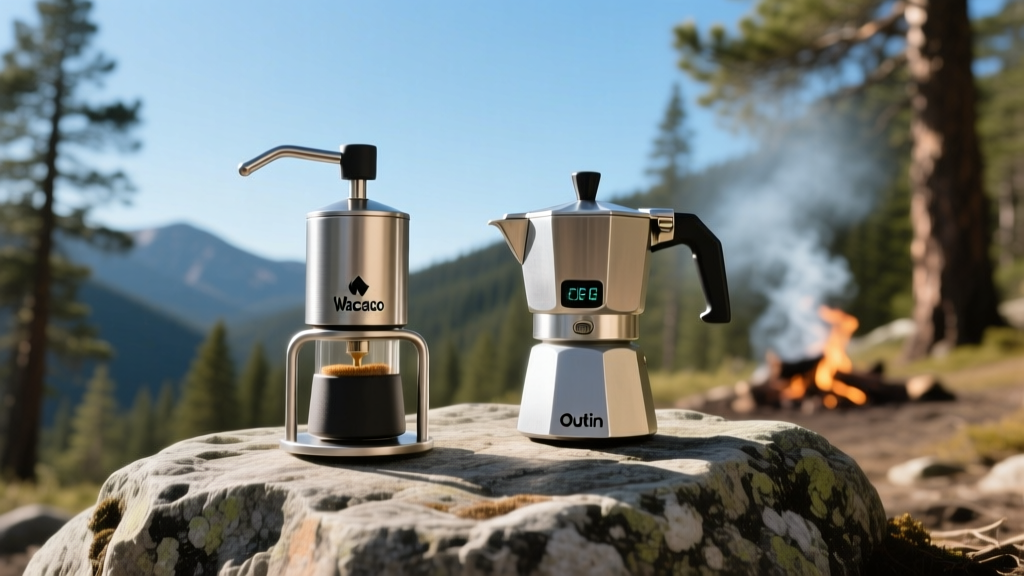
Electric portable espresso makers have solved the biggest pain point of trailside brewing: water temperature. According to extraction standards highlighted by Serious Eats, optimal espresso extraction requires water between 195°F and 205°F (90°C-96°C). The Outin Nano features a 7500mAh battery capable of heating 50ml of cold water to 194°F in just under 4 minutes, yielding up to 5 shots on a single charge. Its 20-bar pump ensures a rich, authentic crema that rivals countertop machines.
The Conqueco Portable Espresso Maker is a close competitor, offering a slightly larger water chamber but taking roughly a minute longer to reach peak temperature. However, electric models come with a distinct seasonal caveat: lithium-ion batteries suffer severe voltage drops in freezing temperatures. If you are winter camping in sub-20°F environments, you must keep the device inside your sleeping bag overnight to prevent the battery management system (BMS) from locking out the heating element.
The Manual Purists: Wacaco Nanopresso & Staresso SP200
For the ultralight backpacker or the winter mountaineer, manual gadgets are bulletproof. The Wacaco Nanopresso remains a gold standard in mechanical reliability. Weighing a mere 336 grams, it utilizes a patented pumping system that requires 15% less force than its predecessors to reach 18 bars of pressure. Because it has no battery, it will never fail you in a blizzard. The trade-off? You must carry a separate thermos of pre-heated water.
The Staresso SP200 offers a hybrid approach, utilizing a side-mounted manual pump that mimics the lever action of traditional espresso machines. It is incredibly forgiving with grind sizes and produces exceptional crema, though its multi-part assembly requires careful cleaning to prevent coffee oils from going rancid on multi-day trips.
Seasonal Science: Altitude, Temperature, and Extraction
Tech enthusiasts often overlook the thermodynamics of brewing at elevation. As you ascend, atmospheric pressure drops, which lowers the boiling point of water. At 8,000 feet, water boils at roughly 198°F (92°C). While this is perfectly within the ideal extraction window for light and medium roasts, it falls short for dark roasts that require higher thermal energy to break down cellular structures.
The Altitude Adjustment Rule: If you are camping above 10,000 feet and prefer dark, oily roasts, an electric heater like the Outin Nano will still be capped by the local boiling point. To compensate, you must increase your coffee-to-water ratio (dose) by 10% and grind your beans slightly finer to increase surface area and extraction yield without relying on higher heat.
For a deeper dive into the fluid dynamics of pressure and flow rate, the extraction theories published by Barista Hustle remain essential reading for any backcountry barista looking to dial in their trail setup.
Essential Accessories for the Backcountry Barista
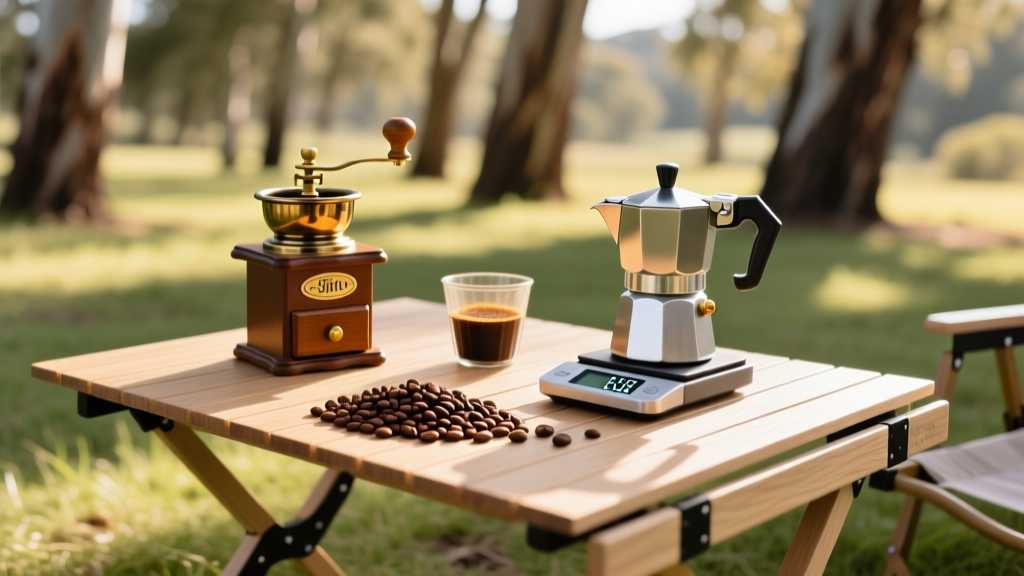
A portable espresso maker is only as good as the grinder feeding it. Pre-ground coffee stales within 48 hours of opening, destroying the volatile aromatics required for a premium shot. To elevate your seasonal outdoor setup, consider these specific additions:
- 1Zpresso JX-Pro Hand Grinder ($179): The undisputed king of portable grinding. Its external adjustment dial allows for 12.5-micron increments, letting you dial in espresso perfectly even when humidity changes the density of your beans. Weighing 520g, it is built like a tank.
- Timemore Chestnut C3 ($65): The best budget alternative. While it lacks the micro-adjustments of the JX-Pro, its S2C burrs crush through 18 grams of coffee in under 45 seconds, saving your forearms on early morning alpine starts.
- Portable Digital Scale ($25-$40): Brands like GreaterGoods or Timemore make rugged, water-resistant nano-scales. Measuring your 18g dose and 36g yield (a 1:2 ratio) is the only way to guarantee consistency when you are shivering in a tent.
Maintenance and Descaling in the Wild
Hard water from mountain streams or campground taps will quickly calcify the micro-pumps in electric travel gadgets. If your device's pressure drops or heating time increases, mineral buildup is the likely culprit. Never use white vinegar on the Outin Nano or Conqueco, as the acetic acid can degrade the internal silicone seals over time.
Instead, pack a few grams of food-grade citric acid powder. Dissolve 5 grams of citric acid in 100ml of warm water, run it through the machine's heating and pumping cycle, and let it sit for 15 minutes. Follow up with two full reservoirs of clean, filtered water to flush the system. This 20-minute maintenance routine will extend the lifespan of your gadget's thermoblock heater by years.
Final Verdict: Choosing Your Trail Companion
The outdoor coffee gadget market in 2026 is highly specialized. If your adventures involve car camping, RV road trips, or basecamp setups where weight is a secondary concern, the Outin Nano is an absolute game-changer, delivering heated, high-pressure espresso at the push of a button. However, if you are counting every gram on a thru-hike or braving extreme winter environments where batteries fail, the mechanical simplicity of the Wacaco Nanopresso paired with a titanium thermos remains the most reliable, fail-proof system available.
Ultimately, the best travel coffee gadget is the one that matches your environment and your willingness to tinker. By understanding the thermal and mechanical limitations of your gear, you can ensure that no matter how far off the grid you go, your morning brew never goes extinct.
For more rugged gear reviews and backcountry tech setups, explore our complete OutdoorGearLab camping archives.
Written by
Emma LarssonEmma Larsson holds an M.A. in International Relations from Sciences Po Paris and a B.A. in Communications from Stockholm University. A digital nomad since 2017, she has worked from over 45 countries across six continents, building deep expertise in portable power solutions, travel routers, compact computing, and connectivity gadgets that survive international travel. Emma is a certified member of the Travel Technology Association and has advised three travel gear startups on product-market fit for remote workers. Her reviews evaluate products against real travel scenarios — TSA compliance, voltage compatibility across 200+ countries, durability through 50+ checked bag cycles, and battery life under airplane mode vs. active use. She has been featured in Condé Nast Traveler's "Tech-Savvy Traveler" series and speaks at Remote Work Summit events.