Top 2025 Tech Gadgets for Outdoor VR and AR Camping
Discover the best 2025 tech gadgets for outdoor VR and AR. Learn how to protect headsets from weather, manage battery drain, and pick the right gear.
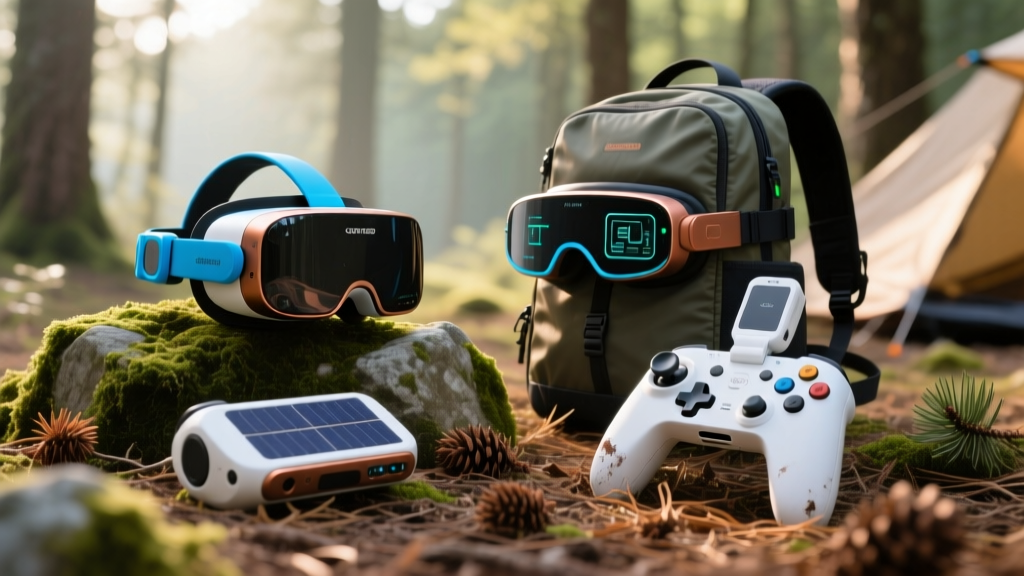
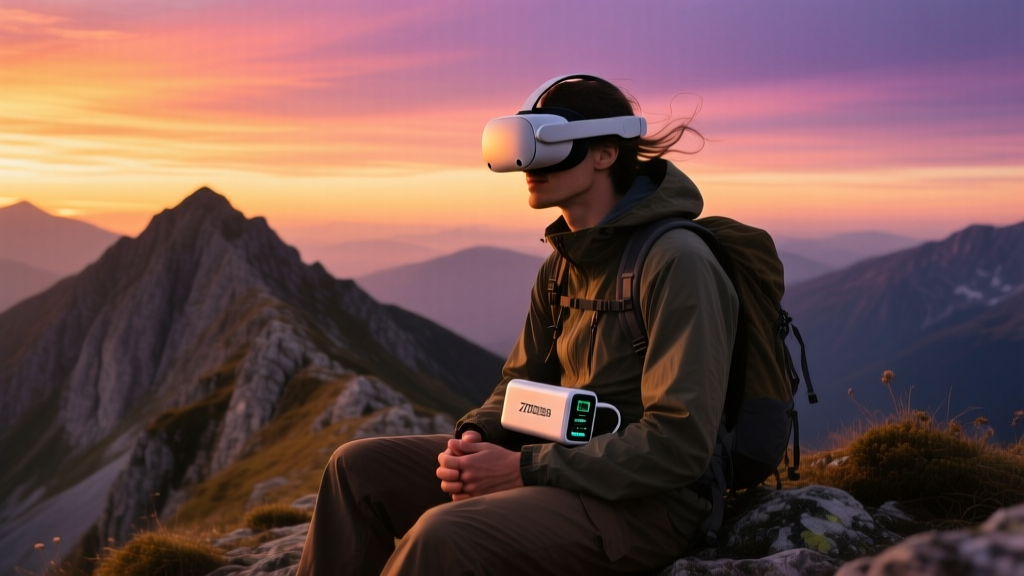
The Optical and Thermal Reality of Outdoor XR
Taking mixed reality into the wild requires understanding the physical limits of consumer optics and lithium-ion chemistry. While the latest 2025 tech gadgets have dramatically improved passthrough fidelity and spatial mapping, outdoor environments introduce extreme dynamic range (HDR) lighting, abrasive particulates, and temperature swings that can permanently damage unprotected hardware. A headset designed for a climate-controlled living room will fail in a backcountry campsite if you ignore its thermal throttling thresholds and optical vulnerabilities.
For tech enthusiasts looking to integrate augmented reality (AR) trail navigation or virtual reality (VR) basecamp entertainment into their outdoor routines, success hinges on selecting the right form factor and pairing it with ruggedized power management. This guide breaks down the exact hardware specifications, environmental failure modes, and off-grid power architectures required to run XR devices safely in the wild.
Evaluating the Best 2025 Tech Gadgets for the Trail
Not all headsets are created equal when exposed to the elements. Here is how the current market leaders perform outside the home.
Meta Quest 3S: The Basecamp Workhorse
The Meta Quest 3S remains the most versatile entry point for outdoor VR. Its 1832x1920 per-eye resolution and color passthrough are excellent for tent-bound gaming or stargazing apps. However, its 4-megapixel RGB passthrough cameras struggle with high-contrast outdoor lighting; bright skies will blow out the image, making terrain navigation hazardous. It is strictly a stationary, basecamp device.
Xreal Air 2 Ultra: The Daylight AR Companion
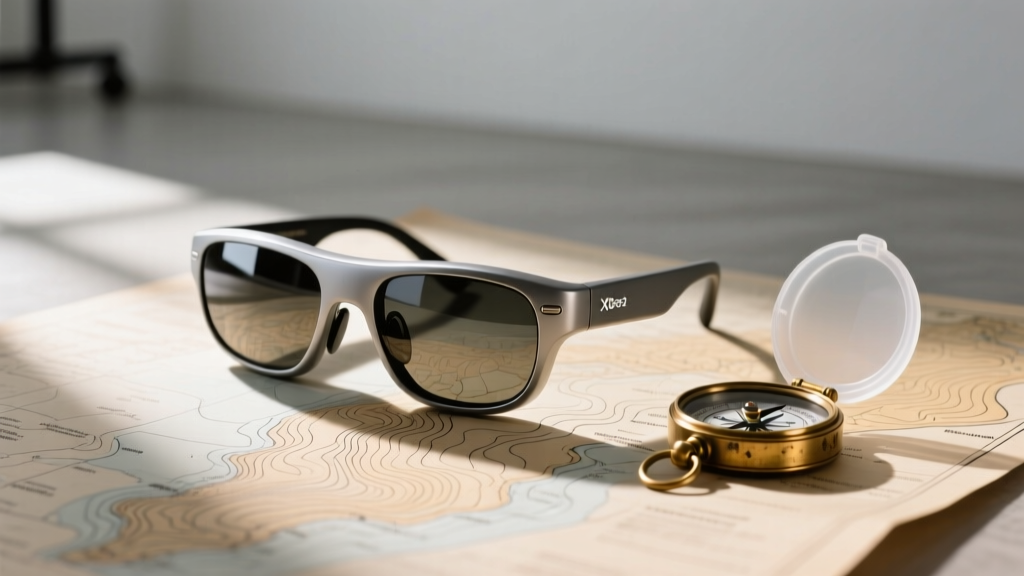
For active hiking, the Xreal Air 2 Ultra is the superior choice. Weighing just 82 grams, it functions as a spatial computing overlay rather than an enclosed VR environment. The critical metric here is brightness: it peaks at roughly 600 nits. While sufficient for overcast trails or dense forest canopies, 600 nits will wash out in direct alpine sunlight, which typically requires 1,000 to 1,200 nits for comfortable AR legibility.
Apple Vision Pro: A Cautionary Tale
Despite its unparalleled micro-OLED brightness (capable of exceeding 5,000 nits locally for HDR), the Vision Pro is entirely unsuited for outdoor camping. The external glass fascia is a magnet for micro-scratches from windblown dust, and the tethered battery pack creates a snag hazard on branches. Leave this $3,499 device at home.
Hardware Comparison Matrix
| Device | Form Factor | Peak Brightness | Weight | IP Rating | MSRP |
|---|---|---|---|---|---|
| Meta Quest 3S | Standalone VR | ~100 nits (LCD) | 514g | None | $299 |
| Xreal Air 2 Ultra | Tethered AR Glasses | 600 nits | 82g | None | $699 |
| Bigscreen Beyond | Tethered VR (PCVR) | ~150 nits (OLED) | 127g | None | $699 |
| Lenovo ThinkReality VRX | Enterprise Standalone | ~120 nits | 620g | IP54 (Dust/Splash) | $3,500+ |
Environmental Failure Modes (And How to Prevent Them)
Consumer XR hardware lacks the ingress protection (IP) ratings found in rugged smartphones. Understanding these specific failure modes is critical for protecting your investment.
Never leave a VR headset face-up outdoors, even for a few seconds. The Fresnel or pancake lenses will focus direct sunlight onto the internal LCD or OLED panels, melting the pixels and causing permanent black spots. Always store the headset face-down in a hard case when not actively worn.
1. Thermal Throttling in Direct Sunlight
The Snapdragon XR2 Gen 2 chipset inside modern headsets operates optimally up to 45°C (113°F) internally. When worn in direct summer sunlight, the dark plastic chassis absorbs solar radiation, pushing internal temperatures past the throttling threshold in under 12 minutes. The device will aggressively dim the display and eventually force a shutdown to protect the silicon. Solution: Apply a light-colored, reflective neoprene sun shield to the headset chassis, and limit continuous outdoor sessions to 20-minute intervals.
2. Lithium-Ion Voltage Sag in Freezing Temperatures
Cold weather camping introduces severe battery limitations. According to Battery University, lithium-ion cells experience increased internal resistance below 0°C (32°F). This causes voltage sag, meaning your headset might report 30% battery life but suddenly shut down because the voltage drops below the cutoff threshold under load. Furthermore, charging a Li-ion battery below freezing causes lithium plating on the anode, permanently degrading capacity and creating a short-circuit hazard.
Solution: Keep external power banks in an inner jacket pocket close to your body heat. Never attempt to charge a headset via USB-C if the battery pack has been sitting in sub-freezing ambient air; allow it to warm to room temperature first.
3. Moisture and Condensation Fogging
Consumer headsets generally lack official IP ratings, meaning they have no guaranteed protection against dust or water. As Rtings notes in their IP rating breakdown, without a certified seal, microscopic dust and humidity will infiltrate the chassis. Moving from a 4°C (40°F) exterior into a 21°C (70°F) tent causes immediate internal condensation on the cold optical lenses, fogging your view and risking internal corrosion.
Solution: Use silica gel desiccant packets inside your headset's hard travel case to absorb ambient moisture. When transitioning between extreme temperature zones, leave the headset in its sealed case for 30 minutes to allow gradual thermal equalization.
Off-Grid Power Architecture
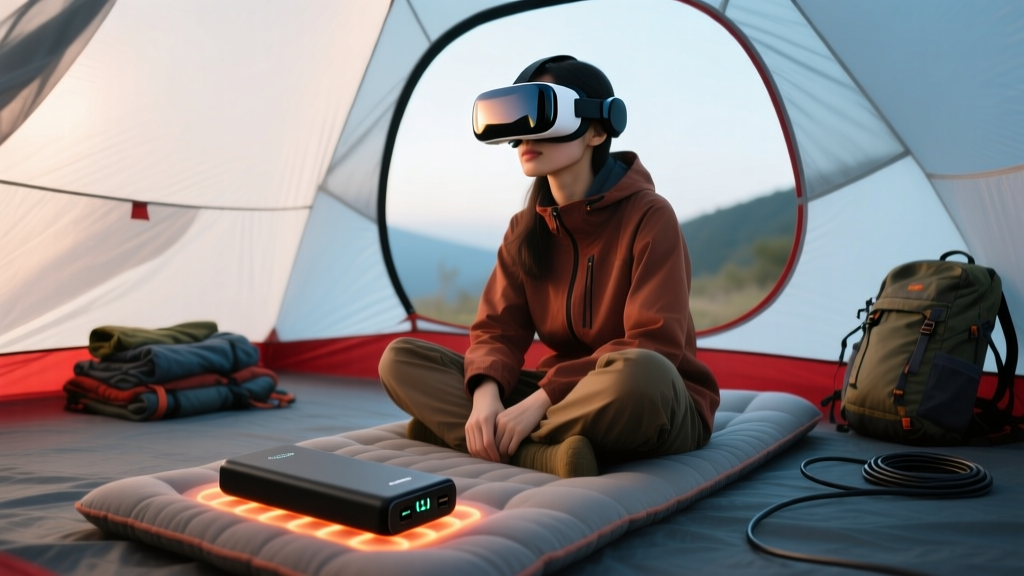
The internal battery of a Meta Quest 3S (4,325 mAh) yields approximately 2.2 hours of mixed-use runtime. For a weekend camping trip, you need a high-capacity, high-output portable power station that can handle multiple charging cycles without failing in cold weather.
- The Power Core: The Anker Prime 27,650mAh Power Bank (250W) is the current gold standard. It holds roughly 99Wh of energy (just under the FAA limit for flights, making it travel-friendly) and features a smart digital display that shows exact input/output wattage and remaining runtime.
- Cable Selection: Use a 100W-rated USB-C to USB-C cable with an internal E-marker chip. Standard 60W cables will bottleneck the charging speed when trying to power the headset while simultaneously running high-fidelity VR applications.
- Headset Strap Integration: For extended outdoor use, pair the headset with a BOBOVR M3 Pro battery strap. This shifts the weight distribution to the back of your skull and hot-swaps power, adding roughly 3 hours of runtime without tethering a cable to your wrist.
Field-Tested Setup for Off-Grid AR Navigation
If you are using AR glasses like the Xreal Air 2 Ultra for trail navigation, follow this exact sequence to ensure reliability when cellular service drops:
- Pre-Download Topography: At home, use the Xreal Nebula app to cache offline 3D spatial maps and topographical overlays for your specific GPS coordinates.
- Calibrate the IMU: Before stepping onto the trail, perform a full 360-degree head rotation to calibrate the Inertial Measurement Unit (IMU). This prevents spatial drift when the 6DoF cameras lose tracking due to uniform outdoor textures (like snow or dense pine needles).
- Manage Peripheral Vision: Set the AR overlay opacity to 30%. This ensures the digital trail markers are visible without obscuring physical hazards like tree roots or loose scree in your peripheral vision.
- Deploy the Sunshade: Snap on the included magnetic front sunshade if ambient light exceeds 10,000 lux. This converts the AR glasses into a virtual cinema display, which is ideal for resting at basecamp rather than active navigation.
Final Gear Considerations
Integrating the best 2025 tech gadgets into your outdoor repertoire requires treating them like precision optical instruments, not rugged camping gear. Invest in a crush-proof EVA hard case (such as the Hermitshell Travel Case), apply a silicone lens cover the moment you power down, and respect the thermal limits of the hardware. By managing power intelligently and protecting the optics from UV and particulate damage, you can seamlessly blend cutting-edge spatial computing with the raw experience of the backcountry.
For more information on battery safety and disposal in outdoor environments, consult the U.S. Department of Energy's battery guidelines to ensure you are handling and storing lithium-ion cells responsibly while off the grid.
Written by
Jake MorrisonJake Morrison holds a B.S. in Electrical Engineering from UC Berkeley and an MBA from Stanford Graduate School of Business. With over 12 years of hands-on experience in consumer electronics, he previously served as a senior product engineer at a Silicon Valley startup before transitioning to tech journalism. Jake has personally tested and benchmarked over 3,000 gadgets across categories including smartphones, wearables, smart home devices, and audio equipment. His durability testing methodology — involving controlled drop tests, thermal cycling, and water submersion — is widely cited by major tech publications. He is a certified CompTIA A+ technician and a contributing editor to the IEEE Consumer Electronics Magazine.