Pet Tech as Science Gadgets: Beginner vs Expert Setup Guide
Discover how modern pet tech functions as applied science gadgets. Compare beginner and expert setups for smart feeders, GPS trackers, and AI cameras.
The Evolution of Pet Care: From Basic Toys to Science Gadgets
When most people think of science gadgets, they picture lab equipment, telescopes, or robotics kits. However, the modern pet care industry has quietly become one of the most aggressive adopters of applied consumer science. Today's pet tech gadgets—ranging from biometric smart feeders to ultra-wideband (UWB) GPS trackers—are essentially sophisticated science gadgets repackaged for domestic use. They leverage edge computing, multi-constellation GNSS, and computer vision to solve complex biological and behavioral challenges.
But not all pet owners need a laboratory-grade setup. Whether you are a novice pet parent looking for basic peace of mind or a data-driven enthusiast building a fully automated ecosystem, understanding the gap between beginner and expert implementations is crucial. Let us break down the hardware, the underlying science, and the real-world costs of these devices in 2026.
Smart Feeders: Gravity Hoppers vs. Biometric Micro-Dosing
The Beginner Approach: App-Controlled Dispensing
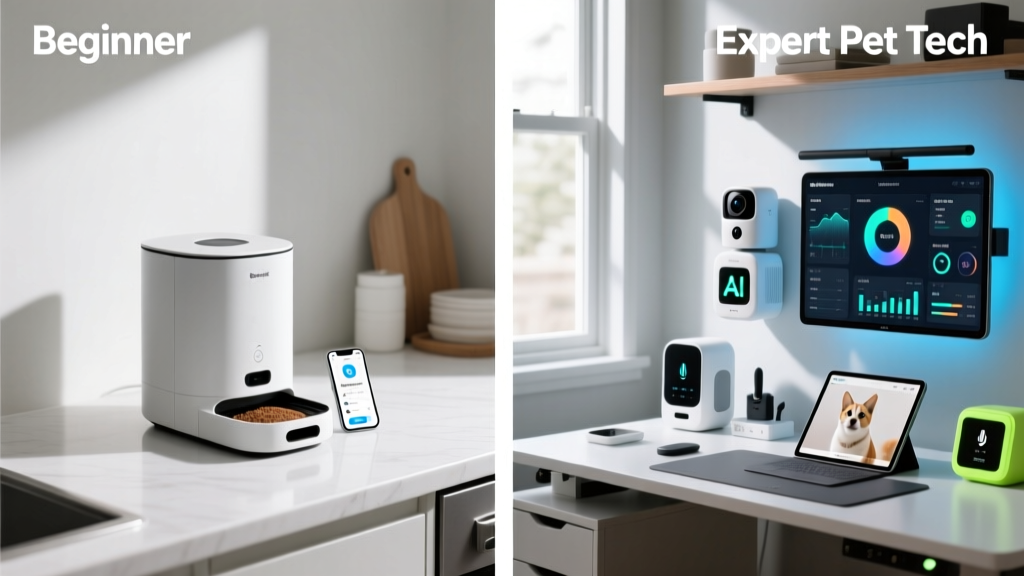
For the beginner, the primary goal is convenience and basic portion control. Devices like the PETLIBRO Granary Smart Feeder (retailing around $139) utilize a simple motorized auger system connected to a 2.4GHz Wi-Fi module. You set a schedule via a smartphone app, and the device dispenses a predetermined volume of kibble. While effective for preventing free-feeding, these basic science gadgets rely on volumetric measurements, which can vary in caloric density depending on the kibble size and shape.
The Expert Approach: RFID and Metabolic Tracking
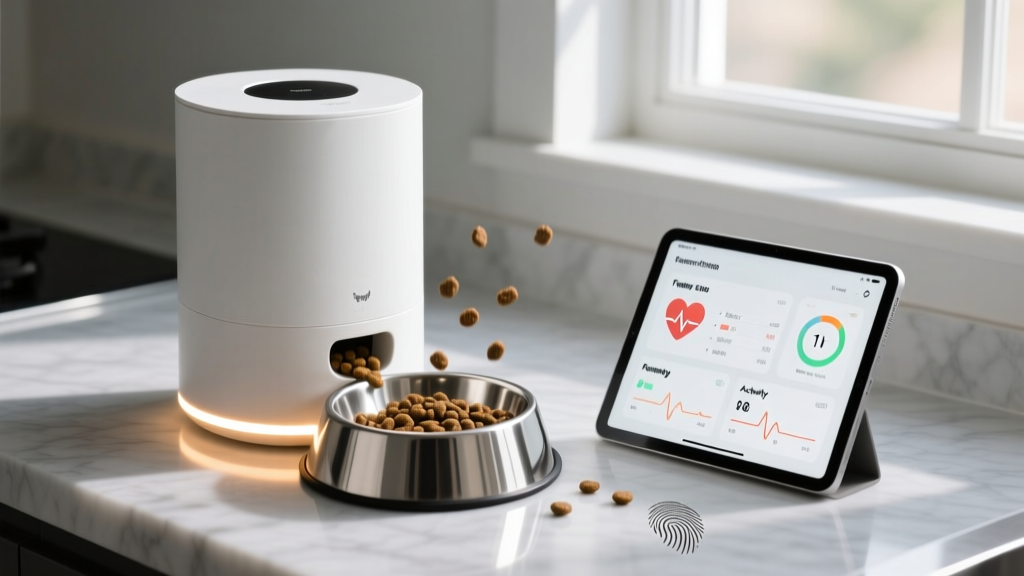
Experts treat feeding as a metabolic science. The SureFeed Microchip Pet Feeder Connect ($179) uses an RFID reader to scan your pet's implanted microchip or collar tag, opening the lid only for the authorized animal. This is critical for multi-pet households where dietary restrictions vary. To push this into true expert territory, enthusiasts pair this feeder with a smart scale (like the Renpho Smart Pet Scale) and integrate the data via IFTTT or Home Assistant. By tracking daily weight fluctuations and cross-referencing them with the ASPCA's obesity guidelines, the system dynamically adjusts the caloric output of the feeder to maintain an optimal Body Condition Score (BCS).
| Feature | Beginner (Volumetric) | Expert (Biometric/RFID) |
|---|---|---|
| Primary Tech | Motorized Auger, Wi-Fi | RFID Scanner, Load Cells, Edge AI |
| Accuracy | Volume-based (+/- 10%) | Weight-based (+/- 1g) |
| Multi-Pet Support | No (Shared Hopper) | Yes (Selective Lids) |
| Avg. Cost | $90 - $150 | $180 - $350+ |
Location Telemetry: Cell Towers vs. UWB Precision
Tracking a fleeing hound or an outdoor cat requires overcoming the limitations of consumer Bluetooth networks. Here, the distinction between a basic gadget and a true science instrument becomes stark.
Beginner: Bluetooth Mesh and Basic LTE-M
The entry-level standard relies on crowdsourced Bluetooth meshes, such as the Apple AirTag ($29). While brilliant for finding lost keys, it fails in rural areas or dense forests where device density is low. Upgrading slightly, cellular GPS collars like the Fi Series 4 utilize LTE-M networks to ping cell towers, offering a location radius of about 10 to 30 feet. It is an excellent, low-cost science gadget for suburban environments, but it struggles with verticality (e.g., tracking a cat in a multi-story tree) and battery drain in weak-signal zones.
Expert: Multi-GNSS and VHF Telemetry
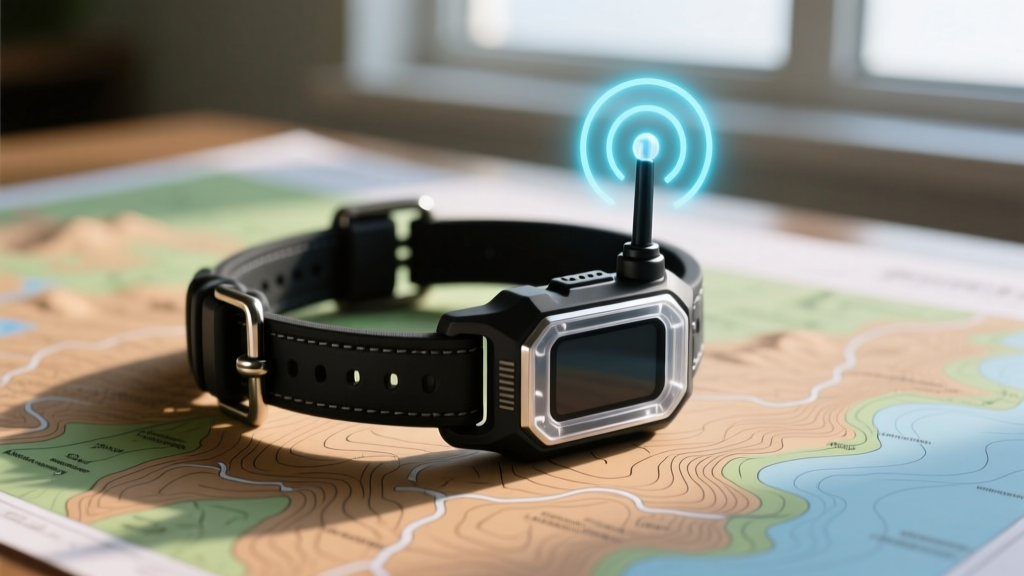
For hunters, search-and-rescue handlers, and extreme enthusiasts, standard GPS is insufficient. The Garmin Alpha 300i ($799) is a masterclass in applied telemetry. It combines multi-constellation GNSS (GPS, GLONASS, Galileo) with VHF radio telemetry. According to Garmin's technical specifications, this allows the handheld unit to track dogs up to 9 miles away without any cellular dependency. Furthermore, expert setups are now integrating Ultra-Wideband (UWB) chips into collar nodes. As noted by the IEEE, UWB provides centimeter-level accuracy by measuring the time-of-flight of radio pulses, allowing owners to pinpoint a pet hiding under a specific bush or inside a dense structure.
Expert Insight: Never rely solely on a Bluetooth tracker for a high-prey-drive dog. The latency in mesh-network updates can mean the difference of several miles before you receive a ping. Invest in dedicated LTE-M or VHF hardware for true safety.
Environmental Monitoring: Streaming vs. AI Behavioral Analysis
Pet cameras have evolved from simple webcam streams into sophisticated environmental sentinels. The underlying science of computer vision has transformed these devices from passive observers into proactive health monitors.
The Beginner Setup: Cloud-Dependent Treat Tossers
The Furbo 360 ($210) remains a favorite for beginners. It offers 1080p streaming, two-way audio, and a motorized treat tosser. The AI is limited to basic motion detection and bark alerts, which are processed in the cloud. While fun, the reliance on cloud servers introduces latency and requires a monthly subscription for advanced video history.
The Expert Setup: Edge-Computed NPU and LiDAR Mapping
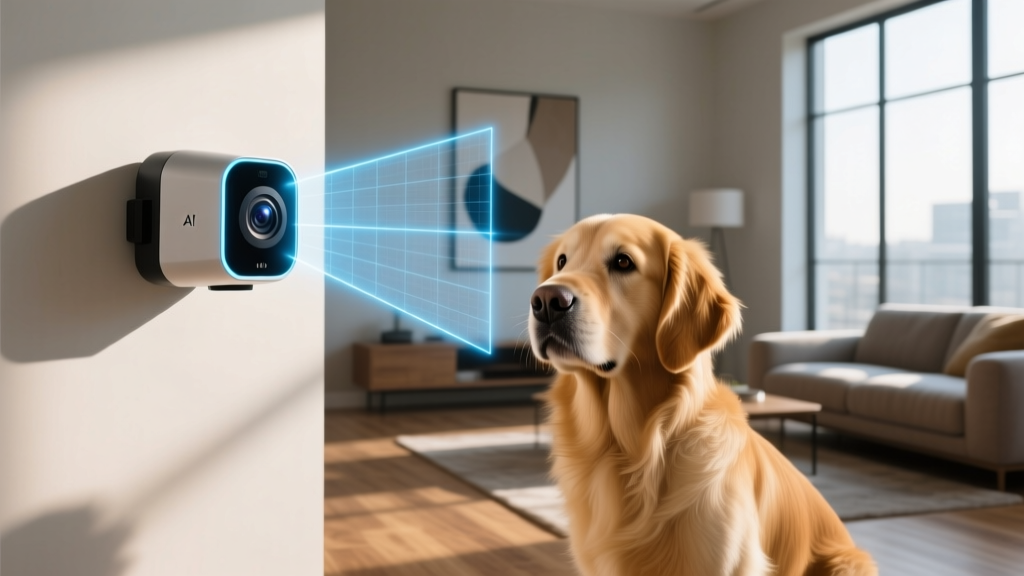
Experts demand local processing and granular behavioral data. Devices like the Eufy Pet Dog Camera D605 ($249) feature an onboard Neural Processing Unit (NPU) that recognizes specific anomalies: vomiting, excessive scratching, or crying, all without sending video to the cloud.
For the ultimate enthusiast, the camera is just one sensor in a broader array. Experts mount LiDAR-equipped indoor rovers or utilize custom Raspberry Pi setups running Frigate NVR with a Google Coral TPU. This allows for localized object detection, mapping the pet's heat zones throughout the house, and correlating indoor humidity and temperature data from smart HVAC sensors to predict joint stiffness in arthritic dogs.
- Beginner Camera Tech: 1080p CMOS sensor, Cloud AI (Bark/Motion), Motorized Treat Dispenser.
- Expert Camera Tech: 2K/4K Sensor, Edge NPU (Vomit/Scratch/Posture detection), Local NVR, LiDAR room mapping.
- Privacy: Beginners accept cloud storage; Experts demand local, encrypted VLAN isolation for all IoT pet devices.
The Decision Matrix: Which Tier Are You?
Choosing between beginner and expert pet science gadgets comes down to your specific use case, budget, and technical literacy. Use this framework to decide your next purchase:
- The Urban Apartment Dweller (Beginner): Focus on app-controlled feeders and Bluetooth/LTE-M trackers. Your environment is controlled, and cellular/Bluetooth mesh density is high.
- The Multi-Pet Household (Intermediate): Invest heavily in RFID-gated feeders and smart scales. The science of caloric restriction is vital when pets steal each other's food.
- The Rural/Working Dog Owner (Expert): Bypass consumer cellular trackers entirely. Invest in VHF telemetry and multi-GNSS collars. Pair this with local AI camera setups to monitor outdoor kennels without relying on spotty rural Wi-Fi.
Frequently Asked Questions
Are expensive pet trackers worth the investment?
If you live in a suburban area with strong cell coverage, a $150 LTE-M collar is sufficient. However, if you hike in national parks or live rurally, the $800 investment in a VHF/GNSS telemetry system is the only scientifically reliable way to track a fleeing animal.
Do smart feeders actually help with pet obesity?
Yes, but only if calibrated correctly. Volumetric feeders can overfeed by up to 15% due to kibble size variations. Expert setups using weight-based load cells and RFID ensure exact caloric delivery, which is critical for metabolic management.
Can I integrate pet tech into my existing smart home?
Beginner devices often use closed ecosystems (proprietary apps). Expert-grade science gadgets frequently support Matter, Zigbee, or local APIs (like Home Assistant), allowing you to trigger HVAC adjustments based on your pet's real-time location in the house.
Written by
Lena ChenLena Chen earned her M.S. in Human-Computer Interaction from Carnegie Mellon University and a B.S. in Electrical Engineering from the University of Washington. She has spent the past decade specializing in smart home architecture and IoT ecosystems, helping over 200 homeowners design fully connected living spaces. Lena is a certified Matter protocol consultant and has published peer-reviewed research on voice-first interface design in the ACM Digital Library. Her reviews of smart home products combine deep technical analysis with real-world usability testing, evaluating everything from Zigbee mesh stability to Alexa skill responsiveness. She regularly speaks at CEDIA Expo and CES smart home panels.