Essential Boat Gadgets: Portable Espresso Makers for 2026
Discover the best boat gadgets for coffee lovers. We review top portable espresso makers and marine-safe travel brewers for your 2026 on-water adventures.
The Unique Challenge of Brewing Coffee on the Water
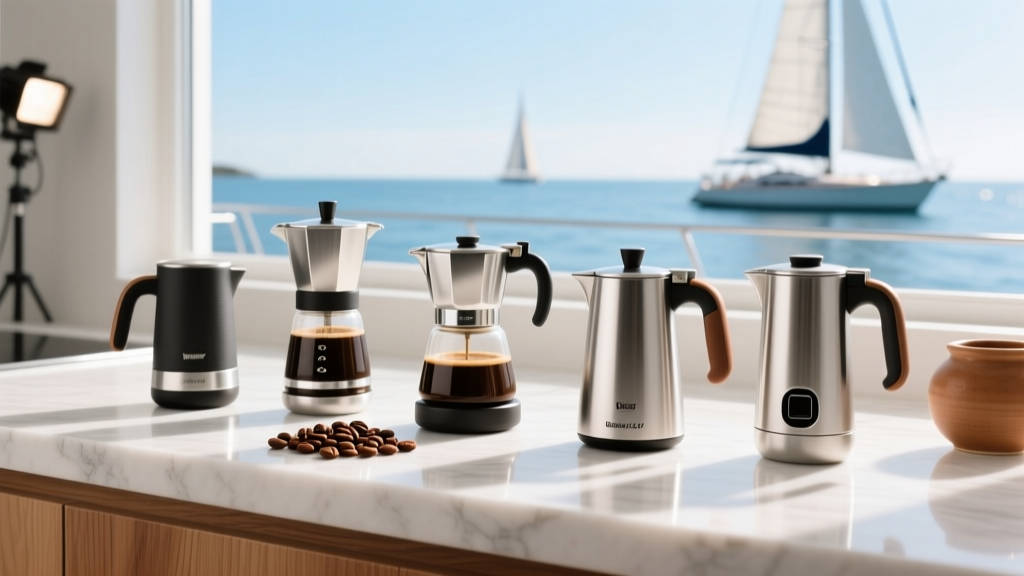
When outfitting your vessel for the 2026 season, the search for essential boat gadgets usually prioritizes navigation, sonar, and safety. However, for the dedicated caffeinated sailor, angler, or liveaboard, the morning ritual is non-negotiable. Brewing high-quality espresso on a boat presents a triad of engineering challenges: limited 12V DC power architecture, constant multi-axis motion, and the highly corrosive salt-air environment.
Most home espresso machines require a 1,200W to 1,800W AC power draw. Running a standard kitchen espresso maker off a marine house bank via an inverter requires pulling upwards of 120 amps at 12V—a massive, inefficient drain that can trip breaker panels or degrade lead-acid and lithium batteries over time. Furthermore, the pitching and rolling of a hull makes traditional portafilters and glass carafes downright dangerous. To solve this, we have tested and curated the ultimate marine-safe coffee gear that respects your vessel's power constraints while delivering café-quality extraction.
Top Portable Espresso Makers for Marine Environments
Wacaco Nanopresso (The Manual Standard)
The Wacaco Nanopresso remains the gold standard for off-grid espresso. Weighing just 80 grams and measuring 6.1 inches in length, it requires zero electricity. Instead, it utilizes a patented manual pumping system capable of generating up to 18 bars of pressure—surpassing the 9-bar standard required for proper crema extraction.
Marine Insight: Because the Nanopresso lacks an internal heating element, you must pair it with a high-retention vacuum thermos (like the Stanley Classic) pre-filled with boiling water from your galley stove. This completely bypasses your boat's electrical system while guaranteeing a perfect 195°F brew temperature.
- Max Pressure: 18 Bar
- Water Capacity: 80ml (2.7 oz)
- Price: ~$70 USD
- Best For: Purists who want true espresso without draining the house bank.
Outin Nano Portable Electric (The Battery-Powered Luxury)
If manual pumping feels like too much work before your morning watch, the Outin Nano is the premier electric alternative for 2026. It features an integrated 50-bar pump and a 7500mAh battery that can heat 68°F water to 194°F in about 3 to 4 minutes, yielding up to 4 hot shots on a single charge.
For boaters, the critical accessory is the 12V DC car charger adapter. By plugging directly into your cigarette lighter or dedicated 12V utility socket, you can heat water indefinitely without touching your primary house bank. The exterior is wrapped in a durable, water-resistant silicone sleeve that provides excellent grip even with wet hands on a rocking deck.
- Max Pressure: 50 Bar
- Battery: 7500mAh (USB-C rechargeable)
- Price: ~$150 USD
- Best For: Weekend cruisers with accessible 12V DC cabin outlets.
AeroPress Go (The Bulletproof Backup)
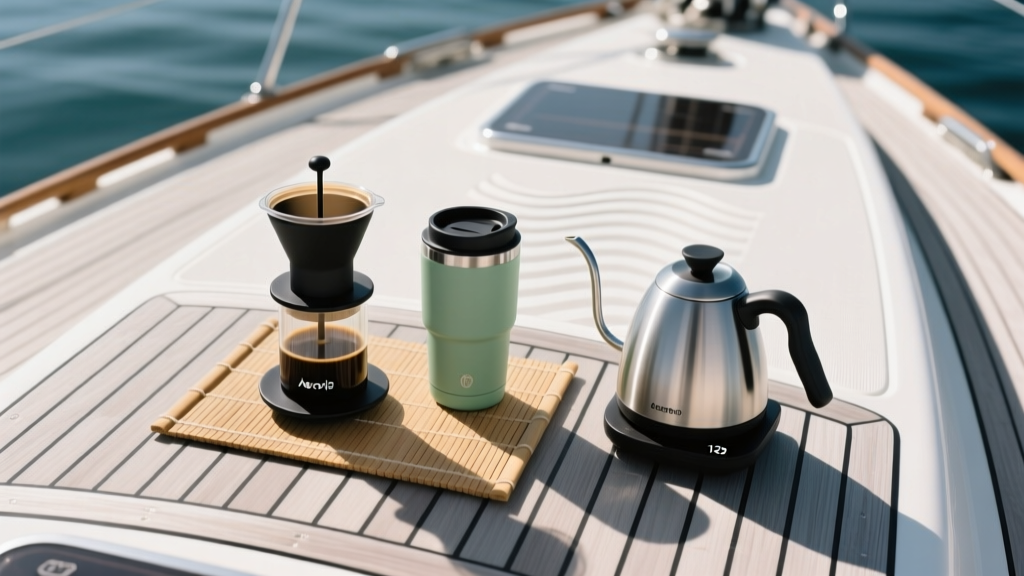
While technically an immersion brewer rather than a true espresso machine, the AeroPress Go produces a highly concentrated, espresso-style shot that forms the base for excellent marine Americanos and lattes. Constructed from virtually indestructible BPA-free Tritan plastic, it will survive being dropped onto a fiberglass deck or tossed around in a rough chop.
The Go model includes its own integrated 15oz travel mug and lid, meaning fewer loose items to secure in the galley when the wind picks up. Total brew time is under two minutes, and cleanup involves simply popping the puck of spent grounds directly into the trash.
Marine-Grade Coffee Grinders & Accessories
Pre-ground coffee loses its volatile aromatics within 30 minutes of exposure to oxygen and humidity—two things abundant in a marine environment. To get real crema, you must grind on demand.
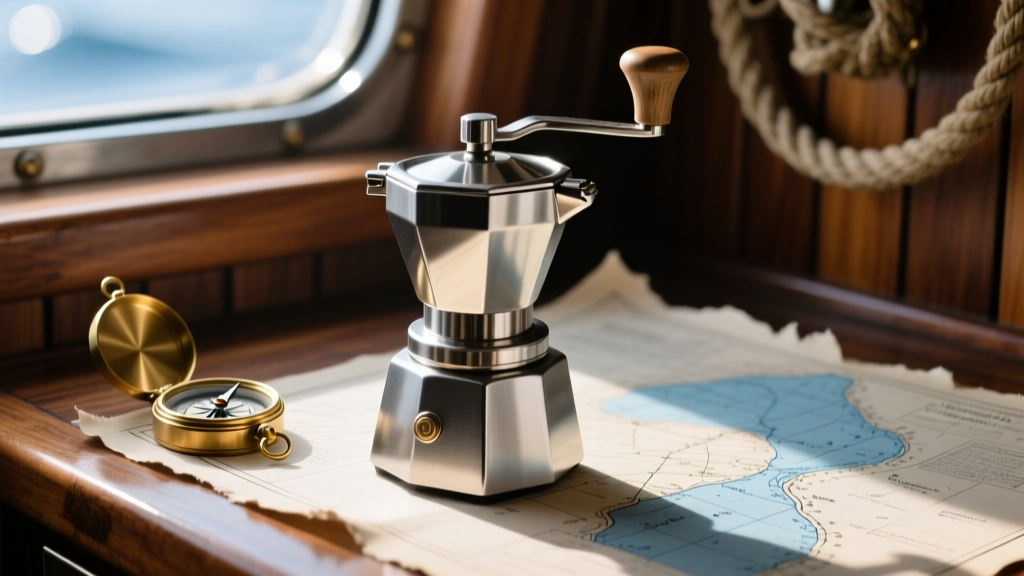
1Zpresso JX Manual Grinder
The 1Zpresso JX is our top pick for boat galleys. Unlike cheaper grinders with aluminum bodies that quickly pit and corrode in salt air, the JX features a 304 stainless steel body and 48mm stainless steel conical burrs. It grinds a 15-gram dose for espresso in under 45 seconds. The external adjustment dial offers 30+ click settings, allowing you to fine-tune your grind size to compensate for the high humidity that often causes coffee beans to behave differently on the water.
Maintenance Note: Never rinse the JX with fresh water. The internal bearings are shielded but not waterproof. Use a stiff, dry bristle brush and a blower bulb to clear grounds. Wipe the exterior with a slightly damp cloth and immediately dry it to prevent surface oxidation.
Power Management & Water Chemistry on Board
The biggest mistake boaters make when brewing coffee is ignoring water chemistry. If your vessel uses a reverse osmosis (RO) watermaker, your water is exceptionally pure, often measuring below 20 PPM (Parts Per Million) on a TDS meter. While great for drinking, RO water lacks the magnesium and calcium ions necessary to bond with coffee compounds. The result? A sour, flat, and under-extracted espresso.
The Remineralization Fix
To fix this without installing complex inline mineralizers, keep a stash of Third Wave Water Espresso Profile packets in your dry goods locker. Simply add a packet to a gallon of your RO water to instantly achieve the ideal 150 PPM mineral balance, complete with the necessary alkalinity to buffer acids and protect your gear from scale buildup.
Heating Water Without an Inverter
If you prefer drip coffee or need boiling water for your manual espresso maker, avoid using a 120V AC kettle on an inverter. Instead, invest in a dedicated 12V DC Travel Kettle (like the RoadPro 12V). These draw roughly 8 to 10 amps and boil 16oz of water in about 15 minutes. It is a slow process, but it is vastly safer for your marine electrical system and prevents voltage drops that can reboot sensitive chartplotters.
A Warning on Inverters: If you must charge your electric gadgets via your boat's AC outlets, ensure your inverter is a Pure Sine Wave model. Cheaper Modified Sine Wave inverters output a choppy electrical wave that can overheat and permanently fry the lithium battery management systems (BMS) inside devices like the Outin Nano or your smartphone.
Comparison Matrix: Boat Coffee Gadgets at a Glance
| Gadget | Type | Power Source | Salt-Air Resistance | Est. Price |
|---|---|---|---|---|
| Wacaco Nanopresso | Manual Espresso | None (Manual) | High (Plastics) | $70 |
| Outin Nano | Electric Espresso | Battery / 12V DC | Moderate (Sealed) | $150 |
| AeroPress Go | Immersion Brewer | None | High (Tritan) | $45 |
| 1Zpresso JX | Manual Grinder | None | Very High (SS 304) | $139 |
| RoadPro 12V Kettle | Water Boiler | 12V DC (10A) | Moderate | $35 |
Frequently Asked Questions (FAQ)
Can I use a standard Nespresso machine on my boat?
Technically yes, if you have a robust 2000W+ pure sine wave inverter and a massive lithium house bank. However, Nespresso machines draw up to 1,260W during the heating phase. On a 12V system, this pulls over 100 amps, which requires massive, expensive cabling (2/0 AWG) to prevent voltage drop and fire hazards. Portable, low-draw boat gadgets are a much safer and more efficient choice.
How do I store coffee beans in a humid marine environment?
Humidity and salt air will destroy roasted coffee beans in days. Store your beans in an opaque, valve-sealed bag inside an airtight hard container (like a Pelican case or a mason jar with a silicone gasket). Keep them in the coolest, darkest part of your galley, away from the engine compartment heat.
Is it safe to pump an espresso maker while the boat is underway?
It is generally safe to use manual devices like the Nanopresso or AeroPress while underway, provided you are seated in the cockpit or a secure salon area. However, handling boiling water from a thermos or 12V kettle while the vessel is pitching in rough chop is a severe burn hazard. Always pre-pour your hot water into a secure, lidded travel mug before adding it to your brewing device while in motion.
Written by
Lena ChenLena Chen earned her M.S. in Human-Computer Interaction from Carnegie Mellon University and a B.S. in Electrical Engineering from the University of Washington. She has spent the past decade specializing in smart home architecture and IoT ecosystems, helping over 200 homeowners design fully connected living spaces. Lena is a certified Matter protocol consultant and has published peer-reviewed research on voice-first interface design in the ACM Digital Library. Her reviews of smart home products combine deep technical analysis with real-world usability testing, evaluating everything from Zigbee mesh stability to Alexa skill responsiveness. She regularly speaks at CEDIA Expo and CES smart home panels.